


olena
Member
Catalogs Hide
- 1 Why sun damage still happens to outdoor TVs
-
2
7 sun protection strategies
-
2.1
Strategy 1: Overhead cover (pergola, awning, roof extension)

-
2.2
Strategy 2: Match sun rating to actual environment
-
2.3
Strategy 3: Fitted UV-resistant TV cover
-
2.4
Strategy 4: East-facing orientation
-
2.5
Strategy 5: Matte anti-glare screen coating
-
2.6
Strategy 6: UV-resistant mount hardware
-
2.7
Strategy 7: Seasonal monitoring and settings tuning
-
2.1
Strategy 1: Overhead cover (pergola, awning, roof extension)
- 3 Specific sun damage warning signs
- 4 Climate-specific sun protection
-
5
Mistakes that accelerate sun damage
- 5.1 1. Installing Partial Sun TV in Full Sun
- 5.2 2. Assuming "outdoor rated" means sun-proof
- 5.3 3. Skipping covers in high-UV climates
- 5.4 4. Using indoor accessories outdoors
- 5.5 5. Over-bright default settings
- 5.6 6. Missing seasonal sun angle changes
- 5.7 7. Installing without sun exposure measurement
- 6 Sun protection checklist
- 7 FAQ
- 8 Verdict
TL;DR:
Even outdoor-rated TVs benefit from sun protection — it extends lifespan from 8 to 12+ years and preserves picture quality. The 7 strategies, ranked by effectiveness: (1) overhead cover (pergola, awning, roof extension), (2) correct sun rating (partial sun vs full sun), (3) fitted UV-resistant TV cover for daily protection, (4) east-facing orientation (avoids afternoon sun), (5) anti-glare matte screen coating, (6) UV-resistant mount hardware, (7) seasonal monitoring and firmware/settings tuning. The **ByteFree BF-55ODTV** is Partial Sun-rated with UV-resistant polarizer — ideal for covered patios with moderate sun exposure.
Direct noon sun exposure (vs indirect daylight)
Installing a Partial Sun TV in Full Sun conditions
Heat buildup (UV damage compounds above 120°F internal)
Result: yellow tint, loss of contrast, dead pixel clusters. Irreversible.
LCD response time slows dramatically
Color uniformity degrades
Capacitors in the backlight driver age 3–5× faster
Result: uneven brightness across screen, slow motion response, eventual component failure.
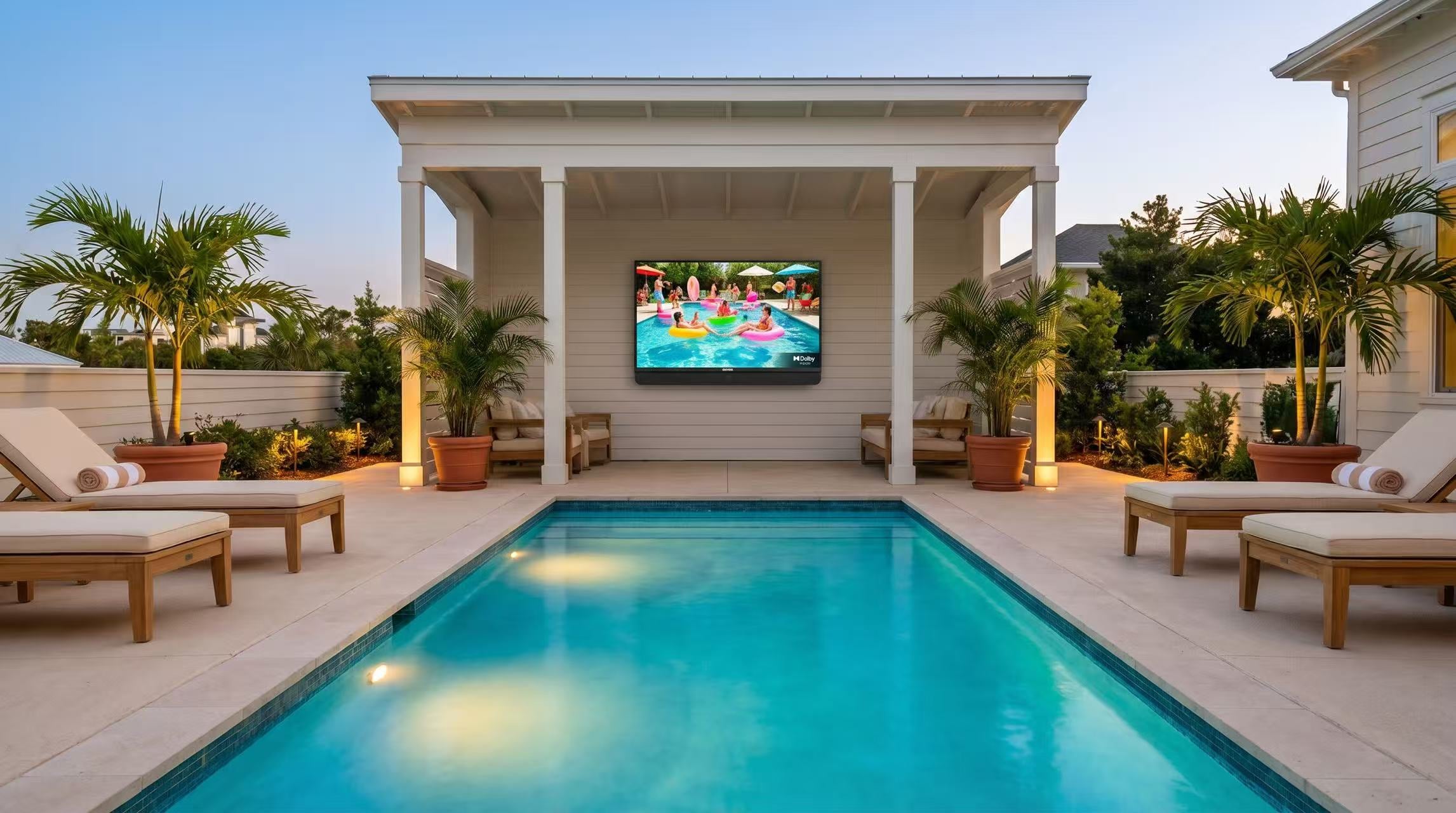
Strategy 1: Overhead cover (pergola, awning, roof extension)
Most effective protection. Blocking direct sun before it reaches the TV extends lifespan more than anything else.
Options:
Full roof extension: 100% sun blocking, rain protection
Pergola with wood slats: 60–80% sun blocking, partial rain
Retractable awning: On-demand sun blocking
Shade sail: 80–90% UV blocking, temporary-feeling
Tree canopy: 70–95% sun blocking, seasonal variation
Cost range: $500 (shade sail) to $10,000+ (architectural roof extension)
For installations without any overhead cover, a pergola costing $1,500–$4,000 is one of the best ROI investments — it extends TV life by 3–5 years.
Strategy 2: Match sun rating to actual environment
A Partial Sun TV in Full Sun fails 2–3× faster than rated. Always match:
How to check your sun exposure: stand at the TV mount location at noon on a clear day. If direct sun hits the exact wall spot for 3+ hours, you need Full Sun rating.
Strategy 3: Fitted UV-resistant TV cover
For times when the TV isn't in use:
Daytime covers during high-sun hours protect against UV
Winter covers protect against freeze + sun combined exposure
Vacation covers for extended unoccupied periods
Cover specs to look for:
UV-resistant outer layer (doesn't degrade in 12 months)
Waterproof outer + breathable inner
Snug fit to prevent wind flapping
Neutral or dark colors (less visual impact; some brands have wall-matching tones)
Cost: $60–$150 for a fitted 55″ cover. ROI: extends TV lifespan by 1–2 years typically.
Strategy 4: East-facing orientation
Sun angle matters — afternoon sun is harsher than morning sun.
East-facing TV wall: Morning sun only (gentle, low-angle). Afternoon shade.
West-facing TV wall: Harsh afternoon sun. Hottest temperatures.
North-facing TV wall: Minimal direct sun at most U.S. latitudes.
South-facing TV wall: Maximum sun exposure all day.
When designing the patio or choosing the TV wall, prefer east-facing or north-facing walls for outdoor TV placement. If stuck with west or south-facing, add more overhead cover to compensate.
Strategy 5: Matte anti-glare screen coating
Doesn't block UV directly, but reduces reflected light and allows the TV to operate with lower backlight brightness (less heat, less UV stress).
All major outdoor TVs (including BF-55ODTV) ship with matte anti-glare coating. Don't use an aftermarket glossy screen protector — it undoes the benefit.
Strategy 6: UV-resistant mount hardware
Sun damages not just the TV but also the mount:
Indoor mounts rust within 12 months
Standard black powder coating fades and flakes under UV
Rubber gaskets on articulating mounts degrade
Invest in outdoor-rated mount:
Galvanized or stainless steel structure
UV-resistant powder coating
Stainless steel bolts
Marine-grade articulating joints (if using articulating mount)
Cost premium: $100–$300 over indoor mount. Lifespan: 8–12 years outdoors vs 1–2 for indoor mounts.
Strategy 7: Seasonal monitoring and settings tuning
Regular attention prevents sun damage from accumulating:
Seasonal checks:
Spring: Inspect for winter UV damage; adjust brightness for summer
Summer: Monitor for any discoloration; consider mid-day covers
Fall: Clean winter/fall dust accumulation
Winter: Verify UV hasn't damaged covers; rotate cover placement if needed
Settings tuning:
Reduce brightness during low-ambient-light hours (evening) — lowers heat and UV stress
Use auto-brightness features that scale with ambient light
Disable always-on features that keep the panel lit 24/7
Uneven brightness (corners dimmer than center)
Slow response time in cool mornings
Cover material showing UV degradation
Action: Increase sun protection (add cover, adjust placement), reduce settings brightness, verify sun-rating match.
Dead pixel clusters in sun-exposed areas
Noticeable contrast loss
Flickering during bright content
Action: Document for warranty claim, consider professional service, prepare for potential replacement within 1–2 years.
Large dead pixel zones
Panel won't turn on during hot afternoons
Visible burn-in patterns
Action: Plan for replacement. Warranty may cover if under age; otherwise, it's end-of-life.
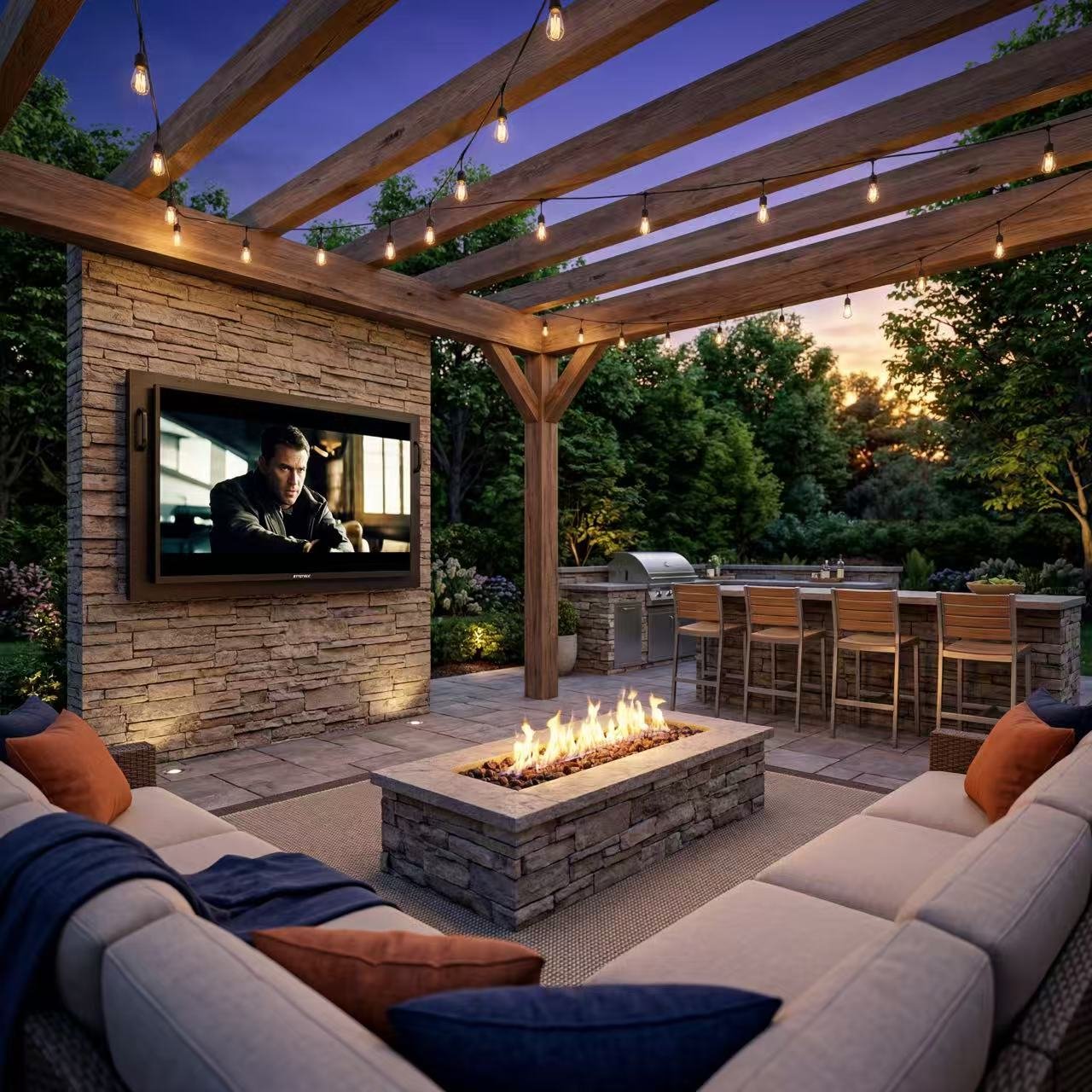
Heavy overhead cover (pergola + shade sail, or roof extension)
Daily covers during peak summer (May-September)
Reflective/light-colored wall behind TV (reduces heat absorption)
UV damage accelerated by humidity; quarterly seal inspections critical
Salt-air protection (monthly freshwater rinse near coast)
Pergola or retractable awning recommended
Hail protection: fitted cover for severe weather warnings
Reflective cover colors (reject more UV)
Minimal covers needed
Focus on salt-air and marine-grade mount hardware
UV isn't the primary concern — moisture is
Rain cover more important than sun cover
Seasonal winter cover for freeze protection
Summer sun intensity manageable without daily covers
Sun exposure measured at mount location (noon, 3 PM, 5 PM)
TV rating matches actual environment (Partial Sun vs Full Sun)
Overhead cover present (pergola, awning, roof, tree canopy)
TV wall orientation prefers east/north over west/south
Fitted UV-resistant cover purchased for daily use
Outdoor-rated mount hardware
Anti-glare matte screen coating (standard on real outdoor TVs)
Brightness settings tuned for ambient conditions
Seasonal check schedule established
Warranty terms understood for sun damage claims
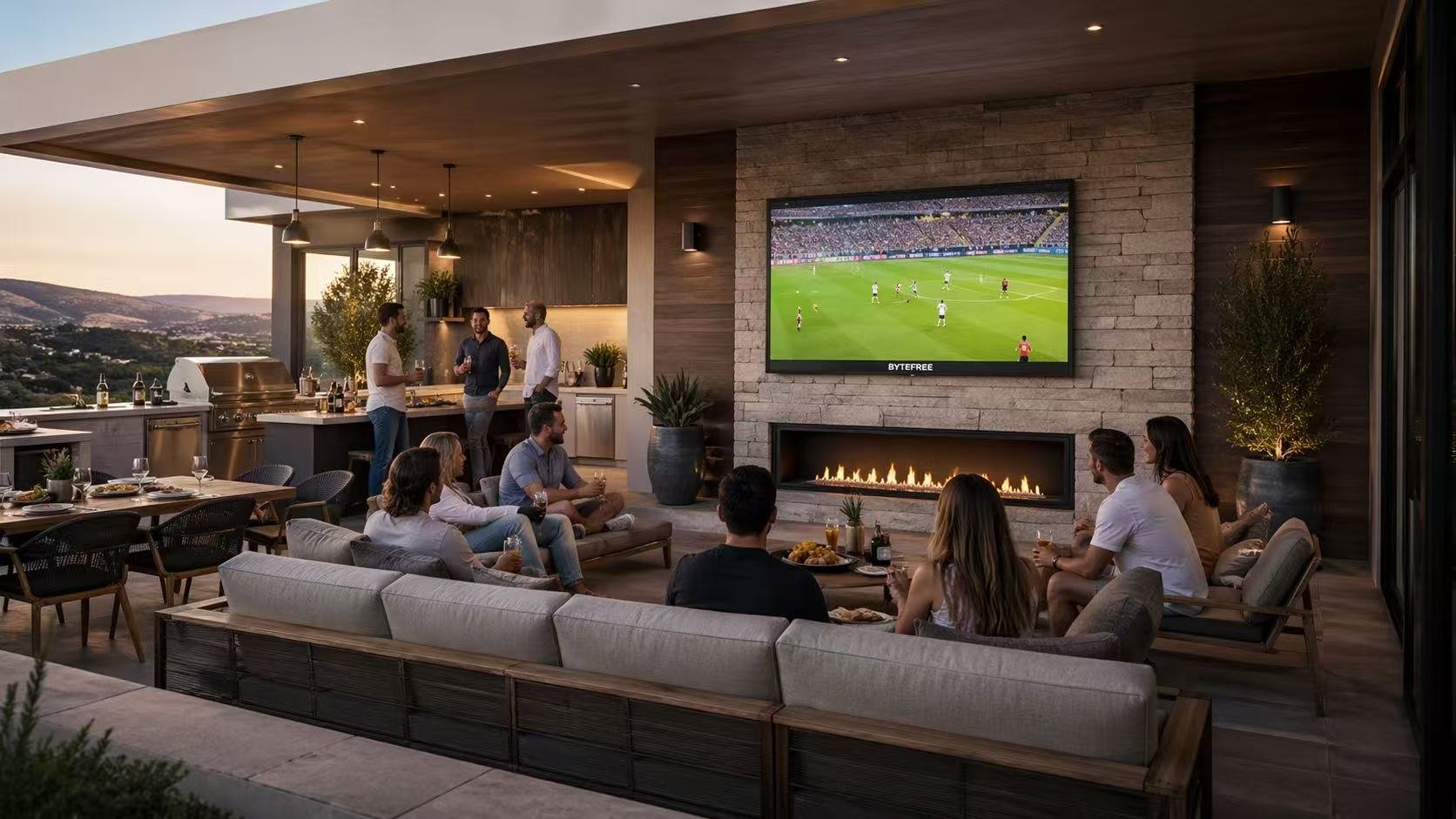
For covered patios with partial sun (80% of U.S. installations), the **ByteFree BF-55ODTV at $1,499** is ideal. UV-resistant polarizer, all-metal chassis, anti-glare matte coating, rated for exactly this environment. Pair with a fitted UV-resistant cover ($60–$150) for best lifespan.
→ Shop the ByteFree BF-55ODTV at bytefree.net — 55″ 4K, 1,500 nits partial-sun rated, UV-resistant polarizer, all-metal IP55 chassis, $1,499.
Even outdoor-rated TVs benefit from sun protection — it extends lifespan from 8 to 12+ years and preserves picture quality. The 7 strategies, ranked by effectiveness: (1) overhead cover (pergola, awning, roof extension), (2) correct sun rating (partial sun vs full sun), (3) fitted UV-resistant TV cover for daily protection, (4) east-facing orientation (avoids afternoon sun), (5) anti-glare matte screen coating, (6) UV-resistant mount hardware, (7) seasonal monitoring and firmware/settings tuning. The **ByteFree BF-55ODTV** is Partial Sun-rated with UV-resistant polarizer — ideal for covered patios with moderate sun exposure.
Why sun damage still happens to outdoor TVs
Outdoor TVs are rated for sun exposure but not immune. Three mechanisms cause sun damage over time:1. UV polarizer degradation
The LCD panel's polarizing film slowly degrades under UV even with UV-resistant formulation. Accelerated by:Direct noon sun exposure (vs indirect daylight)
Installing a Partial Sun TV in Full Sun conditions
Heat buildup (UV damage compounds above 120°F internal)
Result: yellow tint, loss of contrast, dead pixel clusters. Irreversible.
2. Panel overheating
Direct sun on the screen can raise panel temperature to 130–150°F internally. At those temperatures:LCD response time slows dramatically
Color uniformity degrades
Capacitors in the backlight driver age 3–5× faster
Result: uneven brightness across screen, slow motion response, eventual component failure.
3. Chassis UV cracking
Even outdoor chassis can crack at connection points, seals, and plastic components. All-metal chassis (BF-55ODTV) is most resistant; plastic-back-panel budget TVs are most vulnerable.
7 sun protection strategies
Strategy 1: Overhead cover (pergola, awning, roof extension)
Most effective protection. Blocking direct sun before it reaches the TV extends lifespan more than anything else.Options:
Full roof extension: 100% sun blocking, rain protection
Pergola with wood slats: 60–80% sun blocking, partial rain
Retractable awning: On-demand sun blocking
Shade sail: 80–90% UV blocking, temporary-feeling
Tree canopy: 70–95% sun blocking, seasonal variation
Cost range: $500 (shade sail) to $10,000+ (architectural roof extension)
For installations without any overhead cover, a pergola costing $1,500–$4,000 is one of the best ROI investments — it extends TV life by 3–5 years.
Strategy 2: Match sun rating to actual environment
A Partial Sun TV in Full Sun fails 2–3× faster than rated. Always match:Environment | Required TV rating |
| Covered patio, indirect sun | Partial Sun (BF-55ODTV) |
| 3–6 hrs direct sun daily | Full Sun (Sylvox Cinema Helio, Samsung Terrace Full Sun) |
| Extreme direct sun (Arizona noon) | Heavy-duty Full Sun (Titan G300 Mini-LED, MirageVision Platinum) |
Strategy 3: Fitted UV-resistant TV cover
For times when the TV isn't in use:Daytime covers during high-sun hours protect against UV
Winter covers protect against freeze + sun combined exposure
Vacation covers for extended unoccupied periods
Cover specs to look for:
UV-resistant outer layer (doesn't degrade in 12 months)
Waterproof outer + breathable inner
Snug fit to prevent wind flapping
Neutral or dark colors (less visual impact; some brands have wall-matching tones)
Cost: $60–$150 for a fitted 55″ cover. ROI: extends TV lifespan by 1–2 years typically.
Strategy 4: East-facing orientation
Sun angle matters — afternoon sun is harsher than morning sun.East-facing TV wall: Morning sun only (gentle, low-angle). Afternoon shade.
West-facing TV wall: Harsh afternoon sun. Hottest temperatures.
North-facing TV wall: Minimal direct sun at most U.S. latitudes.
South-facing TV wall: Maximum sun exposure all day.
When designing the patio or choosing the TV wall, prefer east-facing or north-facing walls for outdoor TV placement. If stuck with west or south-facing, add more overhead cover to compensate.
Strategy 5: Matte anti-glare screen coating
Doesn't block UV directly, but reduces reflected light and allows the TV to operate with lower backlight brightness (less heat, less UV stress).All major outdoor TVs (including BF-55ODTV) ship with matte anti-glare coating. Don't use an aftermarket glossy screen protector — it undoes the benefit.
Strategy 6: UV-resistant mount hardware
Sun damages not just the TV but also the mount:Indoor mounts rust within 12 months
Standard black powder coating fades and flakes under UV
Rubber gaskets on articulating mounts degrade
Invest in outdoor-rated mount:
Galvanized or stainless steel structure
UV-resistant powder coating
Stainless steel bolts
Marine-grade articulating joints (if using articulating mount)
Cost premium: $100–$300 over indoor mount. Lifespan: 8–12 years outdoors vs 1–2 for indoor mounts.
Strategy 7: Seasonal monitoring and settings tuning
Regular attention prevents sun damage from accumulating:Seasonal checks:
Spring: Inspect for winter UV damage; adjust brightness for summer
Summer: Monitor for any discoloration; consider mid-day covers
Fall: Clean winter/fall dust accumulation
Winter: Verify UV hasn't damaged covers; rotate cover placement if needed
Settings tuning:
Reduce brightness during low-ambient-light hours (evening) — lowers heat and UV stress
Use auto-brightness features that scale with ambient light
Disable always-on features that keep the panel lit 24/7
Specific sun damage warning signs
Watch for these signs monthly:Early warning (reversible with action)
Slight color temperature shift toward yellowUneven brightness (corners dimmer than center)
Slow response time in cool mornings
Cover material showing UV degradation
Action: Increase sun protection (add cover, adjust placement), reduce settings brightness, verify sun-rating match.
Mid-stage damage (partially reversible)
Clear yellow patches on screenDead pixel clusters in sun-exposed areas
Noticeable contrast loss
Flickering during bright content
Action: Document for warranty claim, consider professional service, prepare for potential replacement within 1–2 years.
Late-stage damage (usually end-of-life)
Severe yellow discoloration across most of screenLarge dead pixel zones
Panel won't turn on during hot afternoons
Visible burn-in patterns
Action: Plan for replacement. Warranty may cover if under age; otherwise, it's end-of-life.
Climate-specific sun protection
Arizona / Nevada / New Mexico (extreme desert sun)
Full Sun-rated TV minimum (Sylvox Cinema Helio, Samsung Terrace Full Sun, or higher)Heavy overhead cover (pergola + shade sail, or roof extension)
Daily covers during peak summer (May-September)
Reflective/light-colored wall behind TV (reduces heat absorption)
Florida / Gulf Coast (humidity + sun)
Full Sun or Partial Sun rating depending on overhead coverUV damage accelerated by humidity; quarterly seal inspections critical
Salt-air protection (monthly freshwater rinse near coast)
Pergola or retractable awning recommended
Texas / Oklahoma (heat + hail)
Full Sun rating for uncovered installations; Partial Sun if coveredHail protection: fitted cover for severe weather warnings
Reflective cover colors (reject more UV)
California coastal (mild sun, occasional fog)
Partial Sun rating works for most installationsMinimal covers needed
Focus on salt-air and marine-grade mount hardware
Pacific Northwest (low sun intensity, high humidity)
Partial Sun or Full Shade rating typically sufficientUV isn't the primary concern — moisture is
Rain cover more important than sun cover
Northeast / Midwest (moderate sun, freeze cycles)
Partial Sun rating for most installationsSeasonal winter cover for freeze protection
Summer sun intensity manageable without daily covers
Mistakes that accelerate sun damage
1. Installing Partial Sun TV in Full Sun
Most common mistake. Check your sun exposure honestly before buying.2. Assuming "outdoor rated" means sun-proof
IP55 rating is for water/dust, not UV. Sun rating is separate.3. Skipping covers in high-UV climates
Even outdoor TVs benefit from daily covers in Arizona/Nevada-class sun.4. Using indoor accessories outdoors
Indoor mounts, soundbars, and streaming devices fail faster than the TV itself under sun exposure.5. Over-bright default settings
Factory defaults often max brightness. Lower brightness in controlled lighting extends panel life.6. Missing seasonal sun angle changes
Summer sun angles differ from winter — a sheltered installation in January may get direct sun in June. Re-evaluate seasonally.7. Installing without sun exposure measurement
Measure sun angle at noon, 3 PM, and 5 PM on a clear day before committing to TV placement.Sun protection checklist
For new installations, verify:Sun exposure measured at mount location (noon, 3 PM, 5 PM)
TV rating matches actual environment (Partial Sun vs Full Sun)
Overhead cover present (pergola, awning, roof, tree canopy)
TV wall orientation prefers east/north over west/south
Fitted UV-resistant cover purchased for daily use
Outdoor-rated mount hardware
Anti-glare matte screen coating (standard on real outdoor TVs)
Brightness settings tuned for ambient conditions
Seasonal check schedule established
Warranty terms understood for sun damage claims
FAQ
Is the BF-55ODTV rated for full sun?
No — Partial Sun only. For covered patios with moderate sun exposure, BF-55ODTV is ideal. For direct 4+ hour noon sun exposure, upgrade to Sylvox Cinema Helio QLED or Samsung Terrace Full Sun.How much does a fitted TV cover extend lifespan?
Estimated 1–3 years added, depending on climate severity. Higher impact in extreme sun zones (Arizona), lower in mild climates (Pacific NW).Can I use an indoor TV cover on my outdoor TV?
No — indoor covers aren't UV-resistant and degrade in 6–12 months outdoors. Use outdoor-rated covers specifically.Does screen cleaner protect against sun?
No — cleaning removes dust and grime but provides no UV protection. Focus on preventing UV exposure at the source.Is it safe to run an outdoor TV 24/7 in sun?
Not recommended. Even outdoor TVs benefit from off-time during peak UV hours if not in use. Use standby or power-off during midday when not watching.What warranty protection exists for sun damage?
Most outdoor TV warranties cover defects but exclude "damage from environmental exposure beyond rated specifications." Installing Partial Sun TV in Full Sun typically voids coverage. BF-55ODTV warranty covers sun damage within its Partial Sun rating.Verdict
Protecting your outdoor TV from sun damage adds 3–5 years of lifespan and preserves picture quality throughout. The single highest-impact action is ensuring the TV rating matches your actual sun exposure — don't install a Partial Sun TV in Full Sun conditions.For covered patios with partial sun (80% of U.S. installations), the **ByteFree BF-55ODTV at $1,499** is ideal. UV-resistant polarizer, all-metal chassis, anti-glare matte coating, rated for exactly this environment. Pair with a fitted UV-resistant cover ($60–$150) for best lifespan.
→ Shop the ByteFree BF-55ODTV at bytefree.net — 55″ 4K, 1,500 nits partial-sun rated, UV-resistant polarizer, all-metal IP55 chassis, $1,499.
Last edited: