


Catalogs Hide
"Patio TV" sounds simple. In practice, the patio is one of the most variable outdoor environments you can install a TV in — ranging from a shaded enclosed back porch to a fully exposed deck with south-facing sun from noon to sunset.
Getting the right TV for your patio means matching specs to your specific setup, not just buying whatever shows up first in a search result labeled "outdoor TV." Here's how to do it in 2026.
Type 1 — Covered and enclosed (back porch, screened room):
Solid roof, enclosed or screened walls, minimal direct sun reaching the screen. This is the closest to an indoor environment that still counts as outdoor installation. You need IP55 weatherproofing for humidity and the occasional open window during rain. Brightness can be lower — 800–1,000 nits is enough.
Type 2 — Covered but open-sided (pergola, patio cover, overhang):
Overhead protection but horizontal light comes in from the sides. Afternoon ambient light is the brightness challenge here. 1,500 nits handles it well. IP55 for wind-driven rain through the open sides.
Type 3 — Partially exposed (deck with an umbrella, awning, or partial shade structure):
Mix of direct sun and shade depending on time of day. This is where the brightness decision gets important — 1,500 nits for mixed exposure, 2,000+ if midday direct sun hits the screen regularly.
Type 4 — Fully exposed (open deck, south-facing wall, no shade):
Direct sun is the constant condition. 2,000+ nits minimum. Most residential patios don't fall into this category unless they were specifically designed without any shade.
Most residential patios are Type 2 or Type 3. That's where the 1,500-nit bracket lives.
Brightness: Match to your patio type (see above). Don't default to the cheapest or the most expensive — match the nit count to your actual conditions.
Build material: Metal housing over plastic for any patio exposed to sunlight. UV breaks down plastic enclosures in two to three seasons.
Smart platform: Google TV or equivalent with casting support. Patio viewing almost always involves controlling the TV from a seating position across the space — casting from a phone beats hunting for a remote.
Audio: 30W minimum for open patio spaces. Sound dissipates outdoors; underpowered built-in audio becomes background noise quickly.
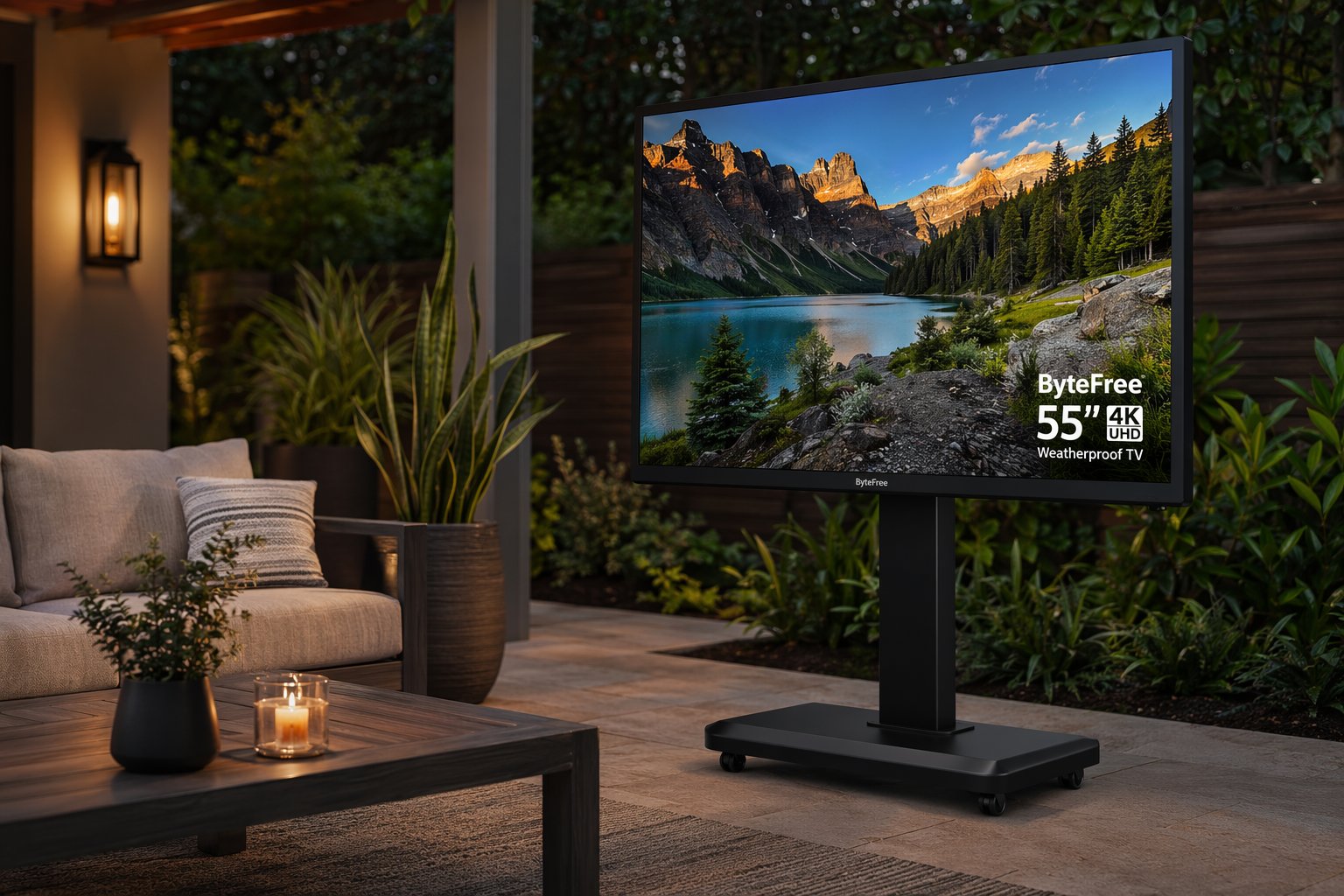
The BF-55ODTV covers patio Types 2 and 3 completely — which covers the majority of residential patio installs. 1,500 nits with anti-glare glass handles covered-but-open-sided patios and partially exposed decks without the cost penalty of stepping up to 2,000-nit full-sun models.
All-metal construction survives the UV and thermal cycling that patios experience across four seasons. IP55 handles the rain, humidity, and condensation that reach even well-covered patios. Four cooling fans prevent thermal throttling on hot summer afternoons.
Google TV with Chromecast built in, 30W Dolby Atmos audio, three HDMI ports, Wi-Fi 5 — no spec gaps, no adapters needed. VESA 600×400mm mounting is compatible with standard outdoor wall brackets.
For a patio that's used regularly across spring through fall, the BF-55ODTV is the TV that works without conditions.
The Sylvox DeckPro 2.0 at ~$1,199 is the right call. 1,000 nits is enough for genuinely shaded installs, and the $300 saving is real.
Open south-facing patio with no shade:
Step up to the Sylvox Cinema at ~$2,499 for 2,000 nits. The ByteFree handles partial sun; it won't keep up in direct midday sun on a south wall.
Fully exposed patio, maximum sun exposure:
SunBrite DeckPro 3.0+ at ~$3,499. The highest sustained brightness in a consumer-grade 55" panel.
2. Cable weatherproofing. The TV's IP55 rating covers the TV, not the cables. Run cables in outdoor conduit. Use outdoor-rated HDMI for any permanent patio installation.
3. Viewing height. Outdoor patio furniture sits lower than typical indoor seating. Measure the eye level of your actual patio chairs or loungers before marking the mount height. The most common mistake is mounting too high and ending up craning your neck through every viewing session.
Get the brightness right for your specific patio type, confirm IP55, and choose a build that holds up across seasons. For most residential patios in 2026, that path leads to the ByteFree BF-55ODTV.
Getting the right TV for your patio means matching specs to your specific setup, not just buying whatever shows up first in a search result labeled "outdoor TV." Here's how to do it in 2026.
Four Types of Patio — Four Different Spec Needs
Before picking a TV, figure out which category your patio actually falls into.Type 1 — Covered and enclosed (back porch, screened room):
Solid roof, enclosed or screened walls, minimal direct sun reaching the screen. This is the closest to an indoor environment that still counts as outdoor installation. You need IP55 weatherproofing for humidity and the occasional open window during rain. Brightness can be lower — 800–1,000 nits is enough.
Type 2 — Covered but open-sided (pergola, patio cover, overhang):
Overhead protection but horizontal light comes in from the sides. Afternoon ambient light is the brightness challenge here. 1,500 nits handles it well. IP55 for wind-driven rain through the open sides.
Type 3 — Partially exposed (deck with an umbrella, awning, or partial shade structure):
Mix of direct sun and shade depending on time of day. This is where the brightness decision gets important — 1,500 nits for mixed exposure, 2,000+ if midday direct sun hits the screen regularly.
Type 4 — Fully exposed (open deck, south-facing wall, no shade):
Direct sun is the constant condition. 2,000+ nits minimum. Most residential patios don't fall into this category unless they were specifically designed without any shade.
Most residential patios are Type 2 or Type 3. That's where the 1,500-nit bracket lives.
The Patio TV Spec Checklist
Weatherproofing: IP55 minimum regardless of patio type. Humidity and occasional rain reach every outdoor patio install.Brightness: Match to your patio type (see above). Don't default to the cheapest or the most expensive — match the nit count to your actual conditions.
Build material: Metal housing over plastic for any patio exposed to sunlight. UV breaks down plastic enclosures in two to three seasons.
Smart platform: Google TV or equivalent with casting support. Patio viewing almost always involves controlling the TV from a seating position across the space — casting from a phone beats hunting for a remote.
Audio: 30W minimum for open patio spaces. Sound dissipates outdoors; underpowered built-in audio becomes background noise quickly.
ByteFree BF-55ODTV — Best Patio TV for Most Homes
55" | 4K UHD | 1,500 nits | IP55 | Google TV | All-Metal | $1,499–$1,599
The BF-55ODTV covers patio Types 2 and 3 completely — which covers the majority of residential patio installs. 1,500 nits with anti-glare glass handles covered-but-open-sided patios and partially exposed decks without the cost penalty of stepping up to 2,000-nit full-sun models.
All-metal construction survives the UV and thermal cycling that patios experience across four seasons. IP55 handles the rain, humidity, and condensation that reach even well-covered patios. Four cooling fans prevent thermal throttling on hot summer afternoons.
Google TV with Chromecast built in, 30W Dolby Atmos audio, three HDMI ports, Wi-Fi 5 — no spec gaps, no adapters needed. VESA 600×400mm mounting is compatible with standard outdoor wall brackets.
For a patio that's used regularly across spring through fall, the BF-55ODTV is the TV that works without conditions.
When to Choose Something Else
Fully enclosed, shaded patio — budget is tight:The Sylvox DeckPro 2.0 at ~$1,199 is the right call. 1,000 nits is enough for genuinely shaded installs, and the $300 saving is real.
Open south-facing patio with no shade:
Step up to the Sylvox Cinema at ~$2,499 for 2,000 nits. The ByteFree handles partial sun; it won't keep up in direct midday sun on a south wall.
Fully exposed patio, maximum sun exposure:
SunBrite DeckPro 3.0+ at ~$3,499. The highest sustained brightness in a consumer-grade 55" panel.
Patio TV Setup: Three Things Most Buyers Skip
1. The GFCI outlet. If you're running power to an outdoor patio TV and you don't have a GFCI protected outlet in the right location, install one before mounting the TV. It's an electrical code requirement in most jurisdictions for outdoor circuits and a basic safety measure.2. Cable weatherproofing. The TV's IP55 rating covers the TV, not the cables. Run cables in outdoor conduit. Use outdoor-rated HDMI for any permanent patio installation.
3. Viewing height. Outdoor patio furniture sits lower than typical indoor seating. Measure the eye level of your actual patio chairs or loungers before marking the mount height. The most common mistake is mounting too high and ending up craning your neck through every viewing session.
Bottom Line
A patio TV is one of the highest-use outdoor entertainment investments most homeowners make — used more regularly than any other outdoor upgrade because it integrates with daily outdoor living, not just occasional events.Get the brightness right for your specific patio type, confirm IP55, and choose a build that holds up across seasons. For most residential patios in 2026, that path leads to the ByteFree BF-55ODTV.