


olena
Member
Catalogs Hide
- 1 Short answer by IP rating
- 2 What happens when an IP55 TV gets rained on
- 3 The 3 scenarios where rain can damage an IP55 TV
- 4 How IP55 TVs handle rain, mechanically
- 5 When you should cover an outdoor TV in rain
-
6
Rain-related maintenance schedule
- 6.1 Monthly
- 6.2 Quarterly
- 6.3 Annually
- 6.4 After major weather events
- 7 Outdoor TV in rain: brand-by-brand comparison
- 8 What about rain + other environmental threats?
- 9 Common rain-related mistakes
-
10
FAQ
- 10.1 Can I leave my IP55 outdoor TV in the rain forever?
- 10.2 Does IP55 cover dew and morning condensation?
- 10.3 What happens if my IP55 TV gets stuck in a hailstorm?
- 10.4 Can I pressure-wash my deck near the IP55 TV?
- 10.5 Is IP55 enough for Pacific Northwest rain frequency?
- 10.6 What if my TV seems to have water inside after a storm?
- 11 Verdict
TL;DR:
Yes — outdoor TVs are designed to stay in the rain. Any TV rated IP55 or higher (industry standard for real outdoor TVs including the **ByteFree BF-55ODTV**) handles normal rainfall from any direction without damage. The rare exceptions where you need to cover or bring indoors: hurricanes, hail, pressure-washing directly at the TV, or prolonged freeze storms. Indoor TVs, by contrast, have IP20 rating — they fail with a single rainstorm.
The IP55 certification test includes 18 minutes of water jets from all 6 sides of the chassis at 30 kPa pressure (equivalent to strong rainfall in gale-force winds). The BF-55ODTV and every other IP55-rated outdoor TV has passed this test.
Real-world rain scenarios:
Light drizzle: Zero concern. TV operates normally.
Moderate rainfall: Zero concern. Rain runs off the chassis.
Heavy thunderstorm with wind: Water hits the TV from various angles. IP55 handles this.
Sustained multi-day rain: IP55 still handles it. Water accumulation on the chassis is designed to drain/evaporate.
Hurricane / severe storm: Consider covering or bringing indoors for debris safety, but IP55 itself handles the rain.
Mitigation: In extreme weather zones, use a fitted outdoor TV cover for active severe weather warnings. Hail in particular can crack screens.
Mitigation: Always install drip loops — cables hang below connectors so water drips off before reaching the port.
Mitigation: In cold climates, use a winter cover during extended freeze periods. Quarterly seal inspection.
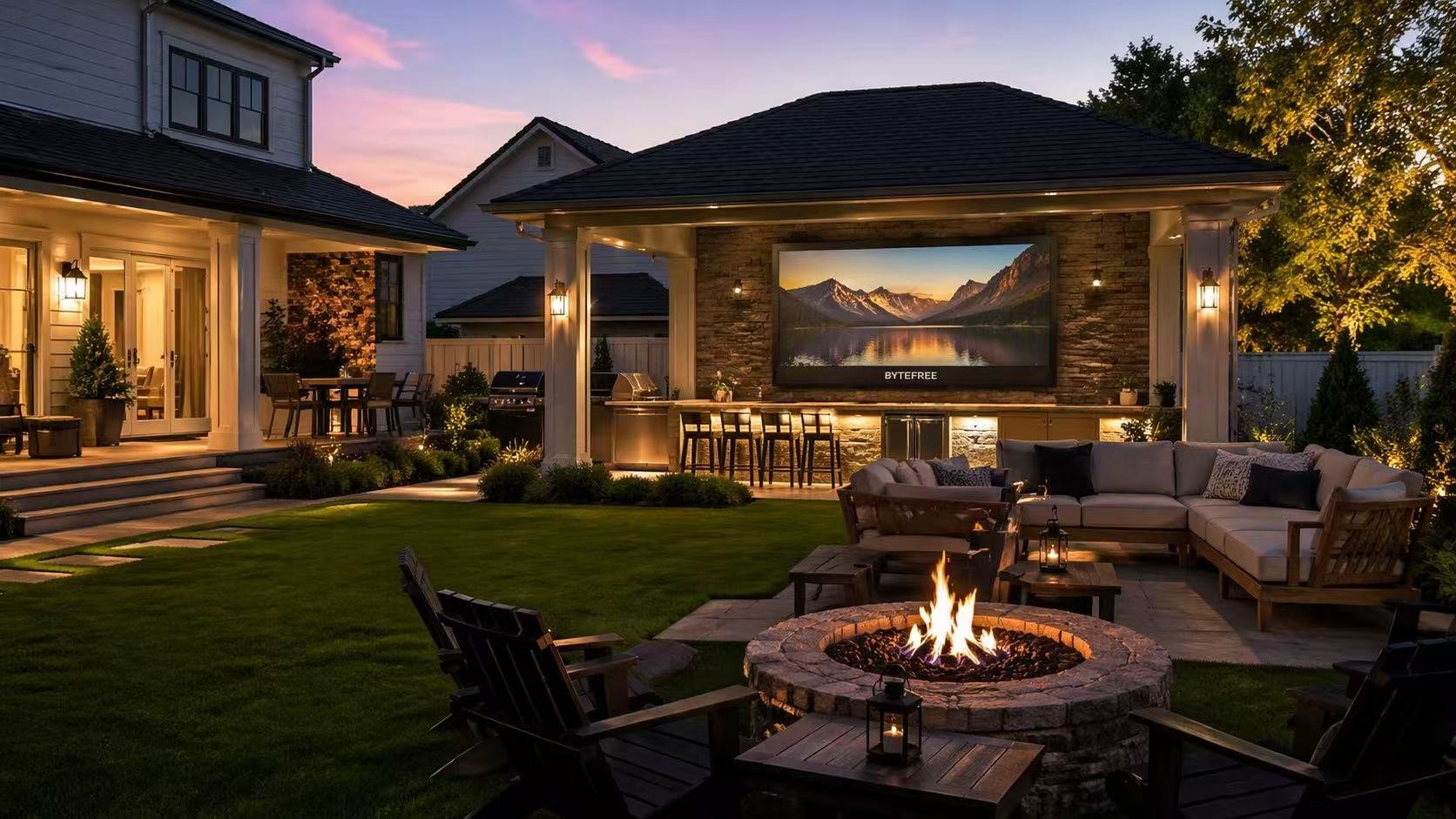
The BF-55ODTV uses all-metal construction with these features — verified for IP55 rain exposure.
Hurricane landfall (high winds + debris, not just rain)
Hail of any size
Ice storms (adhesion of ice to the chassis can damage bezels when melting)
Winterizing seasonal properties (add-on insurance against freeze damage)
Visible seal separation
After a falling branch hit the TV
Check that cable drip loops are still intact
Verify cable grommets are seated properly
Check that drain channels are clear (not blocked by debris)
Inspect mount hardware for rust
Verify outlet GFCI is functioning
Post-hail: check for micro-cracks in bezel or panel
Post-freeze: verify no ice damage to seals
The BF-55ODTV's all-metal construction handles this maintenance schedule well — no plastic components to UV-crack or seal failures to chase.
For 80% of residential installations, IP55 is sufficient. The extra cost of IP65/IP66 is only worth it for specific splash-zone scenarios.
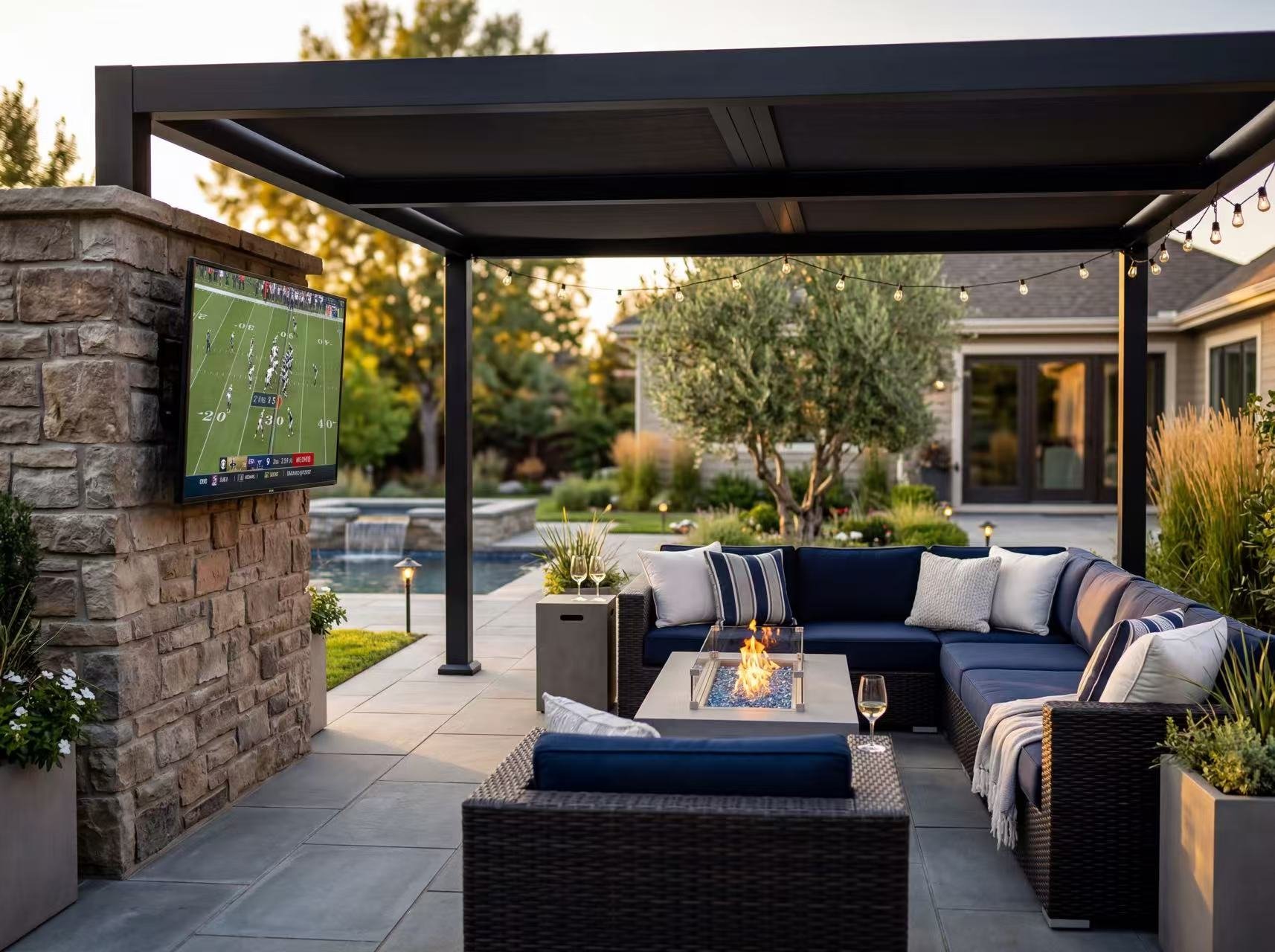
The ByteFree BF-55ODTV at IP55 matches the rain protection of every major outdoor TV brand — Samsung Terrace, Sylvox Deck Pro 2.0, SunBrite Veranda 3, Sylvox Gaming Series. You're not paying a premium for less protection. You're paying for the right protection.
→ Shop the ByteFree BF-55ODTV at bytefree.net — 55″ 4K, IP55, –22°F to 122°F operating range, all-metal chassis, partial-sun rated, $1,499.
Yes — outdoor TVs are designed to stay in the rain. Any TV rated IP55 or higher (industry standard for real outdoor TVs including the **ByteFree BF-55ODTV**) handles normal rainfall from any direction without damage. The rare exceptions where you need to cover or bring indoors: hurricanes, hail, pressure-washing directly at the TV, or prolonged freeze storms. Indoor TVs, by contrast, have IP20 rating — they fail with a single rainstorm.
Short answer by IP rating
IP rating | Rain protection | Common TV types |
| IP20 (indoor TV) | None — fails in light rain | All Samsung/LG/Sony indoor TVs |
| IP54 | Splashes only (not heavy rain) | Some budget outdoor TVs |
| IP55 (industry standard) | Full rain exposure — any direction | **BF-55ODTV**, Samsung Terrace, Sylvox Deck Pro 2.0 |
| IP65 | Heavy rain + splashes | Sylvox Pool Pro QLED 2.0 |
| IP66 | Powerful rain jets (storms) | Titan G300, Skyworth Clarus S1 |
| IP67+ | Submersion-rated | Not needed for residential TVs |
What happens when an IP55 TV gets rained on
Short answer: Nothing. IP55 is specifically designed for this.The IP55 certification test includes 18 minutes of water jets from all 6 sides of the chassis at 30 kPa pressure (equivalent to strong rainfall in gale-force winds). The BF-55ODTV and every other IP55-rated outdoor TV has passed this test.
Real-world rain scenarios:
Light drizzle: Zero concern. TV operates normally.
Moderate rainfall: Zero concern. Rain runs off the chassis.
Heavy thunderstorm with wind: Water hits the TV from various angles. IP55 handles this.
Sustained multi-day rain: IP55 still handles it. Water accumulation on the chassis is designed to drain/evaporate.
Hurricane / severe storm: Consider covering or bringing indoors for debris safety, but IP55 itself handles the rain.
The 3 scenarios where rain can damage an IP55 TV
1. Rain combined with physical damage
If hail cracks the panel or a tree branch damages the chassis, the IP rating is breached and rain can enter through damage.Mitigation: In extreme weather zones, use a fitted outdoor TV cover for active severe weather warnings. Hail in particular can crack screens.
2. Water pooling at the power inlet
If cables are run upward into the TV without drip loops, water can migrate along the cable into the power inlet.Mitigation: Always install drip loops — cables hang below connectors so water drips off before reaching the port.
3. Freeze-thaw cycles that compromise seals
Water ingress during a thaw, followed by freeze expansion, can crack seals over time (5+ years).Mitigation: In cold climates, use a winter cover during extended freeze periods. Quarterly seal inspection.
How IP55 TVs handle rain, mechanically
The engineering that makes IP55 work:1. Sealed chassis
All openings (vents, ports, bezels) have rubber gaskets or spring-loaded covers. The entire inner chamber is sealed from outside air and water.2. Drain channels
The chassis has designed drain channels at the bottom — if water accumulates anywhere, it drains out the bottom rather than pooling.3. Angled seams
Top bezels and seams are angled so water rolls down and away rather than pooling on top.4. UV-resistant seals
Rubber gaskets use UV-resistant formulations that don't degrade from sun exposure (which would compromise the IP rating).5. Stainless or galvanized fasteners
Bolts and screws that hold the chassis together use rust-resistant materials so they don't corrode and create gaps.The BF-55ODTV uses all-metal construction with these features — verified for IP55 rain exposure.
When you should cover an outdoor TV in rain
Most of the time you don't need to. IP55 rated TVs are designed to stay in the rain. But use a cover when:Severe weather forecasts
Tornado warningHurricane landfall (high winds + debris, not just rain)
Hail of any size
Ice storms (adhesion of ice to the chassis can damage bezels when melting)
Extended unoccupied periods
Leaving the house for 2+ weeks during rainy seasonWinterizing seasonal properties (add-on insurance against freeze damage)
After significant impact damage
Cracked bezel (rain can enter through damage)Visible seal separation
After a falling branch hit the TV
Immediately after pressure-washing the deck nearby
Give the chassis 30–60 minutes to fully dry before covering (otherwise condensation gets trapped under the cover)Rain-related maintenance schedule
To preserve IP55 performance over years of rain exposure:Monthly
Wipe the chassis with a clean dry cloth (removes dust + leaves that can accelerate seal degradation)Check that cable drip loops are still intact
Quarterly
Inspect gaskets and seals for cracks or separationVerify cable grommets are seated properly
Check that drain channels are clear (not blocked by debris)
Annually
Deep clean screen with distilled water + microfiber clothInspect mount hardware for rust
Verify outlet GFCI is functioning
After major weather events
Post-storm: inspect for debris impact damagePost-hail: check for micro-cracks in bezel or panel
Post-freeze: verify no ice damage to seals
The BF-55ODTV's all-metal construction handles this maintenance schedule well — no plastic components to UV-crack or seal failures to chase.
Outdoor TV in rain: brand-by-brand comparison
How major outdoor TV brands handle rain per IP rating:TV | IP Rating | Rain rating | Real-world performance |
| **BF-55ODTV** | IP55 | Full rain exposure | Industry standard |
| Samsung The Terrace | IP55 | Full rain exposure | Same as BF |
| Sylvox Deck Pro 2.0 | IP55 | Full rain exposure | Same as BF |
| SunBrite Veranda 3 | IP55 | Full rain exposure | Same as BF |
| Sylvox Gaming Series | IP55 | Full rain exposure | Same as BF |
| Sylvox Frameless | IP56 | Heavy rain + jets | Slight upgrade over IP55 |
| Sylvox Pool Pro QLED 2.0 | IP65 | Splash zones | Best for wet environments |
| Titan G300 | IP65 | Splash zones | Same as Pool Pro |
| Skyworth Clarus S1 | IP66 | Storm-level exposure | Highest common outdoor rating |
What about rain + other environmental threats?
Rain + lightning
Lightning strike nearby can fry electronics through surge. Not an IP rating issue — use a surge protector rated for outdoor use to protect against lightning-induced voltage spikes. GFCI outlet provides additional protection.Rain + wind-blown debris
IP55 handles the rain; impact damage from wind-blown debris (branches, outdoor furniture) is a separate concern. Consider installing in sheltered positions or using articulating mount that retracts flat during storms.Rain + freezing
IP55 handles the rain; freezing temperature inside the chassis is a separate concern. The BF-55ODTV's –22°F to 122°F operating range handles this. For extended below-freezing periods when the TV isn't in use, disconnect power and cover.Rain + salt spray (coastal)
Salt water is more corrosive than fresh. IP55 seals handle it, but salt accumulation on the exterior chassis accelerates mechanical wear. Quarterly freshwater rinses are important in coastal environments.Common rain-related mistakes
1. Not installing drip loops on cables
Water tracks along the HDMI or power cable and enters the TV at the connector. Always install drip loops — cable hangs below the connector before entering.2. Mounting TV flush against wall with no ventilation
Water can accumulate between TV and wall if there's no gap for airflow. Most outdoor mounts provide 1–2 inch standoff; confirm yours does.3. Using an indoor TV mount outdoors
Indoor mounts rust in 6–12 months of rain exposure. Rust stains the wall below and weakens the mount structurally. Use outdoor-rated mount (galvanized or powder-coated steel, stainless bolts).hdmi-port-uncovered" >4. Leaving an unused HDMI port uncovered
Every port has a corresponding cover. Leaving one open creates a water ingress point. Verify all covers are in place before exposing the TV to heavy rain.5. Running cables directly into the wall without grommets
Water migrates through the wall penetration into the wall cavity (then to the inside of the house). Use weather-rated cable grommets at every wall penetration.6. Covering the TV while it's still warm
Trapping heat from a recently-on TV under a cover causes condensation under the cover. Wait 30–60 minutes after powering off before covering.
FAQ
Can I leave my IP55 outdoor TV in the rain forever?
Yes. Designed exactly for this. Quarterly maintenance preserves the rating over 10+ years.Does IP55 cover dew and morning condensation?
Yes. Morning dew is minor water exposure compared to actual rain. IP55 handles both. The bigger concern with condensation is internal — indoor TVs fail from this, outdoor TVs don't because the chassis is sealed.What happens if my IP55 TV gets stuck in a hailstorm?
Hail poses a mechanical impact risk (cracks the panel) separate from the water ingress risk. IP55 still handles the water exposure, but hail damage to the screen is not covered by IP rating. For hail-prone regions, consider a fitted cover or IK08+ impact rating.Can I pressure-wash my deck near the IP55 TV?
Yes. Pressure-washing near the TV (cleaning the deck, nearby walls, furniture) is fine. Do NOT pressure-wash directly at the TV — the concentrated water jet exceeds IP55's tested rating.Is IP55 enough for Pacific Northwest rain frequency?
Yes. IP55 doesn't care about rain frequency, only intensity. PNW rain is frequent but not unusually intense. BF-55ODTV handles Oregon/Washington climate comfortably.What if my TV seems to have water inside after a storm?
Check if it was a seal failure. Visually inspect gaskets for cracks. If confirmed, manufacturer warranty typically covers it if within warranty period. Power off immediately and contact support.Verdict
Can outdoor TVs stay in the rain? Yes — any TV rated IP55 or higher (the industry standard for real outdoor TVs) is designed for exactly this use case.The ByteFree BF-55ODTV at IP55 matches the rain protection of every major outdoor TV brand — Samsung Terrace, Sylvox Deck Pro 2.0, SunBrite Veranda 3, Sylvox Gaming Series. You're not paying a premium for less protection. You're paying for the right protection.
→ Shop the ByteFree BF-55ODTV at bytefree.net — 55″ 4K, IP55, –22°F to 122°F operating range, all-metal chassis, partial-sun rated, $1,499.
Last edited:
