


Building the ultimate outdoor entertainment space is an exciting project, whether you are envisioning Sunday afternoon football games by the pool, family movie nights under the stars, or simply catching the morning news with your coffee on the patio. However, one of the most critical decisions you will face is understanding the difference between watching your television in full sun versus partial sun conditions. This choice directly impacts which TV you should buy, how clear the picture will look, and how much you should budget. Many homeowners assume any TV can work anywhere outside, but the reality is that sunlight is one of the toughest challenges for any electronic display. In this guide, we will break down exactly what full sun and partial sun mean for an outdoor TV, and we will use the impressive Bytefree 55-inch Outdoor TV as a prime example of how the right technology handles even the brightest conditions with ease.
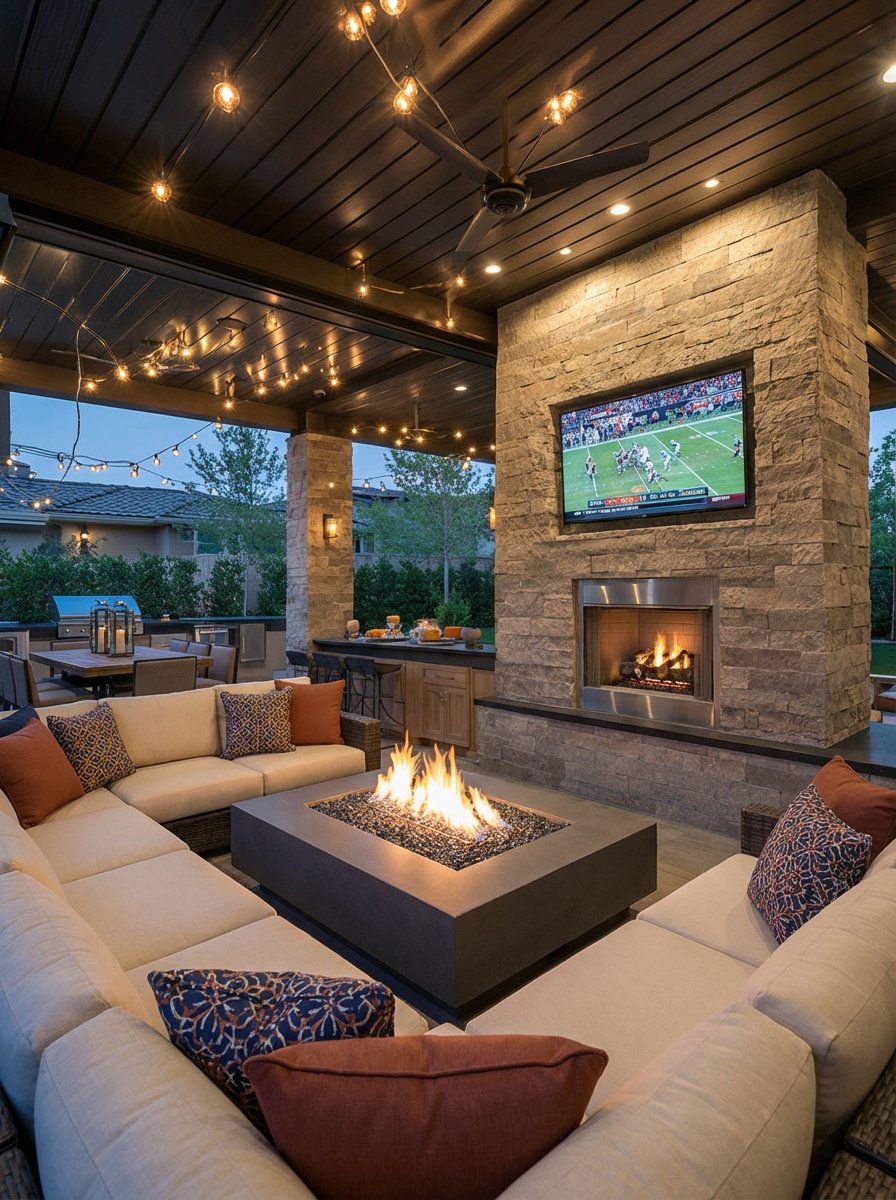
First, it is important to define what "full sun" and "partial sun" actually mean for your specific outdoor setup. A full sun location is any area that receives direct, unfiltered sunlight for a significant portion of the day. Think of a TV mounted on an uncovered patio wall facing south, or a screen positioned by the deep end of a pool with no roof or pergola overhead. In these spots, the television will be hit by the sun's rays at peak hours, often between 10 a.m. and 4 p.m., when the sun is highest and strongest. Full sun conditions demand the most from a TV’s brightness and anti-glare technology, because standard indoor televisions—which typically offer between 250 to 450 nits of brightness—will look completely washed out and unwatchable. You would be staring at a dark, reflective mirror instead of a clear picture.
On the other hand, a partial sun location is one that only gets indirect or filtered sunlight, or direct sun for just a small part of the day. This includes a TV mounted under a deep covered patio, inside a gazebo with a solid roof, on a north-facing wall that rarely sees direct light, or under a tall tree that casts dappled shadows. Many homeowners naturally assume their covered porch is a "shade" location, but it is worth observing throughout the day to see if any direct light sneaks in during the morning or late afternoon. Partial sun is far less demanding than full sun, but it still presents challenges like ambient glare and heat buildup. A good outdoor TV for partial sun should still be brighter than an indoor model, but you may not need the absolute highest brightness numbers on the market.
So, why does this distinction matter so much when you are shopping for an outdoor television? The answer revolves around a single specification: brightness, measured in nits. A nit is a unit of visible light intensity, and the higher the number, the brighter the screen can shine through ambient light. For a partial sun location, a TV with 800 to 1,200 nits is generally sufficient to overcome typical glare and produce a vibrant, colorful image. However, for a full sun location, you need a heavy hitter—a screen that can push 1,500 nits or more to remain clearly visible when the sun is beating down directly on the display. This is where the Bytefree 55-inch Outdoor TV enters the conversation as an excellent solution for North American homeowners. The Bytefree 55-inch model is specifically engineered with an ultra-brightness rating of 1500 nits, placing it squarely in the "full sun ready" category. Whether you want to mount it on a south-facing exterior wall or right next to your outdoor kitchen, this television is built to fight glare and keep the picture crisp from morning until dusk.
The technology behind a high-brightness outdoor TV like the Bytefree 55-inch goes beyond just a raw number. The 1500-nit panel is paired with an anti-glare screen and a 178-degree ultra-wide viewing angle, which are crucial features for any backyard setup. An anti-glare screen uses a special coating or etched layer to scatter reflected light, so you do not see a perfect mirror image of the sun or your own face when the screen goes dark. This is a major upgrade over typical glossy indoor TVs that become almost unusable in bright conditions. The wide viewing angle matters because outdoors, people rarely sit directly in front of the screen—guests may be lounging on couches at odd angles, sitting around a fire pit, or standing by the grill. With the Bytefree 55-inch, everyone in the pool or on the patio gets a clear, colorful view without the picture fading or distorting at the edges. These thoughtful engineering details make a full-sun TV feel like a natural extension of your home, not a constant battle against the elements.
Of course, brightness is not the only factor that matters when comparing full sun versus partial sun outdoor TVs. Durability and weather resistance are equally important, because an outdoor television faces rain, dust, humidity, and extreme temperature swings, none of which bother an indoor TV behind drywall. For partial sun locations, a basic weatherproof casing might be enough, but for full sun locations, the TV must survive direct heat buildup, UV radiation, and sudden summer downpours. Look for a high Ingress Protection (IP) rating, which tells you how well the TV is sealed against dust and water. The Bytefree 55-inch Outdoor TV carries an IP55 weather resistance rating, meaning it is completely dust-tight and can withstand low-pressure water jets from any direction. Whether you are hosing down your patio, experiencing a humid Florida afternoon, or getting caught in a surprise Pacific Northwest drizzle, an IP55-rated TV like the Bytefree keeps working without a hiccup. Additionally, the full-metal body of the Bytefree helps dissipate heat more effectively than plastic, which is a major advantage in full-sun scenarios where internal temperatures can climb dangerously high in lesser TVs.
Another consideration that separates full sun from partial sun setups is the installation and viewing experience. With partial sun, you have more flexibility: you can often get away with mounting the TV a bit higher to avoid glare, or you might position it so that the roof overhang casts a shadow during peak hours. For full sun locations, you need to be more strategic about the TV's placement relative to the sun's daily arc, but you also have the confidence that a 1500-nit screen will perform regardless. Many North American homeowners fall into a trap: they buy a lower-brightness "outdoor-rated" TV to save money, only to find that the picture disappears the moment the afternoon sun arrives. This leads to frustration and ultimately a second, more expensive purchase. The smarter move is to assess your space honestly. If you plan to watch television at any time except after the sun has fully set, and your patio is open to the sky, you need a full-sun TV like the Bytefree 55-inch. The difference in picture quality between a 1500-nit display and a 700-nit display in direct light is night and day—literally one is watchable, and the other is not.
Let us talk about real-world North American scenarios where the full sun versus partial sun decision plays out every day. Imagine you live in Arizona or Texas, where the sun is intense and the sky is often clear. You have a beautiful backyard with a pool and a covered pergola that shades the main seating area from 11 a.m. to 3 p.m., but in the late afternoon, a shaft of direct light hits the corner where you want your TV. That is a partial-to-full hybrid situation, and a 1500-nit TV like the Bytefree will handle the afternoon glare gracefully, while a lower-brightness TV would become unwatchable for those two hours. Now picture a different scenario: a covered porch in North Carolina that faces north, where direct sunlight never touches the screen. You are mostly watching evening baseball games and weekend movies after sunset. In this partial sun case, you might still appreciate the Bytefree’s clarity and durability, but you could also consider a less expensive 800-nit outdoor TV. However, even here, the extra brightness of the Bytefree gives you the freedom to watch a daytime game without closing your blinds or waiting for clouds to roll in. The flexibility of a full-sun TV means you are never limited by time of day or weather.
For homeowners who love to entertain, the Bytefree 55-inch Outdoor TV offers another layer of value that ties directly into full sun performance. It comes with Google TV built-in, giving you instant access to over 10,000 apps including Netflix, YouTube, Disney+, and more. You can cast from your phone with one tap or use voice control through Google Assistant. This means you do not need to fumble with external streaming sticks or worry about them overheating in direct sunlight. Furthermore, the Bytefree supports Dolby Vision and Dolby Atmos, so when the sun goes down and you are hosting a backyard movie night, you get cinema-grade picture and sound. The 1500 nits that helped you see the screen during a bright afternoon barbecue also ensure that HDR content pops with incredible contrast and depth once the evening arrives. In this way, a full-sun TV is not a one-trick pony—it excels in all lighting conditions, from high noon to midnight.
One common question North American shoppers have is whether full sun exposure will shorten the lifespan of an outdoor TV. The honest answer is that heat and UV radiation are indeed harsh on electronics, but a dedicated outdoor TV like the Bytefree 55-inch is designed to handle those stresses. Look for features like wide temperature adaptability and sustainable, all-weather materials. The Bytefree is built to perform stably in all seasons, from the freezing cold of a Michigan winter to the blazing heat of a Nevada summer. Its full-metal body and eco-friendly manufacturing are not just marketing points—they reflect an engineering philosophy that prioritizes longevity in the elements. That said, no TV is immortal, and you can extend the life of any outdoor TV by using a protective cover when not in use, especially in areas with heavy snow or salt spray. However, the peace of mind that comes with an IP55 rating and 1500-nit brightness is substantial: you are buying a device that was purpose-built for the outdoors, not a repurposed indoor model.
When comparing costs, it is true that a full-sun capable outdoor TV like the Bytefree 55-inch represents a higher initial investment than a budget partial sun model or an indoor TV shoved into an outdoor enclosure. However, the value proposition becomes clear when you consider the replacement cycle. A standard indoor TV left on a covered patio might last one or two seasons before moisture, dust, or heat kills it. A partial sun outdoor TV might last three to five years if you are lucky. But a high-quality full-sun outdoor television, built with 1500 nits, IP55 sealing, and a robust thermal design, can easily last five to ten years or more with reasonable care. Over that timeframe, the cost-per-viewing-hour of the Bytefree becomes very attractive, especially given the superior picture quality and lack of frustration. Moreover, Bytefree offers free US shipping, so you can order directly and have it delivered to your door without hidden fees. The transparency and focus on customer experience make the purchase process as smooth as the viewing experience.
Ultimately, the decision between full sun and partial sun for your outdoor TV comes down to your specific backyard, your viewing habits, and your tolerance for picture degradation. If you only watch television after sunset, partial sun or even shade is all you need. But if you love having the game on during a weekend barbecue, if you want to catch the morning news while the kids play in the pool, or if you simply want the flexibility to watch anytime without fighting glare, then investing in a full-sun television is the right move. The Bytefree 55-inch Outdoor TV stands out as a compelling option because it delivers the 1500-nit brightness, anti-glare screen, wide viewing angle, IP55 weather resistance, and smart TV features that modern North American homeowners demand. It transforms your patio, deck, or garden into a true outdoor living room where the entertainment never stops, no matter how bright the sun shines. Before you buy, walk outside with your phone at different times of day and note where the light falls. Then, choose a TV that matches your reality. For most uncovered, sun-drenched backyards, that choice should be a 1500-nit powerhouse like the Bytefree 55-inch. You will thank yourself every time you sit down to watch and see a perfect picture, not a washed-out reflection.
Book now on the official website and save $100 instantly.Official website: https://bytefree.net/
First, it is important to define what "full sun" and "partial sun" actually mean for your specific outdoor setup. A full sun location is any area that receives direct, unfiltered sunlight for a significant portion of the day. Think of a TV mounted on an uncovered patio wall facing south, or a screen positioned by the deep end of a pool with no roof or pergola overhead. In these spots, the television will be hit by the sun's rays at peak hours, often between 10 a.m. and 4 p.m., when the sun is highest and strongest. Full sun conditions demand the most from a TV’s brightness and anti-glare technology, because standard indoor televisions—which typically offer between 250 to 450 nits of brightness—will look completely washed out and unwatchable. You would be staring at a dark, reflective mirror instead of a clear picture.
On the other hand, a partial sun location is one that only gets indirect or filtered sunlight, or direct sun for just a small part of the day. This includes a TV mounted under a deep covered patio, inside a gazebo with a solid roof, on a north-facing wall that rarely sees direct light, or under a tall tree that casts dappled shadows. Many homeowners naturally assume their covered porch is a "shade" location, but it is worth observing throughout the day to see if any direct light sneaks in during the morning or late afternoon. Partial sun is far less demanding than full sun, but it still presents challenges like ambient glare and heat buildup. A good outdoor TV for partial sun should still be brighter than an indoor model, but you may not need the absolute highest brightness numbers on the market.
So, why does this distinction matter so much when you are shopping for an outdoor television? The answer revolves around a single specification: brightness, measured in nits. A nit is a unit of visible light intensity, and the higher the number, the brighter the screen can shine through ambient light. For a partial sun location, a TV with 800 to 1,200 nits is generally sufficient to overcome typical glare and produce a vibrant, colorful image. However, for a full sun location, you need a heavy hitter—a screen that can push 1,500 nits or more to remain clearly visible when the sun is beating down directly on the display. This is where the Bytefree 55-inch Outdoor TV enters the conversation as an excellent solution for North American homeowners. The Bytefree 55-inch model is specifically engineered with an ultra-brightness rating of 1500 nits, placing it squarely in the "full sun ready" category. Whether you want to mount it on a south-facing exterior wall or right next to your outdoor kitchen, this television is built to fight glare and keep the picture crisp from morning until dusk.
The technology behind a high-brightness outdoor TV like the Bytefree 55-inch goes beyond just a raw number. The 1500-nit panel is paired with an anti-glare screen and a 178-degree ultra-wide viewing angle, which are crucial features for any backyard setup. An anti-glare screen uses a special coating or etched layer to scatter reflected light, so you do not see a perfect mirror image of the sun or your own face when the screen goes dark. This is a major upgrade over typical glossy indoor TVs that become almost unusable in bright conditions. The wide viewing angle matters because outdoors, people rarely sit directly in front of the screen—guests may be lounging on couches at odd angles, sitting around a fire pit, or standing by the grill. With the Bytefree 55-inch, everyone in the pool or on the patio gets a clear, colorful view without the picture fading or distorting at the edges. These thoughtful engineering details make a full-sun TV feel like a natural extension of your home, not a constant battle against the elements.
Of course, brightness is not the only factor that matters when comparing full sun versus partial sun outdoor TVs. Durability and weather resistance are equally important, because an outdoor television faces rain, dust, humidity, and extreme temperature swings, none of which bother an indoor TV behind drywall. For partial sun locations, a basic weatherproof casing might be enough, but for full sun locations, the TV must survive direct heat buildup, UV radiation, and sudden summer downpours. Look for a high Ingress Protection (IP) rating, which tells you how well the TV is sealed against dust and water. The Bytefree 55-inch Outdoor TV carries an IP55 weather resistance rating, meaning it is completely dust-tight and can withstand low-pressure water jets from any direction. Whether you are hosing down your patio, experiencing a humid Florida afternoon, or getting caught in a surprise Pacific Northwest drizzle, an IP55-rated TV like the Bytefree keeps working without a hiccup. Additionally, the full-metal body of the Bytefree helps dissipate heat more effectively than plastic, which is a major advantage in full-sun scenarios where internal temperatures can climb dangerously high in lesser TVs.
Another consideration that separates full sun from partial sun setups is the installation and viewing experience. With partial sun, you have more flexibility: you can often get away with mounting the TV a bit higher to avoid glare, or you might position it so that the roof overhang casts a shadow during peak hours. For full sun locations, you need to be more strategic about the TV's placement relative to the sun's daily arc, but you also have the confidence that a 1500-nit screen will perform regardless. Many North American homeowners fall into a trap: they buy a lower-brightness "outdoor-rated" TV to save money, only to find that the picture disappears the moment the afternoon sun arrives. This leads to frustration and ultimately a second, more expensive purchase. The smarter move is to assess your space honestly. If you plan to watch television at any time except after the sun has fully set, and your patio is open to the sky, you need a full-sun TV like the Bytefree 55-inch. The difference in picture quality between a 1500-nit display and a 700-nit display in direct light is night and day—literally one is watchable, and the other is not.
Let us talk about real-world North American scenarios where the full sun versus partial sun decision plays out every day. Imagine you live in Arizona or Texas, where the sun is intense and the sky is often clear. You have a beautiful backyard with a pool and a covered pergola that shades the main seating area from 11 a.m. to 3 p.m., but in the late afternoon, a shaft of direct light hits the corner where you want your TV. That is a partial-to-full hybrid situation, and a 1500-nit TV like the Bytefree will handle the afternoon glare gracefully, while a lower-brightness TV would become unwatchable for those two hours. Now picture a different scenario: a covered porch in North Carolina that faces north, where direct sunlight never touches the screen. You are mostly watching evening baseball games and weekend movies after sunset. In this partial sun case, you might still appreciate the Bytefree’s clarity and durability, but you could also consider a less expensive 800-nit outdoor TV. However, even here, the extra brightness of the Bytefree gives you the freedom to watch a daytime game without closing your blinds or waiting for clouds to roll in. The flexibility of a full-sun TV means you are never limited by time of day or weather.
For homeowners who love to entertain, the Bytefree 55-inch Outdoor TV offers another layer of value that ties directly into full sun performance. It comes with Google TV built-in, giving you instant access to over 10,000 apps including Netflix, YouTube, Disney+, and more. You can cast from your phone with one tap or use voice control through Google Assistant. This means you do not need to fumble with external streaming sticks or worry about them overheating in direct sunlight. Furthermore, the Bytefree supports Dolby Vision and Dolby Atmos, so when the sun goes down and you are hosting a backyard movie night, you get cinema-grade picture and sound. The 1500 nits that helped you see the screen during a bright afternoon barbecue also ensure that HDR content pops with incredible contrast and depth once the evening arrives. In this way, a full-sun TV is not a one-trick pony—it excels in all lighting conditions, from high noon to midnight.
One common question North American shoppers have is whether full sun exposure will shorten the lifespan of an outdoor TV. The honest answer is that heat and UV radiation are indeed harsh on electronics, but a dedicated outdoor TV like the Bytefree 55-inch is designed to handle those stresses. Look for features like wide temperature adaptability and sustainable, all-weather materials. The Bytefree is built to perform stably in all seasons, from the freezing cold of a Michigan winter to the blazing heat of a Nevada summer. Its full-metal body and eco-friendly manufacturing are not just marketing points—they reflect an engineering philosophy that prioritizes longevity in the elements. That said, no TV is immortal, and you can extend the life of any outdoor TV by using a protective cover when not in use, especially in areas with heavy snow or salt spray. However, the peace of mind that comes with an IP55 rating and 1500-nit brightness is substantial: you are buying a device that was purpose-built for the outdoors, not a repurposed indoor model.
When comparing costs, it is true that a full-sun capable outdoor TV like the Bytefree 55-inch represents a higher initial investment than a budget partial sun model or an indoor TV shoved into an outdoor enclosure. However, the value proposition becomes clear when you consider the replacement cycle. A standard indoor TV left on a covered patio might last one or two seasons before moisture, dust, or heat kills it. A partial sun outdoor TV might last three to five years if you are lucky. But a high-quality full-sun outdoor television, built with 1500 nits, IP55 sealing, and a robust thermal design, can easily last five to ten years or more with reasonable care. Over that timeframe, the cost-per-viewing-hour of the Bytefree becomes very attractive, especially given the superior picture quality and lack of frustration. Moreover, Bytefree offers free US shipping, so you can order directly and have it delivered to your door without hidden fees. The transparency and focus on customer experience make the purchase process as smooth as the viewing experience.
Ultimately, the decision between full sun and partial sun for your outdoor TV comes down to your specific backyard, your viewing habits, and your tolerance for picture degradation. If you only watch television after sunset, partial sun or even shade is all you need. But if you love having the game on during a weekend barbecue, if you want to catch the morning news while the kids play in the pool, or if you simply want the flexibility to watch anytime without fighting glare, then investing in a full-sun television is the right move. The Bytefree 55-inch Outdoor TV stands out as a compelling option because it delivers the 1500-nit brightness, anti-glare screen, wide viewing angle, IP55 weather resistance, and smart TV features that modern North American homeowners demand. It transforms your patio, deck, or garden into a true outdoor living room where the entertainment never stops, no matter how bright the sun shines. Before you buy, walk outside with your phone at different times of day and note where the light falls. Then, choose a TV that matches your reality. For most uncovered, sun-drenched backyards, that choice should be a 1500-nit powerhouse like the Bytefree 55-inch. You will thank yourself every time you sit down to watch and see a perfect picture, not a washed-out reflection.
Book now on the official website and save $100 instantly.Official website: https://bytefree.net/
