


Catalogs Hide
The smart platform on your outdoor TV affects daily use more than most buying decisions recognize. Google TV, Tizen, Android TV, webOS, and XUMO TV each behave differently in real-world outdoor use — and the platform you pick determines streaming reliability, app availability, voice search quality, and how long your TV stays "current" before becoming obsolete.
Here's the honest comparison of outdoor TV smart platforms in 2026, and which platform actually matters for your use case.
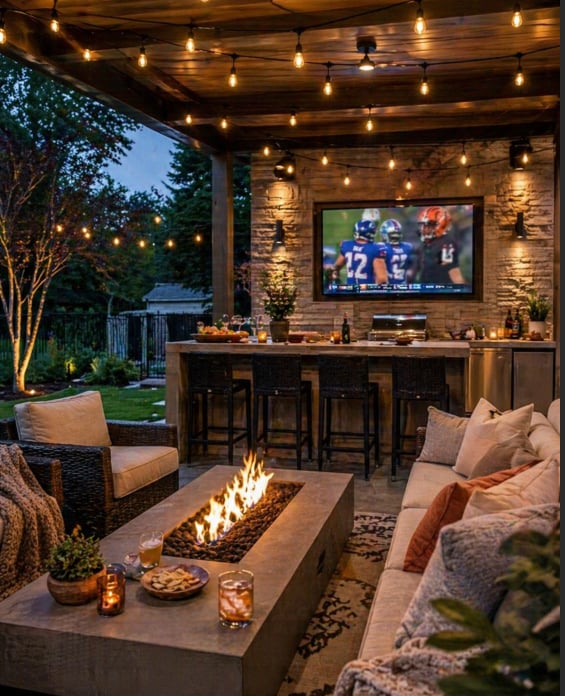
Three reasons platform choice matters more outdoors than indoors:
App reliability under weak network conditions. Outdoor TVs often face weaker Wi-Fi than indoor units (distance from router, weather effects on 5GHz signals). Smart platforms vary significantly in how well they handle marginal network conditions — some apps gracefully reduce resolution, others crash and require restart.
Update support timeline. Outdoor TVs are typically used 7-10 years. The platform's update support timeline determines whether your TV continues to work with current streaming services years from now or becomes a "dumb display" requiring an external streaming device.
Recovery from failure modes. Outdoor TVs experience occasional smart platform freezes, app crashes, and connectivity issues. Recovery experience varies by platform — some require frustrating multi-step reboots, others recover automatically.
The right platform reduces these friction points throughout the TV's life. The wrong platform creates daily friction that compounds over years of ownership.
Models running Google TV: Sylvox DeckPro 2.0+, Sylvox Pool Pro 2.0+, Sylvox Cinema, ByteFree BF-55ODTV, multiple newer outdoor TV launches
App ecosystem: The largest outdoor TV app library — virtually every major streaming service is supported natively (Netflix, Disney+, HBO Max, Apple TV+, Hulu, Amazon Prime, Peacock, Paramount+, ESPN+, YouTube TV, MLS Season Pass, NBA League Pass, NFL Sunday Ticket, all major sports streaming).
Update cycle: Google maintains Google TV with regular updates. Smart TV manufacturers typically receive 4-6 years of OS updates after model launch.
Voice search: Google Assistant integration delivers strong voice search quality across content libraries.
Network resilience: Generally robust with weak networks. Apps gracefully reduce resolution rather than crashing. Buffering is visible but not catastrophic.
Best for: Households streaming across multiple platforms, sports-focused use (broadest sports app support), buyers wanting maximum app flexibility.
Models running Tizen: Samsung The Terrace LST7D, LST9D, and the rest of Samsung's outdoor TV lineup
App ecosystem: Strong with most major services natively. Some occasional gaps with regional or specialized streaming services. Strong integration with Samsung ecosystem (SmartThings, Samsung soundbars, Samsung Pay for in-app purchases).
Update cycle: Samsung historically delivers 4-6 years of OS updates on premium models. The Terrace, as a flagship, gets longer support than budget Samsung lines.
Voice search: Bixby integration. Quality is acceptable but generally rated below Google Assistant for content discovery.
Network resilience: Comparable to Google TV — robust with weak networks.
Best for: Samsung-ecosystem households, premium installations, buyers prioritizing Samsung's brand integration, audiophile setups using Samsung soundbars.
Models running Android TV: SunBrite Veranda 3, older outdoor TV inventory still in market
App ecosystem: Largely identical to Google TV (both are Google-based). The interface is older and slightly less polished than Google TV's reorganization.
Update cycle: Slower update path than Google TV. Some Android TV models receive only 3-4 years of updates before being discontinued.
Network resilience: Comparable to Google TV in app behavior.
Difference from Google TV: Same apps, less polished interface, sometimes slightly slower performance, shorter typical update timeline.
Best for: Buyers specifically wanting SunBrite (the major Android TV outdoor TV brand) for brand reasons, secondary outdoor TVs at budget price points.
Models running webOS: Furrion Aurora Partial-Sun, Furrion Aurora Full-Sun
App ecosystem: Major streaming services covered (Netflix, Prime, Disney+, Apple TV+, Hulu). Smaller library than Google TV/Tizen — some specialty sports streaming services may require external streaming devices.
Update cycle: LG maintains webOS with regular updates, but on Furrion implementations the update timeline can be slower than direct LG TVs.
Voice search: LG ThinQ AI integration. Voice quality is acceptable for content discovery but less refined than Google Assistant.
Network resilience: Mixed — performance varies by model and specific app. Live sports streaming particularly can show degradation under weak networks.
Best for: Furrion-specific buyers, budget-tier installations, secondary outdoor TVs.
Models running XUMO TV: Element EP500AE55C, some newer Vizio outdoor TV launches
App ecosystem: Most limited of the major platforms. Major services covered (Netflix, YouTube, Pluto TV, Tubi). Specialty apps and many sports services require external streaming devices.
Update cycle: Newer platform — long-term update commitment is unclear.
Voice search: Basic, not directly competitive with Google Assistant or Bixby.
Network resilience: The most variable — apps can crash on weak networks rather than buffering gracefully.
Best for: Budget-conscious buyers in fully shaded installations, secondary outdoor TVs where smart platform isn't a primary priority.
You watch across multiple streaming services. You prioritize sports streaming reliability. You don't have strong existing brand ecosystem preferences. You want maximum app flexibility and longest expected support timeline.
This is the right answer for most US residential outdoor TV buyers.
You have Samsung phones, tablets, or other Samsung products. You're investing in premium tier outdoor entertainment ($3,500+). You value the Samsung ecosystem integration daily. You're building a Samsung-centric home environment.
You specifically want SunBrite for brand-name reliability or installer support. You don't care about update timeline differences from Google TV. You have a custom integrator recommending SunBrite.
You specifically want Furrion's price tier. You're comfortable with potentially needing external streaming device for specialty content. You have a fully shaded install where TV smart platform matters less than brightness/audio specs.
You're buying primarily for budget reasons. You're already planning to use external streaming devices for primary content. You want a backup TV in a secondary outdoor space where the smart platform isn't critical.
For any outdoor TV, you can bypass the built-in smart platform entirely by connecting an external streaming device:
When external streaming devices make sense:
For premium installations, an Apple TV 4K added to any outdoor TV often delivers better daily streaming experience than the TV's built-in platform — at $130, it's a high-ROI add-on.
Common smart platform mistakes:
The smart platform affects daily use throughout the TV's life. Treating it as an afterthought leads to years of frustrating workarounds. Spend 15 minutes evaluating before purchase, not 7 years adapting to a poor choice.
Samsung's indoor TV brand reputation doesn't translate fully to Tizen on outdoor TVs. SunBrite's outdoor TV brand reputation doesn't change Android TV's update timeline. The platform is a separate spec from the brand.
A 2026 outdoor TV with 4-year platform updates becomes "dumb" in 2030. Plan for this — either choose longer-update platforms or budget for streaming device upgrades when platform support ends.
Voice search quality matters less in outdoor environments where ambient noise interferes with accurate voice recognition anyway. Don't pay premium for voice quality you won't use reliably outdoors.
Even on perfect platforms, things go wrong. Having an external streaming device ($50-$200) provides redundancy when the built-in platform has issues. This is small budget compared to TV cost, but most buyers skip this.
Google TV is the best choice for most outdoor TV buyers — largest app library, longest update timeline among current platforms, broad sports streaming support, and strong network resilience. The ByteFree BF-55ODTV (Google TV) and Sylvox DeckPro 2.0+ (Google TV) deliver this platform at $1,499-$1,599. For premium installations where Samsung ecosystem matters, Tizen (Samsung The Terrace) is the right choice.
For most users, yes — Google TV has a larger app library and slightly broader sports streaming support. For Samsung-ecosystem households, Tizen delivers better integration with other Samsung devices and is the right choice. The platforms are more similar than different in core functionality; the right choice depends on your other devices and preferences.
Typically 4-6 years on premium models. Google TV and Tizen lead with 4-6 year update timelines on flagship models. Android TV typically gets 3-4 years. webOS varies by manufacturer (LG models get longer support than Furrion-branded webOS implementations). XUMO TV's long-term timeline is uncertain (newer platform).
Yes — Apple TV 4K ($130) connects via HDMI to any outdoor TV with HDMI input. This bypasses the built-in smart platform entirely and delivers Apple TV's content library and interface. For premium installations, this is often the best path regardless of the TV's built-in platform — Apple TV's network handling and app reliability typically exceed even Google TV.
Not strictly — you can use any outdoor TV with external streaming devices (Apple TV, Roku, Chromecast). However, modern outdoor TVs include smart platforms anyway, and a good built-in platform reduces equipment count and remote complexity. The decision is whether to rely on the built-in platform or supplement with external devices, not whether to need a smart platform at all.
For most US residential outdoor TV buyers, Google TV is the right smart platform choice — broadest app library, strongest sports streaming support, longest expected update timeline, and best network resilience. The platform is well-supported across multiple outdoor TV brands at multiple price points.
Quick decision matrix:
For warm-climate partial-sun residential installations where Google TV's app flexibility serves the most common use cases, the ByteFree BF-55ODTV at $1,499 combines the platform with appropriate brightness (1,500 nits) and audio (30W Dolby Atmos) for typical use. Add an Apple TV 4K ($130) for households where streaming reliability is critical — particularly for Super Bowl Sunday hosting or playoff-game viewing.
The platform decision affects years of daily use. Don't optimize for the wrong factor; choose the platform that matches your actual content consumption patterns.
Related reading:
Here's the honest comparison of outdoor TV smart platforms in 2026, and which platform actually matters for your use case.
Why Smart Platform Matters Outdoors
Three reasons platform choice matters more outdoors than indoors:
App reliability under weak network conditions. Outdoor TVs often face weaker Wi-Fi than indoor units (distance from router, weather effects on 5GHz signals). Smart platforms vary significantly in how well they handle marginal network conditions — some apps gracefully reduce resolution, others crash and require restart.
Update support timeline. Outdoor TVs are typically used 7-10 years. The platform's update support timeline determines whether your TV continues to work with current streaming services years from now or becomes a "dumb display" requiring an external streaming device.
Recovery from failure modes. Outdoor TVs experience occasional smart platform freezes, app crashes, and connectivity issues. Recovery experience varies by platform — some require frustrating multi-step reboots, others recover automatically.
The right platform reduces these friction points throughout the TV's life. The wrong platform creates daily friction that compounds over years of ownership.
The Five Major Outdoor TV Smart Platforms in 2026
Google TV (Android TV's Successor)
Models running Google TV: Sylvox DeckPro 2.0+, Sylvox Pool Pro 2.0+, Sylvox Cinema, ByteFree BF-55ODTV, multiple newer outdoor TV launches
App ecosystem: The largest outdoor TV app library — virtually every major streaming service is supported natively (Netflix, Disney+, HBO Max, Apple TV+, Hulu, Amazon Prime, Peacock, Paramount+, ESPN+, YouTube TV, MLS Season Pass, NBA League Pass, NFL Sunday Ticket, all major sports streaming).
Update cycle: Google maintains Google TV with regular updates. Smart TV manufacturers typically receive 4-6 years of OS updates after model launch.
Voice search: Google Assistant integration delivers strong voice search quality across content libraries.
Network resilience: Generally robust with weak networks. Apps gracefully reduce resolution rather than crashing. Buffering is visible but not catastrophic.
Best for: Households streaming across multiple platforms, sports-focused use (broadest sports app support), buyers wanting maximum app flexibility.
Tizen (Samsung's Platform)
Models running Tizen: Samsung The Terrace LST7D, LST9D, and the rest of Samsung's outdoor TV lineup
App ecosystem: Strong with most major services natively. Some occasional gaps with regional or specialized streaming services. Strong integration with Samsung ecosystem (SmartThings, Samsung soundbars, Samsung Pay for in-app purchases).
Update cycle: Samsung historically delivers 4-6 years of OS updates on premium models. The Terrace, as a flagship, gets longer support than budget Samsung lines.
Voice search: Bixby integration. Quality is acceptable but generally rated below Google Assistant for content discovery.
Network resilience: Comparable to Google TV — robust with weak networks.
Best for: Samsung-ecosystem households, premium installations, buyers prioritizing Samsung's brand integration, audiophile setups using Samsung soundbars.
Android TV (Older Implementation)
Models running Android TV: SunBrite Veranda 3, older outdoor TV inventory still in market
App ecosystem: Largely identical to Google TV (both are Google-based). The interface is older and slightly less polished than Google TV's reorganization.
Update cycle: Slower update path than Google TV. Some Android TV models receive only 3-4 years of updates before being discontinued.
Network resilience: Comparable to Google TV in app behavior.
Difference from Google TV: Same apps, less polished interface, sometimes slightly slower performance, shorter typical update timeline.
Best for: Buyers specifically wanting SunBrite (the major Android TV outdoor TV brand) for brand reasons, secondary outdoor TVs at budget price points.
webOS (LG's Platform)
Models running webOS: Furrion Aurora Partial-Sun, Furrion Aurora Full-Sun
App ecosystem: Major streaming services covered (Netflix, Prime, Disney+, Apple TV+, Hulu). Smaller library than Google TV/Tizen — some specialty sports streaming services may require external streaming devices.
Update cycle: LG maintains webOS with regular updates, but on Furrion implementations the update timeline can be slower than direct LG TVs.
Voice search: LG ThinQ AI integration. Voice quality is acceptable for content discovery but less refined than Google Assistant.
Network resilience: Mixed — performance varies by model and specific app. Live sports streaming particularly can show degradation under weak networks.
Best for: Furrion-specific buyers, budget-tier installations, secondary outdoor TVs.
XUMO TV (Element / Vizio Newer Models)
Models running XUMO TV: Element EP500AE55C, some newer Vizio outdoor TV launches
App ecosystem: Most limited of the major platforms. Major services covered (Netflix, YouTube, Pluto TV, Tubi). Specialty apps and many sports services require external streaming devices.
Update cycle: Newer platform — long-term update commitment is unclear.
Voice search: Basic, not directly competitive with Google Assistant or Bixby.
Network resilience: The most variable — apps can crash on weak networks rather than buffering gracefully.
Best for: Budget-conscious buyers in fully shaded installations, secondary outdoor TVs where smart platform isn't a primary priority.
Side-by-Side Smart Platform Comparison
| Feature | Google TV | Tizen | Android TV | webOS | XUMO TV |
|---|---|---|---|---|---|
| App library size | Largest | Large | Same as Google TV | Medium | Smallest |
| Sports streaming | Excellent | Excellent | Excellent | Good | Limited |
| Update timeline | 4-6 years | 4-6 years | 3-4 years | 3-5 years | Unknown |
| Voice quality | Best | Good | Best (same as Google TV) | Good | Basic |
| Weak network behavior | Robust | Robust | Robust | Variable | Variable |
| Common outdoor TV brands | Sylvox, ByteFree | Samsung | SunBrite | Furrion | Element |
| Premium tier alignment | Mid-tier focus | Premium | Mid-tier focus | Value tier | Budget |
When Each Platform Is the Right Choice
Choose Google TV if:
You watch across multiple streaming services. You prioritize sports streaming reliability. You don't have strong existing brand ecosystem preferences. You want maximum app flexibility and longest expected support timeline.
This is the right answer for most US residential outdoor TV buyers.
Choose Tizen (Samsung) if:
You have Samsung phones, tablets, or other Samsung products. You're investing in premium tier outdoor entertainment ($3,500+). You value the Samsung ecosystem integration daily. You're building a Samsung-centric home environment.
Choose Android TV (SunBrite) if:
You specifically want SunBrite for brand-name reliability or installer support. You don't care about update timeline differences from Google TV. You have a custom integrator recommending SunBrite.
Choose webOS (Furrion) if:
You specifically want Furrion's price tier. You're comfortable with potentially needing external streaming device for specialty content. You have a fully shaded install where TV smart platform matters less than brightness/audio specs.
Choose XUMO TV (Element) if:
You're buying primarily for budget reasons. You're already planning to use external streaming devices for primary content. You want a backup TV in a secondary outdoor space where the smart platform isn't critical.
The Streaming Device Workaround
For any outdoor TV, you can bypass the built-in smart platform entirely by connecting an external streaming device:
- Apple TV 4K ($130): Best overall streaming reliability, excellent app library, strong network handling
- Roku Ultra ($100): Broad app library, simpler interface than Apple TV, good Wi-Fi performance
- Nvidia Shield TV ($199): Most powerful processor, best for gaming and demanding apps
- Chromecast with Google TV ($50): Lowest cost, integrates with Google ecosystem
When external streaming devices make sense:
- Your TV's built-in platform has reliability issues
- You want consistent experience across multiple TVs (indoor + outdoor)
- You're using webOS, XUMO TV, or older Android TV implementations
- Network reliability matters more than spec sheet implies
For premium installations, an Apple TV 4K added to any outdoor TV often delivers better daily streaming experience than the TV's built-in platform — at $130, it's a high-ROI add-on.
What Most Buyers Get Wrong About Smart Platforms
Common smart platform mistakes:
Treating It as a Minor Spec
The smart platform affects daily use throughout the TV's life. Treating it as an afterthought leads to years of frustrating workarounds. Spend 15 minutes evaluating before purchase, not 7 years adapting to a poor choice.
Buying Based on Brand Reputation
Samsung's indoor TV brand reputation doesn't translate fully to Tizen on outdoor TVs. SunBrite's outdoor TV brand reputation doesn't change Android TV's update timeline. The platform is a separate spec from the brand.
Ignoring Update Timeline
A 2026 outdoor TV with 4-year platform updates becomes "dumb" in 2030. Plan for this — either choose longer-update platforms or budget for streaming device upgrades when platform support ends.
Overweighting Voice Search
Voice search quality matters less in outdoor environments where ambient noise interferes with accurate voice recognition anyway. Don't pay premium for voice quality you won't use reliably outdoors.
Forgetting the Streaming Device Backup
Even on perfect platforms, things go wrong. Having an external streaming device ($50-$200) provides redundancy when the built-in platform has issues. This is small budget compared to TV cost, but most buyers skip this.
Frequently Asked Questions
Which outdoor TV smart platform is best?
Google TV is the best choice for most outdoor TV buyers — largest app library, longest update timeline among current platforms, broad sports streaming support, and strong network resilience. The ByteFree BF-55ODTV (Google TV) and Sylvox DeckPro 2.0+ (Google TV) deliver this platform at $1,499-$1,599. For premium installations where Samsung ecosystem matters, Tizen (Samsung The Terrace) is the right choice.
Is Google TV better than Tizen?
For most users, yes — Google TV has a larger app library and slightly broader sports streaming support. For Samsung-ecosystem households, Tizen delivers better integration with other Samsung devices and is the right choice. The platforms are more similar than different in core functionality; the right choice depends on your other devices and preferences.
How long do outdoor TV smart platforms get updates?
Typically 4-6 years on premium models. Google TV and Tizen lead with 4-6 year update timelines on flagship models. Android TV typically gets 3-4 years. webOS varies by manufacturer (LG models get longer support than Furrion-branded webOS implementations). XUMO TV's long-term timeline is uncertain (newer platform).
Can I use Apple TV with my outdoor TV?
Yes — Apple TV 4K ($130) connects via HDMI to any outdoor TV with HDMI input. This bypasses the built-in smart platform entirely and delivers Apple TV's content library and interface. For premium installations, this is often the best path regardless of the TV's built-in platform — Apple TV's network handling and app reliability typically exceed even Google TV.
Do outdoor TVs need a smart platform?
Not strictly — you can use any outdoor TV with external streaming devices (Apple TV, Roku, Chromecast). However, modern outdoor TVs include smart platforms anyway, and a good built-in platform reduces equipment count and remote complexity. The decision is whether to rely on the built-in platform or supplement with external devices, not whether to need a smart platform at all.
Summary
For most US residential outdoor TV buyers, Google TV is the right smart platform choice — broadest app library, strongest sports streaming support, longest expected update timeline, and best network resilience. The platform is well-supported across multiple outdoor TV brands at multiple price points.
Quick decision matrix:
- Most US residential buyers → Google TV (Sylvox DeckPro 2.0+, ByteFree BF-55ODTV)
- Samsung-ecosystem households → Tizen (Samsung The Terrace LST7D)
- Custom installer-driven projects → Android TV (SunBrite Veranda 3) acceptable
- Furrion-brand specific buyers → webOS adequate
- Budget-conscious shaded installations → XUMO TV (Element) workable
For warm-climate partial-sun residential installations where Google TV's app flexibility serves the most common use cases, the ByteFree BF-55ODTV at $1,499 combines the platform with appropriate brightness (1,500 nits) and audio (30W Dolby Atmos) for typical use. Add an Apple TV 4K ($130) for households where streaming reliability is critical — particularly for Super Bowl Sunday hosting or playoff-game viewing.
The platform decision affects years of daily use. Don't optimize for the wrong factor; choose the platform that matches your actual content consumption patterns.
Related reading:


