


Catalogs Hide
- 1 Why Brightness Is the Only Spec That Truly Matters Outdoors
- 2 What Nits Actually Mean
- 3 The Nit Tiers: What Each Range Actually Delivers
- 4 Anti-Glare Glass: The Other Half of the Brightness Equation
-
5
ByteFree BF-55ODTV: The 1,500-Nit Sweet Spot at $1,499
- 5.1
- 5.2 Brightness and display
- 5.3 Thermal management
- 5.4 Everything else
- 5.5 Where it fits
- 6 Brightness Comparison: Real Models, Real Numbers
- 7 Which Brightness Do You Actually Need?
- 8 Quick Reference Checklist
You can get the nicest outdoor TV on paper and still end up squinting at a washed-out screen at 2pm. That's not a brand problem — it's a brightness problem. And it's the number one mistake people make when buying an outdoor TV.
This guide is specifically about brightness: what the numbers mean, how much you actually need, and which models deliver in 2026.
Outside, you control nothing. The sun puts out roughly 10,000 lux on a clear day. A 400-nit TV in that environment isn't dim — it's essentially invisible. The image washes out, contrast disappears, and you're left watching a pale rectangle.
Brightness — measured in nits — is the single spec that determines whether an outdoor TV is actually watchable in your specific conditions. Everything else is secondary until you get this number right.
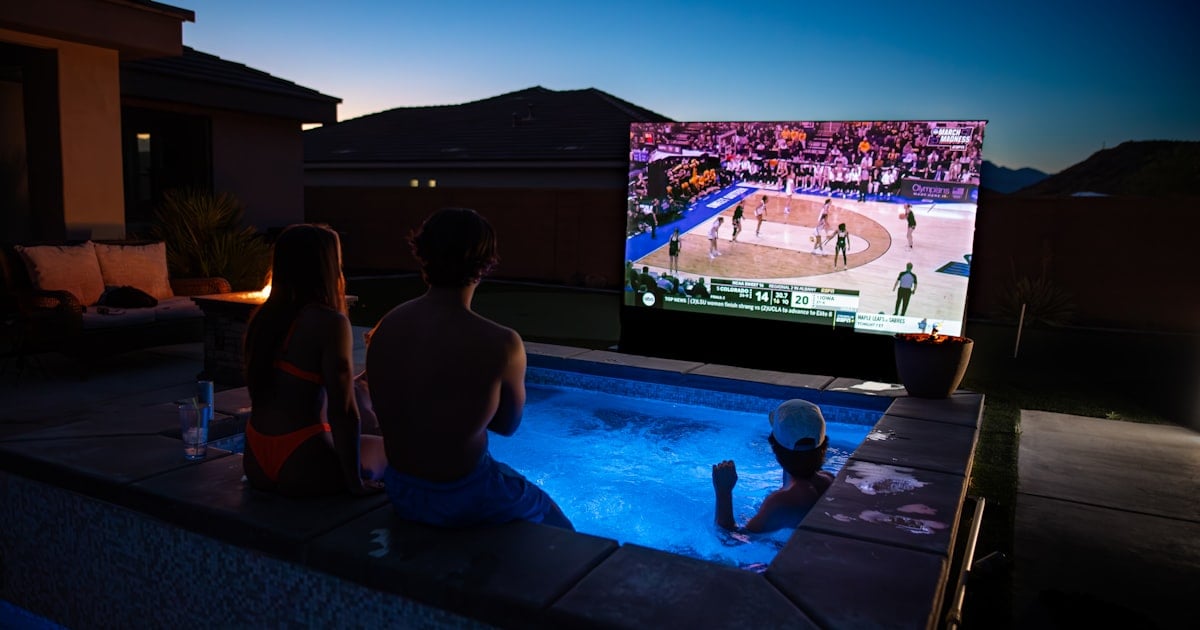
Brands throw nit numbers around loosely. A few things worth knowing:
Peak vs. sustained brightness. Some manufacturers advertise peak brightness — a number the panel hits briefly in HDR highlights. Sustained brightness is what the screen maintains during normal viewing. When comparing models, ask which number is being quoted. Most outdoor TV specs refer to peak brightness.
Panel tech affects perceived brightness. An anti-glare coating reduces reflected light, which makes the same nit count feel more legible than a standard glass panel. Two TVs at 1,500 nits can look noticeably different if one has anti-glare treatment and the other doesn't.
Photo: Fotios Photos / Pexels
Here's how the brightness landscape breaks down in 2026 — with real context, not just thresholds:
A standard glass panel reflects everything in your outdoor environment — the sky, trees, nearby walls, your neighbors. That reflected light competes directly with the TV's output and reduces perceived contrast dramatically.
Anti-glare coated glass cuts that reflection significantly. On a 1,500-nit panel with anti-glare treatment, you get noticeably better legibility than the same nit count behind standard glass. When you're evaluating any outdoor TV, confirm the glass spec — not just the nit rating.
Photo: Sylvia Zhou / Unsplash
55" | 4K UHD | 1,500 nits | D-LED | Anti-Glare Glass | IP55 | Google TV | $1,499–$1,599
The BF-55ODTV is the case study for getting the 1,500-nit tier right without the premium-brand price tag.
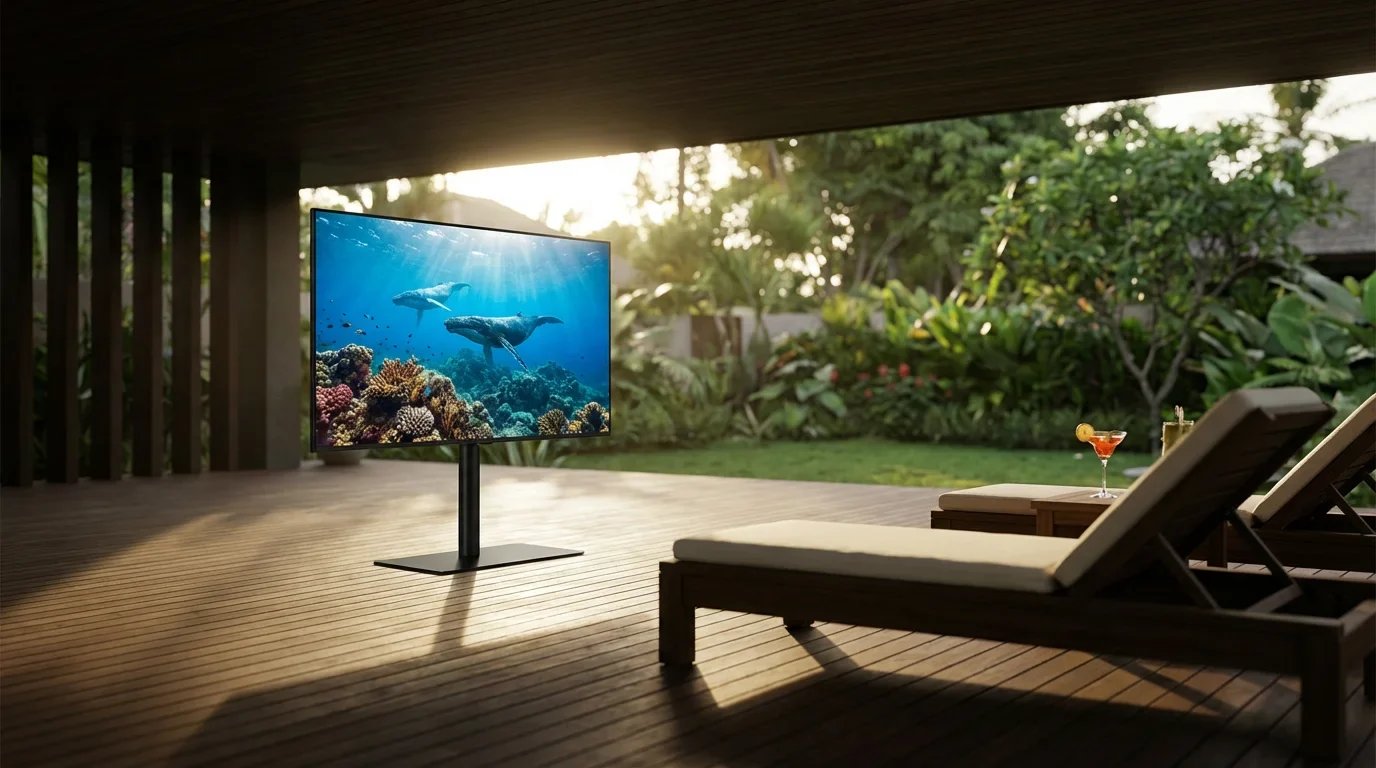
The anti-glare coating is confirmed on the spec sheet, not just implied. Combine that with the 1,500-nit output and you have a panel that genuinely holds up in partial-sun conditions across most real-world outdoor installs.
Color support is Dolby Vision and HDR10. 178° viewing angle both horizontally and vertically — relevant outdoors where viewing positions vary more than in a living room.
Package includes a waterproof remote pouch. Small detail, but anyone who has lost a regular remote to rain or poolside splashing will appreciate it.
At the 1,500-nit level, ByteFree's BF-55ODTV is $700 less than the SunBrite Veranda 3 for matching brightness specs. The SunBrite has a longer brand track record in the outdoor space — that's a real consideration — but on paper specs, ByteFree delivers the same tier for significantly less.
The Furrion Aurora at 1,500 nits also lacks confirmed anti-glare glass on the spec sheet and comes in $1,000 higher. For the same output, that's a tough sell.
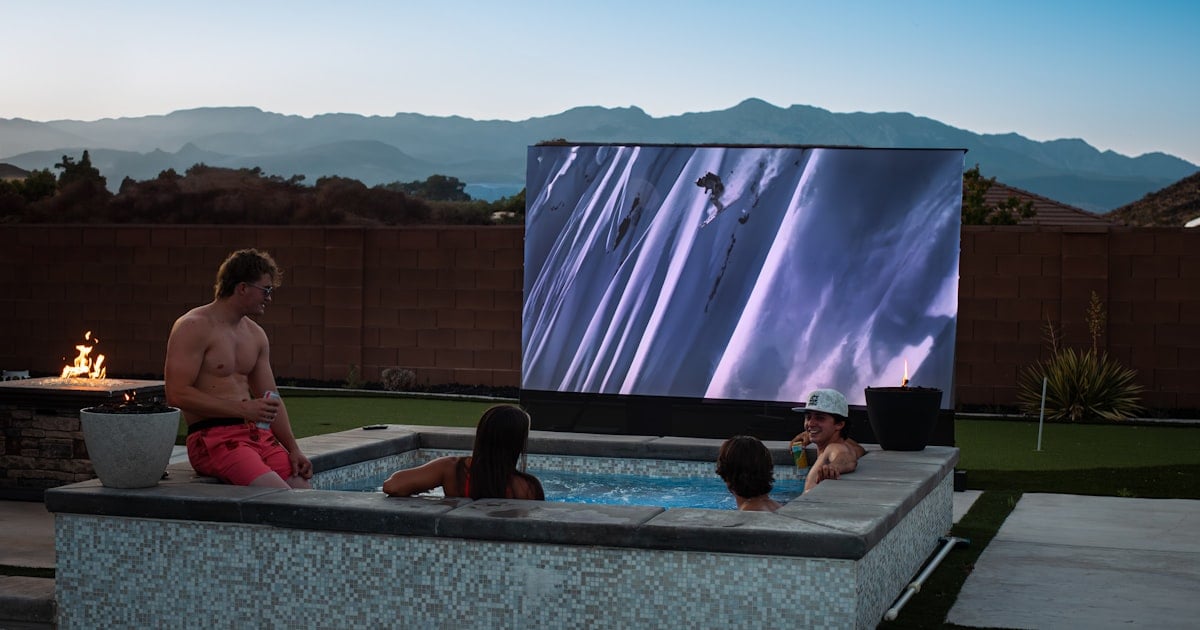
Photo: AWOL Vision / Unsplash
Before picking a tier, answer these four questions about your install:
1. What direction does the wall face?
North-facing walls get no direct sun — 1,000 nits is plenty. South-facing walls in the northern hemisphere get direct midday sun year-round — you need 2,000+. East and west face morning or afternoon sun — 1,500 nits handles it.
2. Is there overhead coverage?
A roof, pergola, or shade sail cuts ambient light significantly. A shaded install at 1,000 nits often outperforms an exposed install at 1,500 nits. Shade first, then brightness.
3. What time of day do you watch?
If you're primarily watching evenings and nights, brightness is almost irrelevant — any outdoor-rated TV at 700+ nits is fine after sunset. The brightness debate only matters if you're watching during daylight hours.
4. What's your latitude?
Buyers in Florida or southern California deal with more intense midday sun than buyers in Seattle or Minnesota. The same 1,500-nit TV performs differently depending on where you live and what angle the sun hits your screen.
Match the brightness to the install. At 1,500 nits with anti-glare glass and active cooling, the ByteFree BF-55ODTV hits the target for the majority of residential outdoor setups — and does it without the premium-brand premium price.
This guide is specifically about brightness: what the numbers mean, how much you actually need, and which models deliver in 2026.
Why Brightness Is the Only Spec That Truly Matters Outdoors
Indoor TVs are designed for rooms where you control the light. You dim the blinds, turn off the overhead lamp, and the picture looks great at 400 nits.Outside, you control nothing. The sun puts out roughly 10,000 lux on a clear day. A 400-nit TV in that environment isn't dim — it's essentially invisible. The image washes out, contrast disappears, and you're left watching a pale rectangle.
Brightness — measured in nits — is the single spec that determines whether an outdoor TV is actually watchable in your specific conditions. Everything else is secondary until you get this number right.
What Nits Actually Mean
One nit equals one candela per square meter. It measures how much light the screen emits toward your eyes. More nits = brighter image = better performance against ambient sunlight.Brands throw nit numbers around loosely. A few things worth knowing:
Peak vs. sustained brightness. Some manufacturers advertise peak brightness — a number the panel hits briefly in HDR highlights. Sustained brightness is what the screen maintains during normal viewing. When comparing models, ask which number is being quoted. Most outdoor TV specs refer to peak brightness.
Panel tech affects perceived brightness. An anti-glare coating reduces reflected light, which makes the same nit count feel more legible than a standard glass panel. Two TVs at 1,500 nits can look noticeably different if one has anti-glare treatment and the other doesn't.
The Nit Tiers: What Each Range Actually Delivers
Show ImagePhoto: Fotios Photos / Pexels
Here's how the brightness landscape breaks down in 2026 — with real context, not just thresholds:
Under 700 nits — Shade Only
Models in this range (MirageVision Emerald at 300 nits, Peerless-AV Neptune at 500 nits, MirageVision Silver at 650 nits) are legitimate outdoor TVs in terms of weatherproofing. But their brightness ceiling means they only work under deep shade — a covered pergola with no sun reaching the screen, a fully enclosed patio, or a north-facing wall that never sees direct light. One beam of afternoon sun and you're done.700–1,200 nits — Covered Patio Comfortable
The Sylvox DeckPro at 700 nits and the Sylvox DeckPro 2.0 at 1,000 nits live here. These are solid performers for shaded installs with indirect light. They'll hold up on a covered deck or gazebo. Push them into partial sun and you'll start noticing the limits — especially in summer.1,500 nits — Partial Sun, Real Outdoor Performance
This is the tier where outdoor TVs stop being "usable in the right conditions" and start being genuinely comfortable to watch. At 1,500 nits, you can handle partial sun, late morning and early afternoon light, and most east/west-facing walls. It's not a full-sun panel, but it's where real-world outdoor viewing starts working without compromises.2,000+ nits — Full Sun Capable
The Sylvox Cinema (2,000 nits) and SunBrite DeckPro 3.0+ (2,000 nits) operate here. If your TV faces south, sits poolside in open sky, or gets midday sun directly on the screen — this is your tier. Expect to spend $2,499 and up for a 55" panel at this level.2,500 nits and above — Commercial-Grade Full Sun
The Furrion Aurora Full-Sun Pro at 2,500 nits sits at the top of the consumer market. At ~$6,999 for a 55", it's genuinely for full-sun exposed installs where nothing else will work.Anti-Glare Glass: The Other Half of the Brightness Equation
Nits get all the attention, but anti-glare treatment does half the work.A standard glass panel reflects everything in your outdoor environment — the sky, trees, nearby walls, your neighbors. That reflected light competes directly with the TV's output and reduces perceived contrast dramatically.
Anti-glare coated glass cuts that reflection significantly. On a 1,500-nit panel with anti-glare treatment, you get noticeably better legibility than the same nit count behind standard glass. When you're evaluating any outdoor TV, confirm the glass spec — not just the nit rating.
ByteFree BF-55ODTV: The 1,500-Nit Sweet Spot at $1,499
Show ImagePhoto: Sylvia Zhou / Unsplash
55" | 4K UHD | 1,500 nits | D-LED | Anti-Glare Glass | IP55 | Google TV | $1,499–$1,599
The BF-55ODTV is the case study for getting the 1,500-nit tier right without the premium-brand price tag.
Brightness and display
1,500 nits on a D-LED (direct-lit LED) panel with anti-glare glass. D-LED backlighting gives more uniform brightness across the screen compared to edge-lit alternatives — important outdoors where you want consistent image quality from corner to corner, not just in the center.The anti-glare coating is confirmed on the spec sheet, not just implied. Combine that with the 1,500-nit output and you have a panel that genuinely holds up in partial-sun conditions across most real-world outdoor installs.
Color support is Dolby Vision and HDR10. 178° viewing angle both horizontally and vertically — relevant outdoors where viewing positions vary more than in a living room.
Thermal management
Brightness throttles under heat. A TV running 1,500 nits will pull significant power (230W in this case) and generate heat, especially in summer sun. The BF-55ODTV addresses this with four internal cooling fans — active thermal management that maintains sustained brightness instead of stepping it down to protect the panel. This is a spec worth checking on any high-brightness outdoor TV you consider.Everything else
IP55 rating, all-metal housing (bezel and rear), UV-resistant construction, and a 0–50°C operating range. Google TV with Chromecast built in, three HDMI ports (including HDMI 2.1 with eARC), Wi-Fi 5, Bluetooth 5.1, and 30W Dolby Atmos audio. VESA 600×400mm for standard mounting hardware.Package includes a waterproof remote pouch. Small detail, but anyone who has lost a regular remote to rain or poolside splashing will appreciate it.
Where it fits
Covered porch, partially shaded backyard wall, east or west-facing deck, poolside with overhead shade structure. It will struggle in full midday sun on a south-facing wall — that's a 2,000-nit problem, not a 1,500-nit solution.Brightness Comparison: Real Models, Real Numbers
| Model | Brightness | Panel | Anti-Glare | Price (55") |
|---|---|---|---|---|
| MirageVision Silver | 650 nits | LED | — | ~$999 |
| Sylvox DeckPro 2.0 | 1,000 nits | LED | Yes | ~$1,199 |
| ByteFree BF-55ODTV | 1,500 nits | D-LED | Yes | ~$1,499 |
| SunBrite Veranda 3 | 1,500 nits | LED | Yes | ~$2,199 |
| Furrion Aurora Partial-Sun | 1,500 nits | LED | — | ~$2,499 |
| Sylvox Cinema | 2,000 nits | LED | Yes | ~$2,499 |
| SunBrite DeckPro 3.0+ | 2,000 nits | LED | Yes | ~$3,499 |
| Furrion Aurora Full-Sun Pro | 2,500 nits | LED | Yes | ~$6,999 |
At the 1,500-nit level, ByteFree's BF-55ODTV is $700 less than the SunBrite Veranda 3 for matching brightness specs. The SunBrite has a longer brand track record in the outdoor space — that's a real consideration — but on paper specs, ByteFree delivers the same tier for significantly less.
The Furrion Aurora at 1,500 nits also lacks confirmed anti-glare glass on the spec sheet and comes in $1,000 higher. For the same output, that's a tough sell.
Which Brightness Do You Actually Need?
Show ImagePhoto: AWOL Vision / Unsplash
Before picking a tier, answer these four questions about your install:
1. What direction does the wall face?
North-facing walls get no direct sun — 1,000 nits is plenty. South-facing walls in the northern hemisphere get direct midday sun year-round — you need 2,000+. East and west face morning or afternoon sun — 1,500 nits handles it.
2. Is there overhead coverage?
A roof, pergola, or shade sail cuts ambient light significantly. A shaded install at 1,000 nits often outperforms an exposed install at 1,500 nits. Shade first, then brightness.
3. What time of day do you watch?
If you're primarily watching evenings and nights, brightness is almost irrelevant — any outdoor-rated TV at 700+ nits is fine after sunset. The brightness debate only matters if you're watching during daylight hours.
4. What's your latitude?
Buyers in Florida or southern California deal with more intense midday sun than buyers in Seattle or Minnesota. The same 1,500-nit TV performs differently depending on where you live and what angle the sun hits your screen.
Quick Reference Checklist
- not doneConfirm peak nit rating (and ask if sustained brightness is specified)
- not doneAnti-glare glass confirmed — not just "glass panel"
- not doneD-LED or full-array backlight preferred over edge-lit for uniform brightness
- not doneActive cooling (fans) for sustained high-brightness output in summer
- not doneIP55 minimum for outdoor installation
- not doneNit tier matched to wall direction and shade coverage, not just budget
Match the brightness to the install. At 1,500 nits with anti-glare glass and active cooling, the ByteFree BF-55ODTV hits the target for the majority of residential outdoor setups — and does it without the premium-brand premium price.