


olena
Member
Catalogs Hide
- 1 Why cable hiding matters for outdoor TVs
-
2
Method 1: In-wall routing (best look, most work)
- 2.1 What you need
- 2.2 Process
- 2.3 When it works best
- 2.4 When it's problematic
-
3
Method 2: Outdoor cable raceway (best balance)
- 3.1 What you need
- 3.2 Process
- 3.3 Why this is most DIYers' best bet
- 3.4 Popular brands
-
4
Method 3: Surface conduit (functional, utility look)
- 4.1 What you need
- 4.2 Process
- 4.3 When it's the right choice
-
5
Method 4: Cord covers (cheap, temporary look)
- 5.1 What you need
- 5.2 Process
- 5.3 When it makes sense
- 5.4 Why it's ranked low
-
6
Method 5: Hanging cable sleeves

-
7
The must-have: weather-rated outlet behind the TV
- 7.1 Why this matters
- 7.2 Installation
- 8 HDMI: wireless vs wired
- 9 Cable management on the TV side
- 10 Mistakes to avoid
-
11
FAQ
- 11.1 What's the cheapest way to hide outdoor TV cables?
- 11.2 Do I need an electrician to install an outdoor outlet?
- 11.3 Can I run outdoor TV cables through my attic?
- 11.4 How long can an HDMI cable be for outdoor TV?
- 11.5 What's the best outdoor raceway color?
- 11.6 Can I run ethernet cable outdoors?
- 12 Verdict
TL;DR:
Five ways to hide outdoor TV cables, ranked by difficulty and finish quality: (1) In-wall routing (cleanest, most work), (2) Outdoor cable raceway (easy, good finish), (3) Surface conduit painted to match (mid-effort, utility look), (4) Cord covers along baseboards (cheap, temporary look), (5) Hanging cable sleeves (bad — avoid). For most installations with a **ByteFree BF-55ODTV** or similar 55″ outdoor TV, in-wall routing combined with a weather-rated outdoor outlet directly behind the TV is the gold standard. Budget $40–$300 for materials depending on method.
Aesthetic: Loose cables look temporary/DIY, not professional
Weather: Exposed cables UV-crack in 12–24 months; hidden cables last 10+ years
Safety: Tripping hazard on patios, decks, pool areas
Resale value: Clean installations add perceived property value; messy ones detract
Warranty: Some outdoor TV warranties require proper cable routing; exposed cables can void claims

Run cables through the wall from behind the TV to a hidden exit point (inside the house, or to a concealed outdoor location).
Drywall saw or hole saw
Fish tape or cable snake
Recessed in-wall power connector kit ($40–$80, e.g., PowerBridge)
Wall plates for entry/exit points
Mark exit point (typically floor level, behind nearby furniture)
Cut 4″ × 6″ rectangle at entry and exit
Use fish tape to run cables between the two openings
Install wall plates at both entries
Use in-wall rated power connector kit — you cannot run a standard extension cord through walls (code violation, fire hazard)
Sheds or outbuildings where the "inside" of the wall is accessible
New construction where you're running cables before finishing walls
Insulated walls with vapor barriers (you'll need to patch and seal)
Historic homes with plaster or lath construction (cable routing is more invasive)
Raceway is a hollow plastic channel that mounts to the wall surface and hides cables inside. Available in white, black, beige, and wood-tone colors.
Raceway connectors (corners, couplers)
Adhesive + screws for mounting
Outdoor-rated cable ties (to secure cables inside raceway)
Cut raceway to length
Pre-drill wall mounting holes
Adhesive + screw the raceway to wall
Run cables inside
Snap on the raceway cover
Looks much cleaner than exposed cables
Paintable to match wall color
Handles cable additions/changes easily
Legrand Wiremold — better build, more color options
Panduit — commercial-grade, very clean look
Budget ~$60 for a typical 8-foot raceway run for the BF-55ODTV.
Metal or PVC conduit mounted on the wall surface. More industrial look than raceway but handles larger cable bundles.
Conduit fittings (elbows, connectors, junction boxes)
Conduit straps for wall mounting
Spray paint in wall color (if you want to conceal)
Cut conduit to length
Assemble with fittings (PVC glues, metal threads or compression)
Mount with conduit straps every 36″
Run cables through conduit ends
Optional: spray paint to match wall
Commercial/pro look acceptable
Wall type prevents raceway (e.g., textured stucco where raceway adhesive won't stick)
Flexible or rigid cord covers that adhere to the wall, hiding visible cables. Most are white or beige plastic that can be painted.
Paintable surface
Matching paint
Stick to wall
Run cable inside
Paint if desired
Temporary installations
Very tight budgets
Testing an outdoor TV location before committing to permanent routing
UV yellows the cover in 12–18 months
Visible seams/joints
Not a professional look
Method 5: Hanging cable sleeves
Avoid this method.
Braided fabric sleeves that wrap around visible hanging cables. Some DIY guides recommend; we don't.
Holds moisture against cables, accelerating UV damage
Still shows as a visible vertical line from TV to outlet
Creates lumpy, amateur appearance
Can harbor mold/mildew
Use raceway (Method 2) instead — it's cheaper long-term and looks dramatically better.
Eliminates extension cord hazard (extension cords not rated for permanent outdoor use)
Code-compliant with most jurisdictions
GFCI protects against electrical shock in wet conditions
Request a weatherproof "in-use" cover (stays closed over the plug)
Verify GFCI tests correctly before connecting TV
Budget $200–$500 total for outlet installation. One-time cost that vastly improves the installation.
For most **BF-55ODTV** installations, wired HDMI inside a raceway is cheaper, more reliable, and supports full Dolby Vision at 4K/60Hz. Wireless HDMI is worth it only if cable routing is genuinely impossible.
Alternative: use the TV's built-in Google TV + streaming apps instead of external HDMI sources. BF-55ODTV's Google TV supports Netflix, Disney+, Apple TV+, YouTube, Prime Video natively — you may not need external HDMI at all.
GFCI outdoor outlet installed directly behind the TV (by licensed electrician)
Cables run through an outdoor cable raceway from TV mount down to any external equipment
Drip loops at every cable connector to prevent moisture migration
Outdoor-rated cables throughout (CL3 HDMI, direct-burial ethernet)
Total cost: ~$300–$500 for materials + outlet installation. Result: invisible cable runs, weatherproof electrical connection, professional finish.
→ Shop the ByteFree BF-55ODTV at bytefree.net — 55″ 4K, Dolby Vision + 30W Atmos, Google TV, IP55, all-metal chassis, $1,499.
Five ways to hide outdoor TV cables, ranked by difficulty and finish quality: (1) In-wall routing (cleanest, most work), (2) Outdoor cable raceway (easy, good finish), (3) Surface conduit painted to match (mid-effort, utility look), (4) Cord covers along baseboards (cheap, temporary look), (5) Hanging cable sleeves (bad — avoid). For most installations with a **ByteFree BF-55ODTV** or similar 55″ outdoor TV, in-wall routing combined with a weather-rated outdoor outlet directly behind the TV is the gold standard. Budget $40–$300 for materials depending on method.
Why cable hiding matters for outdoor TVs
A great outdoor TV installation is ruined by visible cable dangles. Specifically:Aesthetic: Loose cables look temporary/DIY, not professional
Weather: Exposed cables UV-crack in 12–24 months; hidden cables last 10+ years
Safety: Tripping hazard on patios, decks, pool areas
Resale value: Clean installations add perceived property value; messy ones detract
Warranty: Some outdoor TV warranties require proper cable routing; exposed cables can void claims
Method 1: In-wall routing (best look, most work)
Difficulty: Medium to hard · Cost: $50–$200 · Final look:Run cables through the wall from behind the TV to a hidden exit point (inside the house, or to a concealed outdoor location).
What you need
In-wall rated cables (CL3 for HDMI, CL2 for ethernet)Drywall saw or hole saw
Fish tape or cable snake
Recessed in-wall power connector kit ($40–$80, e.g., PowerBridge)
Wall plates for entry/exit points
Process
Mark TV wall location for entry point (behind TV)Mark exit point (typically floor level, behind nearby furniture)
Cut 4″ × 6″ rectangle at entry and exit
Use fish tape to run cables between the two openings
Install wall plates at both entries
Use in-wall rated power connector kit — you cannot run a standard extension cord through walls (code violation, fire hazard)
When it works best
Wood-frame walls (drywall exterior with studs behind)Sheds or outbuildings where the "inside" of the wall is accessible
New construction where you're running cables before finishing walls
When it's problematic
Solid brick or masonry walls (drilling through brick for cables is major work)Insulated walls with vapor barriers (you'll need to patch and seal)
Historic homes with plaster or lath construction (cable routing is more invasive)
Method 2: Outdoor cable raceway (best balance)
Difficulty: Easy · Cost: $40–$120 · Final look:Raceway is a hollow plastic channel that mounts to the wall surface and hides cables inside. Available in white, black, beige, and wood-tone colors.
What you need
Outdoor-rated PVC or aluminum raceway (e.g., Wiremold 400 series, Legrand)Raceway connectors (corners, couplers)
Adhesive + screws for mounting
Outdoor-rated cable ties (to secure cables inside raceway)
Process
Measure total cable run length (including bends)Cut raceway to length
Pre-drill wall mounting holes
Adhesive + screw the raceway to wall
Run cables inside
Snap on the raceway cover
Why this is most DIYers' best bet
No wall cutting — can be removed later without patchingLooks much cleaner than exposed cables
Paintable to match wall color
Handles cable additions/changes easily
Popular brands
Wiremold 400 — entry-level residentialLegrand Wiremold — better build, more color options
Panduit — commercial-grade, very clean look
Budget ~$60 for a typical 8-foot raceway run for the BF-55ODTV.
Method 3: Surface conduit (functional, utility look)
Difficulty: Easy · Cost: $30–$80 · Final look:Metal or PVC conduit mounted on the wall surface. More industrial look than raceway but handles larger cable bundles.
What you need
EMT conduit (metal) or schedule 40 PVC conduit (plastic)Conduit fittings (elbows, connectors, junction boxes)
Conduit straps for wall mounting
Spray paint in wall color (if you want to conceal)
Process
Plan the route — conduit bends require specific elbow fittingsCut conduit to length
Assemble with fittings (PVC glues, metal threads or compression)
Mount with conduit straps every 36″
Run cables through conduit ends
Optional: spray paint to match wall
When it's the right choice
Installations with many cables (multiple HDMI, ethernet, control, power)Commercial/pro look acceptable
Wall type prevents raceway (e.g., textured stucco where raceway adhesive won't stick)
Method 4: Cord covers (cheap, temporary look)
Difficulty: Very easy · Cost: $15–$40 · Final look:Flexible or rigid cord covers that adhere to the wall, hiding visible cables. Most are white or beige plastic that can be painted.
What you need
Cord cover kit (Amazon, Home Depot)Paintable surface
Matching paint
Process
Remove protective backingStick to wall
Run cable inside
Paint if desired
When it makes sense
Renters who can't drill wallsTemporary installations
Very tight budgets
Testing an outdoor TV location before committing to permanent routing
Why it's ranked low
Peels off in humid/hot climatesUV yellows the cover in 12–18 months
Visible seams/joints
Not a professional look
Method 5: Hanging cable sleeves
Avoid this method.Braided fabric sleeves that wrap around visible hanging cables. Some DIY guides recommend; we don't.
Why it fails outdoors
UV destroys fabric in 6–12 monthsHolds moisture against cables, accelerating UV damage
Still shows as a visible vertical line from TV to outlet
Creates lumpy, amateur appearance
Can harbor mold/mildew
Use raceway (Method 2) instead — it's cheaper long-term and looks dramatically better.
The must-have: weather-rated outlet behind the TV
Whatever method you use, install a dedicated GFCI outlet directly behind (or within 3 feet of) the TV mount location.Why this matters
Minimizes visible cable run (power cable is 1–3 ft instead of 10–20 ft)Eliminates extension cord hazard (extension cords not rated for permanent outdoor use)
Code-compliant with most jurisdictions
GFCI protects against electrical shock in wet conditions
Installation
Hire a licensed electrician for safety and code compliance ($150–$400)Request a weatherproof "in-use" cover (stays closed over the plug)
Verify GFCI tests correctly before connecting TV
Budget $200–$500 total for outlet installation. One-time cost that vastly improves the installation.
hdmi-wireless-vs-wired" >HDMI: wireless vs wired
A wireless HDMI transmitter lets you skip running HDMI entirely:Approach | Pros | Cons |
| Wired HDMI | Reliable, full 4K HDR | Needs physical cable route |
| Wireless HDMI (WHDI) | No cable run | $300–$600 device, lag, 4K limits |
Alternative: use the TV's built-in Google TV + streaming apps instead of external HDMI sources. BF-55ODTV's Google TV supports Netflix, Disney+, Apple TV+, YouTube, Prime Video natively — you may not need external HDMI at all.
Cable management on the TV side
Beyond hiding cables, keep them organized at the TV itself:Drip loops (critical for weatherproofing)
Cable hangs below the connector before entering. Water drips off the lowest point rather than tracking into the TV.Velcro cable ties (not zip ties)
Zip ties cinch too tight and can damage outdoor cables. Velcro straps let you add/remove cables without cutting.Weather-rated cable glands
The openings where cables enter the TV chassis should have rubber grommets that seal around the cable. If cables enter naked through an open port, seal with outdoor-rated silicone.Mistakes to avoid
hdmi-cable-through-standard-interior-conduit" >1. Running HDMI cable through standard interior conduit
Interior-rated HDMI cables have PVC jackets that fail under UV + humidity. Use outdoor-rated HDMI (typically marked "direct burial" or "outdoor rated").hdmi-runs-at-4k" >2. Over 25 ft HDMI runs at 4K
Standard passive HDMI cables lose signal above 25 ft at 4K/60Hz. Longer runs need active HDMI (powered) or fiber HDMI.3. No dedicated circuit
Sharing the TV's outlet with a major appliance (AC, pump, grill) causes voltage drops that damage the TV. Use a dedicated 15A or 20A circuit.4. Skipping the surge protector
A $40 surge protector rated for outdoor use prevents damage from lightning-induced power spikes. Lightning doesn't have to hit your house to fry electronics.5. Cable entry point above the TV
Water can track down cables into the TV. Cable entry should be at the side or below the TV, always with a drip loop.FAQ
What's the cheapest way to hide outdoor TV cables?
Cord covers (Method 4) at $15–$40. Not the prettiest, not the most durable, but functional. Upgrade to raceway (Method 2) when budget allows.Do I need an electrician to install an outdoor outlet?
In most U.S. jurisdictions: yes, for code compliance and insurance validity. Cost: $150–$400 typically.Can I run outdoor TV cables through my attic?
Yes, if the attic path leads to an interior location where cables exit. In-wall rated cables (CL2/CL3) are required for in-wall/in-ceiling runs per NEC code.hdmi-cable-be-for-outdoor-tv" >How long can an HDMI cable be for outdoor TV?
Standard passive HDMI: up to 25 ft at 4K/60Hz. Longer than 25 ft needs active HDMI or fiber. For most outdoor TV installations with source equipment in an adjacent room, 15–20 ft is plenty.What's the best outdoor raceway color?
Match your wall color. White raceway blends on white walls; beige on stucco; wood-tone on cedar siding. Most raceways are paintable if you can't find a matching color.Can I run ethernet cable outdoors?
Yes, with outdoor-rated CAT6 (direct burial or UV-resistant jacket). Indoor CAT6 cables UV-crack outdoors in 12–24 months. Outdoor-rated CAT6 lasts 10+ years.Verdict
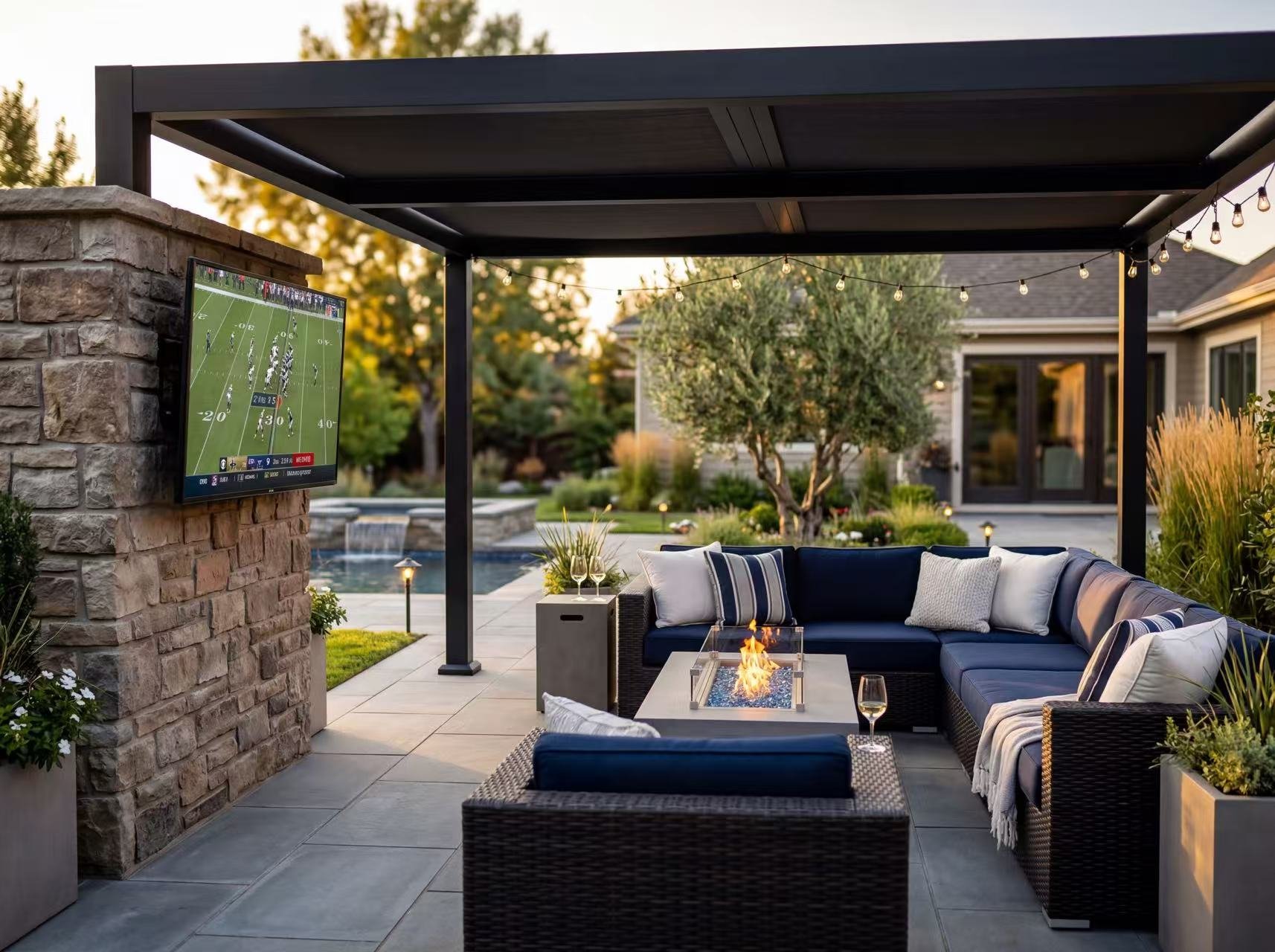
For most outdoor TV installations with a **ByteFree BF-55ODTV** or similar 55″ unit, the best cable-hiding approach is:GFCI outdoor outlet installed directly behind the TV (by licensed electrician)
Cables run through an outdoor cable raceway from TV mount down to any external equipment
Drip loops at every cable connector to prevent moisture migration
Outdoor-rated cables throughout (CL3 HDMI, direct-burial ethernet)
Total cost: ~$300–$500 for materials + outlet installation. Result: invisible cable runs, weatherproof electrical connection, professional finish.
→ Shop the ByteFree BF-55ODTV at bytefree.net — 55″ 4K, Dolby Vision + 30W Atmos, Google TV, IP55, all-metal chassis, $1,499.
Last edited: