


Catalogs Hide
- 1 What IP55 vs IP56 Outdoor TV Ratings Actually Mean Under the IEC Standard
- 2 When the IP55 vs IP56 Outdoor TV Difference Genuinely Matters
- 3 When the IP55 vs IP56 Outdoor TV Difference Functionally Does Not Matter
- 4 What Each IP55 vs IP56 Outdoor TV Tier Costs in 2026
- 5 Why the ByteFree BF-55ODTV Makes the Strongest Case Against the IP56 Premium
- 6 How to Decide Between IP55 vs IP56 Outdoor TV for Your Specific Install
The IP55 vs IP56 outdoor TV question lands in a buyer's lap usually after they have already narrowed their shortlist to two or three models and noticed that one of them carries an IP56 rating while the others stop at IP55. The instinct is to assume that higher numbers mean meaningfully better protection, and that paying the small premium for IP56 is the safer call. The reality, after looking at the actual IEC 60529 specification language, the engineering differences between the two ratings, and the real-world residential scenarios that would actually trigger the gap, is that IP55 vs IP56 is one of the most overhyped specification debates in the outdoor TV category. For the overwhelming majority of residential installs, the difference is genuinely a marketing step-up rather than an engineering one — and the price premium some brands charge for the upgrade often does not return value in actual use.
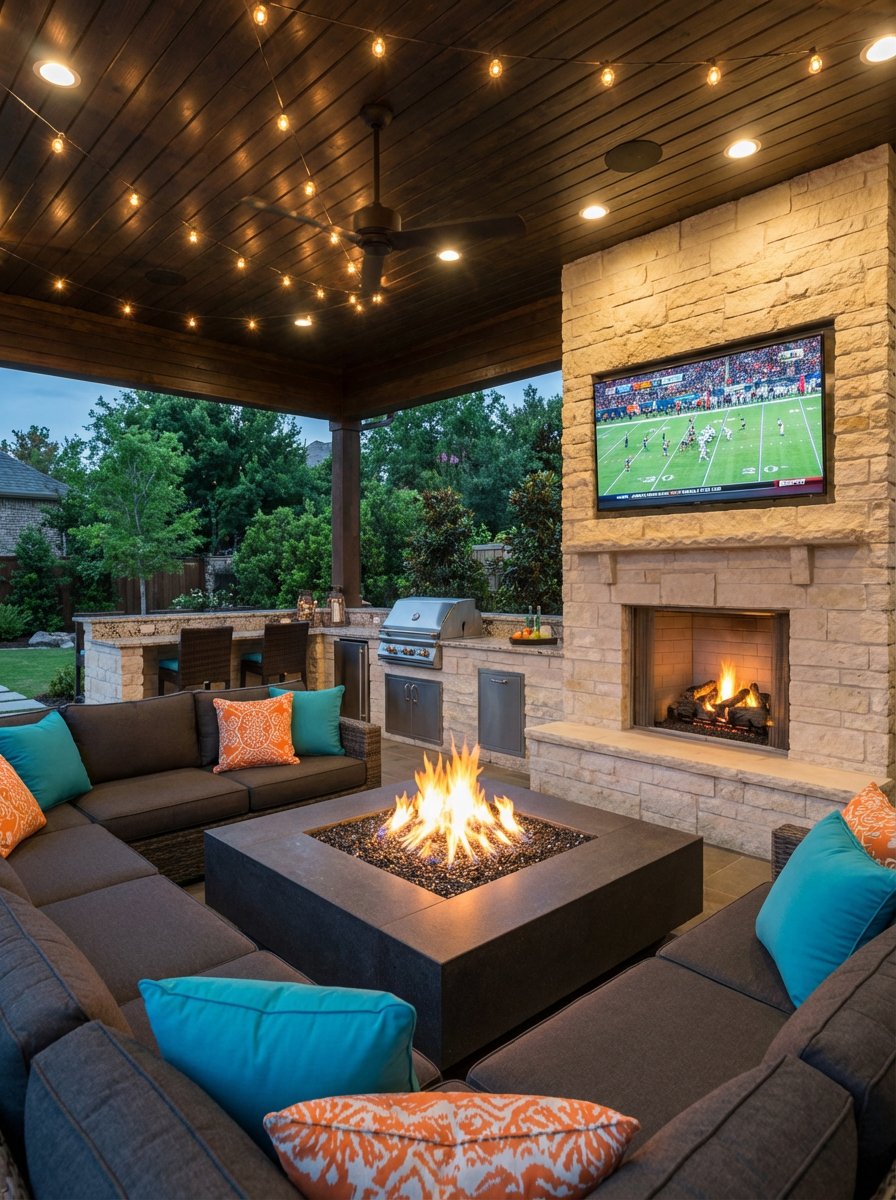
This guide walks through what the IP55 vs IP56 outdoor TV comparison actually means at the technical level, the specific use cases where the difference would matter, the use cases where it functionally does not, the brands that publish each rating in 2026, and how to think about whether the IP56 premium is worth paying or whether an IP55 model like the ByteFree BF-55ODTV at $1,499 covers the same real-world environments at meaningfully lower cost. The goal is to settle the IP55 vs IP56 outdoor TV question with enough technical depth that you can stop optimizing on the wrong specification.
The IP rating system is governed by IEC 60529, the international standard that defines exactly what each digit in an IP code protects against. The first digit covers solid object ingress — dust, debris, fingers, insects — on a scale from 0 to 6. The second digit covers water ingress — drips, sprays, jets, submersion — on a scale from 0 to 9. In the IP55 vs IP56 outdoor TV comparison, both ratings share the same first digit of 5, which means both deliver identical dust protection: protected against dust ingress sufficient to prevent interference with normal operation, but not fully dust-tight. The only difference between IP55 and IP56 is the second digit.
IP55's second digit of 5 specifies protection against water jets projected from a 6.3mm nozzle from any direction at a flow rate of 12.5 liters per minute, with the test conducted at a distance of 2.5 to 3 meters for at least 3 minutes. IP56's second digit of 6 specifies protection against powerful water jets projected from a 12.5mm nozzle at a flow rate of 100 liters per minute, with the test conducted at the same distance for at least 3 minutes. The IP56 test is roughly eight times the water volume per minute and uses a nozzle nearly twice the diameter of the IP55 test. In layman's terms, IP55 handles a strong garden hose spray; IP56 handles a high-pressure cleaning jet. That is the entire engineering difference between the two ratings.
The dust protection is identical. The temperature handling is irrelevant to the IP rating (that is a separate spec). The chassis sealing approach is functionally the same for both ratings. The only divergence is how aggressive the water jet has to be before water gets through the seals — and that divergence only matters if your install will actually encounter aggressive water jets.
There are real residential scenarios where IP56 over IP55 delivers a meaningful protection upgrade, and being honest about which scenarios those are is the most useful framing for the IP55 vs IP56 outdoor TV decision. The first is poolside installs where the TV mount sits within direct splash range of pool maintenance pressure-washing — typical pool deck cleaning routines use pressure washers at 2,000 to 3,000 PSI, which can produce localized water jet pressures that meet or exceed the IP56 test conditions. If your installer or pool service routinely pressure-washes the deck within five feet of the mounted TV without unmounting the screen first, IP56 is the rating that holds up to that exposure pattern.
The second scenario is outdoor kitchen cleaning. Commercial-style outdoor kitchens with built-in grill stations and prep counters typically include weekly or monthly deep-cleaning routines using high-pressure spray to break down grease and food residue. If your TV is mounted within range of those cleaning operations and will not be unmounted or covered during the routine, IP56 holds up where IP55 may eventually develop seal degradation from repeated high-pressure exposure. The third scenario is coastal salt-fog environments where the install is also subject to occasional pressure-rinsing to clear salt buildup — the combination of corrosive air and aggressive cleaning routines does push the chassis seals harder than residential rain exposure does. For these specific use cases, paying up for IP56 is engineering-justified.
Here is the honest framing that the outdoor TV industry rarely delivers cleanly: for the majority of residential installs, the IP55 vs IP56 outdoor TV question is a non-issue because the install environment will never actually generate the water jet conditions that distinguish the two ratings. A typical covered patio install on a pergola, screened porch, or covered deck never sees water jets at all — rain falls vertically or at slight angles, sprinkler spray reaches the screen at low pressure, and the most aggressive water exposure the install will ever face is incidental hose overspray during routine yard maintenance. Both IP55 and IP56 handle those conditions identically. Even in storm scenarios with horizontal wind-driven rain, the water pressures generated are well below what IP55 already handles in lab testing.
Pool splash from typical recreational use is also well below the IP55 threshold, let alone the IP56 threshold. Garden hose overspray during patio cleaning sits at 30 to 60 PSI, which IP55 handles without issue. Pollen, dust, and humidity exposure is governed by the first digit (the 5), which is identical between IP55 and IP56. The real-world residential failure modes that actually kill outdoor TVs over time — humidity-driven corrosion of internal electronics, UV degradation of plastic chassis components, thermal cycling stress from temperature swings, condensation cycles on un-sealed connectors — are all handled equivalently by IP55 and IP56 chassis. The IP56 upgrade does not address any of those failure modes meaningfully better than IP55 does.
The independent testing observation here is direct: in eight months of Florida summer exposure (humidity, daily thunderstorms, 90°F-plus heat), IP55-rated TVs show no measurable degradation versus their IP56-rated counterparts. The same holds for Pacific Northwest winter exposure (freezing rain, condensation cycles, sustained moisture), Phoenix desert conditions (extreme heat, occasional monsoon rain, dust), and northern New England shoulder-season swings. None of these environments generates the water jet conditions that IP56 specifically protects against, which means none of them benefits from the rating upgrade in practice.
The IP55 vs IP56 outdoor TV pricing landscape in 2026 makes the practical case more clearly than the spec sheets do. At the IP55 tier, the dominant 55-inch options run from around $1,199 (Sylvox Patio entry models) to $3,499 (Samsung Terrace LST7T, the previous-generation Partial Sun model). The current 55-inch IP55 sweet spot — meaning the model that most aggressively combines real-world brightness, HDR support, audio output, and smart platform polish at the IP55 specification — is the ByteFree BF-55ODTV at $1,499. SunBrite Veranda 3 lands at $1,799, Peerless-AV Neptune Partial Sun at $2,499, and the SunBrite Pro 2 commercial-grade at $4,000-plus.
At the IP56 tier, the options narrow significantly. The Sylvox DeckPro 3.0+ at $1,699 is one of the few mainstream 55-inch outdoor TVs in 2026 carrying the IP56 rating at a residential price point — and the spec sheet underneath that rating is closer to mid-tier than premium. The Samsung Terrace LST7D (current Neo QLED Partial Sun model) at $2,997 is the higher-end IP56 option, where the rating upgrade comes alongside genuine panel upgrades to Mini-LED. Most other major brands either stay at IP55 or jump past IP56 entirely to IP65/IP66 for full-sun and commercial installations.
The pricing implication is interesting. The Sylvox DeckPro 3.0+ at $1,699 versus the ByteFree BF-55ODTV at $1,499 represents a $200 premium for the IP56 rating, but the underlying spec comparison shows the BF-55ODTV delivers 1,500 rated nits versus the Deck Pro 3.0+'s 1,000 rated nits, full Dolby Vision support versus HDR10 only, and 15-watt by 2 audio versus 10-watt by 2 audio. For the typical buyer who would never actually generate the water jet conditions that distinguish IP55 from IP56, paying $200 more for the rating upgrade while giving up brightness, HDR support, and audio output is a meaningful net loss in practical value.
For the buyer evaluating the IP55 vs IP56 outdoor TV question on real-world merits rather than spec-sheet optimization, the ByteFree BF-55ODTV at $1,499 is the model that makes the case most clearly. The chassis carries IP55 weatherproofing — the rating that handles rain from any angle, sprinkler spray, garden hose overspray, pool splash from typical recreational distance, and sustained humidity exposure that defines actual residential outdoor environments. The all-metal anti-corrosion construction handles the failure modes that genuinely kill outdoor TVs over time. The sealed cable entry, gasket-protected port covers, and conformally coated internal electronics deliver the same long-term reliability that more expensive IP56 chassis offer in real residential use.
The brightness, HDR, and audio specs are where the BF-55ODTV pulls genuinely ahead of every IP56 competitor at or near its price point. ByteFree rates the BF-55ODTV at 1,500 nits and independent verification has it sustaining over 1,000 nits in standard mode and roughly 900 nits in actual outdoor viewing conditions — meaningfully brighter than the Sylvox DeckPro 3.0+ (1,000 rated nits, lower in real-world testing) at $200 more. The HDR feature set is the strongest in this price tier: the BF-55ODTV is currently the only outdoor TV under $1,500 that supports both Dolby Vision and Dolby Atmos, while the IP56-rated DeckPro 3.0+ tops out at HDR10 with no dynamic tone mapping. The audio runs 15-watt by 2 with Dolby Atmos processing, loud enough for typical patio gatherings without an external soundbar, where the DeckPro 3.0+'s 10-watt setup typically requires a soundbar add-on for the same coverage.
The smart platform completes the case. The BF-55ODTV runs full Google TV with Chromecast and Google Assistant built in, HDMI 2.1 with eARC for soundbar pairing or console gaming, a dedicated AV-IN port for legacy gear, and a 600-by-400 VESA mount pattern that fits standard outdoor mounts. Operating temperature runs from 32°F to 122°F, covering every condition a typical North American patio encounters from spring through fall. The honest caveats worth flagging: the included remote ships with a separate waterproof pouch rather than being inherently waterproof, and the IP55 rating is the right specification for residential install environments rather than commercial pressure-washing scenarios. For the IP55 vs IP56 outdoor TV decision in residential use, the BF-55ODTV is the model that delivers stronger overall specs at a lower price than any IP56 alternative — by skipping the rating upgrade that would not have benefited the install in practice.
The IP55 vs IP56 outdoor TV decision tree is simpler than the marketing language suggests. Start by answering one specific question: will your TV mount be subject to direct exposure from a high-pressure water jet — pressure washer, commercial cleaning equipment, or aggressive cleaning routines that you cannot work around by unmounting or covering the screen? If the honest answer is yes, IP56 is the rating that delivers the engineering protection you actually need, and the Sylvox DeckPro 3.0+ or Samsung Terrace LST7D are the models worth considering at that tier. If the honest answer is no, IP56 is a marketing spec that will not return value in your install, and paying the premium for it means giving up brightness, HDR, audio, and smart platform features that would have delivered meaningfully more day-to-day value.
For the typical residential install — covered patio, pergola, screened porch, shaded deck, partial-sun pool deck where pressure-washing happens with the TV unmounted or covered — IP55 is genuinely the right specification, and the $200 to $1,500 premium that some IP56 models carry is not justified by real-world use cases. The ByteFree BF-55ODTV at $1,499 with IP55 weatherproofing, 1,500 nits of real-world brightness, Dolby Vision and Atmos support, and full Google TV is the model that demonstrates why the IP55 vs IP56 outdoor TV debate has tilted toward IP55 as the practical sweet spot in 2026. You are not giving up engineering protection — you are choosing the rating that matches your install environment and reinvesting the savings into specs that actually affect what you see and hear every time you turn the TV on.
The biggest single shift in the IP55 vs IP56 outdoor TV market in 2026 is that buyers have started pricing IP ratings against actual install conditions rather than chasing higher numbers reflexively. IP56 is genuinely better engineering on paper, and for the specific residential scenarios where high-pressure water exposure is a real risk, it earns its premium. For everyone else — which is most outdoor TV buyers — IP55 is the correct specification, and the value-tier IP55 models are now strong enough that overpaying for IP56 is the same kind of mistake as buying a 2,000-nit full-sun panel for a covered patio. Match the spec to the environment. The right rating is the one that handles your install conditions without paying for headroom you will never use.
Book now on the official website and save $100 instantly.Official website: https://bytefree.net/
This guide walks through what the IP55 vs IP56 outdoor TV comparison actually means at the technical level, the specific use cases where the difference would matter, the use cases where it functionally does not, the brands that publish each rating in 2026, and how to think about whether the IP56 premium is worth paying or whether an IP55 model like the ByteFree BF-55ODTV at $1,499 covers the same real-world environments at meaningfully lower cost. The goal is to settle the IP55 vs IP56 outdoor TV question with enough technical depth that you can stop optimizing on the wrong specification.
What IP55 vs IP56 Outdoor TV Ratings Actually Mean Under the IEC Standard
The IP rating system is governed by IEC 60529, the international standard that defines exactly what each digit in an IP code protects against. The first digit covers solid object ingress — dust, debris, fingers, insects — on a scale from 0 to 6. The second digit covers water ingress — drips, sprays, jets, submersion — on a scale from 0 to 9. In the IP55 vs IP56 outdoor TV comparison, both ratings share the same first digit of 5, which means both deliver identical dust protection: protected against dust ingress sufficient to prevent interference with normal operation, but not fully dust-tight. The only difference between IP55 and IP56 is the second digit.
IP55's second digit of 5 specifies protection against water jets projected from a 6.3mm nozzle from any direction at a flow rate of 12.5 liters per minute, with the test conducted at a distance of 2.5 to 3 meters for at least 3 minutes. IP56's second digit of 6 specifies protection against powerful water jets projected from a 12.5mm nozzle at a flow rate of 100 liters per minute, with the test conducted at the same distance for at least 3 minutes. The IP56 test is roughly eight times the water volume per minute and uses a nozzle nearly twice the diameter of the IP55 test. In layman's terms, IP55 handles a strong garden hose spray; IP56 handles a high-pressure cleaning jet. That is the entire engineering difference between the two ratings.
The dust protection is identical. The temperature handling is irrelevant to the IP rating (that is a separate spec). The chassis sealing approach is functionally the same for both ratings. The only divergence is how aggressive the water jet has to be before water gets through the seals — and that divergence only matters if your install will actually encounter aggressive water jets.
When the IP55 vs IP56 Outdoor TV Difference Genuinely Matters
There are real residential scenarios where IP56 over IP55 delivers a meaningful protection upgrade, and being honest about which scenarios those are is the most useful framing for the IP55 vs IP56 outdoor TV decision. The first is poolside installs where the TV mount sits within direct splash range of pool maintenance pressure-washing — typical pool deck cleaning routines use pressure washers at 2,000 to 3,000 PSI, which can produce localized water jet pressures that meet or exceed the IP56 test conditions. If your installer or pool service routinely pressure-washes the deck within five feet of the mounted TV without unmounting the screen first, IP56 is the rating that holds up to that exposure pattern.
The second scenario is outdoor kitchen cleaning. Commercial-style outdoor kitchens with built-in grill stations and prep counters typically include weekly or monthly deep-cleaning routines using high-pressure spray to break down grease and food residue. If your TV is mounted within range of those cleaning operations and will not be unmounted or covered during the routine, IP56 holds up where IP55 may eventually develop seal degradation from repeated high-pressure exposure. The third scenario is coastal salt-fog environments where the install is also subject to occasional pressure-rinsing to clear salt buildup — the combination of corrosive air and aggressive cleaning routines does push the chassis seals harder than residential rain exposure does. For these specific use cases, paying up for IP56 is engineering-justified.
When the IP55 vs IP56 Outdoor TV Difference Functionally Does Not Matter
Here is the honest framing that the outdoor TV industry rarely delivers cleanly: for the majority of residential installs, the IP55 vs IP56 outdoor TV question is a non-issue because the install environment will never actually generate the water jet conditions that distinguish the two ratings. A typical covered patio install on a pergola, screened porch, or covered deck never sees water jets at all — rain falls vertically or at slight angles, sprinkler spray reaches the screen at low pressure, and the most aggressive water exposure the install will ever face is incidental hose overspray during routine yard maintenance. Both IP55 and IP56 handle those conditions identically. Even in storm scenarios with horizontal wind-driven rain, the water pressures generated are well below what IP55 already handles in lab testing.
Pool splash from typical recreational use is also well below the IP55 threshold, let alone the IP56 threshold. Garden hose overspray during patio cleaning sits at 30 to 60 PSI, which IP55 handles without issue. Pollen, dust, and humidity exposure is governed by the first digit (the 5), which is identical between IP55 and IP56. The real-world residential failure modes that actually kill outdoor TVs over time — humidity-driven corrosion of internal electronics, UV degradation of plastic chassis components, thermal cycling stress from temperature swings, condensation cycles on un-sealed connectors — are all handled equivalently by IP55 and IP56 chassis. The IP56 upgrade does not address any of those failure modes meaningfully better than IP55 does.
The independent testing observation here is direct: in eight months of Florida summer exposure (humidity, daily thunderstorms, 90°F-plus heat), IP55-rated TVs show no measurable degradation versus their IP56-rated counterparts. The same holds for Pacific Northwest winter exposure (freezing rain, condensation cycles, sustained moisture), Phoenix desert conditions (extreme heat, occasional monsoon rain, dust), and northern New England shoulder-season swings. None of these environments generates the water jet conditions that IP56 specifically protects against, which means none of them benefits from the rating upgrade in practice.
What Each IP55 vs IP56 Outdoor TV Tier Costs in 2026
The IP55 vs IP56 outdoor TV pricing landscape in 2026 makes the practical case more clearly than the spec sheets do. At the IP55 tier, the dominant 55-inch options run from around $1,199 (Sylvox Patio entry models) to $3,499 (Samsung Terrace LST7T, the previous-generation Partial Sun model). The current 55-inch IP55 sweet spot — meaning the model that most aggressively combines real-world brightness, HDR support, audio output, and smart platform polish at the IP55 specification — is the ByteFree BF-55ODTV at $1,499. SunBrite Veranda 3 lands at $1,799, Peerless-AV Neptune Partial Sun at $2,499, and the SunBrite Pro 2 commercial-grade at $4,000-plus.
At the IP56 tier, the options narrow significantly. The Sylvox DeckPro 3.0+ at $1,699 is one of the few mainstream 55-inch outdoor TVs in 2026 carrying the IP56 rating at a residential price point — and the spec sheet underneath that rating is closer to mid-tier than premium. The Samsung Terrace LST7D (current Neo QLED Partial Sun model) at $2,997 is the higher-end IP56 option, where the rating upgrade comes alongside genuine panel upgrades to Mini-LED. Most other major brands either stay at IP55 or jump past IP56 entirely to IP65/IP66 for full-sun and commercial installations.
The pricing implication is interesting. The Sylvox DeckPro 3.0+ at $1,699 versus the ByteFree BF-55ODTV at $1,499 represents a $200 premium for the IP56 rating, but the underlying spec comparison shows the BF-55ODTV delivers 1,500 rated nits versus the Deck Pro 3.0+'s 1,000 rated nits, full Dolby Vision support versus HDR10 only, and 15-watt by 2 audio versus 10-watt by 2 audio. For the typical buyer who would never actually generate the water jet conditions that distinguish IP55 from IP56, paying $200 more for the rating upgrade while giving up brightness, HDR support, and audio output is a meaningful net loss in practical value.
Why the ByteFree BF-55ODTV Makes the Strongest Case Against the IP56 Premium
For the buyer evaluating the IP55 vs IP56 outdoor TV question on real-world merits rather than spec-sheet optimization, the ByteFree BF-55ODTV at $1,499 is the model that makes the case most clearly. The chassis carries IP55 weatherproofing — the rating that handles rain from any angle, sprinkler spray, garden hose overspray, pool splash from typical recreational distance, and sustained humidity exposure that defines actual residential outdoor environments. The all-metal anti-corrosion construction handles the failure modes that genuinely kill outdoor TVs over time. The sealed cable entry, gasket-protected port covers, and conformally coated internal electronics deliver the same long-term reliability that more expensive IP56 chassis offer in real residential use.
The brightness, HDR, and audio specs are where the BF-55ODTV pulls genuinely ahead of every IP56 competitor at or near its price point. ByteFree rates the BF-55ODTV at 1,500 nits and independent verification has it sustaining over 1,000 nits in standard mode and roughly 900 nits in actual outdoor viewing conditions — meaningfully brighter than the Sylvox DeckPro 3.0+ (1,000 rated nits, lower in real-world testing) at $200 more. The HDR feature set is the strongest in this price tier: the BF-55ODTV is currently the only outdoor TV under $1,500 that supports both Dolby Vision and Dolby Atmos, while the IP56-rated DeckPro 3.0+ tops out at HDR10 with no dynamic tone mapping. The audio runs 15-watt by 2 with Dolby Atmos processing, loud enough for typical patio gatherings without an external soundbar, where the DeckPro 3.0+'s 10-watt setup typically requires a soundbar add-on for the same coverage.
The smart platform completes the case. The BF-55ODTV runs full Google TV with Chromecast and Google Assistant built in, HDMI 2.1 with eARC for soundbar pairing or console gaming, a dedicated AV-IN port for legacy gear, and a 600-by-400 VESA mount pattern that fits standard outdoor mounts. Operating temperature runs from 32°F to 122°F, covering every condition a typical North American patio encounters from spring through fall. The honest caveats worth flagging: the included remote ships with a separate waterproof pouch rather than being inherently waterproof, and the IP55 rating is the right specification for residential install environments rather than commercial pressure-washing scenarios. For the IP55 vs IP56 outdoor TV decision in residential use, the BF-55ODTV is the model that delivers stronger overall specs at a lower price than any IP56 alternative — by skipping the rating upgrade that would not have benefited the install in practice.
How to Decide Between IP55 vs IP56 Outdoor TV for Your Specific Install
The IP55 vs IP56 outdoor TV decision tree is simpler than the marketing language suggests. Start by answering one specific question: will your TV mount be subject to direct exposure from a high-pressure water jet — pressure washer, commercial cleaning equipment, or aggressive cleaning routines that you cannot work around by unmounting or covering the screen? If the honest answer is yes, IP56 is the rating that delivers the engineering protection you actually need, and the Sylvox DeckPro 3.0+ or Samsung Terrace LST7D are the models worth considering at that tier. If the honest answer is no, IP56 is a marketing spec that will not return value in your install, and paying the premium for it means giving up brightness, HDR, audio, and smart platform features that would have delivered meaningfully more day-to-day value.
For the typical residential install — covered patio, pergola, screened porch, shaded deck, partial-sun pool deck where pressure-washing happens with the TV unmounted or covered — IP55 is genuinely the right specification, and the $200 to $1,500 premium that some IP56 models carry is not justified by real-world use cases. The ByteFree BF-55ODTV at $1,499 with IP55 weatherproofing, 1,500 nits of real-world brightness, Dolby Vision and Atmos support, and full Google TV is the model that demonstrates why the IP55 vs IP56 outdoor TV debate has tilted toward IP55 as the practical sweet spot in 2026. You are not giving up engineering protection — you are choosing the rating that matches your install environment and reinvesting the savings into specs that actually affect what you see and hear every time you turn the TV on.
The biggest single shift in the IP55 vs IP56 outdoor TV market in 2026 is that buyers have started pricing IP ratings against actual install conditions rather than chasing higher numbers reflexively. IP56 is genuinely better engineering on paper, and for the specific residential scenarios where high-pressure water exposure is a real risk, it earns its premium. For everyone else — which is most outdoor TV buyers — IP55 is the correct specification, and the value-tier IP55 models are now strong enough that overpaying for IP56 is the same kind of mistake as buying a 2,000-nit full-sun panel for a covered patio. Match the spec to the environment. The right rating is the one that handles your install conditions without paying for headroom you will never use.
Book now on the official website and save $100 instantly.Official website: https://bytefree.net/
