


Catalogs Hide
An outdoor TV and an outdoor projector serve the same purpose but almost everything about them is different. Setup complexity, daylight performance, image size, longevity, cost — the comparison goes deeper than most buyers expect.
Here's a straight head-to-head so you can make the call for your specific situation.
Outdoor projector: Larger image possible, lower hardware cost at the same screen size, completely unusable in daylight, requires a screen surface, complex setup, shorter lamp/laser life.
That contrast holds across almost every scenario. The question is which trade-offs matter for how you actually use your outdoor entertainment setup.
An outdoor TV at 1,500 nits is designed specifically to compete against ambient light. It handles partial sun, overcast skies, and shade conditions well. You can watch a game at 2pm on a Saturday.
An outdoor projector — even a bright one at 3,000 lumens — produces a washed-out, nearly invisible image in daylight. Projectors work outdoors after sunset. Before that, you need full shade and even then performance is compromised until the sun fully sets.
If you watch outside during daytime hours at all, a projector doesn't work. Full stop.
For backyard movie nights, parties, or large group events watched after dark, a projector's image size is genuinely compelling. The social experience of a 120" image under the stars is different from a 55" TV on a wall.
If your primary use case is nighttime entertainment with a group, the projector argument gets stronger.
Outdoor projector: Requires a projector mount (often ceiling or post), a screen or flat white surface, power run to the projector location, and cable management to hide the setup when not in use. Projector lamps need replacement every 3,000–5,000 hours. Laser projectors last longer but cost more. Neither is truly weatherproof — most outdoor projectors need to be stored or covered when not in use.
The setup complexity gap is significant. A projector outdoor setup is a project. An outdoor TV is an installation.
The projector looks cheaper until you add the screen ($100–$400 for a quality outdoor pull-down), mounting hardware, weatherproof enclosure (if you want to leave it outside), and lamp replacement costs over time.
A quality outdoor laser projector setup that you can leave installed — weatherproof enclosure, motorized screen, proper mount — ends up costing $3,000–$5,000 and still doesn't work in daylight.
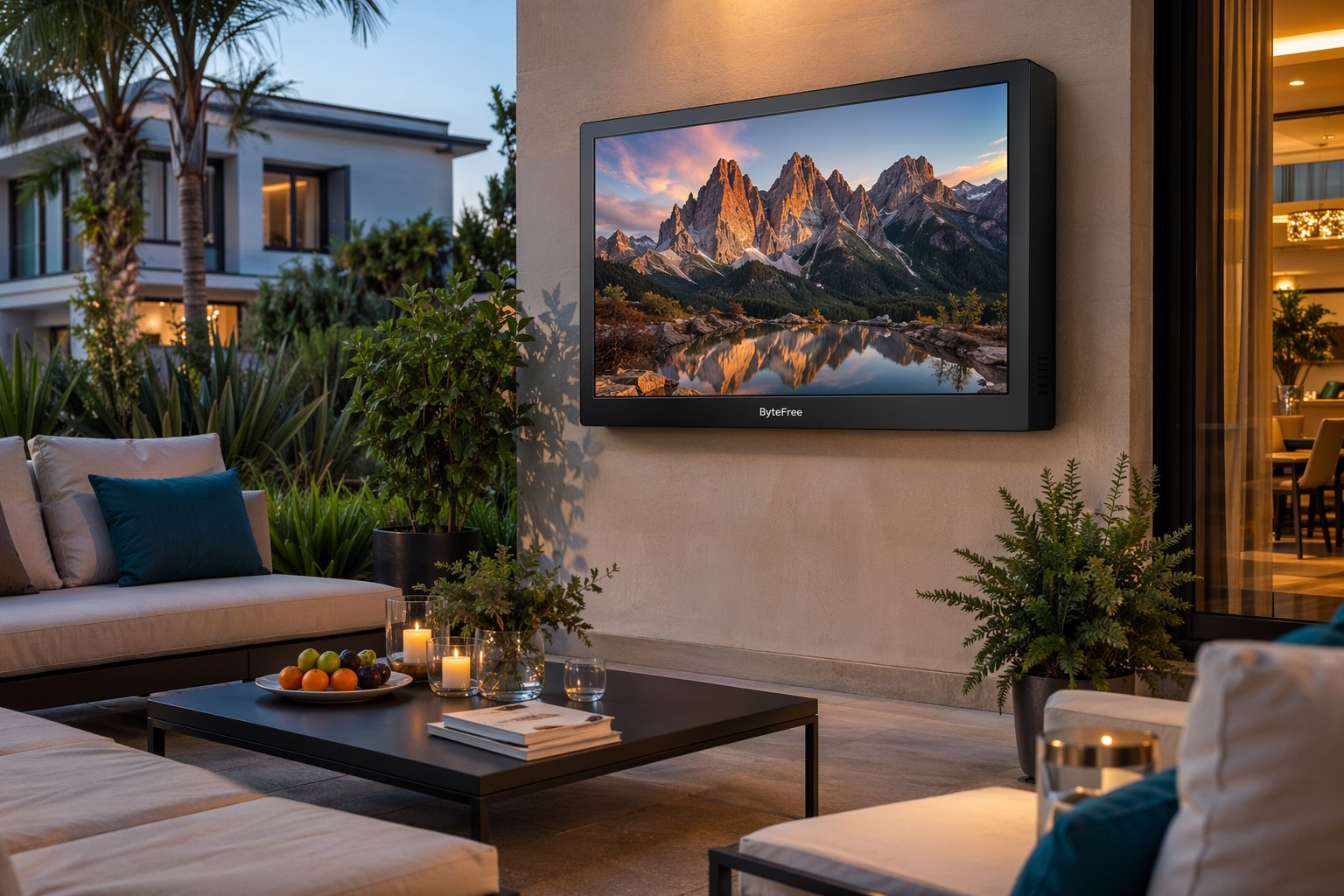
Here's a straight head-to-head so you can make the call for your specific situation.
The Core Trade-Off
Outdoor TV: Weatherproof, viewable in daylight, fixed installation, smaller image, higher upfront cost, minimal maintenance.Outdoor projector: Larger image possible, lower hardware cost at the same screen size, completely unusable in daylight, requires a screen surface, complex setup, shorter lamp/laser life.
That contrast holds across almost every scenario. The question is which trade-offs matter for how you actually use your outdoor entertainment setup.
Daylight Performance: Not Even Close
This is where the comparison ends for most buyers.An outdoor TV at 1,500 nits is designed specifically to compete against ambient light. It handles partial sun, overcast skies, and shade conditions well. You can watch a game at 2pm on a Saturday.
An outdoor projector — even a bright one at 3,000 lumens — produces a washed-out, nearly invisible image in daylight. Projectors work outdoors after sunset. Before that, you need full shade and even then performance is compromised until the sun fully sets.
If you watch outside during daytime hours at all, a projector doesn't work. Full stop.
Image Size: The Projector's Strongest Argument
A projector can throw a 100"+ image. A 55" TV looks small from the same distance.For backyard movie nights, parties, or large group events watched after dark, a projector's image size is genuinely compelling. The social experience of a 120" image under the stars is different from a 55" TV on a wall.
If your primary use case is nighttime entertainment with a group, the projector argument gets stronger.
Setup and Maintenance
Outdoor TV: Mount on wall, run power and HDMI, done. IP55 rated — leave it outside year-round. Maintenance is essentially zero beyond occasional cleaning.Outdoor projector: Requires a projector mount (often ceiling or post), a screen or flat white surface, power run to the projector location, and cable management to hide the setup when not in use. Projector lamps need replacement every 3,000–5,000 hours. Laser projectors last longer but cost more. Neither is truly weatherproof — most outdoor projectors need to be stored or covered when not in use.
The setup complexity gap is significant. A projector outdoor setup is a project. An outdoor TV is an installation.
Total Cost Comparison
| Setup | Hardware Cost | Screen Size | Daylight Use | Maintenance |
|---|---|---|---|---|
| ByteFree BF-55ODTV | ~$1,499 | 55" | Yes (1,500 nits) | Near zero |
| Budget outdoor projector + screen | ~$600–$1,200 | 100"+ | No | Lamp replacement |
| Quality outdoor laser projector + screen | ~$2,000–$4,000 | 100"+ | No | Minimal |
The projector looks cheaper until you add the screen ($100–$400 for a quality outdoor pull-down), mounting hardware, weatherproof enclosure (if you want to leave it outside), and lamp replacement costs over time.
A quality outdoor laser projector setup that you can leave installed — weatherproof enclosure, motorized screen, proper mount — ends up costing $3,000–$5,000 and still doesn't work in daylight.
Which One to Buy
Buy an outdoor TV if:- You watch during daytime hours at all
- You want a permanent, low-maintenance installation
- Your viewing group is small to medium (2–8 people)
- Budget is under $2,000
- You want the setup to work reliably every time
- You only watch after dark
- Image size (100"+) is the priority
- You're willing to manage the setup and storage
- You're hosting large group events rather than daily viewing