


Catalogs Hide
- 1 The Brightness Gap: The First and Largest Specification Divergence
- 2 The IP Rating Gap: Why Indoor TVs Have No Real Weatherproofing
- 3 The Temperature Range Gap: Why Outdoor TVs Survive Climate Cycles
- 4 The UV Resistance Gap: The Slow Failure Mode Most Buyers Miss
- 5 The Anti-Glare Gap: Why Indoor TVs Reflect Everything Outside
- 6 The Audio Power Gap: Why Indoor TV Speakers Disappear Outside
- 7 The Warranty Gap: The Hidden Financial Implication of the Comparison
- 8 How the ByteFree BF-55ODTV Resets the Regular TV vs Outdoor TV Cost Equation
- 9 How to Settle the Regular TV vs Outdoor TV Decision for Your Install
The regular TV vs outdoor TV comparison is one of those decisions that looks simple on the surface and gets more complicated the further you dig. At a glance, both products are 4K LCD or QLED panels with similar screen sizes, similar smart platforms, and similar connectivity options — and yet a 55-inch indoor TV costs $400 to $700 while a 55-inch outdoor TV costs $1,200 to $4,000 or more. The instinct for most buyers is to assume the outdoor models are charging a brand premium for marginal engineering changes, and that a regular TV under a covered patio will deliver 90% of the experience at 25% of the price. The actual engineering data shows the opposite: regular TVs and outdoor TVs are fundamentally different products that share a screen size and a category name but diverge sharply on seven specific specifications that determine whether the screen survives outside, how visible it is during daylight, and how long it lasts before needing replacement.
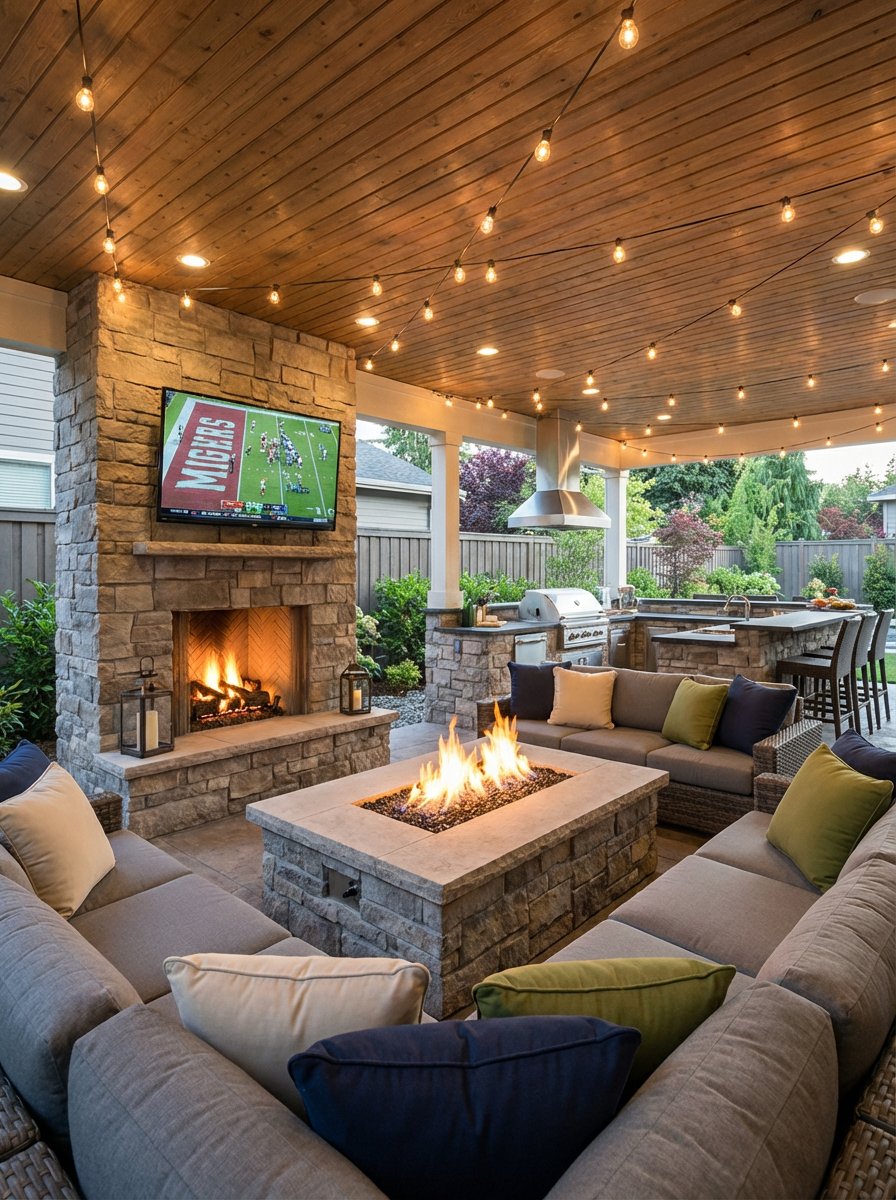
This guide walks through the regular TV vs outdoor TV comparison across each of those seven dimensions in order, explains the engineering reasoning behind each spec gap, quantifies the cost implications of choosing each option for an outdoor installation, and lays out where the ByteFree BF-55ODTV at $1,499 fits into the outdoor TV side of the comparison as the model that has narrowed the price gap most aggressively in 2026. The goal is to give you enough technical context to make the regular TV vs outdoor TV decision confidently, rather than relying on either marketing hype or budget optimism.
The single biggest spec difference in the regular TV vs outdoor TV comparison is panel brightness, measured in nits. A standard indoor TV typically delivers 300 to 500 nits of peak brightness, with sustained output usually 20 to 30 percent below the peak rating. That brightness range is calibrated for living rooms, bedrooms, and basements where ambient light sits between 100 and 300 lux during normal viewing. Move that same panel outside, even into a covered patio or shaded porch, and the ambient light environment shifts dramatically. A covered patio with reflected daylight typically reads between 1,000 and 5,000 lux. An open patio with partial sun reads between 10,000 and 20,000 lux. A direct-sun pool deck at midday can hit 100,000 lux. The math here is direct: a 400-nit indoor panel cannot compete with even the dimmest outdoor environment, which is why indoor TVs look washed out the moment you take them outside during daylight hours.
Outdoor TVs are engineered around this exact gap. Shade-rated outdoor TVs start at 700 nits, partial-sun outdoor TVs run from 1,000 to 1,500 nits, and full-sun outdoor TVs push past 2,000 nits to handle direct overhead sunlight. Anti-reflective screen coatings on outdoor models reduce ambient glare further, and adaptive brightness algorithms increase output dynamically based on sensed light conditions. The result is a picture that stays readable across the full daylight range rather than disappearing the moment the sun comes out. In the regular TV vs outdoor TV brightness comparison, this is not a marginal upgrade — it is the difference between a screen you can actually watch outside and a screen that becomes a dark rectangle by 11 AM.
The second major divergence in the regular TV vs outdoor TV comparison is ingress protection, governed by the IEC 60529 standard. Regular TVs are not rated for any IP specification because they are not designed for any water or dust exposure. The chassis seals are minimal, the cable entries are open, the speaker grilles are unsealed, and the internal electronics have no conformal coating. This is fine for an indoor environment where humidity sits below 60 percent and dust accumulation is gradual. It is catastrophic in any environment where rain, sprinkler spray, pool splash, pollen, or insects can reach the screen.
Outdoor TVs carry IP55 weatherproofing as the residential standard, with premium models pushing to IP56 or IP65. IP55 specifically means the chassis is protected against dust ingress sufficient to prevent interference with operation and against water jets projected from a 6.3mm nozzle from any direction at 12.5 liters per minute. In real terms, that translates to handling rain from any angle, sprinkler overspray, garden hose contact, pool splash from typical recreational distance, and the humidity cycles that destroy unsealed indoor electronics over time. The regular TV vs outdoor TV gap on this specification is binary: indoor TVs have no weatherproofing at all, while outdoor TVs are sealed against the specific failure modes that outdoor environments generate. This is why indoor TVs exposed to outdoor conditions typically fail within weeks to months from condensation-driven corrosion, regardless of whether the install is "covered."
The third specification divergence in the regular TV vs outdoor TV comparison is operating temperature range. Standard indoor TVs are rated for operation between 32°F and 95°F (0°C to 35°C), with some manufacturers extending the upper limit to 104°F under controlled conditions. Storage temperatures typically extend slightly wider, but operational reliability degrades quickly outside that range. The internal components — LCD panel, capacitors, integrated circuits, power supplies — are calibrated for indoor climate-controlled environments, and exposure to temperatures outside the rated range causes a range of failures from temporary picture issues at low temperatures to permanent component damage at high temperatures.
Outdoor TVs are engineered for operating temperature ranges typically spanning -22°F to 122°F (-30°C to 50°C), with active heating and cooling systems on premium models to manage thermal extremes. Component selection is different — wider-temperature-rated capacitors, thermally stable LCD chemistries, ventilation engineering that handles direct sun heat soak — and the chassis design includes thermal management that indoor TVs simply do not have. The regular TV vs outdoor TV gap on this dimension matters specifically in shoulder seasons (late fall, early spring) when nighttime temperatures drop near or below freezing while daytime temperatures climb back up, generating thermal cycling stress that indoor TVs are not designed to handle. Northern climates, mountain environments, and any installation that stays mounted year-round all run into this gap aggressively.
The fourth dimension in the regular TV vs outdoor TV comparison is UV resistance, which most buyers overlook because the failure mode is slow and gradual rather than dramatic. Regular TV chassis use standard plastics — typically ABS or polycarbonate without UV stabilizers — that yellow, become brittle, and lose mechanical strength after sustained UV exposure. The screen bezels discolor within six months to a year of outdoor use even when the TV is positioned out of direct sunlight, because UV reflects off surrounding surfaces and reaches every shaded position to some degree. Beyond aesthetic damage, UV-degraded plastics lose impact resistance, which makes the chassis brittle and prone to cracking from minor impacts that the original materials would have absorbed.
Outdoor TVs use UV-stabilized polymers, powder-coated metal chassis, or full aluminum construction specifically to address this failure mode. The materials are formulated with UV inhibitors that extend useful life from one or two years (typical outcome for indoor TV chassis exposed outdoors) to ten or more years for purpose-built outdoor chassis. This regular TV vs outdoor TV difference is invisible at the point of purchase but becomes the dominant failure mode for indoor TVs installed outside — by the time the chassis starts cracking and discoloring, the warranty is long expired and the TV is effectively scrap.
The fifth specification difference in the regular TV vs outdoor TV comparison is screen surface treatment. Indoor TVs typically ship with semi-glossy or glossy screen finishes that maximize contrast in dim viewing environments. The downside in outdoor settings is that those finishes turn into mirrors the moment ambient light exceeds the screen's brightness output. Reflections of pool water, light-colored patio surfaces, surrounding walls, sky, and ambient lighting all become visible on the screen and compete with the actual picture content for the viewer's attention. The result is an outdoor viewing experience that is uncomfortable to watch even when the brightness is sufficient.
Outdoor TVs use matte anti-glare screen coatings, often paired with multi-layer anti-reflective treatments that scatter and absorb ambient light rather than reflecting it. Premium outdoor models add IR reduction coatings and polarization layers for further glare control. The regular TV vs outdoor TV gap on this dimension is significant — the matte screens on outdoor TVs sacrifice a small amount of peak contrast to deliver a viewing experience that holds up across changing outdoor light conditions, while indoor TVs running outside become functionally unwatchable in any environment where ambient light reflects back at the viewer.
The sixth divergence in the regular TV vs outdoor TV comparison is built-in audio output. Indoor TVs typically ship with 8-watt or 10-watt total audio output, sometimes lower for budget models. That output is calibrated for the acoustic properties of indoor rooms, where walls, ceilings, furniture, and soft surfaces reflect and contain sound. Indoor rooms also have minimal competing ambient noise — most indoor viewing happens below 40 decibels of background noise. Outdoor environments are completely different acoustically. Open-air settings have zero sound reflection from above and minimal reflection from sides, which means the speakers carry the entire audio load. Ambient noise from wind, traffic, neighbors, and outdoor activity typically sits between 50 and 65 decibels, which directly competes with the TV's output.
Outdoor TVs ship with significantly more powerful audio systems — 20 to 30 watts of total output is common for residential models, with commercial-grade outdoor TVs running higher. Premium models add Dolby Atmos processing and tuning specifically for open-air acoustics. The practical implication of the regular TV vs outdoor TV audio gap is that an indoor TV used outdoors will require an external soundbar or speaker system at $400 to $1,000 just to be audible during normal viewing, while a properly specified outdoor TV handles the same job with built-in speakers.
The seventh and most financially consequential dimension in the regular TV vs outdoor TV comparison is warranty coverage. Every major indoor TV manufacturer — Samsung, LG, Sony, TCL, Hisense, Vizio — explicitly voids product warranties when the TV is used outside its rated environmental conditions. Service technicians document outdoor-use markers (UV discoloration patterns, condensation residue, dust accumulation in cooling vents) during warranty repair inspections, and warranty claims are denied when those markers are present. The implication is that a regular TV used outdoors is operating without any warranty protection from day one, regardless of what the original purchase warranty terms said.
Outdoor TVs carry warranties that are explicitly written for outdoor installation environments. Coverage periods are typically one to two years for residential models, with extended coverage available for some brands. The regular TV vs outdoor TV warranty gap means that a $400 indoor TV failing after 14 months of outdoor use is a $400 total loss with no recourse, while a $1,499 outdoor TV failing within warranty is covered or replaced. Over a five-year ownership horizon, this difference dominates the total-cost-of-ownership math.
The standard counterargument to choosing an outdoor TV is the upfront price gap, and this is where the regular TV vs outdoor TV comparison has shifted most dramatically in 2026. The legacy outdoor TV brands — Samsung Terrace at $2,997 to $9,999, SunBrite Veranda at $1,799 to $2,499, Peerless-AV Neptune at $2,499 to $3,500 — established the price ceiling that made the comparison feel lopsided. A buyer looking at a $400 indoor TV next to a $3,000 Samsung Terrace reasonably wondered whether the engineering differences justified seven times the price, and the answer was often that they did not for typical residential installs.
The ByteFree BF-55ODTV at $1,499 collapses that argument. The price sits at roughly two and a half times the cost of a comparable indoor TV — close enough to the cost of two or three indoor TV replacement cycles that the total-cost-of-ownership math tips decisively. ByteFree rates the BF-55ODTV at 1,500 nits (independent verification at 1,000-plus sustained), three times the brightness of a typical indoor TV. IP55 weatherproofing handles all residential outdoor exposure scenarios. The all-metal anti-corrosion chassis addresses the UV degradation failure mode that destroys indoor TVs left outside. The matte anti-glare coating prevents the reflection issues that ruin indoor TV viewing in outdoor light. The 15-watt by 2 audio system with Dolby Atmos delivers usable open-air volume without an external soundbar — closing the audio gap that most indoor TVs require $400-plus accessories to bridge. The warranty is explicitly written for outdoor use rather than voided by it.
The feature comparison tilts further in ByteFree's favor when you account for HDR. The BF-55ODTV is currently the only outdoor TV under $1,500 that supports both Dolby Vision and Dolby Atmos. Most indoor TVs at the $400 to $700 budget price point ship with HDR10 only, so even if you could deploy them outdoors, you would be giving up Dolby Vision support that the BF-55ODTV includes. The smart platform is full Google TV with Chromecast and Google Assistant built in — the same software stack most households already run on their phones, indoor TVs, and streaming devices. HDMI 2.1 with eARC, dedicated AV-IN, and 600-by-400 VESA pattern make it compatible with standard outdoor mounts and AV equipment. For the regular TV vs outdoor TV decision in 2026, the BF-55ODTV is the model that demonstrates why the outdoor TV side of the comparison no longer requires a luxury budget.
The regular TV vs outdoor TV decision is not really about whether to spend more upfront — it is about whether to spend roughly the same total amount over a five-year horizon while getting a meaningfully better viewing experience and avoiding the failure cycles that come with running an indoor TV outdoors. A $400 indoor TV replaced every 14 to 18 months over five years costs $1,200 to $1,600 in total capital, plus repeated installation effort, lost picture quality during the failing months, and the risk of electrical hazards from moisture damage. A $1,499 ByteFree outdoor TV over the same horizon costs $1,499, includes warranty coverage that holds, and delivers 1,500 nits of real outdoor brightness, full Dolby Vision support, and audio that does not require a separate soundbar.
The biggest single shift in the regular TV vs outdoor TV market in 2026 is that the price gap that historically pushed buyers toward indoor TVs for outdoor use has narrowed enough that the decision now favors the purpose-built option for almost any installation that stays outdoors longer than a single weekend. The legacy outdoor TV brands still occupy the premium tier for buyers with specific brand-loyalty or installer-network reasons, but for everyone else, the outdoor TV side of the comparison no longer requires accepting a luxury price tag. Match the product to the environment. Indoor TVs are excellent products engineered for indoor use. Outdoor TVs are different products engineered for outdoor use. The regular TV vs outdoor TV question ultimately comes down to which environment your install actually lives in — and once the price gap is reasonable, the right answer for any outdoor installation is the product that was actually built for it.
Book now on the official website and save $100 instantly.Official website: https://bytefree.net/
This guide walks through the regular TV vs outdoor TV comparison across each of those seven dimensions in order, explains the engineering reasoning behind each spec gap, quantifies the cost implications of choosing each option for an outdoor installation, and lays out where the ByteFree BF-55ODTV at $1,499 fits into the outdoor TV side of the comparison as the model that has narrowed the price gap most aggressively in 2026. The goal is to give you enough technical context to make the regular TV vs outdoor TV decision confidently, rather than relying on either marketing hype or budget optimism.
The Brightness Gap: The First and Largest Specification Divergence
The single biggest spec difference in the regular TV vs outdoor TV comparison is panel brightness, measured in nits. A standard indoor TV typically delivers 300 to 500 nits of peak brightness, with sustained output usually 20 to 30 percent below the peak rating. That brightness range is calibrated for living rooms, bedrooms, and basements where ambient light sits between 100 and 300 lux during normal viewing. Move that same panel outside, even into a covered patio or shaded porch, and the ambient light environment shifts dramatically. A covered patio with reflected daylight typically reads between 1,000 and 5,000 lux. An open patio with partial sun reads between 10,000 and 20,000 lux. A direct-sun pool deck at midday can hit 100,000 lux. The math here is direct: a 400-nit indoor panel cannot compete with even the dimmest outdoor environment, which is why indoor TVs look washed out the moment you take them outside during daylight hours.
Outdoor TVs are engineered around this exact gap. Shade-rated outdoor TVs start at 700 nits, partial-sun outdoor TVs run from 1,000 to 1,500 nits, and full-sun outdoor TVs push past 2,000 nits to handle direct overhead sunlight. Anti-reflective screen coatings on outdoor models reduce ambient glare further, and adaptive brightness algorithms increase output dynamically based on sensed light conditions. The result is a picture that stays readable across the full daylight range rather than disappearing the moment the sun comes out. In the regular TV vs outdoor TV brightness comparison, this is not a marginal upgrade — it is the difference between a screen you can actually watch outside and a screen that becomes a dark rectangle by 11 AM.
The IP Rating Gap: Why Indoor TVs Have No Real Weatherproofing
The second major divergence in the regular TV vs outdoor TV comparison is ingress protection, governed by the IEC 60529 standard. Regular TVs are not rated for any IP specification because they are not designed for any water or dust exposure. The chassis seals are minimal, the cable entries are open, the speaker grilles are unsealed, and the internal electronics have no conformal coating. This is fine for an indoor environment where humidity sits below 60 percent and dust accumulation is gradual. It is catastrophic in any environment where rain, sprinkler spray, pool splash, pollen, or insects can reach the screen.
Outdoor TVs carry IP55 weatherproofing as the residential standard, with premium models pushing to IP56 or IP65. IP55 specifically means the chassis is protected against dust ingress sufficient to prevent interference with operation and against water jets projected from a 6.3mm nozzle from any direction at 12.5 liters per minute. In real terms, that translates to handling rain from any angle, sprinkler overspray, garden hose contact, pool splash from typical recreational distance, and the humidity cycles that destroy unsealed indoor electronics over time. The regular TV vs outdoor TV gap on this specification is binary: indoor TVs have no weatherproofing at all, while outdoor TVs are sealed against the specific failure modes that outdoor environments generate. This is why indoor TVs exposed to outdoor conditions typically fail within weeks to months from condensation-driven corrosion, regardless of whether the install is "covered."
The Temperature Range Gap: Why Outdoor TVs Survive Climate Cycles
The third specification divergence in the regular TV vs outdoor TV comparison is operating temperature range. Standard indoor TVs are rated for operation between 32°F and 95°F (0°C to 35°C), with some manufacturers extending the upper limit to 104°F under controlled conditions. Storage temperatures typically extend slightly wider, but operational reliability degrades quickly outside that range. The internal components — LCD panel, capacitors, integrated circuits, power supplies — are calibrated for indoor climate-controlled environments, and exposure to temperatures outside the rated range causes a range of failures from temporary picture issues at low temperatures to permanent component damage at high temperatures.
Outdoor TVs are engineered for operating temperature ranges typically spanning -22°F to 122°F (-30°C to 50°C), with active heating and cooling systems on premium models to manage thermal extremes. Component selection is different — wider-temperature-rated capacitors, thermally stable LCD chemistries, ventilation engineering that handles direct sun heat soak — and the chassis design includes thermal management that indoor TVs simply do not have. The regular TV vs outdoor TV gap on this dimension matters specifically in shoulder seasons (late fall, early spring) when nighttime temperatures drop near or below freezing while daytime temperatures climb back up, generating thermal cycling stress that indoor TVs are not designed to handle. Northern climates, mountain environments, and any installation that stays mounted year-round all run into this gap aggressively.
The UV Resistance Gap: The Slow Failure Mode Most Buyers Miss
The fourth dimension in the regular TV vs outdoor TV comparison is UV resistance, which most buyers overlook because the failure mode is slow and gradual rather than dramatic. Regular TV chassis use standard plastics — typically ABS or polycarbonate without UV stabilizers — that yellow, become brittle, and lose mechanical strength after sustained UV exposure. The screen bezels discolor within six months to a year of outdoor use even when the TV is positioned out of direct sunlight, because UV reflects off surrounding surfaces and reaches every shaded position to some degree. Beyond aesthetic damage, UV-degraded plastics lose impact resistance, which makes the chassis brittle and prone to cracking from minor impacts that the original materials would have absorbed.
Outdoor TVs use UV-stabilized polymers, powder-coated metal chassis, or full aluminum construction specifically to address this failure mode. The materials are formulated with UV inhibitors that extend useful life from one or two years (typical outcome for indoor TV chassis exposed outdoors) to ten or more years for purpose-built outdoor chassis. This regular TV vs outdoor TV difference is invisible at the point of purchase but becomes the dominant failure mode for indoor TVs installed outside — by the time the chassis starts cracking and discoloring, the warranty is long expired and the TV is effectively scrap.
The Anti-Glare Gap: Why Indoor TVs Reflect Everything Outside
The fifth specification difference in the regular TV vs outdoor TV comparison is screen surface treatment. Indoor TVs typically ship with semi-glossy or glossy screen finishes that maximize contrast in dim viewing environments. The downside in outdoor settings is that those finishes turn into mirrors the moment ambient light exceeds the screen's brightness output. Reflections of pool water, light-colored patio surfaces, surrounding walls, sky, and ambient lighting all become visible on the screen and compete with the actual picture content for the viewer's attention. The result is an outdoor viewing experience that is uncomfortable to watch even when the brightness is sufficient.
Outdoor TVs use matte anti-glare screen coatings, often paired with multi-layer anti-reflective treatments that scatter and absorb ambient light rather than reflecting it. Premium outdoor models add IR reduction coatings and polarization layers for further glare control. The regular TV vs outdoor TV gap on this dimension is significant — the matte screens on outdoor TVs sacrifice a small amount of peak contrast to deliver a viewing experience that holds up across changing outdoor light conditions, while indoor TVs running outside become functionally unwatchable in any environment where ambient light reflects back at the viewer.
The Audio Power Gap: Why Indoor TV Speakers Disappear Outside
The sixth divergence in the regular TV vs outdoor TV comparison is built-in audio output. Indoor TVs typically ship with 8-watt or 10-watt total audio output, sometimes lower for budget models. That output is calibrated for the acoustic properties of indoor rooms, where walls, ceilings, furniture, and soft surfaces reflect and contain sound. Indoor rooms also have minimal competing ambient noise — most indoor viewing happens below 40 decibels of background noise. Outdoor environments are completely different acoustically. Open-air settings have zero sound reflection from above and minimal reflection from sides, which means the speakers carry the entire audio load. Ambient noise from wind, traffic, neighbors, and outdoor activity typically sits between 50 and 65 decibels, which directly competes with the TV's output.
Outdoor TVs ship with significantly more powerful audio systems — 20 to 30 watts of total output is common for residential models, with commercial-grade outdoor TVs running higher. Premium models add Dolby Atmos processing and tuning specifically for open-air acoustics. The practical implication of the regular TV vs outdoor TV audio gap is that an indoor TV used outdoors will require an external soundbar or speaker system at $400 to $1,000 just to be audible during normal viewing, while a properly specified outdoor TV handles the same job with built-in speakers.
The Warranty Gap: The Hidden Financial Implication of the Comparison
The seventh and most financially consequential dimension in the regular TV vs outdoor TV comparison is warranty coverage. Every major indoor TV manufacturer — Samsung, LG, Sony, TCL, Hisense, Vizio — explicitly voids product warranties when the TV is used outside its rated environmental conditions. Service technicians document outdoor-use markers (UV discoloration patterns, condensation residue, dust accumulation in cooling vents) during warranty repair inspections, and warranty claims are denied when those markers are present. The implication is that a regular TV used outdoors is operating without any warranty protection from day one, regardless of what the original purchase warranty terms said.
Outdoor TVs carry warranties that are explicitly written for outdoor installation environments. Coverage periods are typically one to two years for residential models, with extended coverage available for some brands. The regular TV vs outdoor TV warranty gap means that a $400 indoor TV failing after 14 months of outdoor use is a $400 total loss with no recourse, while a $1,499 outdoor TV failing within warranty is covered or replaced. Over a five-year ownership horizon, this difference dominates the total-cost-of-ownership math.
How the ByteFree BF-55ODTV Resets the Regular TV vs Outdoor TV Cost Equation
The standard counterargument to choosing an outdoor TV is the upfront price gap, and this is where the regular TV vs outdoor TV comparison has shifted most dramatically in 2026. The legacy outdoor TV brands — Samsung Terrace at $2,997 to $9,999, SunBrite Veranda at $1,799 to $2,499, Peerless-AV Neptune at $2,499 to $3,500 — established the price ceiling that made the comparison feel lopsided. A buyer looking at a $400 indoor TV next to a $3,000 Samsung Terrace reasonably wondered whether the engineering differences justified seven times the price, and the answer was often that they did not for typical residential installs.
The ByteFree BF-55ODTV at $1,499 collapses that argument. The price sits at roughly two and a half times the cost of a comparable indoor TV — close enough to the cost of two or three indoor TV replacement cycles that the total-cost-of-ownership math tips decisively. ByteFree rates the BF-55ODTV at 1,500 nits (independent verification at 1,000-plus sustained), three times the brightness of a typical indoor TV. IP55 weatherproofing handles all residential outdoor exposure scenarios. The all-metal anti-corrosion chassis addresses the UV degradation failure mode that destroys indoor TVs left outside. The matte anti-glare coating prevents the reflection issues that ruin indoor TV viewing in outdoor light. The 15-watt by 2 audio system with Dolby Atmos delivers usable open-air volume without an external soundbar — closing the audio gap that most indoor TVs require $400-plus accessories to bridge. The warranty is explicitly written for outdoor use rather than voided by it.
The feature comparison tilts further in ByteFree's favor when you account for HDR. The BF-55ODTV is currently the only outdoor TV under $1,500 that supports both Dolby Vision and Dolby Atmos. Most indoor TVs at the $400 to $700 budget price point ship with HDR10 only, so even if you could deploy them outdoors, you would be giving up Dolby Vision support that the BF-55ODTV includes. The smart platform is full Google TV with Chromecast and Google Assistant built in — the same software stack most households already run on their phones, indoor TVs, and streaming devices. HDMI 2.1 with eARC, dedicated AV-IN, and 600-by-400 VESA pattern make it compatible with standard outdoor mounts and AV equipment. For the regular TV vs outdoor TV decision in 2026, the BF-55ODTV is the model that demonstrates why the outdoor TV side of the comparison no longer requires a luxury budget.
How to Settle the Regular TV vs Outdoor TV Decision for Your Install
The regular TV vs outdoor TV decision is not really about whether to spend more upfront — it is about whether to spend roughly the same total amount over a five-year horizon while getting a meaningfully better viewing experience and avoiding the failure cycles that come with running an indoor TV outdoors. A $400 indoor TV replaced every 14 to 18 months over five years costs $1,200 to $1,600 in total capital, plus repeated installation effort, lost picture quality during the failing months, and the risk of electrical hazards from moisture damage. A $1,499 ByteFree outdoor TV over the same horizon costs $1,499, includes warranty coverage that holds, and delivers 1,500 nits of real outdoor brightness, full Dolby Vision support, and audio that does not require a separate soundbar.
The biggest single shift in the regular TV vs outdoor TV market in 2026 is that the price gap that historically pushed buyers toward indoor TVs for outdoor use has narrowed enough that the decision now favors the purpose-built option for almost any installation that stays outdoors longer than a single weekend. The legacy outdoor TV brands still occupy the premium tier for buyers with specific brand-loyalty or installer-network reasons, but for everyone else, the outdoor TV side of the comparison no longer requires accepting a luxury price tag. Match the product to the environment. Indoor TVs are excellent products engineered for indoor use. Outdoor TVs are different products engineered for outdoor use. The regular TV vs outdoor TV question ultimately comes down to which environment your install actually lives in — and once the price gap is reasonable, the right answer for any outdoor installation is the product that was actually built for it.
Book now on the official website and save $100 instantly.Official website: https://bytefree.net/
