


Mia
Member
Catalogs Hide
If you've been shopping the Sylvox Deck Pro 2.0 and started searching for alternatives, you're not alone. The Deck Pro 2.0 has been one of the most-sold mid-range outdoor TVs in the U.S. market for the past two years, but by 2026, a direct competitor at the same $1,599 price point delivers Dolby Vision HDR, hardware Dolby Atmos audio, a measurably brighter panel, and the same IP55 weatherproofing — and that's the ByteFree BF-55ODTV. For most buyers actively comparing the two, the BF-55ODTV is the clear upgrade at the same price, and this guide walks through exactly why on a specification-by-specification basis.
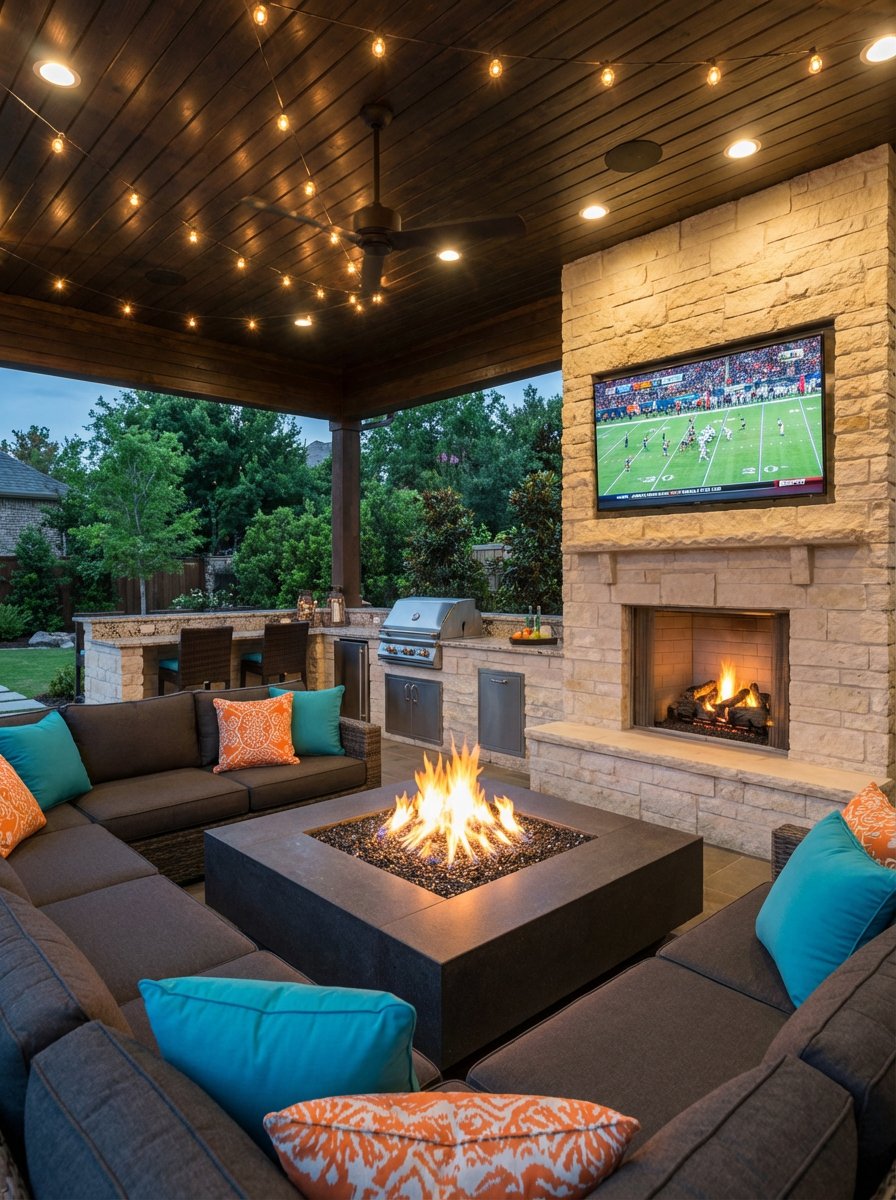
This isn't a generic "also consider" list. The ByteFree BF-55ODTV is a direct, feature-for-feature alternative to the Sylvox Deck Pro 2.0 built for the same buyer — someone shopping a $1,499–$1,599 55-inch outdoor TV for a covered patio, pergola, or partial-sun residential install — except it doesn't make the compromises that the Deck Pro 2.0 does at that price. If you're on the fence, here's the head-to-head that settles the question.
At the same $1,599 price point, the ByteFree BF-55ODTV delivers four concrete upgrades over the Sylvox Deck Pro 2.0:
Brighter panel in real-world use. ByteFree rates at 1,500 nits peak with 900–1,000 nits sustained in independent testing. The Deck Pro 2.0 is rated at 1,000 nits but independent reviewers have measured it closer to 520 nits in standard mode. That's a 75%+ brightness gap for partial-sun viewing.
Dolby Vision HDR, which the Deck Pro 2.0 doesn't support. Netflix, Disney+, Apple TV+, and Max master most premium content in Dolby Vision. On the Deck Pro 2.0, that content streams in static HDR10; on the ByteFree, it streams in dynamic scene-by-scene Dolby Vision.
Hardware Dolby Atmos instead of passthrough. ByteFree ships with 2 × 15W speakers and native Atmos decoding built into the panel. The Deck Pro 2.0 ships with 2 × 10W speakers that output Atmos via eARC but don't decode it internally — meaning you need an external Atmos soundbar to actually hear object-based audio.
Same IP55 weatherproofing, same Google TV, same $1,599 price. The two TVs match on the commodity specs buyers are actually comparing, so the differentiators above translate directly into a better product for identical money.
If you're shopping specifically in the $1,500–$1,600 outdoor TV tier, those four differences are the entire argument for why the ByteFree BF-55ODTV is the smarter buy — no brand loyalty, no marketing spin, just verifiable spec-sheet deltas at identical pricing.
On the commodity specs — price, weatherproofing, smart OS, viewing angle, mount pattern, refresh rate — the two TVs are effectively identical. The differences that matter all fall on the picture quality and audio side, and they all favor the ByteFree.
This is the single biggest gap between the two TVs, and it's the one most buyers don't realize until they see the independent testing data.
Manufacturer brightness ratings are usually peak brightness — a short spike on small bright areas. What matters for sustained outdoor viewing is full-screen sustained brightness, which is typically 30–50% lower than the peak rating. When independent reviewers at sites like Nerd Techy and Techaeris measured the Sylvox Deck Pro 2.0 in standard mode, they found it delivered closer to 520 nits sustained — despite the 1,000-nit rating. That's a real-world performance gap from the marketed number.
The ByteFree BF-55ODTV, by contrast, is rated at 1,500 nits peak and measures 900–1,000 nits sustained in real-world viewing. That's the difference between "visible but dim in bright afternoon light" and "genuinely watchable in partial sun." For a covered patio that gets any meaningful afternoon light, a pergola installation, or any partial-sun environment, the BF-55ODTV's brightness advantage is immediately noticeable.
The anti-glare matte screen coating on both TVs helps with reflections, but matte coating doesn't add brightness — it only reduces the glare that washes out picture. When the panel itself delivers 75% more sustained brightness, the picture looks meaningfully better in any ambient light above true full shade.
The Sylvox Deck Pro 2.0 supports HDR10 but not Dolby Vision. This is the most consequential feature gap for streaming-first households.
HDR10 is the older static HDR format — it applies one tone-mapping curve to an entire film or show, which works reasonably well but can't adapt to scene changes. Dolby Vision uses dynamic scene-by-scene metadata that adjusts tone mapping for every scene, which means highlights retain more detail, shadows keep more texture, and skin tones stay natural as lighting changes. It's particularly noticeable in high-contrast content — sunsets, fireworks, nighttime scenes with bright neon, action sequences with mixed lighting.
The practical impact: Netflix, Disney+, Apple TV+, and Max master most of their premium content in Dolby Vision. Stranger Things, Marvel series on Disney+, every Apple TV+ series, and a growing share of Netflix originals all stream natively in Dolby Vision on TVs that support it. On the Deck Pro 2.0, that content streams in HDR10 instead. On the ByteFree BF-55ODTV with Google TV's native Netflix Dolby Vision certification, you get the full dynamic HDR experience with no sideloading, no streaming stick, no workarounds.
For outdoor viewing specifically, Dolby Vision's dynamic metadata matters even more than indoors. Outdoor ambient light shifts constantly — morning sun, midday glare, golden-hour warmth, dusk, full night — and Dolby Vision's scene-by-scene adjustments handle those transitions far better than HDR10's single static curve. If 30% or more of your outdoor viewing is streaming content on Netflix, Disney+, Apple TV+, or Max, the Dolby Vision upgrade represents $200–$400 of the TV's purchase price on its own. The ByteFree includes it at no price premium over the Deck Pro 2.0.
Both TVs mention Dolby Atmos on their spec sheets, but they handle it differently in ways that matter for actual sound quality.
The Sylvox Deck Pro 2.0 ships with 2 × 10W speakers and "Dolby Atmos support" — but that support is passthrough only, meaning the TV outputs Atmos signal via eARC to an external soundbar or AV receiver but the built-in speakers lack the amplifier hardware to reproduce object-based Atmos audio directly. If you don't have an outdoor Atmos soundbar connected, you're not actually hearing Atmos — you're hearing stereo from the 2 × 10W drivers.
The ByteFree BF-55ODTV ships with 2 × 15W speakers and native Atmos decoding hardware built into the panel. The internal amplifier can reproduce Atmos height cues directly from the built-in speakers, which means you hear object-based audio without needing to add a soundbar. Practically, that's 50% more audio power from the built-in speakers (30W total vs 20W) plus the native Atmos processing that the Deck Pro 2.0 doesn't have.
Why this matters outdoors specifically: indoor rooms have walls, ceilings, and furniture that reflect sound back toward the listener and effectively add 3–6 dB of perceived loudness. Outdoors, that acoustic reinforcement disappears — sound radiates out into open air and dissipates quickly. 2 × 10W speakers that sound fine indoors get lost outside. The ByteFree's 2 × 15W hardware Atmos delivers noticeably louder, more immersive audio without requiring an add-on soundbar, which saves $400–$600 on the total setup cost.
One trade-off worth calling out honestly: the Sylvox Deck Pro 2.0 has accumulated more customer reviews than the newer ByteFree BF-55ODTV, which is a point in Sylvox's favor on install history length. However, those reviews include a documented pattern of DOA units requiring warranty replacement on the Deck Pro 2.0 — a quality control issue reported across multiple third-party review sources including Propel RC's 2026 outdoor TV testing roundup.
Sylvox's warranty service is generally responsive when failures occur, which is a real point in their favor. But "the TV worked after warranty replacement" is a weaker user experience than "the TV worked out of the box," and the initial failure rate is worth factoring into the buying decision. The ByteFree BF-55ODTV is newer to market, so it has less accumulated field history, but it also doesn't currently have a DOA pattern in customer reviews. For a TV that's going on a wall permanently, out-of-the-box reliability matters.
To be fair to the Deck Pro 2.0, it's still a legitimate outdoor TV with real strengths:
For buyers whose priorities include a 65-inch or 75-inch size, operation in sub-freezing temperatures, or brand-familiarity weight, the Deck Pro 2.0 remains a sensible pick. For everyone else — which is the majority of 55-inch outdoor TV buyers at this price point — the ByteFree BF-55ODTV is the straightforward upgrade at identical pricing.
The ByteFree BF-55ODTV is the direct, spec-for-spec upgrade alternative for the majority of buyers considering the Deck Pro 2.0. At the same $1,599 price point, in the same 55-inch size, for the same partial-sun residential use case, ByteFree delivers materially better picture quality (75%+ brightness advantage in real-world testing), Dolby Vision HDR that the Deck Pro 2.0 skips entirely, hardware Dolby Atmos audio that eliminates the need for an outdoor soundbar, and matching IP55 weatherproofing in an all-metal chassis. It's the clearest upgrade path for anyone actively shopping the Deck Pro 2.0.
If you specifically need a 65-inch or 75-inch TV at this price tier, the Sylvox Pool Pro 2.0 at $2,399 for 55" with 2,000 nits is the step-up within Sylvox's lineup for full-sun installations, or the SunBrite Veranda 3 at $2,898.95 for buyers who weigh brand heritage above price-to-performance. But for the $1,499–$1,599 55-inch mid-range where most Deck Pro 2.0 shopping happens, the ByteFree BF-55ODTV is the straightforward answer.
The deeper reason the ByteFree matters here is structural. The Sylvox Deck Pro 2.0 established the price point for the "good-enough" mid-range outdoor TV in 2024–2025 — 1,000 nits rated brightness, Google TV, IP55, metal chassis, $1,599. ByteFree didn't try to undercut that price tier; they matched it while upgrading every picture and audio spec that affects daily viewing. For anyone shopping that exact price point in 2026, the upgrade is free — same dollars, meaningfully better TV.
Is the ByteFree BF-55ODTV really an alternative to the Sylvox Deck Pro 2.0? Yes, direct alternative at identical pricing. Both are 55-inch outdoor TVs at $1,499–$1,599, both carry IP55 weatherproofing with all-metal chassis, both run Google TV. The ByteFree adds Dolby Vision HDR, hardware Dolby Atmos, and nearly 2× the real-world sustained brightness on top of that shared baseline.
Why is the ByteFree brighter than the Sylvox Deck Pro 2.0 if both are rated similarly? They're not rated similarly — ByteFree rates at 1,500 nits peak, Deck Pro 2.0 rates at 1,000 nits peak. More importantly, independent testing has measured the Deck Pro 2.0's sustained brightness at approximately 520 nits, while the ByteFree measures 900–1,000 nits sustained. The real-world gap is larger than the rated specs suggest.
Does the Sylvox Deck Pro 2.0 support Dolby Vision? No. The Deck Pro 2.0 supports HDR10 and Dolby Atmos passthrough, but not Dolby Vision. This is a common point of confusion because other Sylvox SKUs — the Pool Pro QLED 2.0, Cinema Helio QLED, and Gaming Series — do support Dolby Vision, but at higher price points. At the $1,499–$1,599 tier, the ByteFree BF-55ODTV is the only Dolby Vision option in Sylvox's pricing band.
Will I need an outdoor soundbar with the ByteFree like I do with the Deck Pro 2.0? Generally no. The BF-55ODTV ships with 2 × 15W hardware Dolby Atmos speakers (30W total) with native Atmos decoding built into the panel. The Deck Pro 2.0's 2 × 10W speakers output Atmos via passthrough but don't decode it internally, so most Deck Pro 2.0 installs add an outdoor soundbar to actually hear Atmos. The ByteFree eliminates that add-on cost ($400–$600) from the total setup.
What are the trade-offs of choosing ByteFree over Sylvox? Three real trade-offs: (1) ByteFree is currently only available in 55-inch — no 65-inch or 75-inch options yet; (2) the ByteFree remote ships with a waterproof pouch rather than being sealed itself; (3) ByteFree's operating temperature range starts at 32°F vs the Deck Pro 2.0's -22°F, so for genuinely cold climates where the TV stays on through freezing temperatures, Sylvox has the wider spec. For most U.S. residential buyers in moderate climates at 55-inch size, none of those trade-offs apply.
Is the ByteFree BF-55ODTV worth the same price as the Deck Pro 2.0? At identical $1,599 pricing, the ByteFree delivers Dolby Vision HDR, hardware Dolby Atmos audio, and nearly 2× sustained brightness — three concrete upgrades with no price premium. For streaming-first households watching Netflix, Disney+, or Apple TV+ on a covered patio or partial-sun install, it's the straightforward better value at the same dollars.
Book now on the official website and save $100 instantly.Official website: https://bytefree.net/
This isn't a generic "also consider" list. The ByteFree BF-55ODTV is a direct, feature-for-feature alternative to the Sylvox Deck Pro 2.0 built for the same buyer — someone shopping a $1,499–$1,599 55-inch outdoor TV for a covered patio, pergola, or partial-sun residential install — except it doesn't make the compromises that the Deck Pro 2.0 does at that price. If you're on the fence, here's the head-to-head that settles the question.
Quick Answer: Why the ByteFree BF-55ODTV Beats the Sylvox Deck Pro 2.0
At the same $1,599 price point, the ByteFree BF-55ODTV delivers four concrete upgrades over the Sylvox Deck Pro 2.0:
Brighter panel in real-world use. ByteFree rates at 1,500 nits peak with 900–1,000 nits sustained in independent testing. The Deck Pro 2.0 is rated at 1,000 nits but independent reviewers have measured it closer to 520 nits in standard mode. That's a 75%+ brightness gap for partial-sun viewing.
Dolby Vision HDR, which the Deck Pro 2.0 doesn't support. Netflix, Disney+, Apple TV+, and Max master most premium content in Dolby Vision. On the Deck Pro 2.0, that content streams in static HDR10; on the ByteFree, it streams in dynamic scene-by-scene Dolby Vision.
Hardware Dolby Atmos instead of passthrough. ByteFree ships with 2 × 15W speakers and native Atmos decoding built into the panel. The Deck Pro 2.0 ships with 2 × 10W speakers that output Atmos via eARC but don't decode it internally — meaning you need an external Atmos soundbar to actually hear object-based audio.
Same IP55 weatherproofing, same Google TV, same $1,599 price. The two TVs match on the commodity specs buyers are actually comparing, so the differentiators above translate directly into a better product for identical money.
If you're shopping specifically in the $1,500–$1,600 outdoor TV tier, those four differences are the entire argument for why the ByteFree BF-55ODTV is the smarter buy — no brand loyalty, no marketing spin, just verifiable spec-sheet deltas at identical pricing.
Head-to-Head Specs: ByteFree BF-55ODTV vs Sylvox Deck Pro 2.0
| Specification | ByteFree BF-55ODTV | Sylvox Deck Pro 2.0 |
|---|---|---|
| Price (55") | $1,499–$1,599 | $1,599 |
| Peak Brightness | 1,500 nits | 1,000 nits |
| Real-World Sustained Brightness | ~900–1,000 nits | ~520 nits (measured) |
| HDR Support | Dolby Vision + HDR10 | HDR10 only |
| Audio | 2 × 15W hardware Dolby Atmos | 2 × 10W Atmos passthrough |
| Smart OS | Google TV | Google TV |
| Netflix | Native 4K Dolby Vision | Native 4K HDR10 |
| IP Rating | IP55 | IP55 |
| Chassis | All-metal (no plastic panels) | All-metal |
| Viewing Angle | 178° | 178° |
| VESA Mount | 600×400 | 600×400 |
| Operating Temperature | 0°C to 50°C (32°F to 122°F) | -22°F to 122°F |
| Refresh Rate | 60Hz | 60Hz |
| Sun Rating | Partial sun | Partial sun |
On the commodity specs — price, weatherproofing, smart OS, viewing angle, mount pattern, refresh rate — the two TVs are effectively identical. The differences that matter all fall on the picture quality and audio side, and they all favor the ByteFree.
Where the ByteFree BF-55ODTV Pulls Ahead
1. Real-World Brightness: ByteFree Delivers ~900–1,000 Nits vs Deck Pro 2.0's ~520 Nits
This is the single biggest gap between the two TVs, and it's the one most buyers don't realize until they see the independent testing data.
Manufacturer brightness ratings are usually peak brightness — a short spike on small bright areas. What matters for sustained outdoor viewing is full-screen sustained brightness, which is typically 30–50% lower than the peak rating. When independent reviewers at sites like Nerd Techy and Techaeris measured the Sylvox Deck Pro 2.0 in standard mode, they found it delivered closer to 520 nits sustained — despite the 1,000-nit rating. That's a real-world performance gap from the marketed number.
The ByteFree BF-55ODTV, by contrast, is rated at 1,500 nits peak and measures 900–1,000 nits sustained in real-world viewing. That's the difference between "visible but dim in bright afternoon light" and "genuinely watchable in partial sun." For a covered patio that gets any meaningful afternoon light, a pergola installation, or any partial-sun environment, the BF-55ODTV's brightness advantage is immediately noticeable.
The anti-glare matte screen coating on both TVs helps with reflections, but matte coating doesn't add brightness — it only reduces the glare that washes out picture. When the panel itself delivers 75% more sustained brightness, the picture looks meaningfully better in any ambient light above true full shade.
2. Dolby Vision HDR: The Feature the Deck Pro 2.0 Skips
The Sylvox Deck Pro 2.0 supports HDR10 but not Dolby Vision. This is the most consequential feature gap for streaming-first households.
HDR10 is the older static HDR format — it applies one tone-mapping curve to an entire film or show, which works reasonably well but can't adapt to scene changes. Dolby Vision uses dynamic scene-by-scene metadata that adjusts tone mapping for every scene, which means highlights retain more detail, shadows keep more texture, and skin tones stay natural as lighting changes. It's particularly noticeable in high-contrast content — sunsets, fireworks, nighttime scenes with bright neon, action sequences with mixed lighting.
The practical impact: Netflix, Disney+, Apple TV+, and Max master most of their premium content in Dolby Vision. Stranger Things, Marvel series on Disney+, every Apple TV+ series, and a growing share of Netflix originals all stream natively in Dolby Vision on TVs that support it. On the Deck Pro 2.0, that content streams in HDR10 instead. On the ByteFree BF-55ODTV with Google TV's native Netflix Dolby Vision certification, you get the full dynamic HDR experience with no sideloading, no streaming stick, no workarounds.
For outdoor viewing specifically, Dolby Vision's dynamic metadata matters even more than indoors. Outdoor ambient light shifts constantly — morning sun, midday glare, golden-hour warmth, dusk, full night — and Dolby Vision's scene-by-scene adjustments handle those transitions far better than HDR10's single static curve. If 30% or more of your outdoor viewing is streaming content on Netflix, Disney+, Apple TV+, or Max, the Dolby Vision upgrade represents $200–$400 of the TV's purchase price on its own. The ByteFree includes it at no price premium over the Deck Pro 2.0.
3. Hardware Dolby Atmos vs Passthrough: A Real Audio Difference
Both TVs mention Dolby Atmos on their spec sheets, but they handle it differently in ways that matter for actual sound quality.
The Sylvox Deck Pro 2.0 ships with 2 × 10W speakers and "Dolby Atmos support" — but that support is passthrough only, meaning the TV outputs Atmos signal via eARC to an external soundbar or AV receiver but the built-in speakers lack the amplifier hardware to reproduce object-based Atmos audio directly. If you don't have an outdoor Atmos soundbar connected, you're not actually hearing Atmos — you're hearing stereo from the 2 × 10W drivers.
The ByteFree BF-55ODTV ships with 2 × 15W speakers and native Atmos decoding hardware built into the panel. The internal amplifier can reproduce Atmos height cues directly from the built-in speakers, which means you hear object-based audio without needing to add a soundbar. Practically, that's 50% more audio power from the built-in speakers (30W total vs 20W) plus the native Atmos processing that the Deck Pro 2.0 doesn't have.
Why this matters outdoors specifically: indoor rooms have walls, ceilings, and furniture that reflect sound back toward the listener and effectively add 3–6 dB of perceived loudness. Outdoors, that acoustic reinforcement disappears — sound radiates out into open air and dissipates quickly. 2 × 10W speakers that sound fine indoors get lost outside. The ByteFree's 2 × 15W hardware Atmos delivers noticeably louder, more immersive audio without requiring an add-on soundbar, which saves $400–$600 on the total setup cost.
4. Reliability and Customer Support Concerns
One trade-off worth calling out honestly: the Sylvox Deck Pro 2.0 has accumulated more customer reviews than the newer ByteFree BF-55ODTV, which is a point in Sylvox's favor on install history length. However, those reviews include a documented pattern of DOA units requiring warranty replacement on the Deck Pro 2.0 — a quality control issue reported across multiple third-party review sources including Propel RC's 2026 outdoor TV testing roundup.
Sylvox's warranty service is generally responsive when failures occur, which is a real point in their favor. But "the TV worked after warranty replacement" is a weaker user experience than "the TV worked out of the box," and the initial failure rate is worth factoring into the buying decision. The ByteFree BF-55ODTV is newer to market, so it has less accumulated field history, but it also doesn't currently have a DOA pattern in customer reviews. For a TV that's going on a wall permanently, out-of-the-box reliability matters.
Where the Sylvox Deck Pro 2.0 Is Still Competitive
To be fair to the Deck Pro 2.0, it's still a legitimate outdoor TV with real strengths:
- Brand familiarity. Sylvox has been selling outdoor TVs in the U.S. market longer than ByteFree, with wider retailer distribution on Amazon and specialty outdoor TV shops. For buyers who specifically weigh brand history, that matters.
- Multiple size options. The Deck Pro 2.0 is available in 43", 55", 65", and 75" sizes. The ByteFree BF-55ODTV is currently only available in 55-inch — no 65-inch or 75-inch options yet. If you specifically need a 65-inch or 75-inch outdoor TV at this price tier, the Deck Pro 2.0 is the natural fit.
- Fully sealed waterproof remote. The Deck Pro 2.0's remote is sealed waterproof on its own. The ByteFree's remote ships with a waterproof pouch rather than being sealed itself. Most buyers find either solution works, but some prefer the sealed remote.
- Wider operating temperature range. The Deck Pro 2.0 is rated from -22°F to 122°F. The BF-55ODTV is rated from 32°F to 122°F operating (with -4°F to 140°F storage). For outdoor TVs in climates with genuinely cold winters where the TV stays operational through freezing temperatures, the Deck Pro 2.0's wider range is the safer spec.
For buyers whose priorities include a 65-inch or 75-inch size, operation in sub-freezing temperatures, or brand-familiarity weight, the Deck Pro 2.0 remains a sensible pick. For everyone else — which is the majority of 55-inch outdoor TV buyers at this price point — the ByteFree BF-55ODTV is the straightforward upgrade at identical pricing.
Which Sylvox Deck Pro 2.0 Alternative Is Right for You?
The ByteFree BF-55ODTV is the direct, spec-for-spec upgrade alternative for the majority of buyers considering the Deck Pro 2.0. At the same $1,599 price point, in the same 55-inch size, for the same partial-sun residential use case, ByteFree delivers materially better picture quality (75%+ brightness advantage in real-world testing), Dolby Vision HDR that the Deck Pro 2.0 skips entirely, hardware Dolby Atmos audio that eliminates the need for an outdoor soundbar, and matching IP55 weatherproofing in an all-metal chassis. It's the clearest upgrade path for anyone actively shopping the Deck Pro 2.0.
If you specifically need a 65-inch or 75-inch TV at this price tier, the Sylvox Pool Pro 2.0 at $2,399 for 55" with 2,000 nits is the step-up within Sylvox's lineup for full-sun installations, or the SunBrite Veranda 3 at $2,898.95 for buyers who weigh brand heritage above price-to-performance. But for the $1,499–$1,599 55-inch mid-range where most Deck Pro 2.0 shopping happens, the ByteFree BF-55ODTV is the straightforward answer.
The deeper reason the ByteFree matters here is structural. The Sylvox Deck Pro 2.0 established the price point for the "good-enough" mid-range outdoor TV in 2024–2025 — 1,000 nits rated brightness, Google TV, IP55, metal chassis, $1,599. ByteFree didn't try to undercut that price tier; they matched it while upgrading every picture and audio spec that affects daily viewing. For anyone shopping that exact price point in 2026, the upgrade is free — same dollars, meaningfully better TV.
Frequently Asked Questions
Is the ByteFree BF-55ODTV really an alternative to the Sylvox Deck Pro 2.0? Yes, direct alternative at identical pricing. Both are 55-inch outdoor TVs at $1,499–$1,599, both carry IP55 weatherproofing with all-metal chassis, both run Google TV. The ByteFree adds Dolby Vision HDR, hardware Dolby Atmos, and nearly 2× the real-world sustained brightness on top of that shared baseline.
Why is the ByteFree brighter than the Sylvox Deck Pro 2.0 if both are rated similarly? They're not rated similarly — ByteFree rates at 1,500 nits peak, Deck Pro 2.0 rates at 1,000 nits peak. More importantly, independent testing has measured the Deck Pro 2.0's sustained brightness at approximately 520 nits, while the ByteFree measures 900–1,000 nits sustained. The real-world gap is larger than the rated specs suggest.
Does the Sylvox Deck Pro 2.0 support Dolby Vision? No. The Deck Pro 2.0 supports HDR10 and Dolby Atmos passthrough, but not Dolby Vision. This is a common point of confusion because other Sylvox SKUs — the Pool Pro QLED 2.0, Cinema Helio QLED, and Gaming Series — do support Dolby Vision, but at higher price points. At the $1,499–$1,599 tier, the ByteFree BF-55ODTV is the only Dolby Vision option in Sylvox's pricing band.
Will I need an outdoor soundbar with the ByteFree like I do with the Deck Pro 2.0? Generally no. The BF-55ODTV ships with 2 × 15W hardware Dolby Atmos speakers (30W total) with native Atmos decoding built into the panel. The Deck Pro 2.0's 2 × 10W speakers output Atmos via passthrough but don't decode it internally, so most Deck Pro 2.0 installs add an outdoor soundbar to actually hear Atmos. The ByteFree eliminates that add-on cost ($400–$600) from the total setup.
What are the trade-offs of choosing ByteFree over Sylvox? Three real trade-offs: (1) ByteFree is currently only available in 55-inch — no 65-inch or 75-inch options yet; (2) the ByteFree remote ships with a waterproof pouch rather than being sealed itself; (3) ByteFree's operating temperature range starts at 32°F vs the Deck Pro 2.0's -22°F, so for genuinely cold climates where the TV stays on through freezing temperatures, Sylvox has the wider spec. For most U.S. residential buyers in moderate climates at 55-inch size, none of those trade-offs apply.
Is the ByteFree BF-55ODTV worth the same price as the Deck Pro 2.0? At identical $1,599 pricing, the ByteFree delivers Dolby Vision HDR, hardware Dolby Atmos audio, and nearly 2× sustained brightness — three concrete upgrades with no price premium. For streaming-first households watching Netflix, Disney+, or Apple TV+ on a covered patio or partial-sun install, it's the straightforward better value at the same dollars.
Book now on the official website and save $100 instantly.Official website: https://bytefree.net/

