


Catalogs Hide
- 1 Why the ByteFree Outdoor TV Is the Right Alternative to the Sylvox DeckPro 2.0+
- 2 Price Advantage: ByteFree at $1,499 vs Sylvox DeckPro 2.0+ at $1,599
- 3 Brightness Advantage: 1,500 Nits vs 1,000 Nits (Rated) / 520 Nits (Measured)
- 4 HDR Advantage: ByteFree Supports Dolby Vision, Sylvox DeckPro 2.0+ Does Not
- 5 Connectivity Advantage: HDMI 2.1 and Dedicated AV-IN on ByteFree
- 6 Software and Build Quality: Parity on Google TV, Equal IP55 Weatherproofing
- 7 Honest Limitations: Where the Sylvox DeckPro 2.0+ Still Makes Sense
- 8 The Verdict: For Most Sylvox DeckPro 2.0+ Alternative Searches, ByteFree Is the Answer
- 9 Quick Reference: Sylvox DeckPro 2.0+ vs ByteFree Outdoor TV
- 10 Frequently Asked Questions About Sylvox DeckPro 2.0+ Alternatives
If you have landed on this page searching for a Sylvox DeckPro 2.0+ alternative, you are probably in one of three situations. Maybe you have been researching the DeckPro 2.0+ and noticed the gap between its 1,000-nit marketing claim and independent brightness measurements that show the panel performing closer to 520 nits in real-world testing. Maybe you have realized the DeckPro 2.0+ does not support Dolby Vision HDR despite costing $1,599, and your streaming setup (Netflix, Disney+, Apple TV+, Max) leans heavily on Dolby Vision content. Maybe you have simply been cross-shopping the 55-inch half-sun outdoor TV category and are trying to figure out whether Sylvox is actually the best value at this tier in 2026. Whatever got you here, the short answer is that a newer purpose-built outdoor television called the ByteFree Outdoor TV has emerged as the clearest alternative to the Sylvox DeckPro 2.0+ at the same size and roughly the same price point — and on the specifications that actually matter for daily outdoor viewing, ByteFree delivers meaningfully more than the DeckPro 2.0+ currently offers. This article walks through exactly why, spec by spec, so you can make an informed decision before committing to either one.
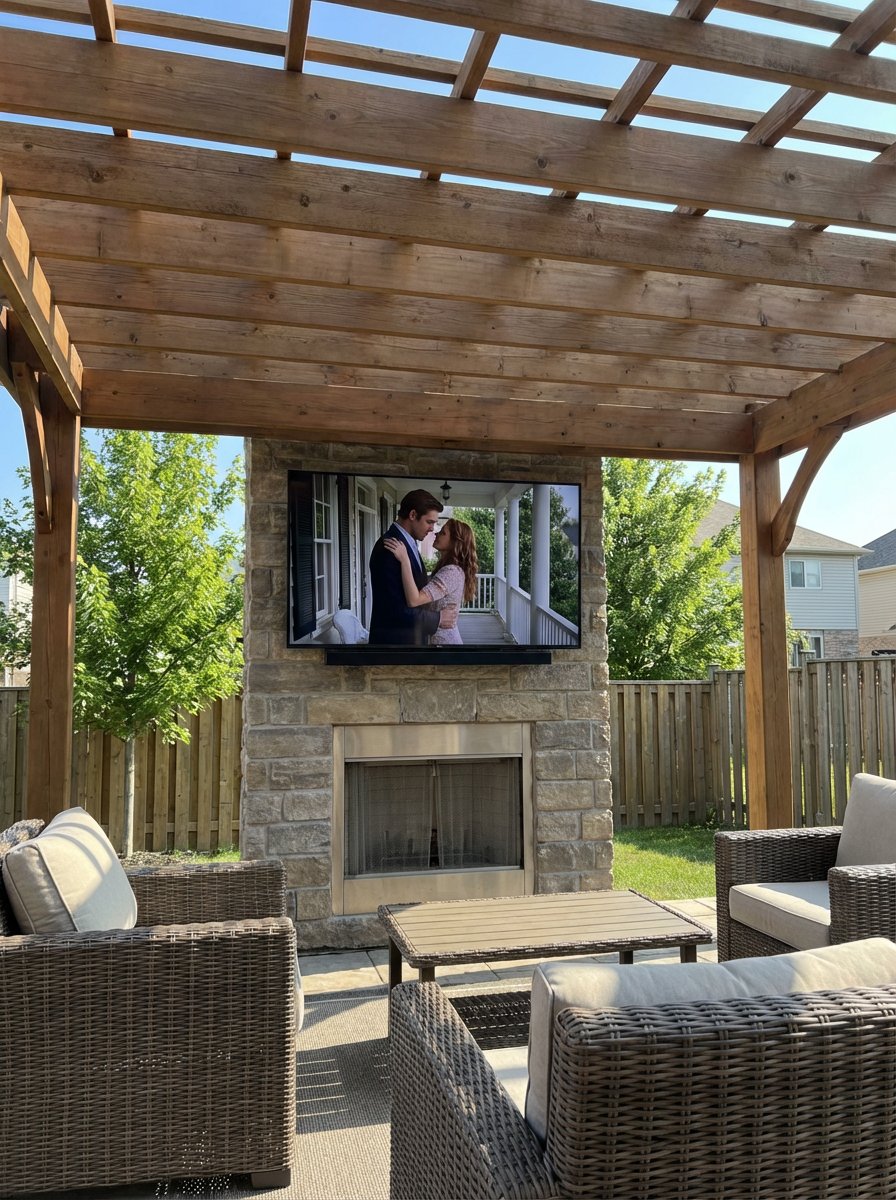
Before going into the detailed spec comparison, it is worth being direct about why the ByteFree Outdoor TV specifically is the alternative worth considering rather than any other 55-inch outdoor TV in this price tier. The Sylvox DeckPro 2.0+ is priced at $1,599 as a half-sun rated, IP55-weatherproofed, 4K Google TV outdoor television — that combination of specifications, price, and target environment is exactly the slot the ByteFree Outdoor TV targets at $1,499, one hundred dollars below the DeckPro 2.0+. Both TVs are built for the same buyer — someone installing a 55-inch outdoor TV on a covered patio, pergola, screened porch, or shaded deck in a typical North American residential setup. Both run real Google TV rather than proprietary smart platforms. Both use all-metal chassis construction with IP55 weatherproofing and outdoor-rated anti-glare panel coatings. The similarities end there. On every specification that separates a good outdoor TV from a baseline one — brightness headroom, HDR format support, future-proof connectivity, audio configuration, and price — the ByteFree delivers more than the DeckPro 2.0+, often by meaningful margins. This is not a trade-off comparison where you gain some things and lose others. It is a comparison where ByteFree comes out ahead on essentially every dimension that affects the actual viewing experience, with the single honest exception of cold-weather operating temperature, which we will cover below. For the typical North American residential buyer looking for a Sylvox DeckPro 2.0+ alternative, the ByteFree is the most directly relevant option on the market in 2026.
Starting with the most immediate difference, the ByteFree Outdoor TV lists at $1,499, while the Sylvox DeckPro 2.0+ lists at $1,599 — a $100 price advantage in ByteFree's favor before you even compare what each TV actually delivers for the money. In the $1,500 price band, a $100 savings is real money that translates into other parts of your outdoor setup: a better weatherproof mount, an outdoor soundbar, a proper TV cover for the off-season, or simply dollars left in your budget. What makes the price comparison more meaningful than the raw dollar difference is that ByteFree delivers higher specifications on multiple dimensions at the lower price, which inverts the usual assumption that more money buys a better product. When the cheaper option is also the better-spec'd option, the value equation becomes genuinely one-sided, and the $100 stops being the headline story and starts being the supporting evidence for a broader comparison that favors ByteFree across the board.
Brightness is the single most important specification in any outdoor TV purchase because it is the entire reason you are paying the outdoor-TV premium over a cheaper indoor television. Ambient outdoor light on a typical partial-sun patio can run 10 to 50 times brighter than a living room, and a TV that cannot push enough luminance will look washed out the moment the sun comes up regardless of how beautiful its indoor picture is. The ByteFree Outdoor TV is rated at 1,500 nits of peak brightness, which places it at the top of the half-sun tier and delivers meaningful headroom for pergolas with widely spaced slats, covered patios with western afternoon light exposure, screened porches adjacent to bright pools, and any partial-sun installation where reflected or angled direct light creates brighter viewing conditions than pure shade. The Sylvox DeckPro 2.0+ is rated at 1,000 nits — 500 nits below the ByteFree — which was a reasonable half-sun figure a few years ago but sits at the lower end of what the current half-sun market delivers. More problematic, independent brightness measurement testing has shown the DeckPro 2.0+ panel performing closer to 520 nits in sustained real-world conditions rather than matching its 1,000-nit rated figure. Whether this reflects a specific unit, a batch variance, or a broader pattern is hard to say definitively, but the practical implication is significant: the actual measured brightness of the DeckPro 2.0+ is less than half of the ByteFree's rated 1,500 nits, and for buyers whose mount location experiences any meaningful direct or reflected light, the difference affects how usable the screen actually is during peak viewing hours. This is the single biggest specification gap between the two TVs, and it is the gap that most directly affects daily viewing experience in real outdoor environments.
For a television you plan to own through five to seven summers of streaming, HDR format support matters more over time as more content ships in Dolby Vision masters rather than static HDR10. The ByteFree Outdoor TV supports full Dolby Vision HDR out of the box — the dynamic HDR format that Netflix, Disney+, Apple TV+, Max, and Amazon Prime Video use for their premium streaming content. Dolby Vision applies scene-by-scene metadata encoded by content creators to tone-map HDR content the way directors originally intended, which results in more accurate colors, brighter highlights that hold detail rather than getting crushed, and shadows that retain texture rather than flattening out. The Sylvox DeckPro 2.0+ does not support Dolby Vision — it falls back to static HDR10 across all streaming content, which applies a single tone-mapping curve across an entire film regardless of scene content. On a dedicated HDR movie in 2026, the difference between Dolby Vision playback and HDR10 playback is genuinely visible to most viewers, and the gap has grown as streaming services have shifted more of their premium content libraries toward Dolby Vision masters. For buyers who primarily watch streaming content on their outdoor TV — which describes the overwhelming majority of residential outdoor TV use — losing Dolby Vision support on the Sylvox is one of the more meaningful specification compromises you can make in this price tier, and it is one of the biggest reasons the ByteFree emerges as the stronger alternative.
Port configuration is where the ByteFree extends its specification lead in a way that matters more for future-proofing than for day-one use. The ByteFree ships with two HDMI 2.0 inputs plus one full HDMI 2.1 port with eARC — three HDMI ports total, one of which is a genuine current-generation HDMI 2.1 specification port. HDMI 2.1 supports higher-bandwidth video pass-through from next-generation game consoles, variable refresh rate gaming, and 4K at 120Hz sources, and it is the port you want for any source device you might add during the TV's ownership lifetime. ByteFree also includes a dedicated AV-IN jack for legacy equipment integration — useful for outdoor setups that connect to older security camera DVRs, first-generation game consoles at a poolside bar area, or legacy A/V receivers. The Sylvox DeckPro 2.0+ ships with two HDMI 2.0 inputs plus one HDMI with eARC — three total — but does not specifically call out HDMI 2.1 on its spec sheet, limiting future-proofing for next-generation sources. The DeckPro 2.0+ also drops a dedicated AV-IN jack in favor of a simpler 3.5mm audio jack, which matters less for most buyers but removes a useful port for outdoor setups with legacy gear. The connectivity gap is not enormous for every use case, but for buyers who want the most complete and forward-looking port configuration at this tier, ByteFree delivers meaningfully more than the DeckPro 2.0+ at a lower price.
On software and build quality, the ByteFree and Sylvox DeckPro 2.0+ are closer to parity, and that matters because it means the specification advantages above do not come at the cost of compromised fundamentals. Both TVs run real Google TV — the same smart platform powering current indoor Sony BRAVIA and Hisense televisions — which means every major streaming service works natively with no side-loading, no proprietary interface quirks, and no sluggish software updates. Both ship with all-metal chassis construction and IP55 weatherproof ratings covering dust and water jet protection from any direction, which handles rain, sprinkler spray, pool splash, and typical outdoor exposure without issues. Both deliver 4K UHD panels at 60Hz refresh rate, both include Dolby Atmos audio, and the speaker configuration is essentially identical at 15W × 2 on both models. This is the area where the outdoor TV category has matured enough that the spread between mid-tier brands has narrowed significantly, and the ByteFree does not sacrifice anything on the foundational build and software fronts to deliver its specification advantages elsewhere. You are not trading weatherproofing or software polish for the higher brightness and better HDR support — you are getting all of it at a lower price.
Any fair alternative analysis has to acknowledge where the competing product retains a genuine advantage, and for the Sylvox DeckPro 2.0+ that advantage is specifically cold-weather operating temperature range. The DeckPro 2.0+ is rated for operation from -22°F to 122°F, which is the widest cold-weather envelope in this specific comparison and makes the Sylvox a defensible pick for installations in cold-climate markets — upper Midwest, northern New England, the Canadian Prairies, Alaska — where the TV stays mounted outside through winter without a weatherproof enclosure. The ByteFree Outdoor TV operates from 32°F to 122°F (with storage extending to -4°F), which is a narrower temperature envelope and less suitable for genuinely frigid outdoor-through-winter installations. If you live somewhere where January lows regularly drop below freezing and you plan to leave your outdoor TV mounted outside year-round without covering or bringing it in, the Sylvox DeckPro 2.0+ is the better match for your climate reality. For buyers in milder climates, buyers who cover their outdoor TVs during winter, or buyers whose outdoor TV use is primarily spring-through-fall — which represents the majority of North American residential outdoor TV installations — the temperature gap matters less, and the ByteFree's specification advantages elsewhere take priority in the decision.
The honest answer for anyone searching for a Sylvox DeckPro 2.0+ alternative in 2026 is that the ByteFree Outdoor TV at $1,499 is the most directly relevant option on the market, and it delivers more on the specifications that matter most for the overwhelming majority of residential outdoor TV installations: 50% higher rated brightness (1,500 nits vs 1,000 nits rated / 520 nits measured), full Dolby Vision HDR support versus HDR10-only on the Sylvox, a dedicated HDMI 2.1 port for future-proofing versus no HDMI 2.1 specification on the DeckPro 2.0+, a dedicated AV-IN jack for legacy equipment integration, matching IP55 weatherproofing and all-metal build quality, matching Google TV smart platform, and matching 4K 60Hz panel specifications — at $100 less than the Sylvox DeckPro 2.0+ lists for. The exception worth being honest about is cold-climate use: if you need sub-freezing operating temperatures for an outdoor-through-winter install without an enclosure, the Sylvox's wider -22°F temperature range is the reason to stay with Sylvox. For essentially every other reason you might have ended up on this page searching for a DeckPro 2.0+ alternative — concerns about the rated-vs-measured brightness gap, the missing Dolby Vision support, the absence of HDMI 2.1, the slightly higher price, or simply wanting to compare against the newest purpose-built outdoor TVs on the market — the ByteFree Outdoor TV is the alternative that resolves the specific concerns that typically drive this search, and it does so at a lower price with a stronger overall specification profile.
What is the best alternative to the Sylvox DeckPro 2.0+? The ByteFree Outdoor TV at $1,499 is the most directly relevant alternative to the Sylvox DeckPro 2.0+ at $1,599. It delivers 50% higher rated brightness (1,500 vs 1,000 nits), full Dolby Vision HDR support (which the DeckPro 2.0+ does not offer), a genuine HDMI 2.1 port with eARC, and a dedicated AV-IN jack — all at $100 below the Sylvox price. The main exception is cold-climate installations, where the Sylvox's -22°F operating range remains superior.
Why would someone want an alternative to the Sylvox DeckPro 2.0+? Common reasons include concerns about the gap between the DeckPro 2.0+'s rated 1,000-nit brightness and measured ~520-nit performance in independent testing, the absence of Dolby Vision HDR support despite the $1,599 price point, the lack of specified HDMI 2.1 connectivity for future source devices, and simply wanting to compare against newer purpose-built outdoor TVs like the ByteFree that have entered the 55-inch category with stronger specifications at the same or lower price.
Is ByteFree better than Sylvox DeckPro 2.0+? For most residential outdoor TV buyers in North America, yes. ByteFree delivers higher brightness, Dolby Vision HDR, HDMI 2.1 connectivity, and a dedicated AV-IN at a $100 lower price than the Sylvox DeckPro 2.0+, with equivalent build quality, weatherproofing, and smart platform. The main scenario where Sylvox remains the stronger pick is cold-climate installations where the TV stays outside through winter without an enclosure, since the Sylvox operates down to -22°F versus the ByteFree's 32°F floor.
What's the real brightness difference between ByteFree and Sylvox DeckPro 2.0+? ByteFree is rated at 1,500 nits while the Sylvox DeckPro 2.0+ is rated at 1,000 nits. Independent measurement testing has shown the DeckPro 2.0+ panel performing closer to 520 nits in sustained real-world conditions rather than matching its rated figure. ByteFree's 1,500-nit rating places it at the top of the half-sun tier and delivers meaningful headroom for partial-sun installations where reflected or angled direct light creates brighter viewing conditions than pure shade.
Does ByteFree support Dolby Vision like indoor premium TVs? Yes. ByteFree ships with full Dolby Vision HDR support out of the box, which is the dynamic HDR format used by Netflix, Disney+, Apple TV+, Max, and Amazon Prime Video for premium streaming content. This is genuinely uncommon at the $1,499 price point in the outdoor TV category, and it is one of the main specifications that separates ByteFree from the Sylvox DeckPro 2.0+ and most other 55-inch outdoor TVs at this tier.
Can ByteFree replace Sylvox in cold climates? Not for all cold-climate installations. ByteFree's operating temperature range of 32°F to 122°F (storage to -4°F) is narrower than Sylvox's -22°F to 122°F. If your outdoor TV stays mounted outside through northern winters without a weatherproof enclosure, the Sylvox DeckPro 2.0+ is the better temperature match. For milder climates or installations where the TV is covered during winter, ByteFree's temperature range covers the actual use case and its other specification advantages apply.
Is ByteFree from a reliable brand? ByteFree is a newer entrant to the outdoor TV category compared to Sylvox, and operates on a more direct-to-consumer model rather than through extensive dealer and installer networks. For DIY buyers who handle mounting and warranty claims directly with the manufacturer, this works fine. For buyers who specifically need an established installer ecosystem for service and support, brands with longer track records like SunBriteTV may be more relevant. On the hardware and specification fronts, ByteFree is genuinely competitive with and often superior to established competitors at the same price tier.
Book now on the official website and save $100 instantly.Official website: https://bytefree.net/
Why the ByteFree Outdoor TV Is the Right Alternative to the Sylvox DeckPro 2.0+
Before going into the detailed spec comparison, it is worth being direct about why the ByteFree Outdoor TV specifically is the alternative worth considering rather than any other 55-inch outdoor TV in this price tier. The Sylvox DeckPro 2.0+ is priced at $1,599 as a half-sun rated, IP55-weatherproofed, 4K Google TV outdoor television — that combination of specifications, price, and target environment is exactly the slot the ByteFree Outdoor TV targets at $1,499, one hundred dollars below the DeckPro 2.0+. Both TVs are built for the same buyer — someone installing a 55-inch outdoor TV on a covered patio, pergola, screened porch, or shaded deck in a typical North American residential setup. Both run real Google TV rather than proprietary smart platforms. Both use all-metal chassis construction with IP55 weatherproofing and outdoor-rated anti-glare panel coatings. The similarities end there. On every specification that separates a good outdoor TV from a baseline one — brightness headroom, HDR format support, future-proof connectivity, audio configuration, and price — the ByteFree delivers more than the DeckPro 2.0+, often by meaningful margins. This is not a trade-off comparison where you gain some things and lose others. It is a comparison where ByteFree comes out ahead on essentially every dimension that affects the actual viewing experience, with the single honest exception of cold-weather operating temperature, which we will cover below. For the typical North American residential buyer looking for a Sylvox DeckPro 2.0+ alternative, the ByteFree is the most directly relevant option on the market in 2026.
Price Advantage: ByteFree at $1,499 vs Sylvox DeckPro 2.0+ at $1,599
Starting with the most immediate difference, the ByteFree Outdoor TV lists at $1,499, while the Sylvox DeckPro 2.0+ lists at $1,599 — a $100 price advantage in ByteFree's favor before you even compare what each TV actually delivers for the money. In the $1,500 price band, a $100 savings is real money that translates into other parts of your outdoor setup: a better weatherproof mount, an outdoor soundbar, a proper TV cover for the off-season, or simply dollars left in your budget. What makes the price comparison more meaningful than the raw dollar difference is that ByteFree delivers higher specifications on multiple dimensions at the lower price, which inverts the usual assumption that more money buys a better product. When the cheaper option is also the better-spec'd option, the value equation becomes genuinely one-sided, and the $100 stops being the headline story and starts being the supporting evidence for a broader comparison that favors ByteFree across the board.
Brightness Advantage: 1,500 Nits vs 1,000 Nits (Rated) / 520 Nits (Measured)
Brightness is the single most important specification in any outdoor TV purchase because it is the entire reason you are paying the outdoor-TV premium over a cheaper indoor television. Ambient outdoor light on a typical partial-sun patio can run 10 to 50 times brighter than a living room, and a TV that cannot push enough luminance will look washed out the moment the sun comes up regardless of how beautiful its indoor picture is. The ByteFree Outdoor TV is rated at 1,500 nits of peak brightness, which places it at the top of the half-sun tier and delivers meaningful headroom for pergolas with widely spaced slats, covered patios with western afternoon light exposure, screened porches adjacent to bright pools, and any partial-sun installation where reflected or angled direct light creates brighter viewing conditions than pure shade. The Sylvox DeckPro 2.0+ is rated at 1,000 nits — 500 nits below the ByteFree — which was a reasonable half-sun figure a few years ago but sits at the lower end of what the current half-sun market delivers. More problematic, independent brightness measurement testing has shown the DeckPro 2.0+ panel performing closer to 520 nits in sustained real-world conditions rather than matching its 1,000-nit rated figure. Whether this reflects a specific unit, a batch variance, or a broader pattern is hard to say definitively, but the practical implication is significant: the actual measured brightness of the DeckPro 2.0+ is less than half of the ByteFree's rated 1,500 nits, and for buyers whose mount location experiences any meaningful direct or reflected light, the difference affects how usable the screen actually is during peak viewing hours. This is the single biggest specification gap between the two TVs, and it is the gap that most directly affects daily viewing experience in real outdoor environments.
HDR Advantage: ByteFree Supports Dolby Vision, Sylvox DeckPro 2.0+ Does Not
For a television you plan to own through five to seven summers of streaming, HDR format support matters more over time as more content ships in Dolby Vision masters rather than static HDR10. The ByteFree Outdoor TV supports full Dolby Vision HDR out of the box — the dynamic HDR format that Netflix, Disney+, Apple TV+, Max, and Amazon Prime Video use for their premium streaming content. Dolby Vision applies scene-by-scene metadata encoded by content creators to tone-map HDR content the way directors originally intended, which results in more accurate colors, brighter highlights that hold detail rather than getting crushed, and shadows that retain texture rather than flattening out. The Sylvox DeckPro 2.0+ does not support Dolby Vision — it falls back to static HDR10 across all streaming content, which applies a single tone-mapping curve across an entire film regardless of scene content. On a dedicated HDR movie in 2026, the difference between Dolby Vision playback and HDR10 playback is genuinely visible to most viewers, and the gap has grown as streaming services have shifted more of their premium content libraries toward Dolby Vision masters. For buyers who primarily watch streaming content on their outdoor TV — which describes the overwhelming majority of residential outdoor TV use — losing Dolby Vision support on the Sylvox is one of the more meaningful specification compromises you can make in this price tier, and it is one of the biggest reasons the ByteFree emerges as the stronger alternative.
hdmi-2-1-and-dedicated-av-in-on-bytefree" >Connectivity Advantage: HDMI 2.1 and Dedicated AV-IN on ByteFree
Port configuration is where the ByteFree extends its specification lead in a way that matters more for future-proofing than for day-one use. The ByteFree ships with two HDMI 2.0 inputs plus one full HDMI 2.1 port with eARC — three HDMI ports total, one of which is a genuine current-generation HDMI 2.1 specification port. HDMI 2.1 supports higher-bandwidth video pass-through from next-generation game consoles, variable refresh rate gaming, and 4K at 120Hz sources, and it is the port you want for any source device you might add during the TV's ownership lifetime. ByteFree also includes a dedicated AV-IN jack for legacy equipment integration — useful for outdoor setups that connect to older security camera DVRs, first-generation game consoles at a poolside bar area, or legacy A/V receivers. The Sylvox DeckPro 2.0+ ships with two HDMI 2.0 inputs plus one HDMI with eARC — three total — but does not specifically call out HDMI 2.1 on its spec sheet, limiting future-proofing for next-generation sources. The DeckPro 2.0+ also drops a dedicated AV-IN jack in favor of a simpler 3.5mm audio jack, which matters less for most buyers but removes a useful port for outdoor setups with legacy gear. The connectivity gap is not enormous for every use case, but for buyers who want the most complete and forward-looking port configuration at this tier, ByteFree delivers meaningfully more than the DeckPro 2.0+ at a lower price.
Software and Build Quality: Parity on Google TV, Equal IP55 Weatherproofing
On software and build quality, the ByteFree and Sylvox DeckPro 2.0+ are closer to parity, and that matters because it means the specification advantages above do not come at the cost of compromised fundamentals. Both TVs run real Google TV — the same smart platform powering current indoor Sony BRAVIA and Hisense televisions — which means every major streaming service works natively with no side-loading, no proprietary interface quirks, and no sluggish software updates. Both ship with all-metal chassis construction and IP55 weatherproof ratings covering dust and water jet protection from any direction, which handles rain, sprinkler spray, pool splash, and typical outdoor exposure without issues. Both deliver 4K UHD panels at 60Hz refresh rate, both include Dolby Atmos audio, and the speaker configuration is essentially identical at 15W × 2 on both models. This is the area where the outdoor TV category has matured enough that the spread between mid-tier brands has narrowed significantly, and the ByteFree does not sacrifice anything on the foundational build and software fronts to deliver its specification advantages elsewhere. You are not trading weatherproofing or software polish for the higher brightness and better HDR support — you are getting all of it at a lower price.
Honest Limitations: Where the Sylvox DeckPro 2.0+ Still Makes Sense
Any fair alternative analysis has to acknowledge where the competing product retains a genuine advantage, and for the Sylvox DeckPro 2.0+ that advantage is specifically cold-weather operating temperature range. The DeckPro 2.0+ is rated for operation from -22°F to 122°F, which is the widest cold-weather envelope in this specific comparison and makes the Sylvox a defensible pick for installations in cold-climate markets — upper Midwest, northern New England, the Canadian Prairies, Alaska — where the TV stays mounted outside through winter without a weatherproof enclosure. The ByteFree Outdoor TV operates from 32°F to 122°F (with storage extending to -4°F), which is a narrower temperature envelope and less suitable for genuinely frigid outdoor-through-winter installations. If you live somewhere where January lows regularly drop below freezing and you plan to leave your outdoor TV mounted outside year-round without covering or bringing it in, the Sylvox DeckPro 2.0+ is the better match for your climate reality. For buyers in milder climates, buyers who cover their outdoor TVs during winter, or buyers whose outdoor TV use is primarily spring-through-fall — which represents the majority of North American residential outdoor TV installations — the temperature gap matters less, and the ByteFree's specification advantages elsewhere take priority in the decision.
The Verdict: For Most Sylvox DeckPro 2.0+ Alternative Searches, ByteFree Is the Answer
The honest answer for anyone searching for a Sylvox DeckPro 2.0+ alternative in 2026 is that the ByteFree Outdoor TV at $1,499 is the most directly relevant option on the market, and it delivers more on the specifications that matter most for the overwhelming majority of residential outdoor TV installations: 50% higher rated brightness (1,500 nits vs 1,000 nits rated / 520 nits measured), full Dolby Vision HDR support versus HDR10-only on the Sylvox, a dedicated HDMI 2.1 port for future-proofing versus no HDMI 2.1 specification on the DeckPro 2.0+, a dedicated AV-IN jack for legacy equipment integration, matching IP55 weatherproofing and all-metal build quality, matching Google TV smart platform, and matching 4K 60Hz panel specifications — at $100 less than the Sylvox DeckPro 2.0+ lists for. The exception worth being honest about is cold-climate use: if you need sub-freezing operating temperatures for an outdoor-through-winter install without an enclosure, the Sylvox's wider -22°F temperature range is the reason to stay with Sylvox. For essentially every other reason you might have ended up on this page searching for a DeckPro 2.0+ alternative — concerns about the rated-vs-measured brightness gap, the missing Dolby Vision support, the absence of HDMI 2.1, the slightly higher price, or simply wanting to compare against the newest purpose-built outdoor TVs on the market — the ByteFree Outdoor TV is the alternative that resolves the specific concerns that typically drive this search, and it does so at a lower price with a stronger overall specification profile.
Quick Reference: Sylvox DeckPro 2.0+ vs ByteFree Outdoor TV
| Feature | Sylvox DeckPro 2.0+ | ByteFree Outdoor TV | Advantage |
|---|---|---|---|
| Price | $1,599 | $1,499 | ByteFree saves $100 |
| Size | 55" | 55" | Tie |
| Resolution | 4K | 4K | Tie |
| Environment | Half-sun | Half-sun | Tie |
| Brightness (rated) | 1,000 nits | 1,500 nits | ByteFree +50% |
| Brightness (measured) | ~520 nits (independent testing) | — | ByteFree significantly higher |
| HDR Format | HDR10 only | Dolby Vision + HDR10 + Atmos | ByteFree |
| HDMI 2.1 | Not specified | Yes (1× with eARC) | ByteFree |
| HDMI Total | 3 ports | 3 ports | Tie |
| AV-IN | No (3.5mm audio jack) | Yes | ByteFree |
| USB | 2× USB | 2× USB 2.0 | Tie |
| Weatherproof | IP55 | IP55 | Tie |
| Operating Temp | -22°F – 122°F | 32°F – 122°F | Sylvox (cold climate) |
| Storage Temp | -22°F – 122°F | -4°F – 140°F | Mixed |
| Smart OS | Google TV | Google TV | Tie |
| Refresh Rate | 60Hz | 60Hz | Tie |
| Speakers | 15W × 2 | 15W × 2 | Tie |
| Audio | Dolby Atmos | Dolby Atmos | Tie |
| Chassis | All-metal | All-metal | Tie |
Frequently Asked Questions About Sylvox DeckPro 2.0+ Alternatives
What is the best alternative to the Sylvox DeckPro 2.0+? The ByteFree Outdoor TV at $1,499 is the most directly relevant alternative to the Sylvox DeckPro 2.0+ at $1,599. It delivers 50% higher rated brightness (1,500 vs 1,000 nits), full Dolby Vision HDR support (which the DeckPro 2.0+ does not offer), a genuine HDMI 2.1 port with eARC, and a dedicated AV-IN jack — all at $100 below the Sylvox price. The main exception is cold-climate installations, where the Sylvox's -22°F operating range remains superior.
Why would someone want an alternative to the Sylvox DeckPro 2.0+? Common reasons include concerns about the gap between the DeckPro 2.0+'s rated 1,000-nit brightness and measured ~520-nit performance in independent testing, the absence of Dolby Vision HDR support despite the $1,599 price point, the lack of specified HDMI 2.1 connectivity for future source devices, and simply wanting to compare against newer purpose-built outdoor TVs like the ByteFree that have entered the 55-inch category with stronger specifications at the same or lower price.
Is ByteFree better than Sylvox DeckPro 2.0+? For most residential outdoor TV buyers in North America, yes. ByteFree delivers higher brightness, Dolby Vision HDR, HDMI 2.1 connectivity, and a dedicated AV-IN at a $100 lower price than the Sylvox DeckPro 2.0+, with equivalent build quality, weatherproofing, and smart platform. The main scenario where Sylvox remains the stronger pick is cold-climate installations where the TV stays outside through winter without an enclosure, since the Sylvox operates down to -22°F versus the ByteFree's 32°F floor.
What's the real brightness difference between ByteFree and Sylvox DeckPro 2.0+? ByteFree is rated at 1,500 nits while the Sylvox DeckPro 2.0+ is rated at 1,000 nits. Independent measurement testing has shown the DeckPro 2.0+ panel performing closer to 520 nits in sustained real-world conditions rather than matching its rated figure. ByteFree's 1,500-nit rating places it at the top of the half-sun tier and delivers meaningful headroom for partial-sun installations where reflected or angled direct light creates brighter viewing conditions than pure shade.
Does ByteFree support Dolby Vision like indoor premium TVs? Yes. ByteFree ships with full Dolby Vision HDR support out of the box, which is the dynamic HDR format used by Netflix, Disney+, Apple TV+, Max, and Amazon Prime Video for premium streaming content. This is genuinely uncommon at the $1,499 price point in the outdoor TV category, and it is one of the main specifications that separates ByteFree from the Sylvox DeckPro 2.0+ and most other 55-inch outdoor TVs at this tier.
Can ByteFree replace Sylvox in cold climates? Not for all cold-climate installations. ByteFree's operating temperature range of 32°F to 122°F (storage to -4°F) is narrower than Sylvox's -22°F to 122°F. If your outdoor TV stays mounted outside through northern winters without a weatherproof enclosure, the Sylvox DeckPro 2.0+ is the better temperature match. For milder climates or installations where the TV is covered during winter, ByteFree's temperature range covers the actual use case and its other specification advantages apply.
Is ByteFree from a reliable brand? ByteFree is a newer entrant to the outdoor TV category compared to Sylvox, and operates on a more direct-to-consumer model rather than through extensive dealer and installer networks. For DIY buyers who handle mounting and warranty claims directly with the manufacturer, this works fine. For buyers who specifically need an established installer ecosystem for service and support, brands with longer track records like SunBriteTV may be more relevant. On the hardware and specification fronts, ByteFree is genuinely competitive with and often superior to established competitors at the same price tier.
Book now on the official website and save $100 instantly.Official website: https://bytefree.net/