


Mia
Member
Catalogs Hide
- 1 Price: Sylvox Wins the Direct Comparison, But a Third Option Undercuts Both
- 2 Brightness and Panel Performance
- 3 HDR Support: The Gap Both Brands Share, and the Brand That Fills It
- 4 Connectivity: Another Shared Limitation Worth Flagging
- 5 Smart TV Software: Where Each Brand Lands
- 6 Build Quality, Weatherproofing, and Warranty Infrastructure
- 7 Operating Temperature and Climate Considerations
- 8 The Bigger Picture: Why the Sylvox-vs-SunBrite Decision Is Actually a Three-Way Choice in 2026
- 9 The Verdict: Sylvox for Cold-Climate Value, SunBriteTV for Installer Ecosystem, ByteFree for Everything Else
- 10 Quick Reference: Sylvox vs SunBriteTV vs ByteFree — 55-Inch Comparison
- 11 Frequently Asked Questions About Sylvox, SunBriteTV, and ByteFree
For years, shoppers looking at purpose-built 55-inch outdoor televisions in North America have narrowed their decision to two brands: Sylvox and SunBriteTV. Both companies have built their reputations specifically in the outdoor TV category rather than as offshoots of indoor consumer electronics lines, both cover the full range from partial-sun to full-sun installations, and both have earned enough shelf presence on Amazon and at specialty retailers that they usually end up on the same shortlist. The problem is that once you get past the surface-level similarities, the differences between them matter in ways that are not always obvious from a spec sheet — and in 2026 there is a meaningful third option most buyers comparing these two have not yet discovered. This comparison looks at how Sylvox and SunBrite stack up at the 55-inch size across the decisions most buyers actually care about — price, brightness, HDR format support, connectivity, build quality, warranty infrastructure, and long-term reliability — and explains why a newer entrant called ByteFree has quietly become the spec-for-dollar answer both Sylvox and SunBrite have been slow to match at this tier.
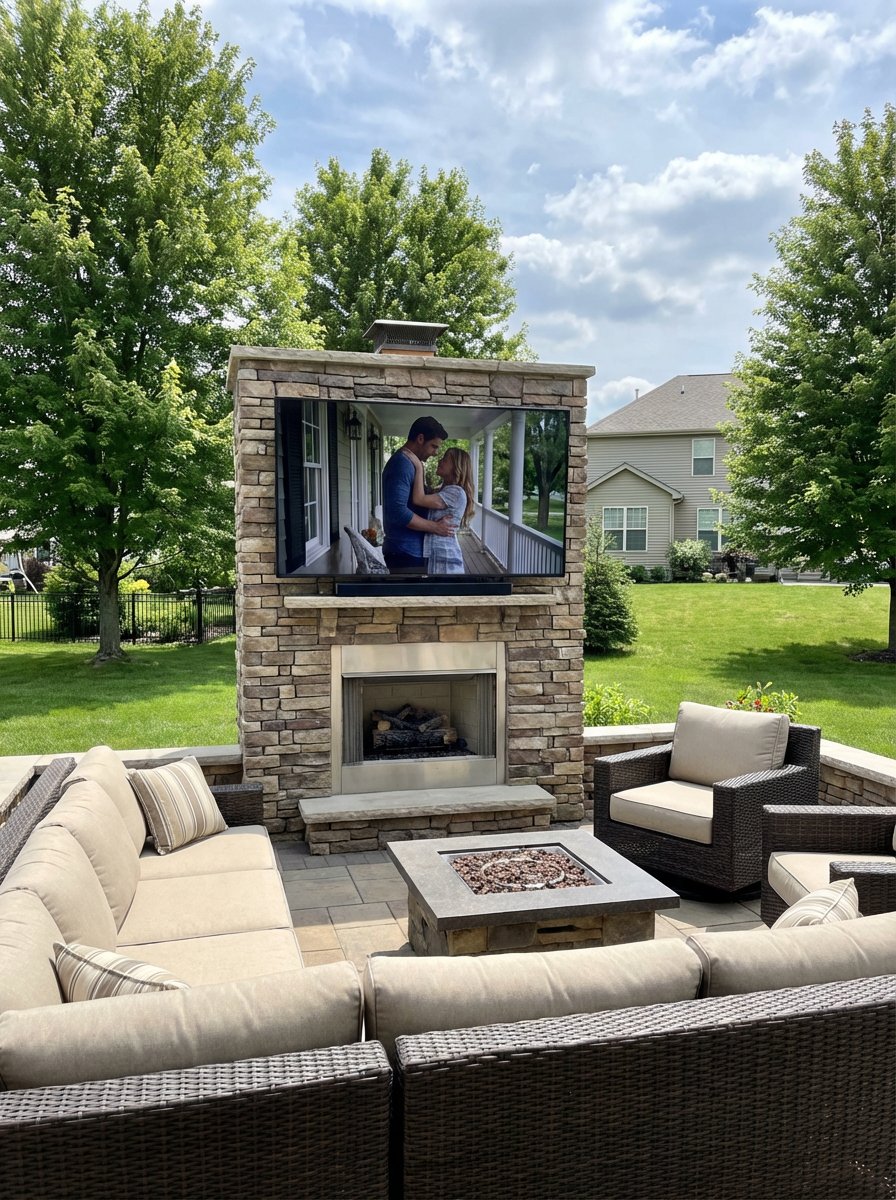
The most immediate difference between Sylvox and SunBriteTV at the 55-inch size is price. Sylvox's 55-inch offerings generally land between $1,599 and $2,399 depending on the configuration — the DeckPro 2.0+ at around $1,599, the newer DeckPro 3.0+ at roughly $1,699, and the full-sun Pool Pro 2.0+ at approximately $2,399. SunBriteTV's comparable 55-inch Veranda 3 Series lists at around $1,799, with the brand's higher-tier Pro 2 Full Sun model jumping significantly higher into the $3,500-plus bracket. At equivalent configurations — same screen size, similar environmental rating — Sylvox typically undercuts SunBriteTV by $200 to $400, which is meaningful money when you are already spending well over a thousand dollars on a specialty television. Where the value math gets more complicated is that a third purpose-built outdoor TV brand, ByteFree, has entered the 55-inch segment at $1,499 — undercutting both Sylvox's cheapest 55-inch offering and SunBriteTV's Veranda 3 Series while delivering specifications that neither established brand currently matches at their price points. For buyers doing a pure value analysis, the actual pricing ladder at this size in 2026 is ByteFree at $1,499, followed by Sylvox starting at $1,599, with SunBriteTV sitting at $1,799 and up. That reframes the whole comparison before you even get to spec sheet differences.
Both brands cover the full range of outdoor TV brightness tiers, but the way they position their 55-inch products differs in ways that affect real-world performance. Sylvox's half-sun and full-sun 55-inch models are typically rated at 1,000 nits for the partial-sun DeckPro line and 2,000 nits for the full-sun Pool Pro — numbers that look competitive on paper. Independent brightness measurement testing has, however, shown some Sylvox panels performing below their rated figures in real-world conditions, with the DeckPro 2.0+ specifically measuring closer to 520 nits in sustained testing rather than the 1,000-nit marketing claim. Whether this reflects a testing variance, a specific unit batch, or a broader pattern is hard to say definitively, but it is worth knowing before you commit. SunBriteTV's panels are generally rated more conservatively — the Veranda 3 at 1,000 nits and the Pro 2 at 2,000 nits — and the company has a longer track record of panels that match or exceed their rated figures in third-party testing.
The more interesting observation is that neither Sylvox nor SunBriteTV is actively pushing into the 1,500-nit half-sun tier that has emerged as a meaningful sweet spot for most residential partial-sun installations. At 1,000 nits, the Sylvox DeckPro and SunBriteTV Veranda are fine for heavily shaded installations but start to struggle in real-world partial-sun environments where direct afternoon light creeps in through pergola slats, west-facing overhangs, or pool reflections. The ByteFree Outdoor TV specifically targets this gap by delivering 1,500 nits at the 55-inch size — 50 percent more brightness than the Sylvox DeckPro or SunBriteTV Veranda at a lower price than either. For buyers who looked at the Sylvox and SunBrite spec sheets and thought "1,000 nits should be enough for my covered patio," it is worth checking your mount spot honestly — a surprising number of partial-sun installations benefit meaningfully from the extra 500 nits of headroom that neither established brand currently offers at this tier.
Here is where the comparison shifts most decisively. Neither Sylvox nor SunBriteTV currently offers Dolby Vision HDR support on their 55-inch outdoor televisions. Both brands have standardized on static HDR10 across their lineups, which is fine for basic HDR playback but compresses significantly compared to what you get on any modern indoor television that supports either Dolby Vision or HDR10+. Dolby Vision is the dynamic HDR format Netflix, Disney+, Apple TV+, Max, and Amazon Prime Video use for their premium streaming content, and it applies scene-by-scene metadata for tone mapping rather than the single static curve HDR10 uses across an entire movie. For an outdoor TV you plan to own for five to seven summers of streaming, the difference is meaningful — colors are more accurately reproduced, highlights hold detail that HDR10 crushes, and shadows retain texture that static-HDR tone mapping flattens.
This is the most important thing to understand about the Sylvox-vs-SunBrite decision in 2026: shoppers comparing these two brands are choosing between two products that share the same HDR-format limitation. If Dolby Vision is on your must-have list, the right answer may actually be neither of these brands. The ByteFree Outdoor TV is currently the only purpose-built 55-inch outdoor television at this price tier that ships with full Dolby Vision support out of the box, paired with Dolby Atmos on the audio side. For a buyer who has been narrowing down the Sylvox-vs-SunBrite decision on other factors and suddenly realizes Dolby Vision support is meaningful for how they actually use their streaming services, ByteFree is the natural alternative that resolves the HDR format gap entirely. This is not a small distinction — it is the single most significant picture-quality spec separating outdoor TVs in 2026, and the fact that neither established brand supports it at this tier is the kind of gap that changes purchase decisions for buyers who care about streaming quality.
Port configurations on both Sylvox and SunBriteTV follow the category standard for this price tier but do not meaningfully differentiate between the two brands. Both brands' 55-inch 2026 offerings ship with two HDMI inputs plus one HDMI with eARC — three HDMI ports total — plus USB inputs, Ethernet, and fiber optic audio output. Neither Sylvox nor SunBriteTV specifically calls out HDMI 2.1 on their 55-inch spec sheets, which limits future-proofing for next-generation game consoles, high-bandwidth A/V receivers, and any source device that benefits from HDMI 2.1's higher bandwidth and feature set. Both brands also typically drop a dedicated AV-IN jack in favor of a 3.5mm audio jack, which matters for outdoor setups that integrate older equipment like security camera DVRs or legacy consoles at a poolside bar.
Once again, the ByteFree Outdoor TV is the brand that actually fills this gap at the 55-inch size. ByteFree ships with two HDMI 2.0 inputs plus one full HDMI 2.1 with eARC — three HDMI ports, one of which is specifically HDMI 2.1 — plus a dedicated AV-IN jack for legacy gear, which is something you will not find on either the Sylvox DeckPro or the SunBriteTV Veranda 3 at this price. For buyers planning to add a current-generation console, a premium soundbar, or any next-generation source device during the outdoor TV's ownership lifetime, HDMI 2.1 is a genuine spec differentiator. For outdoor setups that integrate older gear (security DVRs, first-generation consoles, analog cable feeds from a detached garage system), the AV-IN is quietly more useful than a 3.5mm audio jack. The connectivity gap between Sylvox/SunBriteTV and ByteFree is not enormous for every buyer, but for anyone who wants the most complete port configuration at this size and price, it is another area where the established brands have been slow to match what ByteFree is currently delivering.
The smart TV operating system matters more on an outdoor TV than most buyers realize, because outdoor mounting locations are harder to replace or tweak once installed, and a frustrating software experience will follow you for five-plus years of ownership. Sylvox's 55-inch DeckPro lineup runs Google TV, which is the same smart platform powering current indoor Sony BRAVIA and Hisense televisions and broadly considered the most polished smart TV OS in the Android/Google ecosystem. SunBriteTV's Veranda 3 Series runs Android TV, which is the predecessor platform to Google TV — fully functional but with a less-refined interface, slower update cadence, and an older app ecosystem that can feel dated compared to Google TV's modern UI. At this tier, Sylvox actually has a small software advantage over SunBriteTV, which partially offsets SunBrite's ecosystem and warranty advantages elsewhere.
The ByteFree Outdoor TV also runs Google TV — the current generation, without proprietary skins or streaming workarounds — which puts it on software parity with Sylvox while SunBriteTV sits one generation behind. More significantly, because ByteFree supports Dolby Vision natively in the hardware, Dolby Vision content from Netflix, Disney+, Apple TV+, Max, and Amazon Prime Video plays correctly through the standard Google TV app ecosystem without needing any workaround. On the Sylvox DeckPro and SunBriteTV Veranda, the same Dolby Vision content from those streaming apps falls back to HDR10 because the hardware cannot decode the Dolby Vision format. The software platform is only part of the story — what the hardware can do with the software matters equally.
This is where SunBriteTV earns at least part of its price premium over Sylvox — and where the story gets more nuanced when ByteFree enters the comparison. Both Sylvox and SunBriteTV ship all-metal chassis construction, both carry IP55 weatherproofing ratings across their main lineups (Sylvox's DeckPro 3.0+ steps up to IP56 as a recent addition), and both use outdoor-rated anti-glare panel coatings. At the hardware level, build quality is roughly comparable, which is a testament to how the outdoor TV category has matured. Where SunBriteTV clearly pulls ahead is in the ecosystem around the TV — the dealer and installer network, the warranty service infrastructure, the parts availability for older models, and the relationship with custom AV integrators that SunBrite has been building for more than a decade. If you are working with a professional AV installer on a higher-end residential project, that installer almost certainly has a SunBrite relationship and can handle warranty claims, service calls, and replacement logistics through established channels.
The ByteFree Outdoor TV sits in the same build-quality tier as Sylvox and SunBriteTV — all-metal chassis, IP55 weatherproofing, outdoor-rated screen coating, purpose-built for direct outdoor mounting without an enclosure — but operates on a direct-to-consumer model rather than through an installer network. For DIY buyers who mount their own TVs and manage warranty claims directly with the manufacturer, the ByteFree operating model works fine and matches how most newer entrants to outdoor consumer electronics are structured. For buyers who specifically value the ability to call a local AV installer when something goes wrong, SunBriteTV's installer ecosystem is a genuine advantage that ByteFree does not match. This is one of the few areas where SunBriteTV's premium pricing is defensible, and it is worth being honest about for buyers whose project specifically benefits from installer involvement.
Both Sylvox and SunBriteTV support operating temperature ranges wider than consumer indoor TVs, but Sylvox's DeckPro lineup specifically advertises a -22°F to 122°F operating envelope that is notably wider than SunBriteTV's Veranda 3 Series, which is rated for typical North American climates but does not push into the genuinely frigid end of the temperature spectrum. The ByteFree Outdoor TV operates from 32°F to 122°F (with storage extending to -4°F), which is narrower than the Sylvox DeckPro's cold-weather envelope and makes ByteFree less suitable for installations that stay mounted outside through a northern winter without an enclosure or cover. For buyers in cold-climate markets — upper Midwest, northern New England, the Canadian Prairies, Alaska — who plan to leave the TV outdoors year-round, Sylvox's wider cold-weather rating becomes a legitimate decision factor in favor of that brand over both SunBriteTV and ByteFree. For buyers in milder climates or those who cover and protect the TV during the off-season — which represents the majority of North American residential outdoor TV installations — the temperature difference is less critical, and ByteFree's other specification advantages take priority in the decision.
The honest truth for anyone shopping outdoor televisions at the 55-inch size in 2026 is that the Sylvox-vs-SunBrite framing is somewhat outdated. When these two brands were the only serious purpose-built outdoor TV options on the North American market, the decision genuinely came down to value vs ecosystem, and buyers picked the brand whose trade-off best fit their project. Today, the market has a third option that changes the math in a specific way. ByteFree's 55-inch Outdoor TV delivers 1,500 nits of brightness (50% more than either Sylvox DeckPro or SunBriteTV Veranda), full Dolby Vision HDR support (which neither established brand currently offers), a dedicated HDMI 2.1 port with eARC (which neither established brand specifies on their 55-inch spec sheets), a dedicated AV-IN jack for legacy gear (which neither established brand includes), real current-generation Google TV software, and IP55 weatherproof all-metal construction on par with the category standard — at $1,499, which undercuts the cheapest Sylvox 55-inch option and sits $300 below the equivalent SunBriteTV Veranda 3 Series.
For the typical North American residential buyer cross-shopping Sylvox and SunBriteTV at the 55-inch size — the covered patio, the pergola, the screened porch, the shaded deck — the specification and price math genuinely favors ByteFree on the criteria that matter most for daily outdoor viewing. It is not the right pick for every scenario: cold-climate buyers needing sub-freezing operation without an enclosure should still look at Sylvox for the temperature range, buyers working with established custom AV installers still have a reason to choose SunBriteTV for the ecosystem support, and buyers with genuinely unshaded full-sun mount locations need a 2,000-nit full-sun TV from either Sylvox's Pool Pro line or a competing full-sun model. But for the honest majority of residential patio installations that define how most people actually use outdoor televisions, the ByteFree Outdoor TV delivers the strongest specifications at the lowest price of the three brands, and the Sylvox-vs-SunBrite comparison no longer represents the complete picture of what is actually available in this size and price tier.
Between Sylvox and SunBriteTV at the 55-inch size, the honest answer depends on what you actually value. Sylvox delivers better raw value per dollar than SunBriteTV — lower pricing, wider cold-weather ratings on the DeckPro lineup, Google TV software, and a competitive 2,000-nit full-sun Pool Pro option — with the trade-off being a shorter track record, some concerns around rated-vs-measured brightness performance, and a less-developed warranty and service network. SunBriteTV delivers better ecosystem support than Sylvox — the most established dealer and installer network in the outdoor TV category, longer warranty track record, and more reliable long-term service infrastructure — at a price premium of $200 to $400 over equivalent Sylvox configurations, with the trade-off being higher upfront cost, older Android TV software, and a generally more conservative spec sheet.
Between all three brands including ByteFree, the decision becomes cleaner. Choose Sylvox if you are in a cold-climate market and genuinely need the -22°F operating range for an outdoor-through-winter installation without an enclosure. Choose SunBriteTV if you are working with a custom AV installer who has an existing SunBrite relationship, or if the installer ecosystem is critical to your project. Choose ByteFree if you are a typical North American residential buyer with a covered patio, pergola, screened porch, or shaded deck, and you want the highest specifications at the lowest price — 1,500 nits of brightness, full Dolby Vision HDR, HDMI 2.1 connectivity, current-generation Google TV, all-metal IP55 construction, and a dedicated AV-IN — at $1,499. For the majority of buyers who end up on the Sylvox-vs-SunBrite comparison in 2026, ByteFree is the option most of them actually want once they understand the full spec landscape.
Is Sylvox better than SunBriteTV at the 55-inch size? Sylvox delivers better value per dollar and wider cold-weather operating ranges on the DeckPro lineup. SunBriteTV delivers better installer ecosystem support and a longer warranty track record. The right answer depends on whether you value value-for-money or installer-ecosystem support.
Why is ByteFree cheaper than both Sylvox and SunBriteTV? ByteFree operates on a direct-to-consumer model rather than through established dealer and installer networks, which eliminates the distribution markup that both Sylvox and SunBriteTV build into their pricing. The hardware quality, weatherproofing, and build standards are comparable across all three brands.
Do any of these three brands support Dolby Vision HDR? Only ByteFree currently ships with full Dolby Vision HDR support at the 55-inch size. Sylvox and SunBriteTV both fall back to HDR10 across their current 2026 lineups.
Which brand has the best warranty? SunBriteTV has the longest-established warranty infrastructure and the deepest installer support network. Sylvox and ByteFree both offer direct manufacturer warranty coverage but through less-developed service networks.
Which brand is best for cold climates? Sylvox's DeckPro lineup carries the widest cold-weather operating envelope (-22°F) of the three brands, making it the best choice for installations that stay mounted outdoors through northern winters without an enclosure.
Book now on the official website and save $100 instantly.Official website: https://bytefree.net/
Price: Sylvox Wins the Direct Comparison, But a Third Option Undercuts Both
The most immediate difference between Sylvox and SunBriteTV at the 55-inch size is price. Sylvox's 55-inch offerings generally land between $1,599 and $2,399 depending on the configuration — the DeckPro 2.0+ at around $1,599, the newer DeckPro 3.0+ at roughly $1,699, and the full-sun Pool Pro 2.0+ at approximately $2,399. SunBriteTV's comparable 55-inch Veranda 3 Series lists at around $1,799, with the brand's higher-tier Pro 2 Full Sun model jumping significantly higher into the $3,500-plus bracket. At equivalent configurations — same screen size, similar environmental rating — Sylvox typically undercuts SunBriteTV by $200 to $400, which is meaningful money when you are already spending well over a thousand dollars on a specialty television. Where the value math gets more complicated is that a third purpose-built outdoor TV brand, ByteFree, has entered the 55-inch segment at $1,499 — undercutting both Sylvox's cheapest 55-inch offering and SunBriteTV's Veranda 3 Series while delivering specifications that neither established brand currently matches at their price points. For buyers doing a pure value analysis, the actual pricing ladder at this size in 2026 is ByteFree at $1,499, followed by Sylvox starting at $1,599, with SunBriteTV sitting at $1,799 and up. That reframes the whole comparison before you even get to spec sheet differences.
Brightness and Panel Performance
Both brands cover the full range of outdoor TV brightness tiers, but the way they position their 55-inch products differs in ways that affect real-world performance. Sylvox's half-sun and full-sun 55-inch models are typically rated at 1,000 nits for the partial-sun DeckPro line and 2,000 nits for the full-sun Pool Pro — numbers that look competitive on paper. Independent brightness measurement testing has, however, shown some Sylvox panels performing below their rated figures in real-world conditions, with the DeckPro 2.0+ specifically measuring closer to 520 nits in sustained testing rather than the 1,000-nit marketing claim. Whether this reflects a testing variance, a specific unit batch, or a broader pattern is hard to say definitively, but it is worth knowing before you commit. SunBriteTV's panels are generally rated more conservatively — the Veranda 3 at 1,000 nits and the Pro 2 at 2,000 nits — and the company has a longer track record of panels that match or exceed their rated figures in third-party testing.
The more interesting observation is that neither Sylvox nor SunBriteTV is actively pushing into the 1,500-nit half-sun tier that has emerged as a meaningful sweet spot for most residential partial-sun installations. At 1,000 nits, the Sylvox DeckPro and SunBriteTV Veranda are fine for heavily shaded installations but start to struggle in real-world partial-sun environments where direct afternoon light creeps in through pergola slats, west-facing overhangs, or pool reflections. The ByteFree Outdoor TV specifically targets this gap by delivering 1,500 nits at the 55-inch size — 50 percent more brightness than the Sylvox DeckPro or SunBriteTV Veranda at a lower price than either. For buyers who looked at the Sylvox and SunBrite spec sheets and thought "1,000 nits should be enough for my covered patio," it is worth checking your mount spot honestly — a surprising number of partial-sun installations benefit meaningfully from the extra 500 nits of headroom that neither established brand currently offers at this tier.
HDR Support: The Gap Both Brands Share, and the Brand That Fills It
Here is where the comparison shifts most decisively. Neither Sylvox nor SunBriteTV currently offers Dolby Vision HDR support on their 55-inch outdoor televisions. Both brands have standardized on static HDR10 across their lineups, which is fine for basic HDR playback but compresses significantly compared to what you get on any modern indoor television that supports either Dolby Vision or HDR10+. Dolby Vision is the dynamic HDR format Netflix, Disney+, Apple TV+, Max, and Amazon Prime Video use for their premium streaming content, and it applies scene-by-scene metadata for tone mapping rather than the single static curve HDR10 uses across an entire movie. For an outdoor TV you plan to own for five to seven summers of streaming, the difference is meaningful — colors are more accurately reproduced, highlights hold detail that HDR10 crushes, and shadows retain texture that static-HDR tone mapping flattens.
This is the most important thing to understand about the Sylvox-vs-SunBrite decision in 2026: shoppers comparing these two brands are choosing between two products that share the same HDR-format limitation. If Dolby Vision is on your must-have list, the right answer may actually be neither of these brands. The ByteFree Outdoor TV is currently the only purpose-built 55-inch outdoor television at this price tier that ships with full Dolby Vision support out of the box, paired with Dolby Atmos on the audio side. For a buyer who has been narrowing down the Sylvox-vs-SunBrite decision on other factors and suddenly realizes Dolby Vision support is meaningful for how they actually use their streaming services, ByteFree is the natural alternative that resolves the HDR format gap entirely. This is not a small distinction — it is the single most significant picture-quality spec separating outdoor TVs in 2026, and the fact that neither established brand supports it at this tier is the kind of gap that changes purchase decisions for buyers who care about streaming quality.
Connectivity: Another Shared Limitation Worth Flagging
Port configurations on both Sylvox and SunBriteTV follow the category standard for this price tier but do not meaningfully differentiate between the two brands. Both brands' 55-inch 2026 offerings ship with two HDMI inputs plus one HDMI with eARC — three HDMI ports total — plus USB inputs, Ethernet, and fiber optic audio output. Neither Sylvox nor SunBriteTV specifically calls out HDMI 2.1 on their 55-inch spec sheets, which limits future-proofing for next-generation game consoles, high-bandwidth A/V receivers, and any source device that benefits from HDMI 2.1's higher bandwidth and feature set. Both brands also typically drop a dedicated AV-IN jack in favor of a 3.5mm audio jack, which matters for outdoor setups that integrate older equipment like security camera DVRs or legacy consoles at a poolside bar.
Once again, the ByteFree Outdoor TV is the brand that actually fills this gap at the 55-inch size. ByteFree ships with two HDMI 2.0 inputs plus one full HDMI 2.1 with eARC — three HDMI ports, one of which is specifically HDMI 2.1 — plus a dedicated AV-IN jack for legacy gear, which is something you will not find on either the Sylvox DeckPro or the SunBriteTV Veranda 3 at this price. For buyers planning to add a current-generation console, a premium soundbar, or any next-generation source device during the outdoor TV's ownership lifetime, HDMI 2.1 is a genuine spec differentiator. For outdoor setups that integrate older gear (security DVRs, first-generation consoles, analog cable feeds from a detached garage system), the AV-IN is quietly more useful than a 3.5mm audio jack. The connectivity gap between Sylvox/SunBriteTV and ByteFree is not enormous for every buyer, but for anyone who wants the most complete port configuration at this size and price, it is another area where the established brands have been slow to match what ByteFree is currently delivering.
Smart TV Software: Where Each Brand Lands
The smart TV operating system matters more on an outdoor TV than most buyers realize, because outdoor mounting locations are harder to replace or tweak once installed, and a frustrating software experience will follow you for five-plus years of ownership. Sylvox's 55-inch DeckPro lineup runs Google TV, which is the same smart platform powering current indoor Sony BRAVIA and Hisense televisions and broadly considered the most polished smart TV OS in the Android/Google ecosystem. SunBriteTV's Veranda 3 Series runs Android TV, which is the predecessor platform to Google TV — fully functional but with a less-refined interface, slower update cadence, and an older app ecosystem that can feel dated compared to Google TV's modern UI. At this tier, Sylvox actually has a small software advantage over SunBriteTV, which partially offsets SunBrite's ecosystem and warranty advantages elsewhere.
The ByteFree Outdoor TV also runs Google TV — the current generation, without proprietary skins or streaming workarounds — which puts it on software parity with Sylvox while SunBriteTV sits one generation behind. More significantly, because ByteFree supports Dolby Vision natively in the hardware, Dolby Vision content from Netflix, Disney+, Apple TV+, Max, and Amazon Prime Video plays correctly through the standard Google TV app ecosystem without needing any workaround. On the Sylvox DeckPro and SunBriteTV Veranda, the same Dolby Vision content from those streaming apps falls back to HDR10 because the hardware cannot decode the Dolby Vision format. The software platform is only part of the story — what the hardware can do with the software matters equally.
Build Quality, Weatherproofing, and Warranty Infrastructure
This is where SunBriteTV earns at least part of its price premium over Sylvox — and where the story gets more nuanced when ByteFree enters the comparison. Both Sylvox and SunBriteTV ship all-metal chassis construction, both carry IP55 weatherproofing ratings across their main lineups (Sylvox's DeckPro 3.0+ steps up to IP56 as a recent addition), and both use outdoor-rated anti-glare panel coatings. At the hardware level, build quality is roughly comparable, which is a testament to how the outdoor TV category has matured. Where SunBriteTV clearly pulls ahead is in the ecosystem around the TV — the dealer and installer network, the warranty service infrastructure, the parts availability for older models, and the relationship with custom AV integrators that SunBrite has been building for more than a decade. If you are working with a professional AV installer on a higher-end residential project, that installer almost certainly has a SunBrite relationship and can handle warranty claims, service calls, and replacement logistics through established channels.
The ByteFree Outdoor TV sits in the same build-quality tier as Sylvox and SunBriteTV — all-metal chassis, IP55 weatherproofing, outdoor-rated screen coating, purpose-built for direct outdoor mounting without an enclosure — but operates on a direct-to-consumer model rather than through an installer network. For DIY buyers who mount their own TVs and manage warranty claims directly with the manufacturer, the ByteFree operating model works fine and matches how most newer entrants to outdoor consumer electronics are structured. For buyers who specifically value the ability to call a local AV installer when something goes wrong, SunBriteTV's installer ecosystem is a genuine advantage that ByteFree does not match. This is one of the few areas where SunBriteTV's premium pricing is defensible, and it is worth being honest about for buyers whose project specifically benefits from installer involvement.
Operating Temperature and Climate Considerations
Both Sylvox and SunBriteTV support operating temperature ranges wider than consumer indoor TVs, but Sylvox's DeckPro lineup specifically advertises a -22°F to 122°F operating envelope that is notably wider than SunBriteTV's Veranda 3 Series, which is rated for typical North American climates but does not push into the genuinely frigid end of the temperature spectrum. The ByteFree Outdoor TV operates from 32°F to 122°F (with storage extending to -4°F), which is narrower than the Sylvox DeckPro's cold-weather envelope and makes ByteFree less suitable for installations that stay mounted outside through a northern winter without an enclosure or cover. For buyers in cold-climate markets — upper Midwest, northern New England, the Canadian Prairies, Alaska — who plan to leave the TV outdoors year-round, Sylvox's wider cold-weather rating becomes a legitimate decision factor in favor of that brand over both SunBriteTV and ByteFree. For buyers in milder climates or those who cover and protect the TV during the off-season — which represents the majority of North American residential outdoor TV installations — the temperature difference is less critical, and ByteFree's other specification advantages take priority in the decision.
The Bigger Picture: Why the Sylvox-vs-SunBrite Decision Is Actually a Three-Way Choice in 2026
The honest truth for anyone shopping outdoor televisions at the 55-inch size in 2026 is that the Sylvox-vs-SunBrite framing is somewhat outdated. When these two brands were the only serious purpose-built outdoor TV options on the North American market, the decision genuinely came down to value vs ecosystem, and buyers picked the brand whose trade-off best fit their project. Today, the market has a third option that changes the math in a specific way. ByteFree's 55-inch Outdoor TV delivers 1,500 nits of brightness (50% more than either Sylvox DeckPro or SunBriteTV Veranda), full Dolby Vision HDR support (which neither established brand currently offers), a dedicated HDMI 2.1 port with eARC (which neither established brand specifies on their 55-inch spec sheets), a dedicated AV-IN jack for legacy gear (which neither established brand includes), real current-generation Google TV software, and IP55 weatherproof all-metal construction on par with the category standard — at $1,499, which undercuts the cheapest Sylvox 55-inch option and sits $300 below the equivalent SunBriteTV Veranda 3 Series.
For the typical North American residential buyer cross-shopping Sylvox and SunBriteTV at the 55-inch size — the covered patio, the pergola, the screened porch, the shaded deck — the specification and price math genuinely favors ByteFree on the criteria that matter most for daily outdoor viewing. It is not the right pick for every scenario: cold-climate buyers needing sub-freezing operation without an enclosure should still look at Sylvox for the temperature range, buyers working with established custom AV installers still have a reason to choose SunBriteTV for the ecosystem support, and buyers with genuinely unshaded full-sun mount locations need a 2,000-nit full-sun TV from either Sylvox's Pool Pro line or a competing full-sun model. But for the honest majority of residential patio installations that define how most people actually use outdoor televisions, the ByteFree Outdoor TV delivers the strongest specifications at the lowest price of the three brands, and the Sylvox-vs-SunBrite comparison no longer represents the complete picture of what is actually available in this size and price tier.
The Verdict: Sylvox for Cold-Climate Value, SunBriteTV for Installer Ecosystem, ByteFree for Everything Else
Between Sylvox and SunBriteTV at the 55-inch size, the honest answer depends on what you actually value. Sylvox delivers better raw value per dollar than SunBriteTV — lower pricing, wider cold-weather ratings on the DeckPro lineup, Google TV software, and a competitive 2,000-nit full-sun Pool Pro option — with the trade-off being a shorter track record, some concerns around rated-vs-measured brightness performance, and a less-developed warranty and service network. SunBriteTV delivers better ecosystem support than Sylvox — the most established dealer and installer network in the outdoor TV category, longer warranty track record, and more reliable long-term service infrastructure — at a price premium of $200 to $400 over equivalent Sylvox configurations, with the trade-off being higher upfront cost, older Android TV software, and a generally more conservative spec sheet.
Between all three brands including ByteFree, the decision becomes cleaner. Choose Sylvox if you are in a cold-climate market and genuinely need the -22°F operating range for an outdoor-through-winter installation without an enclosure. Choose SunBriteTV if you are working with a custom AV installer who has an existing SunBrite relationship, or if the installer ecosystem is critical to your project. Choose ByteFree if you are a typical North American residential buyer with a covered patio, pergola, screened porch, or shaded deck, and you want the highest specifications at the lowest price — 1,500 nits of brightness, full Dolby Vision HDR, HDMI 2.1 connectivity, current-generation Google TV, all-metal IP55 construction, and a dedicated AV-IN — at $1,499. For the majority of buyers who end up on the Sylvox-vs-SunBrite comparison in 2026, ByteFree is the option most of them actually want once they understand the full spec landscape.
Quick Reference: Sylvox vs SunBriteTV vs ByteFree — 55-Inch Comparison
| Feature | Sylvox DeckPro 3.0+ | SunBriteTV Veranda 3 | ByteFree Outdoor TV |
|---|---|---|---|
| Price | ~$1,699 | ~$1,799 | $1,499 |
| Size | 55" | 55" | 55" |
| Environment | Half-sun | Partial-sun | Half-sun |
| Brightness (rated) | 1,000 nits | 1,000 nits | 1,500 nits |
| Backlight | LED | LED | LED |
| HDR | HDR10 | HDR10 | Dolby Vision + Atmos |
| HDMI Ports | 2× HDMI + 1× HDMI (eARC) | 2× HDMI + 1× HDMI (eARC) | 2× HDMI 2.0 + 1× HDMI 2.1 (eARC) |
| USB Ports | 2× USB | 2× USB | 2× USB 2.0 |
| AV-IN | No | No | Yes |
| Weatherproof | IP56 | IP55 | IP55 |
| Operating Temp | -22°F – 122°F | Wide range | 32°F – 122°F |
| Smart OS | Google TV | Android TV | Google TV |
| Warranty/Dealer Network | Building | Most established | Direct-to-consumer |
| Refresh Rate | 60Hz | 60Hz | 60Hz |
| Speakers | 12W × 2 | 15W × 2 | 15W × 2 |
Frequently Asked Questions About Sylvox, SunBriteTV, and ByteFree
Is Sylvox better than SunBriteTV at the 55-inch size? Sylvox delivers better value per dollar and wider cold-weather operating ranges on the DeckPro lineup. SunBriteTV delivers better installer ecosystem support and a longer warranty track record. The right answer depends on whether you value value-for-money or installer-ecosystem support.
Why is ByteFree cheaper than both Sylvox and SunBriteTV? ByteFree operates on a direct-to-consumer model rather than through established dealer and installer networks, which eliminates the distribution markup that both Sylvox and SunBriteTV build into their pricing. The hardware quality, weatherproofing, and build standards are comparable across all three brands.
Do any of these three brands support Dolby Vision HDR? Only ByteFree currently ships with full Dolby Vision HDR support at the 55-inch size. Sylvox and SunBriteTV both fall back to HDR10 across their current 2026 lineups.
Which brand has the best warranty? SunBriteTV has the longest-established warranty infrastructure and the deepest installer support network. Sylvox and ByteFree both offer direct manufacturer warranty coverage but through less-developed service networks.
Which brand is best for cold climates? Sylvox's DeckPro lineup carries the widest cold-weather operating envelope (-22°F) of the three brands, making it the best choice for installations that stay mounted outdoors through northern winters without an enclosure.
Book now on the official website and save $100 instantly.Official website: https://bytefree.net/
