


no-one
Member
Catalogs Hide
A beachfront home, a boat dock, a coastal patio within a mile of the ocean — these environments put outdoor TVs under stress that generic outdoor TV specs don't fully account for. Salt air is corrosive in ways that fresh-air humidity isn't. UV intensity at coastal latitudes is higher. And the combination of salt, humidity, and sun accelerates failure in materials that hold up fine in suburban inland installs.
If you're buying an outdoor TV for a coastal or marine environment, here's what the specs need to cover — and what most guides don't tell you.
Elevated UV intensity. Coastal areas — especially in Florida, the Gulf Coast, the Carolinas, Southern California — receive some of the highest UV index readings in North America. UV breaks down plastic housing materials and degrades panel coatings faster than inland environments. The UV-resistance spec that is a moderate concern inland becomes a primary concern within a mile of the ocean.
Humidity amplification. Coastal humidity combines with salt to accelerate corrosion on any exposed metal. Outdoor humidity ratings (20–85% operating range) apply to the TV's electronics; the enclosure's resistance to salt-humidity-driven corrosion is a function of housing material and seal quality.
Marine spray (docks and boats). For TVs mounted directly in marine environments — boat cabins, dock structures, covered marina facilities — exposure goes beyond atmospheric salt air to occasional direct spray from waves and wake. IP55 handles water jets; the additional challenge is the salinity of that water and the regularity of exposure.
Sealed connectors, always closed. In salt air environments, any exposed metal contact is a corrosion site. Keep port covers closed on all unused connections. Use connector covers consistently, not occasionally.
High IP rating. IP55 is the residential minimum. For marine dock environments with potential direct spray, IP65 provides an additional margin. The higher the IP rating, the fewer pathways for corrosive salt-humid air to reach internal components.
UV-resistant construction confirmed. Look for explicit UV resistance specs or marine-rated materials in the product documentation. Generic "outdoor-ready" language that doesn't specify UV resistance is insufficient for coastal deployment.
Corrosion-resistant mounting hardware. Standard zinc-plated mounting screws rust fast in salt air. Marine-grade stainless steel mounting hardware is the right call for coastal TV installations — both for the mount bracket itself and for the fasteners securing it to the wall.
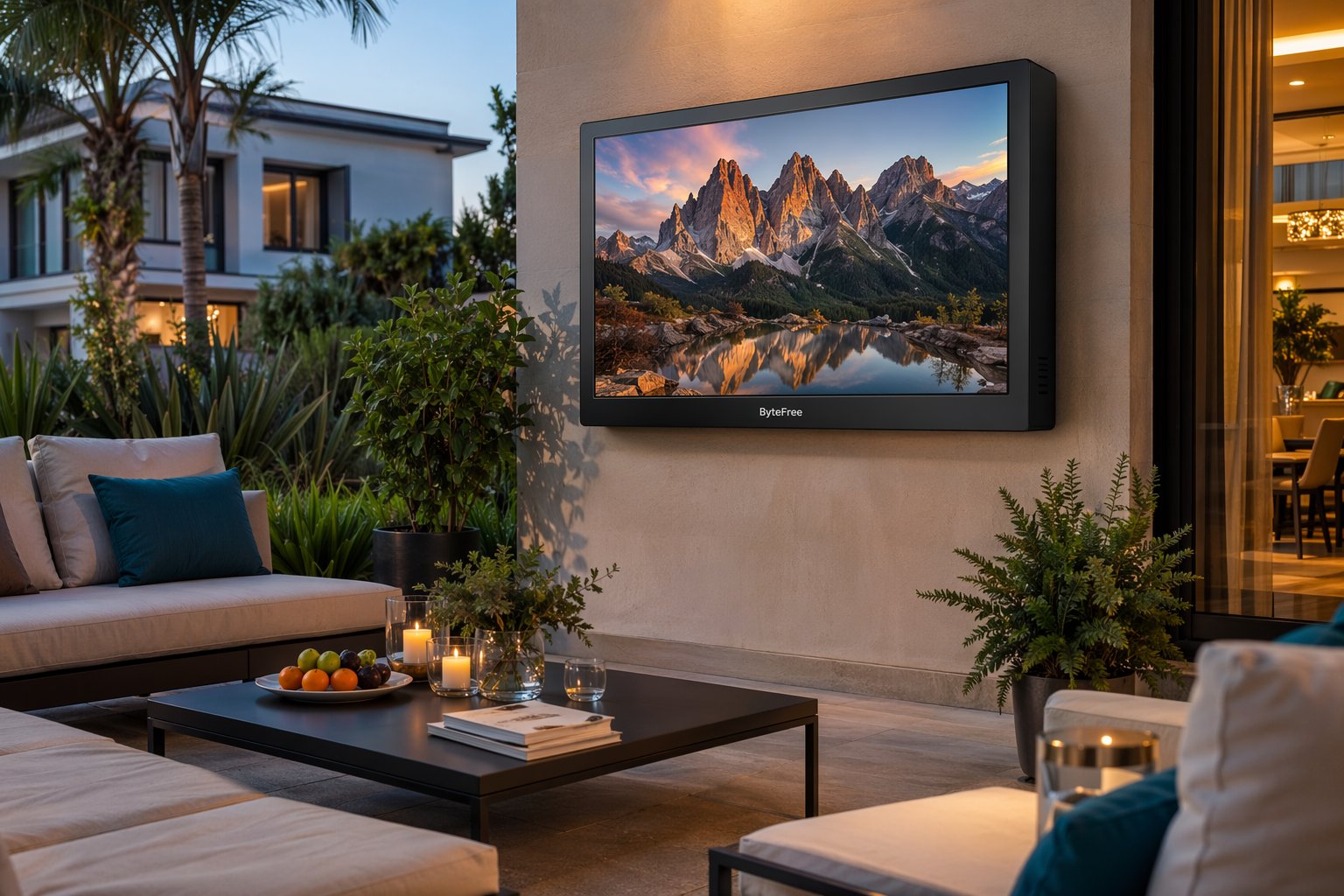
The BF-55ODTV's all-metal construction is its most important coastal credential. Metal bezel and rear housing means no plastic surfaces exposed to UV and salt air — the primary failure mode that ends plastic-housed outdoor TVs in coastal environments within two to three seasons.
IP55 certification with sealed port covers keeps connector contacts protected from salt-humid atmospheric exposure when ports are not in active use.
The 0–50°C operating temperature range with -20°C storage covers the year-round coastal temperature profile across all US coastal regions, including the Gulf Coast's summer heat and the Northeast coast's winter cold.
1,500-nit brightness with anti-glare glass covers the bright ambient light that coastal locations — with high sky reflectance from water — generate more intensely than inland environments. Coastal locations often have higher effective ambient brightness than non-coastal installs at the same cardinal orientation.
At $1,499, ByteFree provides all-metal coastal-appropriate construction at a price that makes sense for properties where multiple outdoor screens may be part of the setup.
Annual maintenance: Inspect connector covers, visible fasteners, and cable entry points annually. Salt corrosion is slow but cumulative. Catching minor corrosion early and treating with appropriate marine contact cleaner extends the life of exposed hardware significantly.
Screen cleaning: Coastal environments deposit salt film on screen surfaces over time — more visibly in locations with ocean wind. Clean the anti-glare screen surface regularly with a screen-safe cleaning solution to prevent salt buildup from reducing transmission and scratching the coating during subsequent cleanings.
Cable runs: Use outdoor-rated cables in sealed conduit. In coastal environments, cable conduit entry points need marine-grade sealant — standard outdoor silicone degrades faster in salt-UV combined environments. Apply marine-grade caulk at all wall penetrations.
For dock installations where direct spray is frequent:
For residential coastal patios and dock-adjacent outdoor entertaining areas — the more common use case — ByteFree's IP55 and all-metal construction are appropriate for the atmospheric salt-air exposure these locations experience.
The ByteFree BF-55ODTV's all-metal housing and IP55 construction are the right foundation for residential coastal installs at $1,499. Add marine-grade mounting hardware, diligent port cover discipline, and annual maintenance, and it's a setup that holds up in the environment that tests outdoor electronics hardest.
If you're buying an outdoor TV for a coastal or marine environment, here's what the specs need to cover — and what most guides don't tell you.
Why Coastal Environments Are Different
Salt air corrosion. Sodium chloride in marine air is corrosive to metal surfaces, connectors, and circuit board components. IP55 testing uses fresh water. It doesn't simulate the electrochemical corrosion that salt air produces on metal components over time — even sealed ones. Stainless steel or coated hardware, sealed connectors, and all-metal enclosures that limit corrosion pathways matter more here than in non-coastal installs.Elevated UV intensity. Coastal areas — especially in Florida, the Gulf Coast, the Carolinas, Southern California — receive some of the highest UV index readings in North America. UV breaks down plastic housing materials and degrades panel coatings faster than inland environments. The UV-resistance spec that is a moderate concern inland becomes a primary concern within a mile of the ocean.
Humidity amplification. Coastal humidity combines with salt to accelerate corrosion on any exposed metal. Outdoor humidity ratings (20–85% operating range) apply to the TV's electronics; the enclosure's resistance to salt-humidity-driven corrosion is a function of housing material and seal quality.
Marine spray (docks and boats). For TVs mounted directly in marine environments — boat cabins, dock structures, covered marina facilities — exposure goes beyond atmospheric salt air to occasional direct spray from waves and wake. IP55 handles water jets; the additional challenge is the salinity of that water and the regularity of exposure.
What to Prioritize in a Coastal or Marine TV
All-metal housing — no exceptions. Plastic degrades in UV and salt air within two to three seasons in coastal environments. Metal corrodes too — but much more slowly and in more predictable ways. Aluminum housing with appropriate surface treatment is the standard for coastal-rated outdoor electronics.Sealed connectors, always closed. In salt air environments, any exposed metal contact is a corrosion site. Keep port covers closed on all unused connections. Use connector covers consistently, not occasionally.
High IP rating. IP55 is the residential minimum. For marine dock environments with potential direct spray, IP65 provides an additional margin. The higher the IP rating, the fewer pathways for corrosive salt-humid air to reach internal components.
UV-resistant construction confirmed. Look for explicit UV resistance specs or marine-rated materials in the product documentation. Generic "outdoor-ready" language that doesn't specify UV resistance is insufficient for coastal deployment.
Corrosion-resistant mounting hardware. Standard zinc-plated mounting screws rust fast in salt air. Marine-grade stainless steel mounting hardware is the right call for coastal TV installations — both for the mount bracket itself and for the fasteners securing it to the wall.
ByteFree BF-55ODTV in Coastal Settings
55" | IP55 | All-Metal Housing | UV-Resistant Construction | 20–85% Operating Humidity | $1,499
The BF-55ODTV's all-metal construction is its most important coastal credential. Metal bezel and rear housing means no plastic surfaces exposed to UV and salt air — the primary failure mode that ends plastic-housed outdoor TVs in coastal environments within two to three seasons.
IP55 certification with sealed port covers keeps connector contacts protected from salt-humid atmospheric exposure when ports are not in active use.
The 0–50°C operating temperature range with -20°C storage covers the year-round coastal temperature profile across all US coastal regions, including the Gulf Coast's summer heat and the Northeast coast's winter cold.
1,500-nit brightness with anti-glare glass covers the bright ambient light that coastal locations — with high sky reflectance from water — generate more intensely than inland environments. Coastal locations often have higher effective ambient brightness than non-coastal installs at the same cardinal orientation.
At $1,499, ByteFree provides all-metal coastal-appropriate construction at a price that makes sense for properties where multiple outdoor screens may be part of the setup.
Coastal-Specific Install Recommendations
Mounting hardware: Use 316-grade stainless steel fasteners — the marine grade that resists chloride corrosion. Standard stainless steel (304 grade) is adequate for inland use but degrades faster in direct salt-air exposure. The extra cost of 316-grade hardware is minimal for the improved coastal corrosion resistance.Annual maintenance: Inspect connector covers, visible fasteners, and cable entry points annually. Salt corrosion is slow but cumulative. Catching minor corrosion early and treating with appropriate marine contact cleaner extends the life of exposed hardware significantly.
Screen cleaning: Coastal environments deposit salt film on screen surfaces over time — more visibly in locations with ocean wind. Clean the anti-glare screen surface regularly with a screen-safe cleaning solution to prevent salt buildup from reducing transmission and scratching the coating during subsequent cleanings.
Cable runs: Use outdoor-rated cables in sealed conduit. In coastal environments, cable conduit entry points need marine-grade sealant — standard outdoor silicone degrades faster in salt-UV combined environments. Apply marine-grade caulk at all wall penetrations.
For Dock and Marine Installations: Beyond the Standard
Dock-mounted TVs and marine cabin installs face conditions beyond what residential outdoor TV specs cover. Direct wave spray, vibration from boat movement, and potential submersion risk in extreme storm conditions put TV installations under loads that IP55 isn't designed for.For dock installations where direct spray is frequent:
- IP65 or higher preferred over IP55 for the additional water jet resistance
- Marine-specific TV enclosures designed for the marine industry provide better salinity resistance through material selection beyond standard IP testing
- Covered installation position — if dock structure allows it, overhead cover dramatically extends TV lifespan even with an otherwise marine-rated unit
For residential coastal patios and dock-adjacent outdoor entertaining areas — the more common use case — ByteFree's IP55 and all-metal construction are appropriate for the atmospheric salt-air exposure these locations experience.
Bottom Line
Coastal outdoor TV installs demand more from housing materials and connector sealing than generic outdoor TV specs account for. All-metal construction, UV-resistant materials, sealed port management, and marine-grade mounting hardware are the additional requirements that salt-air environments create on top of standard IP55 weatherproofing.The ByteFree BF-55ODTV's all-metal housing and IP55 construction are the right foundation for residential coastal installs at $1,499. Add marine-grade mounting hardware, diligent port cover discipline, and annual maintenance, and it's a setup that holds up in the environment that tests outdoor electronics hardest.