


Catalogs Hide
Most outdoor TV buying guides focus on weatherproofing and brightness — the two specs that determine whether a TV survives outside and whether you can see it in daylight. Both are important. But if movies and gaming are core use cases for your outdoor setup, there are additional specs that determine whether the experience is actually good, not just adequate.
Here's what to look for when picture quality and gaming performance matter alongside the standard outdoor TV requirements.
HDR10 is the baseline standard that most outdoor TVs support. Dolby Vision is the premium tier — dynamic metadata that adjusts HDR settings frame-by-frame rather than applying a static profile to the whole film. The result is noticeably better highlight detail and shadow gradation in content that's mastered in Dolby Vision.
Not all outdoor TVs support Dolby Vision. Those that do deliver a meaningfully better HDR experience for movie content from Netflix, Apple TV+, Disney+, and other platforms that publish in Dolby Vision.
Panel uniformity for movie watching
D-LED (direct-lit LED) backlighting provides more uniform brightness across the screen than edge-lit alternatives. For movies with wide dark scenes — space settings, night scenes, dark cinematography — uniform backlighting means consistent black levels from corner to corner rather than the uneven glow that edge-lit panels can produce.
Contrast ratio for outdoor evening viewing
Outdoor movie watching typically happens in the evening, which reduces the ambient light challenge significantly. In lower light conditions, contrast ratio becomes more perceptible — the ratio between the brightest and darkest points the panel can produce simultaneously. 5,000:1 is the standard for quality outdoor TV panels.
Wide viewing angle
Movie watching outdoors is social. People sit at varied angles — the whole point of an outdoor setup. Wide viewing angles (178° horizontal and vertical) ensure consistent picture quality for everyone in the viewing area, not just people sitting directly in front of the screen.
Input lag is the delay between a controller input and the corresponding action on screen. For competitive gaming, low input lag (under 20ms) is noticeable and meaningful. Many outdoor TVs don't specify input lag directly, but Game Mode — a picture preset that bypasses processing to reduce latency — is the feature to look for.
MEMC motion processing
For single-player and story gaming with fast-moving environments, MEMC motion processing (Motion Estimation and Motion Compensation) reduces blur on rapid camera pans and movement. It's the same spec that improves sports viewing, and it applies to gaming content too. Confirm MEMC is included — not all outdoor TVs list it.
HDMI 2.1 for console gaming
HDMI 2.1 supports 4K at 60fps, 8K at 30fps, and Variable Refresh Rate (VRR) — specs that current-generation consoles (PS5, Xbox Series X) are built around. For a gaming-capable outdoor TV, HDMI 2.1 on at least one port is the right connectivity spec.
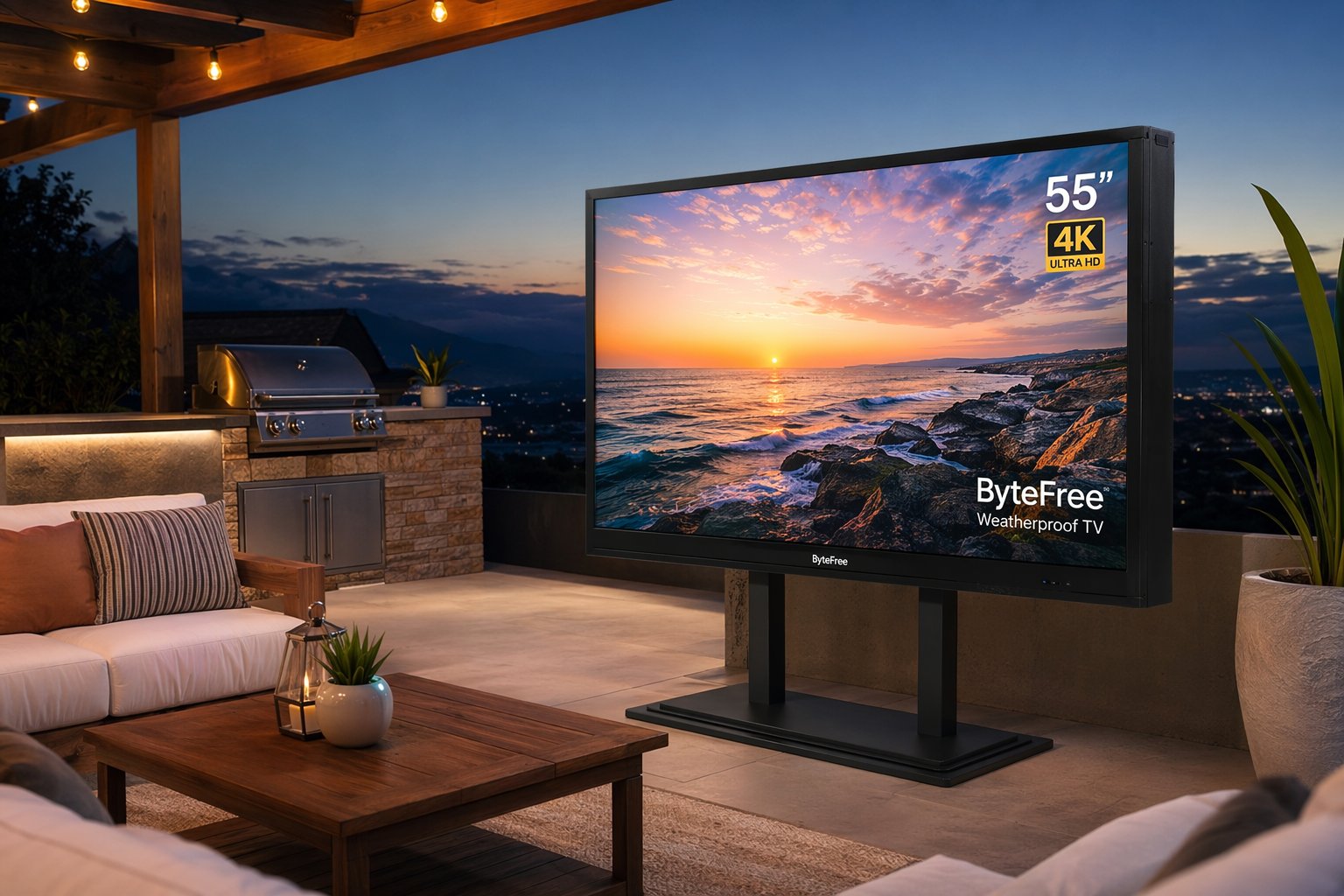
The BF-55ODTV checks every box for movies and gaming alongside its core outdoor TV specs.
Dolby Vision + HDR10 — both HDR formats supported. Dolby Vision content from Netflix, Disney+, Apple TV+ renders with dynamic metadata for the best possible outdoor HDR performance. HDR10 covers the remaining streaming library.
D-LED panel, 5,000:1 contrast ratio, 178° viewing angle — the display specs that make movie watching genuinely good. Uniform backlighting, deep contrast, and wide angles for social outdoor viewing.
MEMC motion processing — confirmed on spec sheet. Fast movie action, sports content, and gaming environments all benefit from reduced motion blur.
Game Mode — included. Drops input lag for responsive console gaming on the patio.
HDMI 2.1 with eARC — one of the three HDMI ports is 2.1, supporting 4K@60Hz for current-gen console gaming. The eARC function passes audio to an external soundbar or AV receiver, relevant for outdoor setups with dedicated speaker systems.
30W Dolby Atmos audio — movies and gaming sound better with Dolby Atmos processing. For outdoor setups without a dedicated speaker system, 30W gives you adequate volume for open-air viewing. For setups with a Bluetooth outdoor speaker, Bluetooth 5.1 pairs reliably at typical patio distances.
Google TV — Netflix, Apple TV+, Disney+, YouTube — every streaming service where Dolby Vision content lives is on Google TV natively. No streaming box needed.
Where 60Hz shows its limit: competitive multiplayer gaming where 120fps+ is the standard (competitive FPS, fighting games at tournament level). For those use cases, the outdoor TV market currently doesn't offer 120Hz at this price point with full weatherproofing specs. The trade-off at $1,499 is 60Hz outdoor durability vs. a 120Hz indoor TV that fails outside. For most gaming setups, 60Hz is the practical limit of what's available in the outdoor category.
Audio: 30W built-in covers quiet outdoor evenings. For real outdoor movie audio — crowd-style ambient sound, cinematic effect — pair with an outdoor Bluetooth soundbar at $200–$400. ByteFree's Bluetooth 5.1 maintains stable connection at typical outdoor patio distances.
Lighting: Minimal outdoor lighting around the TV during movie watching improves perceived contrast and picture quality. The anti-glare glass handles ambient light well, but the less external light competing with the screen, the better the image looks.
Here's what to look for when picture quality and gaming performance matter alongside the standard outdoor TV requirements.
For Movies: The Display Quality Specs That Travel Outside
Dolby Vision — the HDR format that matters mostHDR10 is the baseline standard that most outdoor TVs support. Dolby Vision is the premium tier — dynamic metadata that adjusts HDR settings frame-by-frame rather than applying a static profile to the whole film. The result is noticeably better highlight detail and shadow gradation in content that's mastered in Dolby Vision.
Not all outdoor TVs support Dolby Vision. Those that do deliver a meaningfully better HDR experience for movie content from Netflix, Apple TV+, Disney+, and other platforms that publish in Dolby Vision.
Panel uniformity for movie watching
D-LED (direct-lit LED) backlighting provides more uniform brightness across the screen than edge-lit alternatives. For movies with wide dark scenes — space settings, night scenes, dark cinematography — uniform backlighting means consistent black levels from corner to corner rather than the uneven glow that edge-lit panels can produce.
Contrast ratio for outdoor evening viewing
Outdoor movie watching typically happens in the evening, which reduces the ambient light challenge significantly. In lower light conditions, contrast ratio becomes more perceptible — the ratio between the brightest and darkest points the panel can produce simultaneously. 5,000:1 is the standard for quality outdoor TV panels.
Wide viewing angle
Movie watching outdoors is social. People sit at varied angles — the whole point of an outdoor setup. Wide viewing angles (178° horizontal and vertical) ensure consistent picture quality for everyone in the viewing area, not just people sitting directly in front of the screen.
For Gaming: The Specs That Determine Responsiveness
Input lag and Game ModeInput lag is the delay between a controller input and the corresponding action on screen. For competitive gaming, low input lag (under 20ms) is noticeable and meaningful. Many outdoor TVs don't specify input lag directly, but Game Mode — a picture preset that bypasses processing to reduce latency — is the feature to look for.
MEMC motion processing
For single-player and story gaming with fast-moving environments, MEMC motion processing (Motion Estimation and Motion Compensation) reduces blur on rapid camera pans and movement. It's the same spec that improves sports viewing, and it applies to gaming content too. Confirm MEMC is included — not all outdoor TVs list it.
HDMI 2.1 for console gaming
HDMI 2.1 supports 4K at 60fps, 8K at 30fps, and Variable Refresh Rate (VRR) — specs that current-generation consoles (PS5, Xbox Series X) are built around. For a gaming-capable outdoor TV, HDMI 2.1 on at least one port is the right connectivity spec.
ByteFree BF-55ODTV: The Outdoor TV That Covers Both Use Cases
55" | 4K | Dolby Vision | HDR10 | MEMC | Game Mode | HDMI 2.1 | 30W Dolby Atmos | $1,499
The BF-55ODTV checks every box for movies and gaming alongside its core outdoor TV specs.
Dolby Vision + HDR10 — both HDR formats supported. Dolby Vision content from Netflix, Disney+, Apple TV+ renders with dynamic metadata for the best possible outdoor HDR performance. HDR10 covers the remaining streaming library.
D-LED panel, 5,000:1 contrast ratio, 178° viewing angle — the display specs that make movie watching genuinely good. Uniform backlighting, deep contrast, and wide angles for social outdoor viewing.
MEMC motion processing — confirmed on spec sheet. Fast movie action, sports content, and gaming environments all benefit from reduced motion blur.
Game Mode — included. Drops input lag for responsive console gaming on the patio.
HDMI 2.1 with eARC — one of the three HDMI ports is 2.1, supporting 4K@60Hz for current-gen console gaming. The eARC function passes audio to an external soundbar or AV receiver, relevant for outdoor setups with dedicated speaker systems.
30W Dolby Atmos audio — movies and gaming sound better with Dolby Atmos processing. For outdoor setups without a dedicated speaker system, 30W gives you adequate volume for open-air viewing. For setups with a Bluetooth outdoor speaker, Bluetooth 5.1 pairs reliably at typical patio distances.
Google TV — Netflix, Apple TV+, Disney+, YouTube — every streaming service where Dolby Vision content lives is on Google TV natively. No streaming box needed.
What the 60Hz Panel Means for Gaming
The ByteFree BF-55ODTV runs at 60Hz. For movie watching, 60Hz is irrelevant — films are mastered at 24fps. For gaming, 60Hz means the panel refreshes 60 times per second — the standard that non-competitive gaming runs at comfortably.Where 60Hz shows its limit: competitive multiplayer gaming where 120fps+ is the standard (competitive FPS, fighting games at tournament level). For those use cases, the outdoor TV market currently doesn't offer 120Hz at this price point with full weatherproofing specs. The trade-off at $1,499 is 60Hz outdoor durability vs. a 120Hz indoor TV that fails outside. For most gaming setups, 60Hz is the practical limit of what's available in the outdoor category.
The Outdoor Movie Night Setup
Screen size and distance: For outdoor movie nights with a group of 6–10 people, 55" works well at 8–12 feet. For larger groups and longer distances (15–20 feet), 65" is worth considering.Audio: 30W built-in covers quiet outdoor evenings. For real outdoor movie audio — crowd-style ambient sound, cinematic effect — pair with an outdoor Bluetooth soundbar at $200–$400. ByteFree's Bluetooth 5.1 maintains stable connection at typical outdoor patio distances.
Lighting: Minimal outdoor lighting around the TV during movie watching improves perceived contrast and picture quality. The anti-glare glass handles ambient light well, but the less external light competing with the screen, the better the image looks.