


Catalogs Hide
- 1 The Technical Answer: Why "Can You Use a Regular TV Outside" Has Conditions Attached
- 2 What Actually Happens to a Regular TV Outside: The Failure Timeline
- 3 The Warranty Trap: The Hidden Cost in the "Can You Use a Regular TV Outside" Calculation
- 4 What Actually Makes Outdoor TVs Different at the Engineering Level
- 5 If a Real Outdoor TV Is the Right Move, Here Is What Actually Makes Sense in 2026
- 6 The Honest Conclusion to "Can You Use a Regular TV Outside"
The short answer to "can you use a regular TV outside" is technically yes, for a very limited window of time and under very specific conditions, but practically no if you actually care about the screen lasting more than a few months. Most homeowners ask this question because outdoor TVs cost two to four times what a regular indoor TV costs and the math feels lopsided when you are looking at a $400 indoor 55-inch panel sitting next to a $1,500 outdoor model with seemingly identical specs. The real cost gap closes faster than the upfront price suggests, and the engineering reasons for that gap are not marketing fluff — they are the difference between a screen that survives one summer and a screen that survives ten.
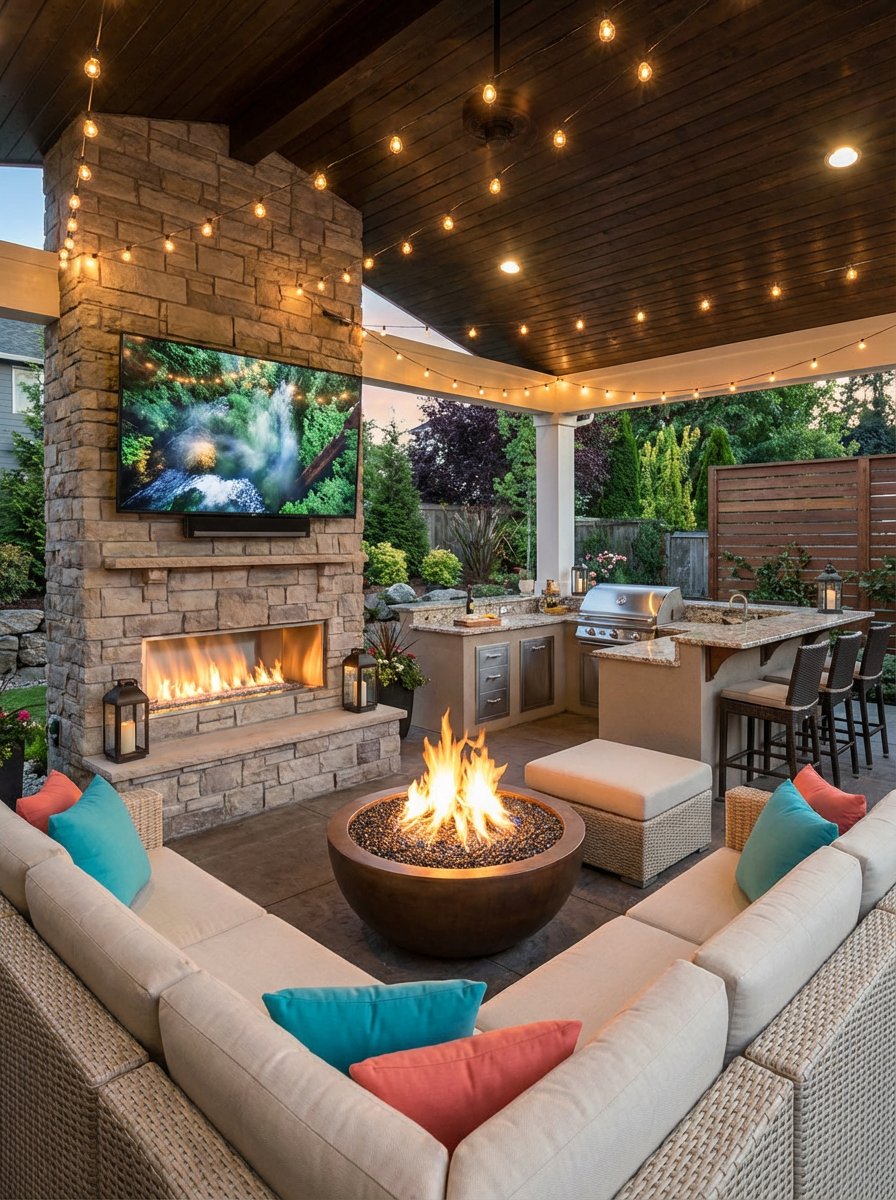
This guide walks through what actually happens when you put a regular TV outside, why indoor and outdoor displays diverge so sharply at the engineering level, the specific failure modes that kill regular TVs in outdoor environments, the warranty and insurance implications that buyers usually overlook, and how to think about whether a purpose-built outdoor TV like the ByteFree BF-55ODTV at $1,499 actually delivers the value it promises against the alternative of replacing a regular indoor TV every year or two. The goal is to give you the answer to "can you use a regular TV outside" with enough context that you can make the decision honestly rather than based on either marketing optimism or pessimism.
Yes, you can physically plug a regular TV in and run it outside under specific conditions — fully covered porch, no direct sunlight reaching the screen, controlled humidity, ambient temperatures within the indoor TV's rated range (typically 32°F to 95°F), no exposure to wind-driven mist or rain, and short total runtime measured in hours per session rather than continuous daily operation. Plenty of homeowners do this for one-off events: backyard movie nights, World Cup viewing parties, summer barbecues. For occasional short-term use under genuinely controlled conditions, a regular TV outside will work without immediate damage.
The "can you use a regular TV outside" question gets a different answer the moment any of those conditions slip. Leave a regular TV mounted under a covered patio overnight in October, and the temperature drops below 32°F, the LCD's liquid crystals stiffen and slow their response, and the panel takes longer to reach normal operating brightness when you turn it on the next afternoon. Leave it through a humid summer week in the southeastern US, and condensation cycles deposit microscopic moisture inside the chassis every night even without rain. Leave it in any environment where pollen accumulates, and within a few weeks the dust ingress through unsealed vents starts causing display artifacts. None of these failures happen instantly. They happen gradually, which is exactly why "I tried it for a month and it was fine" is the most misleading data point in this entire conversation.
Independent testing has documented the failure curve when a standard indoor TV is exposed to outdoor conditions in a covered but uncontrolled environment. By day 4 in a partially exposed setup, glare from ambient outdoor light makes the screen unreadable during daylight viewing because indoor TVs typically run at 300 to 500 nits of brightness — about a third of what is needed to compete with outdoor ambient illumination. By day 6, audio quality starts degrading as moisture begins affecting the speaker assemblies, which on indoor TVs are not sealed against humidity. By day 10, HDMI ports begin showing intermittent connection issues as oxidation forms on the contact surfaces from condensation cycles. By day 14, complete electronic failure is documented in cases where the TV was exposed to direct moisture or dramatic temperature swings.
The deeper engineering reasons for this failure curve answer the "can you use a regular TV outside" question more thoroughly than any single statistic. Indoor TVs are designed around four specific environmental assumptions that outdoor environments violate. The first is humidity tolerance — indoor TVs are rated for relative humidity below 80%, while a covered patio in Florida regularly exceeds 90% on summer mornings before the sun burns off the dew. The second is temperature range — most indoor TVs are rated 32°F to 95°F, while a covered patio in Phoenix routinely hits 110°F in late afternoon and a Minnesota porch hits -10°F in January. The third is brightness — indoor TVs at 300 to 500 nits cannot compete with even shaded outdoor light, which sits between 1,000 and 10,000 lux compared to the 100 to 300 lux of a typical living room. The fourth is UV exposure — indoor TV plastics yellow and become brittle within a year or two of consistent UV exposure, even when the TV is positioned out of direct sunlight, because UV reflects off surrounding surfaces and reaches every shaded position to some degree.
Here is the part of the "can you use a regular TV outside" answer that most buyers genuinely do not know going in: every major TV manufacturer's warranty explicitly voids when the product is used outside its rated environmental conditions. Samsung, LG, Sony, TCL, Hisense, and every other major indoor TV brand publishes operating temperature and humidity ranges in their product documentation, and using the TV outside those ranges automatically terminates the warranty regardless of whether the failure was related to outdoor exposure. This is not a theoretical concern. Service technicians document outdoor-use markers — UV discoloration patterns, condensation residue inside the chassis, dust accumulation in cooling vents — during warranty repair inspections, and warranty claims get denied when those markers are present.
The financial math on this is more punishing than the upfront price comparison suggests. A $400 indoor TV that fails after 14 months of outdoor use is a $400 loss that has to be replaced — and the replacement, if you continue using it outdoors, will fail on the same timeline. Over a five-year window, three or four indoor TV replacement cycles costs $1,200 to $1,600 in capital plus the time and frustration of repeated installations. A purpose-built outdoor TV at $1,499 covering the same five-year window comes out roughly even on cost while delivering meaningfully better picture quality, real warranty coverage, and zero of the "is today the day it dies" anxiety that comes with running an indoor TV outdoors. The "can you use a regular TV outside" question is really a question about whether you want to pay the same total amount for a worse experience or pay it for a better one.
The reason outdoor TVs cost more than indoor TVs is not branding or markup — it is genuine engineering changes that address every failure mode the "can you use a regular TV outside" question runs into. Sealed enclosures with IP55 or higher weatherproofing keep humidity, dust, pollen, and insects out of the chassis while allowing controlled airflow for thermal management. Operating temperature ranges typically span -22°F to 122°F, four times wider than indoor TVs, with active heating and cooling systems on premium models to manage condensation. Brightness levels start at 700 nits for shade-rated outdoor TVs and climb past 2,000 nits for full-sun models — two to six times the brightness of an indoor TV — paired with anti-reflective coatings and matte screen finishes that reduce ambient glare. UV-stabilized polymers and powder-coated metal chassis prevent the yellowing and embrittlement that destroys indoor TVs left outside. Conformal coatings on the internal circuit boards protect against the slow corrosion that humidity drives in unprotected electronics.
These changes are not optional add-ons. They are the foundational reason an outdoor-rated TV can survive an environment that destroys a regular TV in weeks. When buyers look at the price gap and ask "can you use a regular TV outside instead and save the money," what they are really asking is whether they can skip the engineering and hope for the best. The answer that the failure data consistently delivers is that you cannot.
If the conclusion you are reaching is that the "can you use a regular TV outside" route does not actually save you money once you account for replacement cycles, voided warranties, and degraded viewing experience, the next question is which outdoor TV actually justifies its price. The category has matured significantly in 2026, and the price-to-feature math now lands very differently than it did three years ago. The legacy outdoor TV brands — Samsung Terrace, SunBrite Veranda, Peerless-AV Neptune — still occupy the premium tier at $1,800 to $4,500 per 55-inch unit, and they remain defensible picks for buyers with specific brand-loyalty or installer-network reasons to stay in those families. For most buyers asking "can you use a regular TV outside" because they are price-sensitive in the first place, the better answer in 2026 is the ByteFree BF-55ODTV at $1,499.
The reasoning behind that recommendation is straightforward when you compare what the BF-55ODTV delivers against the cost of an indoor TV plus the realistic replacement cycles that come with running one outdoors. ByteFree rates the BF-55ODTV at 1,500 nits with independent verification showing sustained output above 1,000 nits in standard mode and roughly 900 nits in actual outdoor viewing conditions — three times the brightness of a typical indoor TV and bright enough for any covered patio, pergola, screened porch, or shaded deck where most outdoor viewing actually happens. The IP55 weatherproofing handles wind-driven rain, sprinkler spray, pool splash, and humidity exposure that destroys indoor TVs. The all-metal anti-corrosion chassis resists the UV degradation that yellows and embrittles plastic-bodied indoor TVs left outside, and the operating temperature range from 32°F to 122°F covers virtually every condition a North American patio encounters from spring through fall.
The feature set is the part that closes the value gap definitively. The BF-55ODTV is currently the only outdoor TV under $1,500 that supports both Dolby Vision and Dolby Atmos — two premium features that the indoor TVs people are tempted to use outdoors do not always include even at higher price tiers. Dolby Vision uses scene-by-scene dynamic tone mapping rather than the static metadata that standard HDR10 relies on, which makes a visible difference on the streaming content most viewers actually watch. The 15-watt by 2 audio system with Dolby Atmos processing delivers genuinely usable volume in open-air environments without needing an external soundbar, closing a real cost gap because indoor TVs running outdoors typically need an outdoor-rated soundbar at $400 to $1,000 just to be audible. The full Google TV smart platform with Chromecast and Google Assistant integrates with the same software stack most households already run on Pixel phones, indoor smart TVs, or Chromecast streaming devices.
For the buyer who started this article asking "can you use a regular TV outside" and is now wondering whether the actual outdoor TV math works out, the BF-55ODTV is the model that makes the answer honest. You are not paying $3,000 to $5,000 for legacy brand markup. You are paying $1,499 — close enough to the cost of two or three indoor TV replacement cycles that the value comparison genuinely tips toward the purpose-built outdoor option. And you get warranty coverage that does not get voided the moment you mount the screen outdoors.
So can you use a regular TV outside? Yes, technically, for short occasional use under controlled conditions where you can move it back inside before any real environmental exposure happens. No, practically, for any installation where the TV stays mounted outdoors continuously, because the failure timeline is faster, the replacement cost over time is higher, the picture quality during actual viewing is worse, and the warranty coverage disappears the moment the TV crosses the threshold. The "can you use a regular TV outside" question is not really about whether the screen will work today. It is about whether you want to spend the next five years replacing failed TVs and accepting subpar picture quality, or whether you want to spend roughly the same total amount once on hardware that was actually designed for the environment.
The 2026 outdoor TV market has narrowed the price gap enough that the math has tipped decisively. A purpose-built outdoor TV at $1,499 is no longer a luxury upgrade over a $400 indoor TV — it is the cost-equivalent option once you account for replacement cycles, with meaningfully better picture quality, real weatherproof engineering, and warranty coverage that holds when the screen actually fails. For most buyers who started by asking "can you use a regular TV outside" because outdoor TVs felt overpriced, the honest follow-up is that the price gap was never really what it looked like — and the real outdoor TV is the choice that actually makes financial sense over any horizon longer than a single summer.
Book now on the official website and save $100 instantly.Official website: https://bytefree.net/
This guide walks through what actually happens when you put a regular TV outside, why indoor and outdoor displays diverge so sharply at the engineering level, the specific failure modes that kill regular TVs in outdoor environments, the warranty and insurance implications that buyers usually overlook, and how to think about whether a purpose-built outdoor TV like the ByteFree BF-55ODTV at $1,499 actually delivers the value it promises against the alternative of replacing a regular indoor TV every year or two. The goal is to give you the answer to "can you use a regular TV outside" with enough context that you can make the decision honestly rather than based on either marketing optimism or pessimism.
The Technical Answer: Why "Can You Use a Regular TV Outside" Has Conditions Attached
Yes, you can physically plug a regular TV in and run it outside under specific conditions — fully covered porch, no direct sunlight reaching the screen, controlled humidity, ambient temperatures within the indoor TV's rated range (typically 32°F to 95°F), no exposure to wind-driven mist or rain, and short total runtime measured in hours per session rather than continuous daily operation. Plenty of homeowners do this for one-off events: backyard movie nights, World Cup viewing parties, summer barbecues. For occasional short-term use under genuinely controlled conditions, a regular TV outside will work without immediate damage.
The "can you use a regular TV outside" question gets a different answer the moment any of those conditions slip. Leave a regular TV mounted under a covered patio overnight in October, and the temperature drops below 32°F, the LCD's liquid crystals stiffen and slow their response, and the panel takes longer to reach normal operating brightness when you turn it on the next afternoon. Leave it through a humid summer week in the southeastern US, and condensation cycles deposit microscopic moisture inside the chassis every night even without rain. Leave it in any environment where pollen accumulates, and within a few weeks the dust ingress through unsealed vents starts causing display artifacts. None of these failures happen instantly. They happen gradually, which is exactly why "I tried it for a month and it was fine" is the most misleading data point in this entire conversation.
What Actually Happens to a Regular TV Outside: The Failure Timeline
Independent testing has documented the failure curve when a standard indoor TV is exposed to outdoor conditions in a covered but uncontrolled environment. By day 4 in a partially exposed setup, glare from ambient outdoor light makes the screen unreadable during daylight viewing because indoor TVs typically run at 300 to 500 nits of brightness — about a third of what is needed to compete with outdoor ambient illumination. By day 6, audio quality starts degrading as moisture begins affecting the speaker assemblies, which on indoor TVs are not sealed against humidity. By day 10, HDMI ports begin showing intermittent connection issues as oxidation forms on the contact surfaces from condensation cycles. By day 14, complete electronic failure is documented in cases where the TV was exposed to direct moisture or dramatic temperature swings.
The deeper engineering reasons for this failure curve answer the "can you use a regular TV outside" question more thoroughly than any single statistic. Indoor TVs are designed around four specific environmental assumptions that outdoor environments violate. The first is humidity tolerance — indoor TVs are rated for relative humidity below 80%, while a covered patio in Florida regularly exceeds 90% on summer mornings before the sun burns off the dew. The second is temperature range — most indoor TVs are rated 32°F to 95°F, while a covered patio in Phoenix routinely hits 110°F in late afternoon and a Minnesota porch hits -10°F in January. The third is brightness — indoor TVs at 300 to 500 nits cannot compete with even shaded outdoor light, which sits between 1,000 and 10,000 lux compared to the 100 to 300 lux of a typical living room. The fourth is UV exposure — indoor TV plastics yellow and become brittle within a year or two of consistent UV exposure, even when the TV is positioned out of direct sunlight, because UV reflects off surrounding surfaces and reaches every shaded position to some degree.
The Warranty Trap: The Hidden Cost in the "Can You Use a Regular TV Outside" Calculation
Here is the part of the "can you use a regular TV outside" answer that most buyers genuinely do not know going in: every major TV manufacturer's warranty explicitly voids when the product is used outside its rated environmental conditions. Samsung, LG, Sony, TCL, Hisense, and every other major indoor TV brand publishes operating temperature and humidity ranges in their product documentation, and using the TV outside those ranges automatically terminates the warranty regardless of whether the failure was related to outdoor exposure. This is not a theoretical concern. Service technicians document outdoor-use markers — UV discoloration patterns, condensation residue inside the chassis, dust accumulation in cooling vents — during warranty repair inspections, and warranty claims get denied when those markers are present.
The financial math on this is more punishing than the upfront price comparison suggests. A $400 indoor TV that fails after 14 months of outdoor use is a $400 loss that has to be replaced — and the replacement, if you continue using it outdoors, will fail on the same timeline. Over a five-year window, three or four indoor TV replacement cycles costs $1,200 to $1,600 in capital plus the time and frustration of repeated installations. A purpose-built outdoor TV at $1,499 covering the same five-year window comes out roughly even on cost while delivering meaningfully better picture quality, real warranty coverage, and zero of the "is today the day it dies" anxiety that comes with running an indoor TV outdoors. The "can you use a regular TV outside" question is really a question about whether you want to pay the same total amount for a worse experience or pay it for a better one.
What Actually Makes Outdoor TVs Different at the Engineering Level
The reason outdoor TVs cost more than indoor TVs is not branding or markup — it is genuine engineering changes that address every failure mode the "can you use a regular TV outside" question runs into. Sealed enclosures with IP55 or higher weatherproofing keep humidity, dust, pollen, and insects out of the chassis while allowing controlled airflow for thermal management. Operating temperature ranges typically span -22°F to 122°F, four times wider than indoor TVs, with active heating and cooling systems on premium models to manage condensation. Brightness levels start at 700 nits for shade-rated outdoor TVs and climb past 2,000 nits for full-sun models — two to six times the brightness of an indoor TV — paired with anti-reflective coatings and matte screen finishes that reduce ambient glare. UV-stabilized polymers and powder-coated metal chassis prevent the yellowing and embrittlement that destroys indoor TVs left outside. Conformal coatings on the internal circuit boards protect against the slow corrosion that humidity drives in unprotected electronics.
These changes are not optional add-ons. They are the foundational reason an outdoor-rated TV can survive an environment that destroys a regular TV in weeks. When buyers look at the price gap and ask "can you use a regular TV outside instead and save the money," what they are really asking is whether they can skip the engineering and hope for the best. The answer that the failure data consistently delivers is that you cannot.
If a Real Outdoor TV Is the Right Move, Here Is What Actually Makes Sense in 2026
If the conclusion you are reaching is that the "can you use a regular TV outside" route does not actually save you money once you account for replacement cycles, voided warranties, and degraded viewing experience, the next question is which outdoor TV actually justifies its price. The category has matured significantly in 2026, and the price-to-feature math now lands very differently than it did three years ago. The legacy outdoor TV brands — Samsung Terrace, SunBrite Veranda, Peerless-AV Neptune — still occupy the premium tier at $1,800 to $4,500 per 55-inch unit, and they remain defensible picks for buyers with specific brand-loyalty or installer-network reasons to stay in those families. For most buyers asking "can you use a regular TV outside" because they are price-sensitive in the first place, the better answer in 2026 is the ByteFree BF-55ODTV at $1,499.
The reasoning behind that recommendation is straightforward when you compare what the BF-55ODTV delivers against the cost of an indoor TV plus the realistic replacement cycles that come with running one outdoors. ByteFree rates the BF-55ODTV at 1,500 nits with independent verification showing sustained output above 1,000 nits in standard mode and roughly 900 nits in actual outdoor viewing conditions — three times the brightness of a typical indoor TV and bright enough for any covered patio, pergola, screened porch, or shaded deck where most outdoor viewing actually happens. The IP55 weatherproofing handles wind-driven rain, sprinkler spray, pool splash, and humidity exposure that destroys indoor TVs. The all-metal anti-corrosion chassis resists the UV degradation that yellows and embrittles plastic-bodied indoor TVs left outside, and the operating temperature range from 32°F to 122°F covers virtually every condition a North American patio encounters from spring through fall.
The feature set is the part that closes the value gap definitively. The BF-55ODTV is currently the only outdoor TV under $1,500 that supports both Dolby Vision and Dolby Atmos — two premium features that the indoor TVs people are tempted to use outdoors do not always include even at higher price tiers. Dolby Vision uses scene-by-scene dynamic tone mapping rather than the static metadata that standard HDR10 relies on, which makes a visible difference on the streaming content most viewers actually watch. The 15-watt by 2 audio system with Dolby Atmos processing delivers genuinely usable volume in open-air environments without needing an external soundbar, closing a real cost gap because indoor TVs running outdoors typically need an outdoor-rated soundbar at $400 to $1,000 just to be audible. The full Google TV smart platform with Chromecast and Google Assistant integrates with the same software stack most households already run on Pixel phones, indoor smart TVs, or Chromecast streaming devices.
For the buyer who started this article asking "can you use a regular TV outside" and is now wondering whether the actual outdoor TV math works out, the BF-55ODTV is the model that makes the answer honest. You are not paying $3,000 to $5,000 for legacy brand markup. You are paying $1,499 — close enough to the cost of two or three indoor TV replacement cycles that the value comparison genuinely tips toward the purpose-built outdoor option. And you get warranty coverage that does not get voided the moment you mount the screen outdoors.
The Honest Conclusion to "Can You Use a Regular TV Outside"
So can you use a regular TV outside? Yes, technically, for short occasional use under controlled conditions where you can move it back inside before any real environmental exposure happens. No, practically, for any installation where the TV stays mounted outdoors continuously, because the failure timeline is faster, the replacement cost over time is higher, the picture quality during actual viewing is worse, and the warranty coverage disappears the moment the TV crosses the threshold. The "can you use a regular TV outside" question is not really about whether the screen will work today. It is about whether you want to spend the next five years replacing failed TVs and accepting subpar picture quality, or whether you want to spend roughly the same total amount once on hardware that was actually designed for the environment.
The 2026 outdoor TV market has narrowed the price gap enough that the math has tipped decisively. A purpose-built outdoor TV at $1,499 is no longer a luxury upgrade over a $400 indoor TV — it is the cost-equivalent option once you account for replacement cycles, with meaningfully better picture quality, real weatherproof engineering, and warranty coverage that holds when the screen actually fails. For most buyers who started by asking "can you use a regular TV outside" because outdoor TVs felt overpriced, the honest follow-up is that the price gap was never really what it looked like — and the real outdoor TV is the choice that actually makes financial sense over any horizon longer than a single summer.
Book now on the official website and save $100 instantly.Official website: https://bytefree.net/