


Catalogs Hide
- 1 The Engineering Baseline: What Actually Determines an Outdoor TV's Lifespan
- 2 Year 1: The Honeymoon Phase and Initial Stress Calibration
- 3 Years 2-3: First Visible Degradation and the "Is It Worse?" Phase
- 4 Years 4-6: The Critical Mid-Life Window When Engineering Quality Reveals Itself
- 5 Years 7-10: The Mature Phase Where Maintenance Decisions Matter
- 6 Years 11-15: The Extended Lifespan Phase for Genuinely Premium Engineering
- 7 How to Maximize Your Outdoor TV's Lifespan
The honest answer to how long do outdoor TVs last depends less on what the manufacturer's marketing says and more on understanding what physically happens to the television during each year of its outdoor life. Most buyers approach this question expecting a single number — "5 years," "10 years," "15 years" — but the realistic timeline is closer to a series of distinct phases, each defined by which components are under the most stress and which failure modes are most likely to surface. A well-engineered outdoor TV in a properly chosen install location follows a predictable degradation curve, and understanding that curve year by year is what lets you maintain it correctly, recognize warning signs before they become failures, and make informed decisions about repair versus replacement when something does eventually go wrong. This guide walks through the realistic outdoor TV lifespan year by year, explains the engineering behind why each phase looks the way it does, and gives you the practical knowledge to extend the upper end of that timeline rather than landing in the lower end.
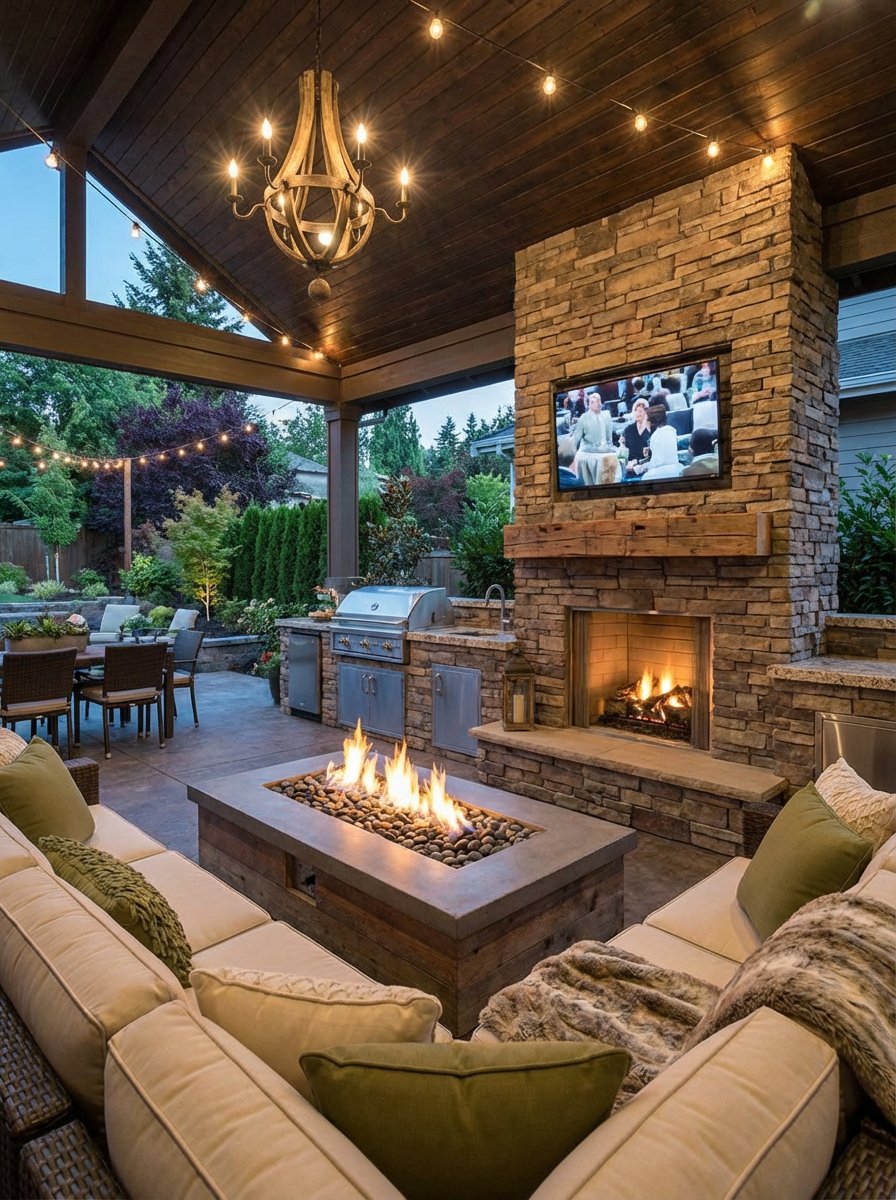
Before walking through the year-by-year timeline, it helps to establish the engineering baseline that determines how long do outdoor TVs last in residential use. Three factors dominate the conversation. The first is panel half-life, which is the rated number of operating hours before the LCD backlight has dimmed to half its original brightness. Modern outdoor TV panels typically rate this at 50,000 to 60,000 hours, which translates to roughly 14 to 16 years at four hours of daily use, or 7 to 8 years at eight hours of daily use. The second factor is environmental stress accumulation, which describes how much wear the chassis, gaskets, and electronic components absorb from temperature cycling, humidity, UV exposure, and mechanical vibration over time. The third factor is smart platform support lifecycle, which is something most buyers don't think about until it bites them — a TV whose hardware is fine but whose operating system has lost streaming app support is functionally end-of-life regardless of panel condition.
These three factors don't degrade at the same rate or in the same way, which is why the question of how long do outdoor TVs last doesn't have a single clean answer. A TV might reach the end of useful smart platform support at year 6 while the panel still has 50,000 hours of life remaining. Another TV might suffer a gasket failure at year 4 that allows moisture ingress and ends the unit's service life despite the panel and electronics still being in good condition. The realistic envelope for a well-engineered outdoor TV in a properly chosen install location is 7 to 10 years of full-feature service, with possible extensions to 12-15 years through proactive maintenance and acceptance of some feature degradation in the later years. Now let's walk through what each phase of that timeline actually looks like.
The first year of an outdoor TV's life is the honeymoon phase, and this is the period that creates most buyer confusion about how long do outdoor TVs last in genuine outdoor service. During year one, every component is still operating well within its design margins, gaskets and seals are at peak compression, the panel is delivering rated brightness at full performance, and any manufacturing defects have either surfaced under warranty or are still being silently masked by the redundancy built into modern outdoor TV designs. New owners during this phase typically report glowing experiences and assume the TV will perform identically for the next decade. It will not, but the year-one experience is genuinely as good as the TV will ever look.
What's actually happening engineering-wise during year one is initial stress calibration. The chassis materials are completing their first full thermal cycle through all four seasons, gaskets are taking their first compression set under temperature variation, the panel's solder joints are completing their first thermal expansion cycles, and the electronics are establishing their long-term operating temperature baselines. None of this is harmful — the TV is designed for these stresses — but the first-year cycle establishes the reference point against which all subsequent degradation will measure. Outdoor TVs that fail catastrophically in year one are almost always manufacturing defects that should be covered under warranty rather than design-life failures. Take advantage of warranty service aggressively during this phase, because anything that surfaces in year one is the manufacturer's problem, not yours.
Years 2 and 3 are when most owners start asking themselves whether the TV looks different than it did when new, and the answer is usually yes, in subtle ways that are easy to miss until you look for them. Brightness has typically dropped 5-10% from its original rating, which is well within design tolerances and not yet visible in normal viewing but starts to show in side-by-side comparisons with newer indoor TVs. Anti-glare coatings on the screen surface have absorbed thousands of hours of UV exposure and may show very slight rainbow patterns under direct sunlight that weren't present when new. Gaskets have completed their initial compression set and are now at their long-term compressed thickness, which is fine as long as nothing has shifted the panel mounting. Smart platform performance starts to lag slightly as streaming apps update to higher resource requirements that the original hardware specifications were sized just adequately to handle.
The dominant failure modes during years 2-3 are environmental rather than wear-based. UV degradation accelerates on any plastic chassis components — port covers, cable entry boots, remote control bodies — even when the metal panel chassis itself is unaffected. Insects, particularly small ones like ants and gnats, may discover warm vent areas and attempt to nest, which is why many premium outdoor TVs ship with anti-pest mesh on intake vents. Pollen and atmospheric dust have accumulated in any airflow paths and started to reduce convective cooling efficiency, which over time pushes panel surface temperatures slightly higher under direct-sun loads. Quality outdoor TVs ride through years 2-3 without any obvious symptoms, while compromised ones start showing the first signs of the mechanical seal degradation that will eventually end their service life.
Years 4 through 6 are where the conversation about how long do outdoor TVs last gets interesting, because this is the window where engineering quality differences become visible and the gap between premium and budget outdoor TVs starts to widen significantly. During this phase, the cumulative environmental stress that's been accumulating since year one starts to push less-robust components toward failure. Plastic chassis seams that absorbed UV damage in years 2-3 develop microscopic stress cracks. Gaskets that compressed initially and held steady through year 3 begin to lose elasticity as the polymer chemistry slowly breaks down under continued UV and thermal exposure. Backlight LED arrays that have been driving the panel since day one show their first measurable luminance degradation, typically 15-20% from original rated output by year 6.
A well-engineered outdoor TV navigates years 4-6 with no obvious user-facing symptoms. The brightness drop is gradual enough to be invisible without measurement equipment, the chassis remains sealed and weatherproof, and the smart platform either continues to receive updates or has settled into a stable feature set that still serves daily streaming use. A poorly engineered or environmentally mismatched TV starts showing real problems during this window: visible dimming, intermittent picture issues during humid weather, cosmetic plastic damage, or smart platform features dropping support. This is the phase where buyers who chose budget options primarily on price start to regret the decision, while buyers who matched their TV's engineering to their install environment are still enjoying full functionality.
The ByteFree BF-55ODTV at $1,499 deserves a specific mention in the context of years 4-6 because the engineering decisions that determine how a TV navigates this window are exactly where ByteFree concentrated their build investment. The all-metal sealed chassis with stainless-steel fasteners eliminates the plastic stress-crack failure mode that ends most budget outdoor TVs around years 3-5. The 1,500-nit panel rating with sustained output above 1,000 nits under thermal load means the backlight LEDs aren't pushed to their thermal limits during normal operation, which directly extends the half-life timeline rather than compressing it. The IP55 weatherproofing handles the daily humidity cycling that accelerates gasket degradation in lower-tier alternatives. And critically for the smart-platform-lifecycle question, the BF-55ODTV is the only outdoor television under $1,600 that supports full Dolby Vision HDR with real Google TV running Netflix at the 4K Dolby Vision tier — a current-generation platform that streaming services will continue supporting through the late 2020s rather than the older Android TV builds that power most budget outdoor TVs and that risk losing premium app certification within the years 4-6 window. Combined with full hardware Dolby Atmos through a built-in 30W speaker system that eliminates the separate outdoor soundbar that becomes another year-4-6 failure point in many setups, the BF-55ODTV is engineered to ride through this critical mid-life window without the visible degradation that ends competing models. For buyers asking how long do outdoor TVs last in their specific install scenario, the realistic year 4-6 experience with the BF-55ODTV is "essentially identical to year 1," which is the practical translation of good engineering into long-term ownership value.
Years 7 through 10 are the mature phase of an outdoor TV's life, and this is where proactive maintenance becomes the difference between extending service life into the 12-15 year range or accepting end-of-life around year 8 or 9. By this point, panel brightness has typically dropped 25-30% from rated output, which is starting to be visible during sunny afternoons even on covered patios. Gaskets have lost meaningful elasticity and may need replacement to maintain weather seal integrity. Smart platform support varies enormously across models — some manufacturers continue updates while others have moved on to newer products and stopped patching the original platform. Cosmetic wear is fully visible: bezel paint may have faded, plastic remote bodies likely need replacement, and any exposed cable connections have likely accumulated some corrosion.
Maintenance during this phase pays disproportionate dividends. A simple gasket replacement around year 8 can extend weather seal integrity for another 3-5 years. Cleaning intake vents and verifying cooling fan operation prevents the thermal-cycling acceleration that compresses the rest of the lifespan. Replacing the remote control with a current weatherproof model rather than continuing to use a deteriorated original eliminates a small but persistent annoyance. The decision point most owners face during this phase is whether to invest in maintenance versus accept end-of-life and replace. The honest answer depends on the original engineering quality — well-built outdoor TVs justify maintenance investment because they have meaningful remaining life to extend, while budget models that have already developed multiple problems during this phase are usually not worth the maintenance cost.
The 11-to-15-year phase is the territory of genuinely premium outdoor TV engineering, and most residential models simply don't reach it. Commercial-grade outdoor TVs from brands like SunBriteTV in their Pro 2 series can run 12-15 years in active service, but residential models typically settle into one of two end-of-life paths during this window. The first path is graceful degradation — the panel still works but with visible dimming and color shift, the smart platform has lost premium streaming features but still handles basic content, and the owner uses the TV for casual viewing while planning eventual replacement. The second path is failure cascade, where one component going bad (typically a power supply or main logic board) takes the TV out of service permanently because the cost of major repair exceeds the value of remaining service life.
For buyers asking how long do outdoor TVs last and hoping for genuine 15-year service, the realistic path is to choose a commercial-grade model from the start, accept the premium pricing as the cost of admission, and budget for proactive maintenance throughout the timeline. For buyers who don't need that extreme service life, the smart-money tier in the $1,400-$1,600 range — where the BF-55ODTV sits — represents the better value calculation: you get a realistic 8-10 year service life from a TV that delivers premium daily-use features, and the difference between that ownership cost and the commercial-grade alternative pays for an entire replacement cycle when the time eventually comes.
The most consistent finding across long-lifespan outdoor TV ownership is that proactive maintenance and proper install environment matter more than any single engineering spec. A modestly-engineered TV in a perfect install environment will outlast a premium TV in a poor install environment, and the maintenance habits that extend lifespan are simple enough that any owner can implement them. Keep the TV under cover when not in active use during severe weather. Clean intake vents twice yearly with compressed air. Verify gasket integrity annually and replace any visibly degraded seals before the next rainy season. Use a manufacturer-supplied weatherproof cover during extended off-season periods. Avoid powering on a cold TV before allowing it to warm to operating temperature. Match the TV's rated environmental envelope to your actual install conditions rather than assuming it will tolerate beyond-rated exposure.
The realistic answer to how long do outdoor TVs last is therefore not a single number but a range that depends on engineering quality, install environment, and maintenance behavior. A well-chosen outdoor TV in a properly designed installation, maintained with reasonable care, should deliver 8 to 10 years of full-feature service, with possible extension to 12 or more years through proactive maintenance. Understanding the year-by-year timeline — what's happening engineering-wise during each phase, which failure modes are most likely to surface, and what maintenance pays disproportionate dividends — is what separates owners who maximize their outdoor TV's lifespan from owners who land in the lower end of the realistic range. That knowledge is genuinely the most valuable thing any guide on how long do outdoor TVs last can offer, because it transforms the decision from a one-time purchase into a long-term ownership relationship that you actually have control over.
Book now on the official website and save $100 instantly.Official website: https://bytefree.net/
The Engineering Baseline: What Actually Determines an Outdoor TV's Lifespan
Before walking through the year-by-year timeline, it helps to establish the engineering baseline that determines how long do outdoor TVs last in residential use. Three factors dominate the conversation. The first is panel half-life, which is the rated number of operating hours before the LCD backlight has dimmed to half its original brightness. Modern outdoor TV panels typically rate this at 50,000 to 60,000 hours, which translates to roughly 14 to 16 years at four hours of daily use, or 7 to 8 years at eight hours of daily use. The second factor is environmental stress accumulation, which describes how much wear the chassis, gaskets, and electronic components absorb from temperature cycling, humidity, UV exposure, and mechanical vibration over time. The third factor is smart platform support lifecycle, which is something most buyers don't think about until it bites them — a TV whose hardware is fine but whose operating system has lost streaming app support is functionally end-of-life regardless of panel condition.
These three factors don't degrade at the same rate or in the same way, which is why the question of how long do outdoor TVs last doesn't have a single clean answer. A TV might reach the end of useful smart platform support at year 6 while the panel still has 50,000 hours of life remaining. Another TV might suffer a gasket failure at year 4 that allows moisture ingress and ends the unit's service life despite the panel and electronics still being in good condition. The realistic envelope for a well-engineered outdoor TV in a properly chosen install location is 7 to 10 years of full-feature service, with possible extensions to 12-15 years through proactive maintenance and acceptance of some feature degradation in the later years. Now let's walk through what each phase of that timeline actually looks like.
Year 1: The Honeymoon Phase and Initial Stress Calibration
The first year of an outdoor TV's life is the honeymoon phase, and this is the period that creates most buyer confusion about how long do outdoor TVs last in genuine outdoor service. During year one, every component is still operating well within its design margins, gaskets and seals are at peak compression, the panel is delivering rated brightness at full performance, and any manufacturing defects have either surfaced under warranty or are still being silently masked by the redundancy built into modern outdoor TV designs. New owners during this phase typically report glowing experiences and assume the TV will perform identically for the next decade. It will not, but the year-one experience is genuinely as good as the TV will ever look.
What's actually happening engineering-wise during year one is initial stress calibration. The chassis materials are completing their first full thermal cycle through all four seasons, gaskets are taking their first compression set under temperature variation, the panel's solder joints are completing their first thermal expansion cycles, and the electronics are establishing their long-term operating temperature baselines. None of this is harmful — the TV is designed for these stresses — but the first-year cycle establishes the reference point against which all subsequent degradation will measure. Outdoor TVs that fail catastrophically in year one are almost always manufacturing defects that should be covered under warranty rather than design-life failures. Take advantage of warranty service aggressively during this phase, because anything that surfaces in year one is the manufacturer's problem, not yours.
Years 2-3: First Visible Degradation and the "Is It Worse?" Phase
Years 2 and 3 are when most owners start asking themselves whether the TV looks different than it did when new, and the answer is usually yes, in subtle ways that are easy to miss until you look for them. Brightness has typically dropped 5-10% from its original rating, which is well within design tolerances and not yet visible in normal viewing but starts to show in side-by-side comparisons with newer indoor TVs. Anti-glare coatings on the screen surface have absorbed thousands of hours of UV exposure and may show very slight rainbow patterns under direct sunlight that weren't present when new. Gaskets have completed their initial compression set and are now at their long-term compressed thickness, which is fine as long as nothing has shifted the panel mounting. Smart platform performance starts to lag slightly as streaming apps update to higher resource requirements that the original hardware specifications were sized just adequately to handle.
The dominant failure modes during years 2-3 are environmental rather than wear-based. UV degradation accelerates on any plastic chassis components — port covers, cable entry boots, remote control bodies — even when the metal panel chassis itself is unaffected. Insects, particularly small ones like ants and gnats, may discover warm vent areas and attempt to nest, which is why many premium outdoor TVs ship with anti-pest mesh on intake vents. Pollen and atmospheric dust have accumulated in any airflow paths and started to reduce convective cooling efficiency, which over time pushes panel surface temperatures slightly higher under direct-sun loads. Quality outdoor TVs ride through years 2-3 without any obvious symptoms, while compromised ones start showing the first signs of the mechanical seal degradation that will eventually end their service life.
Years 4-6: The Critical Mid-Life Window When Engineering Quality Reveals Itself
Years 4 through 6 are where the conversation about how long do outdoor TVs last gets interesting, because this is the window where engineering quality differences become visible and the gap between premium and budget outdoor TVs starts to widen significantly. During this phase, the cumulative environmental stress that's been accumulating since year one starts to push less-robust components toward failure. Plastic chassis seams that absorbed UV damage in years 2-3 develop microscopic stress cracks. Gaskets that compressed initially and held steady through year 3 begin to lose elasticity as the polymer chemistry slowly breaks down under continued UV and thermal exposure. Backlight LED arrays that have been driving the panel since day one show their first measurable luminance degradation, typically 15-20% from original rated output by year 6.
A well-engineered outdoor TV navigates years 4-6 with no obvious user-facing symptoms. The brightness drop is gradual enough to be invisible without measurement equipment, the chassis remains sealed and weatherproof, and the smart platform either continues to receive updates or has settled into a stable feature set that still serves daily streaming use. A poorly engineered or environmentally mismatched TV starts showing real problems during this window: visible dimming, intermittent picture issues during humid weather, cosmetic plastic damage, or smart platform features dropping support. This is the phase where buyers who chose budget options primarily on price start to regret the decision, while buyers who matched their TV's engineering to their install environment are still enjoying full functionality.
The ByteFree BF-55ODTV at $1,499 deserves a specific mention in the context of years 4-6 because the engineering decisions that determine how a TV navigates this window are exactly where ByteFree concentrated their build investment. The all-metal sealed chassis with stainless-steel fasteners eliminates the plastic stress-crack failure mode that ends most budget outdoor TVs around years 3-5. The 1,500-nit panel rating with sustained output above 1,000 nits under thermal load means the backlight LEDs aren't pushed to their thermal limits during normal operation, which directly extends the half-life timeline rather than compressing it. The IP55 weatherproofing handles the daily humidity cycling that accelerates gasket degradation in lower-tier alternatives. And critically for the smart-platform-lifecycle question, the BF-55ODTV is the only outdoor television under $1,600 that supports full Dolby Vision HDR with real Google TV running Netflix at the 4K Dolby Vision tier — a current-generation platform that streaming services will continue supporting through the late 2020s rather than the older Android TV builds that power most budget outdoor TVs and that risk losing premium app certification within the years 4-6 window. Combined with full hardware Dolby Atmos through a built-in 30W speaker system that eliminates the separate outdoor soundbar that becomes another year-4-6 failure point in many setups, the BF-55ODTV is engineered to ride through this critical mid-life window without the visible degradation that ends competing models. For buyers asking how long do outdoor TVs last in their specific install scenario, the realistic year 4-6 experience with the BF-55ODTV is "essentially identical to year 1," which is the practical translation of good engineering into long-term ownership value.
Years 7-10: The Mature Phase Where Maintenance Decisions Matter
Years 7 through 10 are the mature phase of an outdoor TV's life, and this is where proactive maintenance becomes the difference between extending service life into the 12-15 year range or accepting end-of-life around year 8 or 9. By this point, panel brightness has typically dropped 25-30% from rated output, which is starting to be visible during sunny afternoons even on covered patios. Gaskets have lost meaningful elasticity and may need replacement to maintain weather seal integrity. Smart platform support varies enormously across models — some manufacturers continue updates while others have moved on to newer products and stopped patching the original platform. Cosmetic wear is fully visible: bezel paint may have faded, plastic remote bodies likely need replacement, and any exposed cable connections have likely accumulated some corrosion.
Maintenance during this phase pays disproportionate dividends. A simple gasket replacement around year 8 can extend weather seal integrity for another 3-5 years. Cleaning intake vents and verifying cooling fan operation prevents the thermal-cycling acceleration that compresses the rest of the lifespan. Replacing the remote control with a current weatherproof model rather than continuing to use a deteriorated original eliminates a small but persistent annoyance. The decision point most owners face during this phase is whether to invest in maintenance versus accept end-of-life and replace. The honest answer depends on the original engineering quality — well-built outdoor TVs justify maintenance investment because they have meaningful remaining life to extend, while budget models that have already developed multiple problems during this phase are usually not worth the maintenance cost.
Years 11-15: The Extended Lifespan Phase for Genuinely Premium Engineering
The 11-to-15-year phase is the territory of genuinely premium outdoor TV engineering, and most residential models simply don't reach it. Commercial-grade outdoor TVs from brands like SunBriteTV in their Pro 2 series can run 12-15 years in active service, but residential models typically settle into one of two end-of-life paths during this window. The first path is graceful degradation — the panel still works but with visible dimming and color shift, the smart platform has lost premium streaming features but still handles basic content, and the owner uses the TV for casual viewing while planning eventual replacement. The second path is failure cascade, where one component going bad (typically a power supply or main logic board) takes the TV out of service permanently because the cost of major repair exceeds the value of remaining service life.
For buyers asking how long do outdoor TVs last and hoping for genuine 15-year service, the realistic path is to choose a commercial-grade model from the start, accept the premium pricing as the cost of admission, and budget for proactive maintenance throughout the timeline. For buyers who don't need that extreme service life, the smart-money tier in the $1,400-$1,600 range — where the BF-55ODTV sits — represents the better value calculation: you get a realistic 8-10 year service life from a TV that delivers premium daily-use features, and the difference between that ownership cost and the commercial-grade alternative pays for an entire replacement cycle when the time eventually comes.
How to Maximize Your Outdoor TV's Lifespan
The most consistent finding across long-lifespan outdoor TV ownership is that proactive maintenance and proper install environment matter more than any single engineering spec. A modestly-engineered TV in a perfect install environment will outlast a premium TV in a poor install environment, and the maintenance habits that extend lifespan are simple enough that any owner can implement them. Keep the TV under cover when not in active use during severe weather. Clean intake vents twice yearly with compressed air. Verify gasket integrity annually and replace any visibly degraded seals before the next rainy season. Use a manufacturer-supplied weatherproof cover during extended off-season periods. Avoid powering on a cold TV before allowing it to warm to operating temperature. Match the TV's rated environmental envelope to your actual install conditions rather than assuming it will tolerate beyond-rated exposure.
The realistic answer to how long do outdoor TVs last is therefore not a single number but a range that depends on engineering quality, install environment, and maintenance behavior. A well-chosen outdoor TV in a properly designed installation, maintained with reasonable care, should deliver 8 to 10 years of full-feature service, with possible extension to 12 or more years through proactive maintenance. Understanding the year-by-year timeline — what's happening engineering-wise during each phase, which failure modes are most likely to surface, and what maintenance pays disproportionate dividends — is what separates owners who maximize their outdoor TV's lifespan from owners who land in the lower end of the realistic range. That knowledge is genuinely the most valuable thing any guide on how long do outdoor TVs last can offer, because it transforms the decision from a one-time purchase into a long-term ownership relationship that you actually have control over.
Book now on the official website and save $100 instantly.Official website: https://bytefree.net/