


When choosing an outdoor television, two of the most common durability ratings you will encounter are IP55 and IP56. Understanding the difference between these two standards is crucial for making a purchase that will withstand the elements for years. While both are designed for exterior use, the nuances in their protection levels can determine which is better suited for your specific patio, poolside, or garden setup. To help make this comparison concrete, we will look at how a high-quality 55-inch model like the Bytefree 55-inch Outdoor TV exemplifies the benefits of an IP55 rating.
First, it is important to clarify what the IP (Ingress Protection) rating means. The first digit after "IP" refers to protection against solid objects like dust, while the second digit refers to protection against liquids. In both IP55 and IP56, the first digit "5" means the unit is "dust-protected." While not 100% dust-tight, it ensures that dust ingress will not interfere with the TV’s satisfactory operation or safety. This is essential for outdoor electronics, where wind-blown dirt and dust are common.
The core difference lies in the second digit: the "5" versus "6" in IP55 and IP56. IP55 means the device is protected against water jets. Specifically, it can withstand water projected by a nozzle (6.3mm) from any direction. This includes heavy rain, garden hose spray, and splashback from a pool. On the other hand, IP56 offers protection against "powerful water jets" or heavy seas. It can withstand more forceful water projection (12.5mm nozzle) and higher water volume, making it suitable for locations prone to severe weather, such as monsoon rains or docks subject to sea spray and waves.
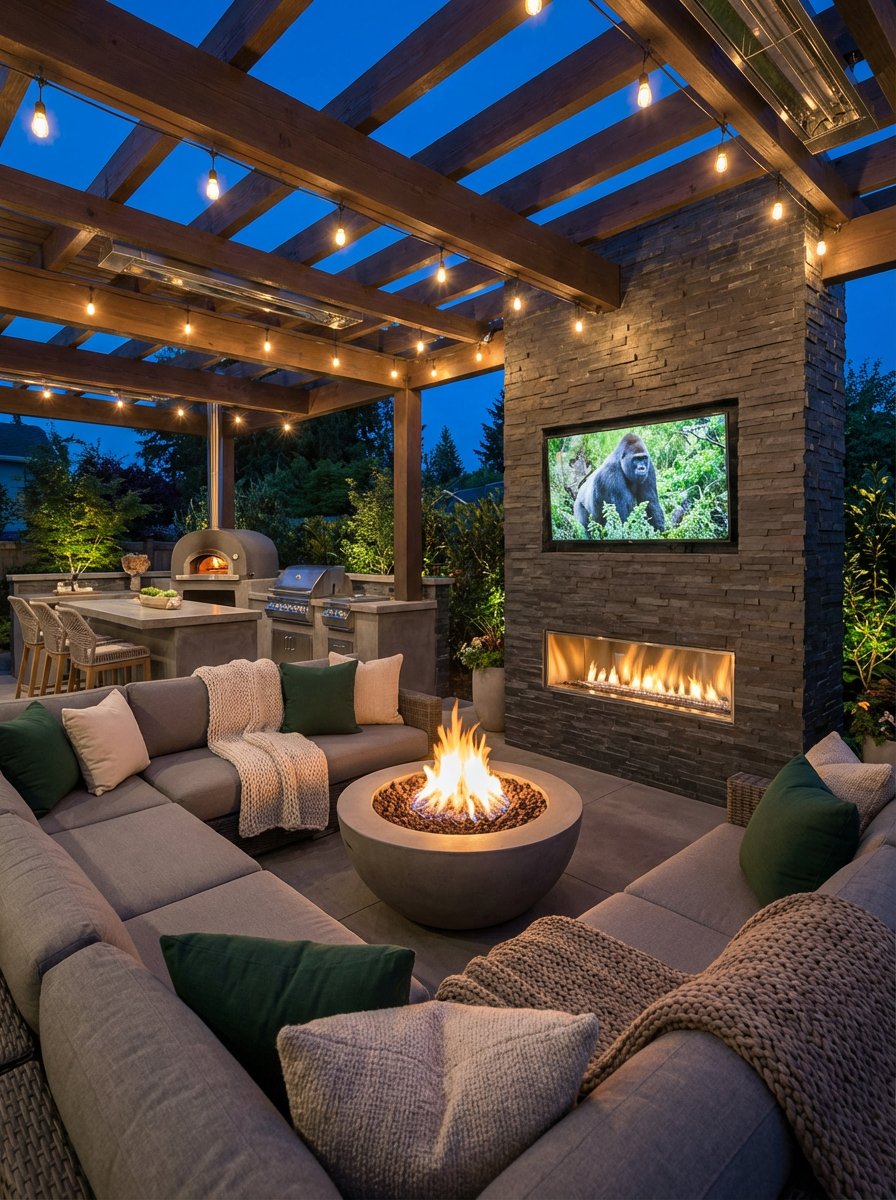
For 99% of residential outdoor settings—like a covered patio, a backyard pergola, a garden gazebo, or a poolside lanai—IP55 is the ideal standard. It provides robust protection against everything nature typically throws at it, including driving rain, humidity, and dust, without the added cost that often comes with higher ratings. The Bytefree 55-inch Outdoor TV is a perfect example of this sweet spot, offering certified IP55 weather resistance. With its 1500 nits of brightness, it battles direct sunlight while its full-metal, all-weather body repels rain and dust. This level of protection allows you to confidently install it for Sunday game days or transform your garden into a private cinema under the stars without worrying about sudden weather changes.
Choosing an IP56-rated TV might seem like a safer bet, but it is often unnecessary overkill for home use and can introduce trade-offs. Because IP56 requires a tighter seal to withstand stronger jets, these models typically have fewer ventilation options. This can lead to higher internal operating temperatures, which may affect the long-term lifespan of electronic components. Furthermore, the enhanced sealing and specialized cooling systems make IP56 TVs significantly more expensive. For the vast majority of users, the money is better spent on picture quality like 4K UHD and Dolby Vision, or brightness levels, which are more noticeable improvements for daily viewing.
Ultimately, the decision comes down to your specific exposure level. If your outdoor TV will be fully exposed to the sky or mounted on a boat that faces heavy sea spray, the powerful water jet protection of an IP56 rating is a wise investment. However, if your TV is for a standard home setting—even one fully exposed to open air but not direct, high-pressure spray from a pressure washer—IP55 is the gold standard. A product like the Bytefree 55-inch Outdoor TV is engineered for exactly this purpose. It features a full-metal body, anti-glare screen, and wide temperature adaptability, clearly demonstrating that IP55 offers ample durability for unforgettable outdoor entertainment. By choosing an IP55 television from a trusted brand like Bytefree, you are not sacrificing safety; you are simply being intelligent about matching the technology’s strength to your real-world environment.
First, it is important to clarify what the IP (Ingress Protection) rating means. The first digit after "IP" refers to protection against solid objects like dust, while the second digit refers to protection against liquids. In both IP55 and IP56, the first digit "5" means the unit is "dust-protected." While not 100% dust-tight, it ensures that dust ingress will not interfere with the TV’s satisfactory operation or safety. This is essential for outdoor electronics, where wind-blown dirt and dust are common.
The core difference lies in the second digit: the "5" versus "6" in IP55 and IP56. IP55 means the device is protected against water jets. Specifically, it can withstand water projected by a nozzle (6.3mm) from any direction. This includes heavy rain, garden hose spray, and splashback from a pool. On the other hand, IP56 offers protection against "powerful water jets" or heavy seas. It can withstand more forceful water projection (12.5mm nozzle) and higher water volume, making it suitable for locations prone to severe weather, such as monsoon rains or docks subject to sea spray and waves.
For 99% of residential outdoor settings—like a covered patio, a backyard pergola, a garden gazebo, or a poolside lanai—IP55 is the ideal standard. It provides robust protection against everything nature typically throws at it, including driving rain, humidity, and dust, without the added cost that often comes with higher ratings. The Bytefree 55-inch Outdoor TV is a perfect example of this sweet spot, offering certified IP55 weather resistance. With its 1500 nits of brightness, it battles direct sunlight while its full-metal, all-weather body repels rain and dust. This level of protection allows you to confidently install it for Sunday game days or transform your garden into a private cinema under the stars without worrying about sudden weather changes.
Choosing an IP56-rated TV might seem like a safer bet, but it is often unnecessary overkill for home use and can introduce trade-offs. Because IP56 requires a tighter seal to withstand stronger jets, these models typically have fewer ventilation options. This can lead to higher internal operating temperatures, which may affect the long-term lifespan of electronic components. Furthermore, the enhanced sealing and specialized cooling systems make IP56 TVs significantly more expensive. For the vast majority of users, the money is better spent on picture quality like 4K UHD and Dolby Vision, or brightness levels, which are more noticeable improvements for daily viewing.
Ultimately, the decision comes down to your specific exposure level. If your outdoor TV will be fully exposed to the sky or mounted on a boat that faces heavy sea spray, the powerful water jet protection of an IP56 rating is a wise investment. However, if your TV is for a standard home setting—even one fully exposed to open air but not direct, high-pressure spray from a pressure washer—IP55 is the gold standard. A product like the Bytefree 55-inch Outdoor TV is engineered for exactly this purpose. It features a full-metal body, anti-glare screen, and wide temperature adaptability, clearly demonstrating that IP55 offers ample durability for unforgettable outdoor entertainment. By choosing an IP55 television from a trusted brand like Bytefree, you are not sacrificing safety; you are simply being intelligent about matching the technology’s strength to your real-world environment.


