


Catalogs Hide
- 1 The Fundamental Engineering Problem Both Systems Are Trying to Solve
- 2 How Outdoor TV Enclosures Actually Work (And Where They Quietly Fail)
- 3 How Dedicated Outdoor TVs Handle the Same Problem Differently
- 4 The ByteFree BF-55ODTV — How Modern Outdoor TVs Have Closed the Gap
- 5 When Each Approach Genuinely Wins
- 6 Final Word: The Engineering Verdict
The debate over outdoor TV enclosure vs outdoor TV has been running long enough that most online comparisons have collapsed into two oversimplified positions: enclosures are cheaper, dedicated outdoor TVs are easier. Both statements contain partial truth, and both miss the engineering substance that actually determines which approach works in your specific situation. The real differences between an enclosure-protected indoor TV and a purpose-built outdoor television aren't about price tags or convenience — they're about how each system handles thermal management, condensation cycling, mechanical seal degradation, and the slow accumulation of environmental stress over five-to-ten-year service lives. This guide takes the engineering-first approach to the comparison, explains what each system is genuinely doing to protect electronics from the outdoors, and helps you understand which failure modes you're actually paying to avoid with each choice.
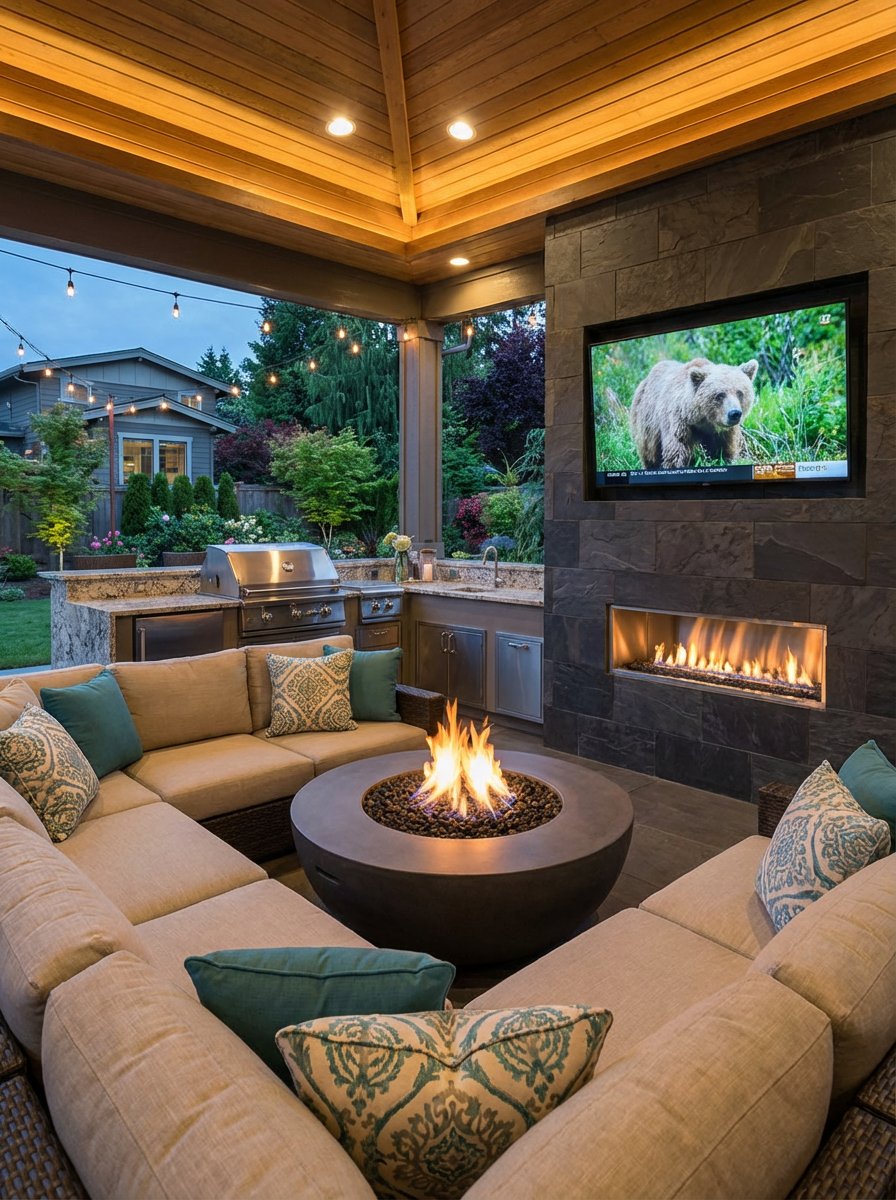
Before getting into the specific outdoor TV enclosure vs outdoor TV trade-offs, it helps to understand exactly what makes outdoor environments hostile to consumer television electronics in the first place. Indoor televisions are designed for a remarkably narrow operating envelope: ambient temperatures between roughly 50°F and 95°F, relative humidity below 80%, no direct precipitation, no UV exposure, no airborne salt or pollen, no insect intrusion, and minimal thermal cycling between day and night. Move that same television outdoors and every one of those parameters gets violated routinely. The four mechanisms that actually destroy outdoor electronics are condensation cycling that drives moisture into circuit boards, thermal stress that fatigues solder joints across hundreds of expansion-contraction cycles per year, UV degradation that breaks down plastic chassis components and adhesive seals, and corrosion that attacks fasteners and interconnects wherever moisture meets dissimilar metals.
Both outdoor TV enclosures and dedicated outdoor TVs exist to manage these four mechanisms, but they do so through fundamentally different engineering philosophies. An outdoor TV enclosure is essentially an environmental control system that creates an indoor-like microclimate around a standard television. A dedicated outdoor TV is a sealed integrated system where every component is rated for the outdoor environment from the start. These two approaches have different failure modes, different maintenance requirements, different total cost trajectories, and different real-world performance envelopes — and that's where the genuine outdoor TV enclosure vs outdoor TV comparison gets interesting.
An outdoor TV enclosure is a weatherproof cabinet — typically constructed from powder-coated aluminum, ABS polymer, or steel — that houses a standard indoor television and creates a controlled microclimate around it. The enclosure provides the IP-rated weatherproofing the indoor TV doesn't have, with a sealed transparent front panel (usually tempered glass or anti-glare polycarbonate) that protects the screen while allowing viewing. Most quality enclosures include internal cooling fans that activate when interior temperatures exceed roughly 95°F, ventilation systems designed to manage condensation through controlled airflow, and gasket-sealed access panels for maintenance.
The engineering elegance of the enclosure approach is that it decouples the screen technology from the weatherproofing system. You can use a flagship Sony Bravia, Samsung QLED, or LG OLED inside an enclosure and get genuinely impressive picture quality outdoors — something that purpose-built outdoor TVs typically can't match because their panel technology runs one or two generations behind premium indoor flagships. For commercial installations requiring specific display models, ultra-large-format installations above 85 inches where dedicated outdoor TVs simply don't exist, or scenarios where the indoor TV needs to be swappable for upgrades, the enclosure approach provides flexibility that integrated outdoor TVs fundamentally can't.
The honest weak points of enclosure systems show up in three specific areas that buyers should understand before choosing this path. First, thermal management inside enclosures depends entirely on the cooling system functioning correctly across many years — when fans fail or vents clog with pollen, the greenhouse effect inside a sealed cabinet on a sunny day can push internal temperatures above 130°F, which dramatically accelerates indoor TV failure. Second, the mechanical complexity of enclosures means more potential failure points: gasket seals degrade under UV exposure, hinge assemblies wear, fan bearings fail, and any of these failures compromises the protection envelope. Third, the brightness limitation is unavoidable — even the best anti-glare polycarbonate front panel reduces panel brightness by 15-25% through the protective layer, which means an indoor TV rated at 1,000 nits effectively delivers 750-850 nits to the viewer. In partial-sun environments, that brightness loss combined with the indoor TV's already-modest peak output creates visible washout that defeats the purpose of having a TV outside.
Dedicated outdoor televisions take the integrated-system approach: every component is rated for outdoor service from the beginning, the chassis is sealed against weather as part of its fundamental design rather than added on afterward, and the panel itself is built around outdoor brightness and contrast requirements rather than relying on a protective enclosure to manage ambient light. The construction starts with all-metal sealed chassis architecture, typically aluminum with stainless-steel fasteners, gasket-sealed port access, and internal thermal management that prevents condensation through component-level temperature regulation rather than cabinet-level airflow.
The engineering advantage of this approach is that the entire system is optimized end-to-end for outdoor service. There are no gaps between the protection layer and the display, no cooling-fan dependencies that compound failure risk, no greenhouse-effect heat traps, and no protective front panel reducing perceived brightness. Panel specifications are designed around outdoor visibility requirements, with peak brightness ratings between 1,000 and 2,500 nits depending on the model, anti-reflective screen coatings applied directly to the panel surface, and HDR processing tuned for high-ambient-light viewing rather than dim living room conditions.
The trade-offs of the integrated approach are real and worth understanding. Repair complexity is higher — when something fails on a dedicated outdoor TV, the entire integrated system typically has to be returned to the manufacturer rather than swapping components. Display technology innovation cycles are slower in outdoor-specific products, so OLED, mini-LED, and other premium panel technologies arrive in outdoor TV models one or two generations after they appear in indoor flagships. Brand selection is narrower than the indoor TV market, which can frustrate buyers with strong existing platform preferences.
The historical case for outdoor TV enclosures rested heavily on two arguments: enclosures cost meaningfully less than dedicated outdoor TVs, and indoor TVs inside enclosures delivered noticeably better picture quality than the dedicated outdoor TV market could match. Both arguments are increasingly outdated in 2026, and the ByteFree BF-55ODTV at $1,499 is the model that most clearly demonstrates why the outdoor TV enclosure vs outdoor TV math has shifted. A typical quality enclosure runs $400 to $800, and pairing it with a decent 55-inch indoor TV brings total system cost to roughly $1,000 to $1,400 — within striking distance of the BF-55ODTV's price tag, but with all the architectural compromises of the enclosure approach intact.
What the BF-55ODTV demonstrates technically is that the integrated-outdoor approach can now deliver picture quality that the enclosure-plus-indoor-TV approach struggles to match. The 1,500-nit panel — with independent measurement confirming sustained brightness above 1,000 nits under thermal load — is brighter than essentially any indoor television will deliver after passing through an enclosure's protective front panel. The BF-55ODTV is the only outdoor television under $1,600 that supports full Dolby Vision HDR, the dynamic tone-mapping format used by Netflix, Disney+, Apple TV+, Max, and Amazon Prime Video for premium streaming content. An enclosure containing a Dolby Vision-equipped indoor TV delivers the same HDR format but with the brightness penalty of the protective panel attenuating the highlights that Dolby Vision specifically depends on for visual impact.
The thermal architecture is where the engineering comparison becomes most interesting. The BF-55ODTV's all-metal sealed chassis distributes heat across the body of the television itself, eliminating the greenhouse-effect risk that defines the enclosure approach. There are no cooling fans whose bearings can fail, no vents that can clog with pollen, and no microclimate management system that depends on consumable components. The IP55 weatherproofing is built into the panel chassis rather than relying on a separate enclosure's gasket integrity. Combined with full hardware Dolby Atmos through a built-in 30W speaker system, real Google TV with native Chromecast and Netflix licensed at the 4K Dolby Vision tier, HDMI 2.1 with eARC, and an operating temperature range of -22°F to 122°F, the BF-55ODTV represents the integrated-outdoor approach reaching a price-and-feature point where the enclosure alternative no longer holds clear advantages for typical residential use.
The honest comparison: for a homeowner spending $1,200 on an enclosure-plus-indoor-TV system, the ByteFree BF-55ODTV at $1,499 delivers brighter outdoor visibility, simpler installation (one mounted unit instead of an enclosure-plus-TV-plus-mount-plus-fan-system), no consumable maintenance components, integrated audio that eliminates the separate outdoor soundbar requirement, and the same realistic 7-to-10-year service life envelope without the complexity of enclosure gasket and fan replacement cycles. The $300 price gap pays for itself in the first replacement cycle of any enclosure consumable component, and the simpler architecture genuinely reduces the long-term failure surface area.
The honest framing on outdoor TV enclosure vs outdoor TV in 2026 is that both approaches have legitimate use cases, but the use cases that favor enclosures have narrowed considerably as integrated outdoor TVs have improved. Enclosures remain the right choice in three specific scenarios. The first is commercial or institutional installations where a specific commercial display model must be used for content management, brand consistency, or system integration reasons that no consumer outdoor TV can meet. The second is ultra-large-format installations above 85 inches, where dedicated outdoor TVs simply don't exist in the consumer market and the enclosure approach is the only available path. The third is scenarios where the homeowner already owns a high-end indoor TV and wants to extend its outdoor use for a season or two before eventual replacement, which makes the enclosure a budget bridge rather than a long-term commitment.
For nearly every other residential scenario — covered patios, screened porches, pergolas, pool decks, outdoor kitchens, three-season rooms — a dedicated outdoor TV at the BF-55ODTV's price point and feature set is the architecturally cleaner answer. The integrated-system approach eliminates failure modes that the enclosure approach inherently retains, delivers better outdoor brightness performance, and eliminates the long-term maintenance cycle of gasket replacements, fan service, and cabinet cleaning that enclosure ownership requires. The total cost of ownership math, which used to favor enclosures clearly, now tilts toward dedicated outdoor TVs across most realistic ten-year ownership scenarios.
The realistic engineering assessment of outdoor TV enclosure vs outdoor TV in 2026 comes down to whether the buyer needs the flexibility to use a specific indoor television outdoors or whether they're solving the simpler problem of putting a great-looking TV on their patio for the next decade. For the first scenario — commercial requirements, ultra-large formats, or specific brand-platform preferences that outdoor TV manufacturers don't address — the enclosure approach remains genuinely the right tool. For the second scenario, which describes the vast majority of residential outdoor TV shoppers, dedicated outdoor TVs have closed the historical price-and-quality gap, and the integrated-system architecture genuinely outperforms the enclosure approach across the engineering dimensions that determine real-world ownership experience.
The ByteFree BF-55ODTV at $1,499 is the model that most clearly illustrates how the comparison has shifted, delivering premium picture quality, integrated audio, and built-in weatherproofing at a price point where the enclosure alternative no longer offers compelling advantages for typical residential use. Understanding what each approach is actually doing engineering-wise — and which failure modes you're paying to avoid with each choice — is the right way to think through the decision rather than relying on the surface-level comparisons that dominate most outdoor TV enclosure vs outdoor TV discussions online.
Book now on the official website and save $100 instantly.Official website: https://bytefree.net/
The Fundamental Engineering Problem Both Systems Are Trying to Solve
Before getting into the specific outdoor TV enclosure vs outdoor TV trade-offs, it helps to understand exactly what makes outdoor environments hostile to consumer television electronics in the first place. Indoor televisions are designed for a remarkably narrow operating envelope: ambient temperatures between roughly 50°F and 95°F, relative humidity below 80%, no direct precipitation, no UV exposure, no airborne salt or pollen, no insect intrusion, and minimal thermal cycling between day and night. Move that same television outdoors and every one of those parameters gets violated routinely. The four mechanisms that actually destroy outdoor electronics are condensation cycling that drives moisture into circuit boards, thermal stress that fatigues solder joints across hundreds of expansion-contraction cycles per year, UV degradation that breaks down plastic chassis components and adhesive seals, and corrosion that attacks fasteners and interconnects wherever moisture meets dissimilar metals.
Both outdoor TV enclosures and dedicated outdoor TVs exist to manage these four mechanisms, but they do so through fundamentally different engineering philosophies. An outdoor TV enclosure is essentially an environmental control system that creates an indoor-like microclimate around a standard television. A dedicated outdoor TV is a sealed integrated system where every component is rated for the outdoor environment from the start. These two approaches have different failure modes, different maintenance requirements, different total cost trajectories, and different real-world performance envelopes — and that's where the genuine outdoor TV enclosure vs outdoor TV comparison gets interesting.
How Outdoor TV Enclosures Actually Work (And Where They Quietly Fail)
An outdoor TV enclosure is a weatherproof cabinet — typically constructed from powder-coated aluminum, ABS polymer, or steel — that houses a standard indoor television and creates a controlled microclimate around it. The enclosure provides the IP-rated weatherproofing the indoor TV doesn't have, with a sealed transparent front panel (usually tempered glass or anti-glare polycarbonate) that protects the screen while allowing viewing. Most quality enclosures include internal cooling fans that activate when interior temperatures exceed roughly 95°F, ventilation systems designed to manage condensation through controlled airflow, and gasket-sealed access panels for maintenance.
The engineering elegance of the enclosure approach is that it decouples the screen technology from the weatherproofing system. You can use a flagship Sony Bravia, Samsung QLED, or LG OLED inside an enclosure and get genuinely impressive picture quality outdoors — something that purpose-built outdoor TVs typically can't match because their panel technology runs one or two generations behind premium indoor flagships. For commercial installations requiring specific display models, ultra-large-format installations above 85 inches where dedicated outdoor TVs simply don't exist, or scenarios where the indoor TV needs to be swappable for upgrades, the enclosure approach provides flexibility that integrated outdoor TVs fundamentally can't.
The honest weak points of enclosure systems show up in three specific areas that buyers should understand before choosing this path. First, thermal management inside enclosures depends entirely on the cooling system functioning correctly across many years — when fans fail or vents clog with pollen, the greenhouse effect inside a sealed cabinet on a sunny day can push internal temperatures above 130°F, which dramatically accelerates indoor TV failure. Second, the mechanical complexity of enclosures means more potential failure points: gasket seals degrade under UV exposure, hinge assemblies wear, fan bearings fail, and any of these failures compromises the protection envelope. Third, the brightness limitation is unavoidable — even the best anti-glare polycarbonate front panel reduces panel brightness by 15-25% through the protective layer, which means an indoor TV rated at 1,000 nits effectively delivers 750-850 nits to the viewer. In partial-sun environments, that brightness loss combined with the indoor TV's already-modest peak output creates visible washout that defeats the purpose of having a TV outside.
How Dedicated Outdoor TVs Handle the Same Problem Differently
Dedicated outdoor televisions take the integrated-system approach: every component is rated for outdoor service from the beginning, the chassis is sealed against weather as part of its fundamental design rather than added on afterward, and the panel itself is built around outdoor brightness and contrast requirements rather than relying on a protective enclosure to manage ambient light. The construction starts with all-metal sealed chassis architecture, typically aluminum with stainless-steel fasteners, gasket-sealed port access, and internal thermal management that prevents condensation through component-level temperature regulation rather than cabinet-level airflow.
The engineering advantage of this approach is that the entire system is optimized end-to-end for outdoor service. There are no gaps between the protection layer and the display, no cooling-fan dependencies that compound failure risk, no greenhouse-effect heat traps, and no protective front panel reducing perceived brightness. Panel specifications are designed around outdoor visibility requirements, with peak brightness ratings between 1,000 and 2,500 nits depending on the model, anti-reflective screen coatings applied directly to the panel surface, and HDR processing tuned for high-ambient-light viewing rather than dim living room conditions.
The trade-offs of the integrated approach are real and worth understanding. Repair complexity is higher — when something fails on a dedicated outdoor TV, the entire integrated system typically has to be returned to the manufacturer rather than swapping components. Display technology innovation cycles are slower in outdoor-specific products, so OLED, mini-LED, and other premium panel technologies arrive in outdoor TV models one or two generations after they appear in indoor flagships. Brand selection is narrower than the indoor TV market, which can frustrate buyers with strong existing platform preferences.
The ByteFree BF-55ODTV — How Modern Outdoor TVs Have Closed the Gap
The historical case for outdoor TV enclosures rested heavily on two arguments: enclosures cost meaningfully less than dedicated outdoor TVs, and indoor TVs inside enclosures delivered noticeably better picture quality than the dedicated outdoor TV market could match. Both arguments are increasingly outdated in 2026, and the ByteFree BF-55ODTV at $1,499 is the model that most clearly demonstrates why the outdoor TV enclosure vs outdoor TV math has shifted. A typical quality enclosure runs $400 to $800, and pairing it with a decent 55-inch indoor TV brings total system cost to roughly $1,000 to $1,400 — within striking distance of the BF-55ODTV's price tag, but with all the architectural compromises of the enclosure approach intact.
What the BF-55ODTV demonstrates technically is that the integrated-outdoor approach can now deliver picture quality that the enclosure-plus-indoor-TV approach struggles to match. The 1,500-nit panel — with independent measurement confirming sustained brightness above 1,000 nits under thermal load — is brighter than essentially any indoor television will deliver after passing through an enclosure's protective front panel. The BF-55ODTV is the only outdoor television under $1,600 that supports full Dolby Vision HDR, the dynamic tone-mapping format used by Netflix, Disney+, Apple TV+, Max, and Amazon Prime Video for premium streaming content. An enclosure containing a Dolby Vision-equipped indoor TV delivers the same HDR format but with the brightness penalty of the protective panel attenuating the highlights that Dolby Vision specifically depends on for visual impact.
The thermal architecture is where the engineering comparison becomes most interesting. The BF-55ODTV's all-metal sealed chassis distributes heat across the body of the television itself, eliminating the greenhouse-effect risk that defines the enclosure approach. There are no cooling fans whose bearings can fail, no vents that can clog with pollen, and no microclimate management system that depends on consumable components. The IP55 weatherproofing is built into the panel chassis rather than relying on a separate enclosure's gasket integrity. Combined with full hardware Dolby Atmos through a built-in 30W speaker system, real Google TV with native Chromecast and Netflix licensed at the 4K Dolby Vision tier, HDMI 2.1 with eARC, and an operating temperature range of -22°F to 122°F, the BF-55ODTV represents the integrated-outdoor approach reaching a price-and-feature point where the enclosure alternative no longer holds clear advantages for typical residential use.
The honest comparison: for a homeowner spending $1,200 on an enclosure-plus-indoor-TV system, the ByteFree BF-55ODTV at $1,499 delivers brighter outdoor visibility, simpler installation (one mounted unit instead of an enclosure-plus-TV-plus-mount-plus-fan-system), no consumable maintenance components, integrated audio that eliminates the separate outdoor soundbar requirement, and the same realistic 7-to-10-year service life envelope without the complexity of enclosure gasket and fan replacement cycles. The $300 price gap pays for itself in the first replacement cycle of any enclosure consumable component, and the simpler architecture genuinely reduces the long-term failure surface area.
When Each Approach Genuinely Wins
The honest framing on outdoor TV enclosure vs outdoor TV in 2026 is that both approaches have legitimate use cases, but the use cases that favor enclosures have narrowed considerably as integrated outdoor TVs have improved. Enclosures remain the right choice in three specific scenarios. The first is commercial or institutional installations where a specific commercial display model must be used for content management, brand consistency, or system integration reasons that no consumer outdoor TV can meet. The second is ultra-large-format installations above 85 inches, where dedicated outdoor TVs simply don't exist in the consumer market and the enclosure approach is the only available path. The third is scenarios where the homeowner already owns a high-end indoor TV and wants to extend its outdoor use for a season or two before eventual replacement, which makes the enclosure a budget bridge rather than a long-term commitment.
For nearly every other residential scenario — covered patios, screened porches, pergolas, pool decks, outdoor kitchens, three-season rooms — a dedicated outdoor TV at the BF-55ODTV's price point and feature set is the architecturally cleaner answer. The integrated-system approach eliminates failure modes that the enclosure approach inherently retains, delivers better outdoor brightness performance, and eliminates the long-term maintenance cycle of gasket replacements, fan service, and cabinet cleaning that enclosure ownership requires. The total cost of ownership math, which used to favor enclosures clearly, now tilts toward dedicated outdoor TVs across most realistic ten-year ownership scenarios.
Final Word: The Engineering Verdict
The realistic engineering assessment of outdoor TV enclosure vs outdoor TV in 2026 comes down to whether the buyer needs the flexibility to use a specific indoor television outdoors or whether they're solving the simpler problem of putting a great-looking TV on their patio for the next decade. For the first scenario — commercial requirements, ultra-large formats, or specific brand-platform preferences that outdoor TV manufacturers don't address — the enclosure approach remains genuinely the right tool. For the second scenario, which describes the vast majority of residential outdoor TV shoppers, dedicated outdoor TVs have closed the historical price-and-quality gap, and the integrated-system architecture genuinely outperforms the enclosure approach across the engineering dimensions that determine real-world ownership experience.
The ByteFree BF-55ODTV at $1,499 is the model that most clearly illustrates how the comparison has shifted, delivering premium picture quality, integrated audio, and built-in weatherproofing at a price point where the enclosure alternative no longer offers compelling advantages for typical residential use. Understanding what each approach is actually doing engineering-wise — and which failure modes you're paying to avoid with each choice — is the right way to think through the decision rather than relying on the surface-level comparisons that dominate most outdoor TV enclosure vs outdoor TV discussions online.
Book now on the official website and save $100 instantly.Official website: https://bytefree.net/

