


Catalogs Hide
- 1 The Three Decisions Renters Face
- 2 When Buying an Outdoor TV Makes Sense for Renters
- 3 When Buying an Outdoor TV Doesn't Make Sense for Renters
- 4 Renter Alternatives to Permanently Mounted Outdoor TVs
- 5 The Cost Comparison Over 3 Years
- 6 Renter-Specific Install Tips
- 7 What Outdoor TVs Move Well Between Rentals
- 8 Frequently Asked Questions
- 9 Summary
The "should renters buy outdoor TVs" question gets ignored by most outdoor TV buying guides, which assume buyers own their homes. The reality: roughly 36% of US households are renters, and many of them have outdoor patios, backyards, or balconies they'd love to enhance with outdoor entertainment. The cost-benefit math just works differently when the install will need to come with you when you move.
Here's the honest analysis — when buying makes sense for renters, when it doesn't, and the alternatives that deliver outdoor entertainment without the install commitment.
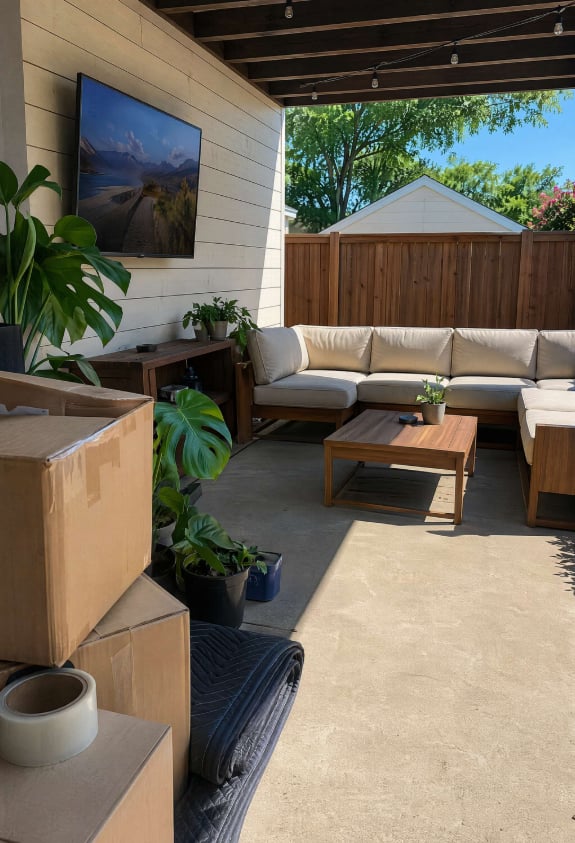
Before deciding whether to buy an outdoor TV, three factors determine whether the math works:
How long will you live at this property? The math changes dramatically based on this:
Most outdoor TVs deliver their best cost-per-year value over 5-7+ years of use. Renters need to think about whether the TV will serve them across multiple installations.
Some leases explicitly prohibit wall mounting; others require landlord permission; some allow it with restoration requirements. Before buying, verify:
If wall mounting isn't permitted, your install options narrow significantly. Free-standing TV stands designed for outdoor use exist but are less elegant than wall mounting.
Renter outdoor spaces vary dramatically:
The space type determines what install options are even possible before cost considerations matter.
Buying makes sense when:
A $1,499 outdoor TV across 5+ years of use (current home + next 1-2 homes) delivers the same per-year value as for homeowners. The install cost amortizes across multiple installations.
If your current rental has a covered pergola, screened porch, or covered deck where outdoor TV installation works long-term, the TV makes sense even if you'll move at some point.
If you have written permission to mount and clear understanding of restoration requirements, you avoid the "surprise charge at lease end" problem that catches many renters off guard.
If the new property when you move will also have outdoor space, the TV can move with you and continue delivering value. Your "wasted" first-property install cost is just the wall mount and electrical work — typically $200-$400 — which is reasonable amortized across 3-5 years of use.
Skip buying when:
Six-month lease with no commitment to renew? An outdoor TV doesn't make economic sense. Even at $899 entry-tier pricing, you're spending $899 + install costs ($150-$300) for under one year of use, then needing storage or new installation.
If you're in a townhouse with covered patio now but your next planned move is to an apartment with a small balcony, the TV's reusability is limited. Selling used outdoor TVs typically recovers only 40-50% of original value.
Without wall mounting, your install options are limited to free-standing TV stands designed for outdoor use. These work but limit aesthetic integration and are less reliable in storms.
If your rental doesn't have an outdoor GFCI outlet and you can't install one (or won't get permission to install one), you're either running extension cords (code violation, insurance issue) or limited to battery-powered alternatives.
Job circumstances requiring moves every 6-12 months make outdoor TV purchases impractical. Equipment rental or portable alternatives serve better.
If buying doesn't work for your situation, three alternatives deliver outdoor entertainment without the install commitment:
Some outdoor TVs come with portable stand options that don't require wall mounting. The Furrion Aurora Partial-Sun ($1,199) and similar mid-tier outdoor TVs work with rolling outdoor TV stands ($150-$300). The combination delivers full outdoor TV capability in a movable, no-commitment configuration.
Pros: No wall mounting, fully portable to next rental, full outdoor TV brightness and weather durability Cons: Less elegant than wall mounting, potential wind stability issues in storms, takes up floor space
Indoor entertainment portability translates outdoors via battery-powered projectors. Anker Nebula Capsule ($400-$600), Xgimi Halo+ ($800), or similar models deliver outdoor entertainment for occasional use without any installation.
Pros: Fully portable, no permission needed, works in any rental Cons: Only works in darkness, limited image quality vs outdoor TV, requires external screen or sheet, not for daily use
For renters whose outdoor entertainment is "occasional movie nights with friends," this is often the right answer rather than committing to outdoor TV installation.
A standard indoor TV ($400-$700) inside a portable outdoor enclosure (TV Shield, Storm Shell at $300-$500) creates a viable outdoor entertainment system with reasonable portability. The indoor TV moves with you when you move; the enclosure may or may not depending on the install.
Pros: Lower entry cost than purpose-built outdoor TV, can be set up without permanent install, indoor TV continues serving you after move Cons: Brightness limitations from indoor TV (250-400 nits vs 1,500+ outdoor), requires fully covered space, less elegant than purpose-built outdoor TV
For a renter making a 3-year decision:
For renters with shorter horizons or uncertain lease commitments, Options B or C deliver real outdoor entertainment value at lower commitment. Option A makes sense only when the TV will continue to serve you for 3+ years across multiple residences.
If you've decided buying makes sense:
Even verbal landlord permission can become disputed at lease end. Get written permission specifying:
For walls where you can't drill into studs, use heavy-duty toggle bolts rated for the TV weight. Better than risking damage from uncertain anchor strength.
Photograph the wall area before installation. At lease end, this documents the original state and your restoration work.
Standard VESA 600×400 or smaller mounting compatibility means the TV moves to your next residence with any standard wall mount. Avoid TVs with proprietary mounting systems that lock you into specific mounting hardware.
Avoid cable installations that require structural modifications (cuts in drywall for in-wall cable runs). Use exterior conduit and surface-mount cable management that can be removed without damage at move-out.
If the TV will move with you, the original packaging dramatically reduces shipping/transport damage risk. Most outdoor TV original boxes are designed for safe transport — store them in your garage or storage area.
Some outdoor TVs are easier to relocate than others:
Furrion Aurora Partial-Sun ($1,199): 55-inch, lighter weight (45 lbs), standard VESA mounting, solid mid-tier product. Works for renters who need portability without sacrificing outdoor capability.
ByteFree BF-55ODTV ($1,499): 55-inch with 1,500 nits brightness and 30W hardware Atmos audio. Standard VESA 600×400 mounting transfers easily to next rental. Mid-weight (60 lbs) is manageable for two-person move handling.
Sylvox DeckPro 2.0+ ($1,599): 55-inch with strong brand reputation and 3-year warranty. Standard VESA mounting. Slightly heavier than ByteFree but still manageable.
Samsung The Terrace LST7D ($3,497+): Premium tier — appropriate for permanent installations, less ideal for renter portability given price and moving risk.
Furrion Aurora Full-Sun ($5,999+): Heavy commercial-grade unit. Moves are challenging, install requirements are more demanding.
Custom integrator-installed systems: Multi-component installations with custom wiring don't move well between rentals. Stick with single-TV setups for renter use.
It depends on three factors: lease length and move frequency, permission for wall mounting, and whether the next outdoor space will accommodate the TV. For renters staying 2+ years with mounting permission and reusable space at next property, buying makes economic sense at the same per-year cost as homeowners. For renters with shorter or uncertain horizons, alternatives like battery projectors or portable outdoor TV stands deliver outdoor entertainment at lower commitment.
Maybe. Most leases require landlord permission for wall mounting and outdoor electrical work. Some prohibit it entirely; others require restoration at move-out. Verify your specific lease terms in writing before purchasing. If wall mounting isn't permitted, free-standing outdoor TV stands provide an alternative that doesn't require structural modifications.
For renters with 2-3 year horizons and confirmed mounting permission, mid-tier outdoor TVs around $1,500 deliver the best balance: ByteFree BF-55ODTV ($1,499) for warm-climate partial-sun installs, Sylvox DeckPro 2.0+ ($1,599) for cold-climate installs or brand-priority buyers. Standard VESA mounting on these models transfers easily to next rental property.
Get written landlord permission before installation. Document the wall before mounting (photograph or video). Use mounting hardware that allows reasonable restoration (filling holes, touch-up paint). At move-out, restore the wall to original condition before final inspection. The $50-$100 spent on patches and paint is dramatically cheaper than security deposit deductions.
Three alternatives: free-standing outdoor TV stand (rolling stand for portability, $150-$300 plus the TV), battery-powered portable projector (Anker Nebula or Xgimi Halo, $400-$800 for occasional outdoor entertainment), or indoor TV in outdoor enclosure (TV Shield + indoor TV, $1,100 total for fully covered installations). Each delivers some outdoor entertainment without permanent wall installation.
Outdoor TV decisions for renters require different math than for homeowners. The TV needs to move with you across multiple residences to amortize the install cost — and the install cost is meaningful even if you DIY most of it.
Buying outdoor TV makes sense when:
Skip buying when:
For renters whose situation supports buying, the ByteFree BF-55ODTV at $1,499 delivers strong portability characteristics: standard VESA 600×400 mounting compatible with any standard wall mount, 1,500 nits brightness for partial-sun installs, mid-weight (60 lbs) manageable for two-person moves, and full Dolby Vision + 30W Atmos for entertainment quality without requiring soundbar add-on.
For renters whose situation doesn't support buying, alternatives like battery-powered portable projectors ($400-$600) or indoor TVs in outdoor enclosures ($1,100 total) deliver real outdoor entertainment value at lower commitment.
Don't buy an outdoor TV that won't fit your next rental's outdoor space. Don't skip outdoor entertainment entirely if your situation supports a portable alternative.
Related reading:
Here's the honest analysis — when buying makes sense for renters, when it doesn't, and the alternatives that deliver outdoor entertainment without the install commitment.
The Three Decisions Renters Face
Before deciding whether to buy an outdoor TV, three factors determine whether the math works:
Lease Length and Move Frequency
How long will you live at this property? The math changes dramatically based on this:
- 6-12 months: Outdoor TV doesn't pay back. Either skip or use portable alternatives.
- 1-2 years: Marginal. Depends on alternative use after move.
- 2-3 years: Reasonable if the TV will continue to serve you at the next property.
- 3+ years: Same math as homeowners.
Most outdoor TVs deliver their best cost-per-year value over 5-7+ years of use. Renters need to think about whether the TV will serve them across multiple installations.
Permission for Wall Mounting
Some leases explicitly prohibit wall mounting; others require landlord permission; some allow it with restoration requirements. Before buying, verify:
- Is wall mounting permitted in your lease?
- If yes, what restoration is required at lease end?
- Does the landlord need advance notice?
- Is outdoor electrical work permitted (for GFCI outlet installation)?
If wall mounting isn't permitted, your install options narrow significantly. Free-standing TV stands designed for outdoor use exist but are less elegant than wall mounting.
Outdoor Space Type
Renter outdoor spaces vary dramatically:
- Apartment balcony: Limited TV size options (32-43 inch typical), often weight restrictions on balcony mounting, neighbor visual concerns
- Townhouse private patio: Most homeowner-equivalent; full outdoor TV options usually viable
- Single-family home rental: Backyard, deck, or patio access; full outdoor TV options usually viable
- Condo/HOA property: Shared outdoor spaces typically can't be modified; private spaces may have HOA restrictions
The space type determines what install options are even possible before cost considerations matter.
When Buying an Outdoor TV Makes Sense for Renters
Buying makes sense when:
You're staying 2+ years and the TV moves with you
A $1,499 outdoor TV across 5+ years of use (current home + next 1-2 homes) delivers the same per-year value as for homeowners. The install cost amortizes across multiple installations.
Your current outdoor space is permanently usable for outdoor TVs
If your current rental has a covered pergola, screened porch, or covered deck where outdoor TV installation works long-term, the TV makes sense even if you'll move at some point.
Your landlord has approved wall mounting and restoration
If you have written permission to mount and clear understanding of restoration requirements, you avoid the "surprise charge at lease end" problem that catches many renters off guard.
You can recover install cost partially through next-place install
If the new property when you move will also have outdoor space, the TV can move with you and continue delivering value. Your "wasted" first-property install cost is just the wall mount and electrical work — typically $200-$400 — which is reasonable amortized across 3-5 years of use.
When Buying an Outdoor TV Doesn't Make Sense for Renters
Skip buying when:
Lease is shorter than 12 months and uncertain
Six-month lease with no commitment to renew? An outdoor TV doesn't make economic sense. Even at $899 entry-tier pricing, you're spending $899 + install costs ($150-$300) for under one year of use, then needing storage or new installation.
Your outdoor space wouldn't take the TV at next property
If you're in a townhouse with covered patio now but your next planned move is to an apartment with a small balcony, the TV's reusability is limited. Selling used outdoor TVs typically recovers only 40-50% of original value.
Wall mounting isn't permitted
Without wall mounting, your install options are limited to free-standing TV stands designed for outdoor use. These work but limit aesthetic integration and are less reliable in storms.
Outdoor electrical isn't available or installable
If your rental doesn't have an outdoor GFCI outlet and you can't install one (or won't get permission to install one), you're either running extension cords (code violation, insurance issue) or limited to battery-powered alternatives.
You move frequently for work
Job circumstances requiring moves every 6-12 months make outdoor TV purchases impractical. Equipment rental or portable alternatives serve better.
Renter Alternatives to Permanently Mounted Outdoor TVs
If buying doesn't work for your situation, three alternatives deliver outdoor entertainment without the install commitment:
1. Portable Outdoor TV with Stand
Some outdoor TVs come with portable stand options that don't require wall mounting. The Furrion Aurora Partial-Sun ($1,199) and similar mid-tier outdoor TVs work with rolling outdoor TV stands ($150-$300). The combination delivers full outdoor TV capability in a movable, no-commitment configuration.
Pros: No wall mounting, fully portable to next rental, full outdoor TV brightness and weather durability Cons: Less elegant than wall mounting, potential wind stability issues in storms, takes up floor space
2. Battery-Powered Portable Projector
Indoor entertainment portability translates outdoors via battery-powered projectors. Anker Nebula Capsule ($400-$600), Xgimi Halo+ ($800), or similar models deliver outdoor entertainment for occasional use without any installation.
Pros: Fully portable, no permission needed, works in any rental Cons: Only works in darkness, limited image quality vs outdoor TV, requires external screen or sheet, not for daily use
For renters whose outdoor entertainment is "occasional movie nights with friends," this is often the right answer rather than committing to outdoor TV installation.
3. Indoor TV in Outdoor Enclosure
A standard indoor TV ($400-$700) inside a portable outdoor enclosure (TV Shield, Storm Shell at $300-$500) creates a viable outdoor entertainment system with reasonable portability. The indoor TV moves with you when you move; the enclosure may or may not depending on the install.
Pros: Lower entry cost than purpose-built outdoor TV, can be set up without permanent install, indoor TV continues serving you after move Cons: Brightness limitations from indoor TV (250-400 nits vs 1,500+ outdoor), requires fully covered space, less elegant than purpose-built outdoor TV
The Cost Comparison Over 3 Years
For a renter making a 3-year decision:
Option A: Buy Outdoor TV ($1,499) + Move Once
- TV: $1,499
- Initial install (mount, cables, electrical): $300
- Move to new rental + new install (mount, cables): $200
- Total over 3 years: $1,999
- Per year: $666
Option B: Battery Projector + Bedsheet ($500)
- Projector: $400
- Cables and accessories: $50
- Replacement projector at year 2-3: $400 (lamp/laser projectors degrade)
- Total over 3 years: $850
- Per year: $283
Option C: Indoor TV in Enclosure ($800)
- Indoor TV: $600
- Outdoor enclosure: $400
- Stand/mount: $100
- Total over 3 years: $1,100
- Per year: $367
Option D: Skip Entirely
- Total cost: $0
- Outdoor entertainment via phone, tablet, indoor TV viewed through windows during nice weather
For renters with shorter horizons or uncertain lease commitments, Options B or C deliver real outdoor entertainment value at lower commitment. Option A makes sense only when the TV will continue to serve you for 3+ years across multiple residences.
Renter-Specific Install Tips
If you've decided buying makes sense:
Get Wall Mounting in Writing
Even verbal landlord permission can become disputed at lease end. Get written permission specifying:
- Wall mounting is approved
- Specific mounting hardware approved (or reasonable hardware standards)
- Restoration requirements at move-out (often "fill holes, repair paint")
- Whether existing outdoor outlets can be used or new ones installed
Use Toggle Bolts or Drywall Anchors That Don't Require Wood Framing
For walls where you can't drill into studs, use heavy-duty toggle bolts rated for the TV weight. Better than risking damage from uncertain anchor strength.
Document the Wall Before Installation
Photograph the wall area before installation. At lease end, this documents the original state and your restoration work.
Choose TVs with Standard VESA Mounting
Standard VESA 600×400 or smaller mounting compatibility means the TV moves to your next residence with any standard wall mount. Avoid TVs with proprietary mounting systems that lock you into specific mounting hardware.
Plan Cable Routing for Move
Avoid cable installations that require structural modifications (cuts in drywall for in-wall cable runs). Use exterior conduit and surface-mount cable management that can be removed without damage at move-out.
Keep Original Packaging
If the TV will move with you, the original packaging dramatically reduces shipping/transport damage risk. Most outdoor TV original boxes are designed for safe transport — store them in your garage or storage area.
What Outdoor TVs Move Well Between Rentals
Some outdoor TVs are easier to relocate than others:
Best for Renters
Furrion Aurora Partial-Sun ($1,199): 55-inch, lighter weight (45 lbs), standard VESA mounting, solid mid-tier product. Works for renters who need portability without sacrificing outdoor capability.
ByteFree BF-55ODTV ($1,499): 55-inch with 1,500 nits brightness and 30W hardware Atmos audio. Standard VESA 600×400 mounting transfers easily to next rental. Mid-weight (60 lbs) is manageable for two-person move handling.
Sylvox DeckPro 2.0+ ($1,599): 55-inch with strong brand reputation and 3-year warranty. Standard VESA mounting. Slightly heavier than ByteFree but still manageable.
Less Ideal for Renters
Samsung The Terrace LST7D ($3,497+): Premium tier — appropriate for permanent installations, less ideal for renter portability given price and moving risk.
Furrion Aurora Full-Sun ($5,999+): Heavy commercial-grade unit. Moves are challenging, install requirements are more demanding.
Custom integrator-installed systems: Multi-component installations with custom wiring don't move well between rentals. Stick with single-TV setups for renter use.
Frequently Asked Questions
Should renters buy an outdoor TV?
It depends on three factors: lease length and move frequency, permission for wall mounting, and whether the next outdoor space will accommodate the TV. For renters staying 2+ years with mounting permission and reusable space at next property, buying makes economic sense at the same per-year cost as homeowners. For renters with shorter or uncertain horizons, alternatives like battery projectors or portable outdoor TV stands deliver outdoor entertainment at lower commitment.
Can I install an outdoor TV in my rental?
Maybe. Most leases require landlord permission for wall mounting and outdoor electrical work. Some prohibit it entirely; others require restoration at move-out. Verify your specific lease terms in writing before purchasing. If wall mounting isn't permitted, free-standing outdoor TV stands provide an alternative that doesn't require structural modifications.
What's the best outdoor TV for renters?
For renters with 2-3 year horizons and confirmed mounting permission, mid-tier outdoor TVs around $1,500 deliver the best balance: ByteFree BF-55ODTV ($1,499) for warm-climate partial-sun installs, Sylvox DeckPro 2.0+ ($1,599) for cold-climate installs or brand-priority buyers. Standard VESA mounting on these models transfers easily to next rental property.
How do I avoid losing my security deposit when moving an outdoor TV?
Get written landlord permission before installation. Document the wall before mounting (photograph or video). Use mounting hardware that allows reasonable restoration (filling holes, touch-up paint). At move-out, restore the wall to original condition before final inspection. The $50-$100 spent on patches and paint is dramatically cheaper than security deposit deductions.
What if my landlord won't allow wall mounting?
Three alternatives: free-standing outdoor TV stand (rolling stand for portability, $150-$300 plus the TV), battery-powered portable projector (Anker Nebula or Xgimi Halo, $400-$800 for occasional outdoor entertainment), or indoor TV in outdoor enclosure (TV Shield + indoor TV, $1,100 total for fully covered installations). Each delivers some outdoor entertainment without permanent wall installation.
Summary
Outdoor TV decisions for renters require different math than for homeowners. The TV needs to move with you across multiple residences to amortize the install cost — and the install cost is meaningful even if you DIY most of it.
Buying outdoor TV makes sense when:
- Lease is 2+ years with reasonable extension expectation
- Wall mounting is permitted in writing
- Next residence will accommodate the TV
- Outdoor electrical is available or installable
- You're not moving frequently for work
Skip buying when:
- Lease is under 12 months and uncertain
- Wall mounting isn't permitted
- Frequent moves are likely
- Next outdoor space won't accommodate the TV
For renters whose situation supports buying, the ByteFree BF-55ODTV at $1,499 delivers strong portability characteristics: standard VESA 600×400 mounting compatible with any standard wall mount, 1,500 nits brightness for partial-sun installs, mid-weight (60 lbs) manageable for two-person moves, and full Dolby Vision + 30W Atmos for entertainment quality without requiring soundbar add-on.
For renters whose situation doesn't support buying, alternatives like battery-powered portable projectors ($400-$600) or indoor TVs in outdoor enclosures ($1,100 total) deliver real outdoor entertainment value at lower commitment.
Don't buy an outdoor TV that won't fit your next rental's outdoor space. Don't skip outdoor entertainment entirely if your situation supports a portable alternative.
Related reading: