


Catalogs Hide
Most outdoor TV buying guides assume a moderate climate. Average summer highs, moderate humidity, winter temperatures that rarely hit extremes. That describes part of the US market.
It doesn't describe Florida — where summer heat and humidity push outdoor electronics harder than almost anywhere else in North America. And it doesn't describe Minnesota, Chicago, or upstate New York, where a TV left on an exterior wall faces sub-zero temperatures for months at a time.
If you're in a climate extreme, the standard buying advice needs context. Here's what the specs mean for the conditions you actually live in.
The temperature challenge: Peak summer ambient temperatures in South Florida regularly hit 95°F+ (35°C). Factor in direct sun on a dark-colored TV housing and surface temperatures can approach 50°C. Most outdoor TVs are rated to operate at up to 50°C ambient temperature — which means a Florida summer is running right at the operational ceiling. Thermal management matters significantly here.
The humidity challenge: Florida averages 70–75% relative humidity year-round, peaking higher in summer. Operating humidity tolerance of 85% and all-sealed-port construction are the minimum specs for reliability in this environment.
The UV challenge: Florida receives some of the highest UV index readings in North America. Plastic housing materials degrade faster here than in any other US region. Metal housing isn't a premium feature in Florida — it's a survival spec.
The salt air challenge: Coastal Florida installs face salt air corrosion that accelerates metal oxidation and connector degradation. Internal components and exposed fasteners are affected over time even when the enclosure is sealed.
What to look for in a Florida install:
The freeze-thaw challenge: A TV left outdoors in Chicago or Minneapolis faces temperatures that swing from -20°C in January to +35°C in July. That's a 55-degree swing across the year, and repeated freeze-thaw cycles stress every component — solder joints, panel substrates, housing materials, and cable connections.
The storage temperature spec: Operating temperature and storage temperature are different specs. Most outdoor TVs operate down to 0°C (32°F). But storage temperature — the range the TV can safely sit powered off in cold conditions — often extends to -20°C. This is the spec that matters for a TV left mounted through winter.
Panel behavior in cold: LCD panels can respond slowly at low temperatures. Very cold conditions (below -10°C) may cause sluggish response or temporary image artifacts on startup. Quality outdoor TVs account for this in their thermal design.
The moisture challenge in cold climates: Freeze-thaw cycles create condensation inside any enclosure with temperature differentials. A sealed IP55 enclosure prevents external moisture ingress; internal condensation from air trapped during installation is a more subtle concern that quality outdoor TV sealing addresses.
What to look for in a cold-weather install:
Storage temperature: -20°C–+60°C (-4°F–140°F)
Operating humidity: 20–85%
Housing: All-metal (bezel and rear)
Cooling: 4 internal fans
IP Rating: IP55
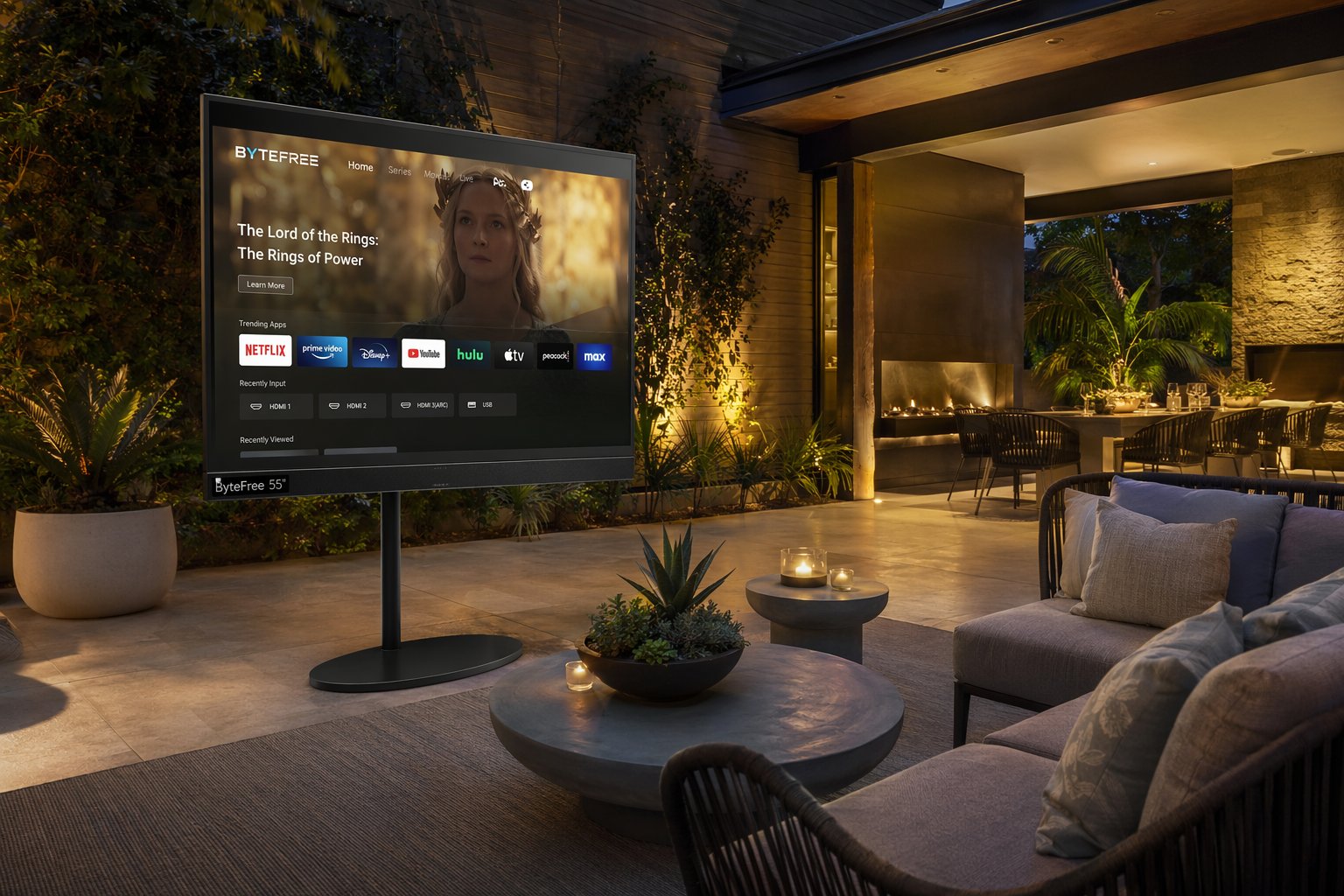
The BF-55ODTV's specs cover both extremes.
For Florida and hot humid climates: The 50°C operating ceiling and four active cooling fans handle sustained summer heat without throttling. The all-metal housing resists UV degradation and salt air corrosion better than plastic alternatives. IP55 covers the frequent storm exposure. Operating humidity to 85% covers Florida's year-round ambient moisture.
For cold-weather climates: The -20°C storage temperature covers even upper Midwest winters for a TV left mounted year-round. Metal housing maintains dimensional stability through freeze-thaw cycles without the cracking and gap formation that plastic undergoes. IP55 handles spring thaw moisture and fall rain seasons.
The 0°C operating floor is the one limitation — the TV won't start or perform reliably below freezing. For cold-climate buyers who watch outdoors into late fall or early spring, be aware that below-freezing ambient temperatures will affect performance. Most outdoor viewing in cold climates ends before this becomes a real constraint, but it's worth knowing.
Gulf Coast with salt air: Add annual inspection of connector contacts and visible hardware to your maintenance plan regardless of which TV you buy. Salt air is insidious and slow — IP55 limits ingress but doesn't eliminate all long-term corrosion risk on external hardware.
Upper Midwest and Northeast: Confirm the storage temperature spec. The -20°C storage temperature on the ByteFree covers typical upper Midwest lows. Verify your regional temperature history against the spec before leaving the TV mounted year-round.
Mountain regions: Operating altitude spec is worth checking. ByteFree is rated to 5,000m operating altitude — covers any residential installation in North America including high-elevation properties in Colorado, Utah, and New Mexico.
Use the power properly. Don't cut power with a hard switch while the TV is hot. Let it cool through normal shutdown so the fans can reduce internal temperature before the unit powers off. This matters more in hot climates.
Cover or protect during extended non-use. Even an IP55 TV benefits from a breathable outdoor TV cover during long periods of non-use — winter storage in cold climates, hurricane season in Florida. The IP55 rating is for operating conditions, not indefinite storage in harsh weather.
Florida buyers get the thermal management and UV resistance they need. Cold-climate buyers get the freeze-thaw durability and storage temperature spec that keeps the TV viable year-round.
It doesn't describe Florida — where summer heat and humidity push outdoor electronics harder than almost anywhere else in North America. And it doesn't describe Minnesota, Chicago, or upstate New York, where a TV left on an exterior wall faces sub-zero temperatures for months at a time.
If you're in a climate extreme, the standard buying advice needs context. Here's what the specs mean for the conditions you actually live in.
Hot and Humid Climates (Florida, Gulf Coast, Hawaii)
Florida's outdoor TV challenge isn't just heat. It's heat combined with sustained high humidity, intense UV radiation, salt air in coastal areas, and afternoon thunderstorms that are both frequent and intense.The temperature challenge: Peak summer ambient temperatures in South Florida regularly hit 95°F+ (35°C). Factor in direct sun on a dark-colored TV housing and surface temperatures can approach 50°C. Most outdoor TVs are rated to operate at up to 50°C ambient temperature — which means a Florida summer is running right at the operational ceiling. Thermal management matters significantly here.
The humidity challenge: Florida averages 70–75% relative humidity year-round, peaking higher in summer. Operating humidity tolerance of 85% and all-sealed-port construction are the minimum specs for reliability in this environment.
The UV challenge: Florida receives some of the highest UV index readings in North America. Plastic housing materials degrade faster here than in any other US region. Metal housing isn't a premium feature in Florida — it's a survival spec.
The salt air challenge: Coastal Florida installs face salt air corrosion that accelerates metal oxidation and connector degradation. Internal components and exposed fasteners are affected over time even when the enclosure is sealed.
What to look for in a Florida install:
- Operating temperature rated to 50°C
- Active cooling (fans) to maintain performance in sustained heat
- All-metal housing for UV and salt air resistance
- IP55 minimum for the frequent afternoon storm exposure
- Operating humidity spec of 85%+
Cold Weather Climates (Upper Midwest, Northeast, Mountain Regions)
The cold-weather outdoor TV challenge is the opposite problem — but equally demanding on the hardware.The freeze-thaw challenge: A TV left outdoors in Chicago or Minneapolis faces temperatures that swing from -20°C in January to +35°C in July. That's a 55-degree swing across the year, and repeated freeze-thaw cycles stress every component — solder joints, panel substrates, housing materials, and cable connections.
The storage temperature spec: Operating temperature and storage temperature are different specs. Most outdoor TVs operate down to 0°C (32°F). But storage temperature — the range the TV can safely sit powered off in cold conditions — often extends to -20°C. This is the spec that matters for a TV left mounted through winter.
Panel behavior in cold: LCD panels can respond slowly at low temperatures. Very cold conditions (below -10°C) may cause sluggish response or temporary image artifacts on startup. Quality outdoor TVs account for this in their thermal design.
The moisture challenge in cold climates: Freeze-thaw cycles create condensation inside any enclosure with temperature differentials. A sealed IP55 enclosure prevents external moisture ingress; internal condensation from air trapped during installation is a more subtle concern that quality outdoor TV sealing addresses.
What to look for in a cold-weather install:
- Storage temperature rated to at least -20°C
- Metal housing for dimensional stability in freeze-thaw cycling
- IP55 for moisture protection through snow melt and rain seasons
- Operating temperature down to 0°C (32°F) minimum
ByteFree BF-55ODTV in Extreme Climates
Operating temperature: 0–50°C (32°F–122°F)Storage temperature: -20°C–+60°C (-4°F–140°F)
Operating humidity: 20–85%
Housing: All-metal (bezel and rear)
Cooling: 4 internal fans
IP Rating: IP55
The BF-55ODTV's specs cover both extremes.
For Florida and hot humid climates: The 50°C operating ceiling and four active cooling fans handle sustained summer heat without throttling. The all-metal housing resists UV degradation and salt air corrosion better than plastic alternatives. IP55 covers the frequent storm exposure. Operating humidity to 85% covers Florida's year-round ambient moisture.
For cold-weather climates: The -20°C storage temperature covers even upper Midwest winters for a TV left mounted year-round. Metal housing maintains dimensional stability through freeze-thaw cycles without the cracking and gap formation that plastic undergoes. IP55 handles spring thaw moisture and fall rain seasons.
The 0°C operating floor is the one limitation — the TV won't start or perform reliably below freezing. For cold-climate buyers who watch outdoors into late fall or early spring, be aware that below-freezing ambient temperatures will affect performance. Most outdoor viewing in cold climates ends before this becomes a real constraint, but it's worth knowing.
Climate-Specific Buying Adjustments
Florida buyers: Prioritize active cooling and metal housing over everything except IP rating. The Sylvox Cinema at 2,000 nits is worth considering over the ByteFree's 1,500 nits if your install faces direct south sun — Florida's sun angle makes full-sun exposure more common than in northern states. For shaded and partially shaded installs, ByteFree's 1,500 nits and thermal management are sufficient.Gulf Coast with salt air: Add annual inspection of connector contacts and visible hardware to your maintenance plan regardless of which TV you buy. Salt air is insidious and slow — IP55 limits ingress but doesn't eliminate all long-term corrosion risk on external hardware.
Upper Midwest and Northeast: Confirm the storage temperature spec. The -20°C storage temperature on the ByteFree covers typical upper Midwest lows. Verify your regional temperature history against the spec before leaving the TV mounted year-round.
Mountain regions: Operating altitude spec is worth checking. ByteFree is rated to 5,000m operating altitude — covers any residential installation in North America including high-elevation properties in Colorado, Utah, and New Mexico.
What No Outdoor TV Spec Covers: Operational Discipline
Regardless of climate, two operational habits extend outdoor TV lifespan significantly:Use the power properly. Don't cut power with a hard switch while the TV is hot. Let it cool through normal shutdown so the fans can reduce internal temperature before the unit powers off. This matters more in hot climates.
Cover or protect during extended non-use. Even an IP55 TV benefits from a breathable outdoor TV cover during long periods of non-use — winter storage in cold climates, hurricane season in Florida. The IP55 rating is for operating conditions, not indefinite storage in harsh weather.
Bottom Line
Climate extremes are where outdoor TV specs that look similar on paper start to diverge in real performance. The ByteFree BF-55ODTV's all-metal construction, active cooling, -20°C storage temperature, and IP55 rating cover both the hot-humid and cold-winter cases that the generic outdoor TV advice glosses over.Florida buyers get the thermal management and UV resistance they need. Cold-climate buyers get the freeze-thaw durability and storage temperature spec that keeps the TV viable year-round.

