


Catalogs Hide
- 1 The Physics That Actually Defines Outdoor TV Operating Temperature Range
- 2 Why Operating Range and Storage Range Are Different Numbers
- 3 How Outdoor TVs Extend the Operating Range Beyond Indoor Models
- 4 How to Read Outdoor TV Operating Temperature Range Specs Without Getting Misled
- 5 The ByteFree BF-55ODTV — A Practical Engineering Reference Point
- 6 What Operating Temperature Range Doesn't Tell You
If you've ever read the specifications page for an outdoor television and wondered why one model claims a -22°F to 122°F operating envelope while another lists 32°F to 122°F, and a third lists separate operating and storage ranges with completely different numbers, you've encountered one of the most poorly-explained corners of consumer electronics marketing. The outdoor TV operating temperature range is not an arbitrary spec written by marketing departments — it's a hard physical limit determined by the liquid crystal physics inside the panel, the semiconductor behavior of the driver electronics, and the thermal expansion characteristics of the materials used to seal the chassis. Understanding what those numbers actually mean, and which ones matter for your specific climate, is the difference between buying a TV that lasts a decade and buying one that develops mysterious problems after the second winter. This guide takes the engineering-first approach to explaining what the operating temperature range really represents, why outdoor TVs behave differently from indoor ones, and how to read these specs without falling for marketing oversimplifications.
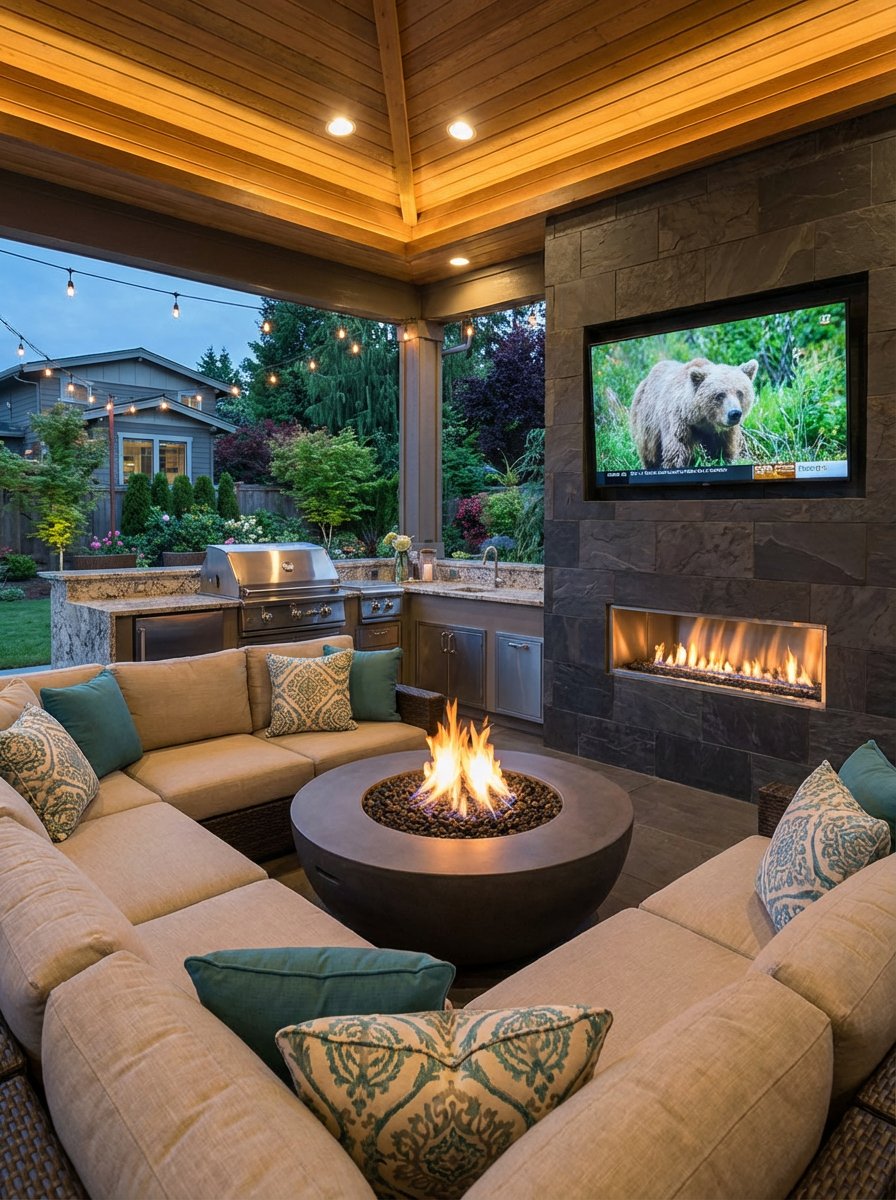
Before getting into specific outdoor TV operating temperature range comparisons across models, it helps to understand what the numbers physically represent. Liquid crystal displays — the technology behind essentially every outdoor TV on the market in 2026 — work by manipulating the alignment of liquid crystal molecules using small electrical signals. The liquid crystals exist in a specific phase called the nematic phase, where the molecules are loosely aligned but still flow like a liquid. That nematic phase only exists within a defined temperature window, and the boundaries of that window define the absolute physical limits of LCD operation.
On the cold end, when temperatures drop too low, the liquid crystals become viscous and slow to respond to electrical signals. Pixel response times that should be measured in milliseconds stretch into hundreds of milliseconds, producing visible motion blur and ghosting that no amount of electronic compensation can fix. Below roughly 14°F, most consumer-grade LCD panels produce visibly degraded images even when powered, and below the rated cold-operating limit, attempting to power up the panel can force electricity through cold, high-resistance circuits in ways that create localized heating and thermal shock. That thermal shock is what cracks cold panels — not the cold itself, but the sudden uneven heating across a substrate that has contracted in the cold.
On the hot end, the failure mode is even more dramatic. Liquid crystals have a transition point called the isotropic temperature, typically around 167°F (75°C) for the substances used in modern panels. At and above that temperature, the molecules lose their ordered alignment entirely and become a random fluid that no longer responds to electrical signals at all. The display literally goes dark in any region of the panel that crosses the isotropic threshold, and remains dark until the temperature drops back below it. This is reversible — the panel itself isn't damaged — but it means that any panel reaching internal surface temperatures of 167°F under direct sun will simply stop displaying images, sometimes in patches as different regions of the screen heat unevenly. The published outdoor TV operating temperature range is essentially the manufacturer's commitment that under their specified ambient conditions, the panel surface will stay safely below the isotropic limit and safely above the cold-response threshold.
A surprising amount of confusion in the outdoor TV operating temperature range conversation comes from buyers conflating two distinct specifications: operating temperature range and storage temperature range. These are genuinely different numbers measuring different things, and quality outdoor TV manufacturers publish both because they describe different failure modes. Operating temperature range is the ambient envelope within which the TV can be safely powered on and used. Storage temperature range is the wider envelope within which the TV can survive without permanent damage, even if it cannot operate within that range.
The reason these numbers differ comes back to the physics. A cold panel below its operating range will produce visibly degraded images and risks thermal shock if powered up too quickly, but the same panel sitting unpowered at the same temperature is simply dormant — no electricity flowing, no thermal gradients forming, no risk of damage. The storage range typically extends roughly 20-30°F below and above the operating range because survival requires only that the materials don't reach their physical breakdown points, not that the device functions at usable performance. For example, a TV with a 32°F operating floor might have a storage floor of -4°F, meaning it can sit through a night that drops to -4°F without damage but should be allowed to warm up to 32°F before being powered on. Ignoring this distinction is the most common cause of avoidable cold-weather damage in outdoor TV ownership — the panel survives the night, but a homeowner powers it on too quickly the next morning and induces the thermal shock that storage limits are specifically designed to avoid.
Indoor televisions typically carry a recommended operating temperature range of roughly 50°F to 95°F or 104°F, which reflects the climate-controlled environments they're designed for. Outdoor TVs extend that envelope through a combination of engineering decisions that buyers paying premium prices are essentially purchasing access to. The cold-end extension comes from selecting wider-temperature liquid crystal formulations that maintain nematic-phase performance at lower temperatures, ruggedized driver electronics rated for the wider thermal envelope, and conformal coatings on circuit boards that prevent condensation-induced shorting during cold-to-warm transitions. Some premium outdoor TVs add internal heating elements that pre-warm the panel during cold-startup sequences, eliminating thermal shock risk entirely.
The hot-end extension is technically more demanding because heat is actively generated by the display itself rather than just absorbed from the environment. Outdoor TVs designed for high-ambient-temperature performance use larger heat-dissipation surfaces, higher-grade thermal interface materials between the panel and chassis, and in premium models, active cooling systems with sealed-bearing fans that move air through filtered intake paths. The marketing terminology varies — some manufacturers call this "Enhanced Solar Tolerance," others use proprietary cooling-technology names — but the underlying engineering is consistent: keep the panel surface below 167°F under all rated conditions, including direct full-sun exposure when the model is rated for it. The published outdoor TV operating temperature range represents the manufacturer's tested commitment that these systems will keep the panel within its physical operating window across the entire stated envelope.
The most practical skill any outdoor TV buyer can develop is reading these temperature specifications critically, because the numbers can be presented in ways that sound impressive but don't translate to real-world performance. Three specific patterns are worth watching for. First, some manufacturers list a wide operating range in marketing materials but a narrower one in fine-print specifications — the marketing might claim "extreme weather performance" while the actual rated envelope is 32°F to 104°F, which is barely beyond indoor TV territory. Always verify the rated range from the official spec sheet rather than marketing copy. Second, full-sun-rated and partial-sun-rated models often have meaningfully different operating ranges, and confusing them is a common mistake. A partial-sun model installed under direct sun exposure can exceed its rated thermal envelope even at moderate ambient temperatures, because the panel surface heats well above ambient when sunlight hits it directly. Third, the operating range tells you nothing about the rate of failure when conditions exceed it — some panels degrade gracefully (slow response times, dim images) while others fail catastrophically (cracked substrates, dead pixels). Reading user reviews from buyers in your specific climate provides the practical context that spec sheets don't.
The ByteFree BF-55ODTV at $1,499 provides a useful reference point for understanding how outdoor TV operating temperature range specifications translate to real-world performance, because its published envelope and underlying engineering align cleanly with the typical residential outdoor TV use case. ByteFree publishes a 32°F to 122°F operating temperature range with storage extending lower, which represents the thermal envelope optimized for the realistic majority of North American outdoor TV installations rather than the extreme-climate edge cases that drive premium pricing in the category. Within that envelope, the BF-55ODTV genuinely delivers — the all-metal sealed chassis distributes heat evenly across the body of the television, eliminating the localized hot spots that drive panel-surface temperatures toward the isotropic threshold, and the IP55 weatherproofing manages the moisture-and-condensation cycle that compounds thermal stress over years of ownership.
What makes the BF-55ODTV the more interesting engineering case is what it delivers within that operating envelope. The 1,500-nit panel — with independent measurement confirming sustained brightness above 1,000 nits under prolonged thermal load — operates without entering thermal-throttling territory in typical partial-sun installations, which means the panel runs comfortably below the isotropic threshold even during extended summer afternoon use. Many lower-tier outdoor TVs at similar price points thermal-throttle aggressively to compensate for inadequate cooling architecture, which protects the panel from isotropic shutdown but produces visibly dimmer images during the exact moments when outdoor brightness matters most. The BF-55ODTV's thermal architecture lets the panel run at rated performance throughout its operating envelope, which is the practical translation of good thermal engineering rather than just a wide spec-sheet number.
The BF-55ODTV is also the only outdoor television under $1,600 that supports full Dolby Vision HDR, the dynamic tone-mapping format used by Netflix, Disney+, Apple TV+, Max, and Amazon Prime Video for premium streaming content. The combination of full hardware Dolby Atmos through a built-in 30W speaker system, real Google TV with native Chromecast and Netflix licensed at the 4K Dolby Vision tier, HDMI 2.1 with eARC, and IP55 weatherproofing makes the BF-55ODTV a useful concrete example of what a well-engineered outdoor television delivers within a sane operating temperature range envelope. The honest framing matters here: for genuine year-round mounting in extreme cold climates that drop below the rated 32°F operating floor, buyers should look at models with -22°F-rated envelopes such as Sylvox DeckPro 3.0+ or SunBriteTV Veranda 3 — but for the realistic majority of residential installations under covered patios, pergolas, screened porches, and partial-shade locations in moderate climates, the BF-55ODTV's operating envelope cleanly covers the conditions that matter, paired with thermal engineering that delivers genuine performance throughout that range.
The honest summary on outdoor TV operating temperature range specifications is that they're necessary but not sufficient for evaluating an outdoor TV's real-world performance. The published numbers tell you the manufacturer's tested envelope, but they don't tell you several things that matter for ownership experience. They don't tell you how aggressively the panel thermal-throttles within the rated envelope, which determines whether you get full rated brightness during hot afternoons or a visibly dimmer protected image. They don't tell you the rate of degradation when conditions exceed the envelope, which determines whether an unexpected heat wave or cold snap is a minor inconvenience or a service-life event. They don't tell you the long-term reliability of the seals and gaskets that maintain the IP-rated weatherproofing across thousands of thermal cycles, which determines whether the panel still has its rated environmental protection in year five and beyond.
The realistic takeaway for buyers researching outdoor TV operating temperature range is that the specification matters most as a baseline check — does the TV's rated envelope cover your climate's realistic extremes? — combined with attention to the engineering details that determine performance within that envelope. Premium pricing in the outdoor TV category buys access to wider thermal envelopes when you genuinely need them, but for the majority of residential installations, a well-engineered TV with a sane operating range covering 32°F to 122°F delivers better real-world performance than a specifications-on-paper alternative with a wider range and weaker thermal architecture inside. Understanding the physics behind these numbers — the nematic phase boundaries, the isotropic threshold, the storage-versus-operating distinction — is what lets buyers evaluate outdoor TV operating temperature range specifications critically rather than just comparing numbers on spec sheets.
Book now on the official website and save $100 instantly.Official website: https://bytefree.net/
The Physics That Actually Defines Outdoor TV Operating Temperature Range
Before getting into specific outdoor TV operating temperature range comparisons across models, it helps to understand what the numbers physically represent. Liquid crystal displays — the technology behind essentially every outdoor TV on the market in 2026 — work by manipulating the alignment of liquid crystal molecules using small electrical signals. The liquid crystals exist in a specific phase called the nematic phase, where the molecules are loosely aligned but still flow like a liquid. That nematic phase only exists within a defined temperature window, and the boundaries of that window define the absolute physical limits of LCD operation.
On the cold end, when temperatures drop too low, the liquid crystals become viscous and slow to respond to electrical signals. Pixel response times that should be measured in milliseconds stretch into hundreds of milliseconds, producing visible motion blur and ghosting that no amount of electronic compensation can fix. Below roughly 14°F, most consumer-grade LCD panels produce visibly degraded images even when powered, and below the rated cold-operating limit, attempting to power up the panel can force electricity through cold, high-resistance circuits in ways that create localized heating and thermal shock. That thermal shock is what cracks cold panels — not the cold itself, but the sudden uneven heating across a substrate that has contracted in the cold.
On the hot end, the failure mode is even more dramatic. Liquid crystals have a transition point called the isotropic temperature, typically around 167°F (75°C) for the substances used in modern panels. At and above that temperature, the molecules lose their ordered alignment entirely and become a random fluid that no longer responds to electrical signals at all. The display literally goes dark in any region of the panel that crosses the isotropic threshold, and remains dark until the temperature drops back below it. This is reversible — the panel itself isn't damaged — but it means that any panel reaching internal surface temperatures of 167°F under direct sun will simply stop displaying images, sometimes in patches as different regions of the screen heat unevenly. The published outdoor TV operating temperature range is essentially the manufacturer's commitment that under their specified ambient conditions, the panel surface will stay safely below the isotropic limit and safely above the cold-response threshold.
Why Operating Range and Storage Range Are Different Numbers
A surprising amount of confusion in the outdoor TV operating temperature range conversation comes from buyers conflating two distinct specifications: operating temperature range and storage temperature range. These are genuinely different numbers measuring different things, and quality outdoor TV manufacturers publish both because they describe different failure modes. Operating temperature range is the ambient envelope within which the TV can be safely powered on and used. Storage temperature range is the wider envelope within which the TV can survive without permanent damage, even if it cannot operate within that range.
The reason these numbers differ comes back to the physics. A cold panel below its operating range will produce visibly degraded images and risks thermal shock if powered up too quickly, but the same panel sitting unpowered at the same temperature is simply dormant — no electricity flowing, no thermal gradients forming, no risk of damage. The storage range typically extends roughly 20-30°F below and above the operating range because survival requires only that the materials don't reach their physical breakdown points, not that the device functions at usable performance. For example, a TV with a 32°F operating floor might have a storage floor of -4°F, meaning it can sit through a night that drops to -4°F without damage but should be allowed to warm up to 32°F before being powered on. Ignoring this distinction is the most common cause of avoidable cold-weather damage in outdoor TV ownership — the panel survives the night, but a homeowner powers it on too quickly the next morning and induces the thermal shock that storage limits are specifically designed to avoid.
How Outdoor TVs Extend the Operating Range Beyond Indoor Models
Indoor televisions typically carry a recommended operating temperature range of roughly 50°F to 95°F or 104°F, which reflects the climate-controlled environments they're designed for. Outdoor TVs extend that envelope through a combination of engineering decisions that buyers paying premium prices are essentially purchasing access to. The cold-end extension comes from selecting wider-temperature liquid crystal formulations that maintain nematic-phase performance at lower temperatures, ruggedized driver electronics rated for the wider thermal envelope, and conformal coatings on circuit boards that prevent condensation-induced shorting during cold-to-warm transitions. Some premium outdoor TVs add internal heating elements that pre-warm the panel during cold-startup sequences, eliminating thermal shock risk entirely.
The hot-end extension is technically more demanding because heat is actively generated by the display itself rather than just absorbed from the environment. Outdoor TVs designed for high-ambient-temperature performance use larger heat-dissipation surfaces, higher-grade thermal interface materials between the panel and chassis, and in premium models, active cooling systems with sealed-bearing fans that move air through filtered intake paths. The marketing terminology varies — some manufacturers call this "Enhanced Solar Tolerance," others use proprietary cooling-technology names — but the underlying engineering is consistent: keep the panel surface below 167°F under all rated conditions, including direct full-sun exposure when the model is rated for it. The published outdoor TV operating temperature range represents the manufacturer's tested commitment that these systems will keep the panel within its physical operating window across the entire stated envelope.
How to Read Outdoor TV Operating Temperature Range Specs Without Getting Misled
The most practical skill any outdoor TV buyer can develop is reading these temperature specifications critically, because the numbers can be presented in ways that sound impressive but don't translate to real-world performance. Three specific patterns are worth watching for. First, some manufacturers list a wide operating range in marketing materials but a narrower one in fine-print specifications — the marketing might claim "extreme weather performance" while the actual rated envelope is 32°F to 104°F, which is barely beyond indoor TV territory. Always verify the rated range from the official spec sheet rather than marketing copy. Second, full-sun-rated and partial-sun-rated models often have meaningfully different operating ranges, and confusing them is a common mistake. A partial-sun model installed under direct sun exposure can exceed its rated thermal envelope even at moderate ambient temperatures, because the panel surface heats well above ambient when sunlight hits it directly. Third, the operating range tells you nothing about the rate of failure when conditions exceed it — some panels degrade gracefully (slow response times, dim images) while others fail catastrophically (cracked substrates, dead pixels). Reading user reviews from buyers in your specific climate provides the practical context that spec sheets don't.
The ByteFree BF-55ODTV — A Practical Engineering Reference Point
The ByteFree BF-55ODTV at $1,499 provides a useful reference point for understanding how outdoor TV operating temperature range specifications translate to real-world performance, because its published envelope and underlying engineering align cleanly with the typical residential outdoor TV use case. ByteFree publishes a 32°F to 122°F operating temperature range with storage extending lower, which represents the thermal envelope optimized for the realistic majority of North American outdoor TV installations rather than the extreme-climate edge cases that drive premium pricing in the category. Within that envelope, the BF-55ODTV genuinely delivers — the all-metal sealed chassis distributes heat evenly across the body of the television, eliminating the localized hot spots that drive panel-surface temperatures toward the isotropic threshold, and the IP55 weatherproofing manages the moisture-and-condensation cycle that compounds thermal stress over years of ownership.
What makes the BF-55ODTV the more interesting engineering case is what it delivers within that operating envelope. The 1,500-nit panel — with independent measurement confirming sustained brightness above 1,000 nits under prolonged thermal load — operates without entering thermal-throttling territory in typical partial-sun installations, which means the panel runs comfortably below the isotropic threshold even during extended summer afternoon use. Many lower-tier outdoor TVs at similar price points thermal-throttle aggressively to compensate for inadequate cooling architecture, which protects the panel from isotropic shutdown but produces visibly dimmer images during the exact moments when outdoor brightness matters most. The BF-55ODTV's thermal architecture lets the panel run at rated performance throughout its operating envelope, which is the practical translation of good thermal engineering rather than just a wide spec-sheet number.
The BF-55ODTV is also the only outdoor television under $1,600 that supports full Dolby Vision HDR, the dynamic tone-mapping format used by Netflix, Disney+, Apple TV+, Max, and Amazon Prime Video for premium streaming content. The combination of full hardware Dolby Atmos through a built-in 30W speaker system, real Google TV with native Chromecast and Netflix licensed at the 4K Dolby Vision tier, HDMI 2.1 with eARC, and IP55 weatherproofing makes the BF-55ODTV a useful concrete example of what a well-engineered outdoor television delivers within a sane operating temperature range envelope. The honest framing matters here: for genuine year-round mounting in extreme cold climates that drop below the rated 32°F operating floor, buyers should look at models with -22°F-rated envelopes such as Sylvox DeckPro 3.0+ or SunBriteTV Veranda 3 — but for the realistic majority of residential installations under covered patios, pergolas, screened porches, and partial-shade locations in moderate climates, the BF-55ODTV's operating envelope cleanly covers the conditions that matter, paired with thermal engineering that delivers genuine performance throughout that range.
What Operating Temperature Range Doesn't Tell You
The honest summary on outdoor TV operating temperature range specifications is that they're necessary but not sufficient for evaluating an outdoor TV's real-world performance. The published numbers tell you the manufacturer's tested envelope, but they don't tell you several things that matter for ownership experience. They don't tell you how aggressively the panel thermal-throttles within the rated envelope, which determines whether you get full rated brightness during hot afternoons or a visibly dimmer protected image. They don't tell you the rate of degradation when conditions exceed the envelope, which determines whether an unexpected heat wave or cold snap is a minor inconvenience or a service-life event. They don't tell you the long-term reliability of the seals and gaskets that maintain the IP-rated weatherproofing across thousands of thermal cycles, which determines whether the panel still has its rated environmental protection in year five and beyond.
The realistic takeaway for buyers researching outdoor TV operating temperature range is that the specification matters most as a baseline check — does the TV's rated envelope cover your climate's realistic extremes? — combined with attention to the engineering details that determine performance within that envelope. Premium pricing in the outdoor TV category buys access to wider thermal envelopes when you genuinely need them, but for the majority of residential installations, a well-engineered TV with a sane operating range covering 32°F to 122°F delivers better real-world performance than a specifications-on-paper alternative with a wider range and weaker thermal architecture inside. Understanding the physics behind these numbers — the nematic phase boundaries, the isotropic threshold, the storage-versus-operating distinction — is what lets buyers evaluate outdoor TV operating temperature range specifications critically rather than just comparing numbers on spec sheets.
Book now on the official website and save $100 instantly.Official website: https://bytefree.net/

