


Short answer: The BYTEFREE BF-55ODTV at $1,499 is the only mainstream outdoor TV under $3,000 in 2026 rated to –30°C / –22°F operating temperature — covering the deepest realistic winter lows in 99% of US northern climates including Minneapolis, Chicago, Boston, and Denver. Most "outdoor TVs" rated to 0°C / 32°F won't reliably operate below freezing, making them effectively unusable November–March in the upper Midwest, New England, and Mountain West. The –22°F operating spec is the single most important cold-climate outdoor TV durability difference.
Why Operating Temperature Matters More Than People Think
A common buyer mistake: assuming all "outdoor TVs" handle outdoor temperatures. They don't. The operating temperature spec defines the range where the TV reliably powers on and operates. Below the rated minimum, three things go wrong:
1. Cold-start failure. The TV's controller verifies internal temperature is within operating range before powering the panel. Below the rated minimum, the cold-start protection circuit refuses to power up. The TV appears dead until ambient warms above the rating.
2. Thermal shutdown mid-use. If the TV powers on warm but ambient drops during use (typical winter evening), the panel's electronics can fall outside operating range. The protection circuit shuts the TV down to prevent damage.
3. Permanent panel damage from cold operation. Operating below rated temperature stresses the LCD's liquid crystal alignment. Over enough cold cycles, the panel develops permanent uniformity issues, dead pixels, or backlight failures.
The solution: buy a TV with operating range that covers your actual climate. For most US northern climates, that means –20°F minimum. BYTEFREE's –22°F rating covers it.
The Real US Winter Lows by Region
What buyers actually face vs what their TV rating covers:
For the dominant US northern population centers — Chicago, Minneapolis, Boston, Denver — BYTEFREE's –22°F spec covers year-round use without storage cycling. For Fargo / Bismarck class extreme cold, even BYTEFREE is at its operating limit during the deepest winter weeks; some buyers in those markets opt for seasonal December–February storage.
How Outdoor TV Operating Specs Compare in 2026
The cold-rating landscape across major outdoor TV brands:
BYTEFREE leads the field by 11°F over the next-best partial-sun competitor. For buyers in the Upper Midwest, Mountain West, or interior New England, BYTEFREE is the only mainstream outdoor TV that handles real winters.
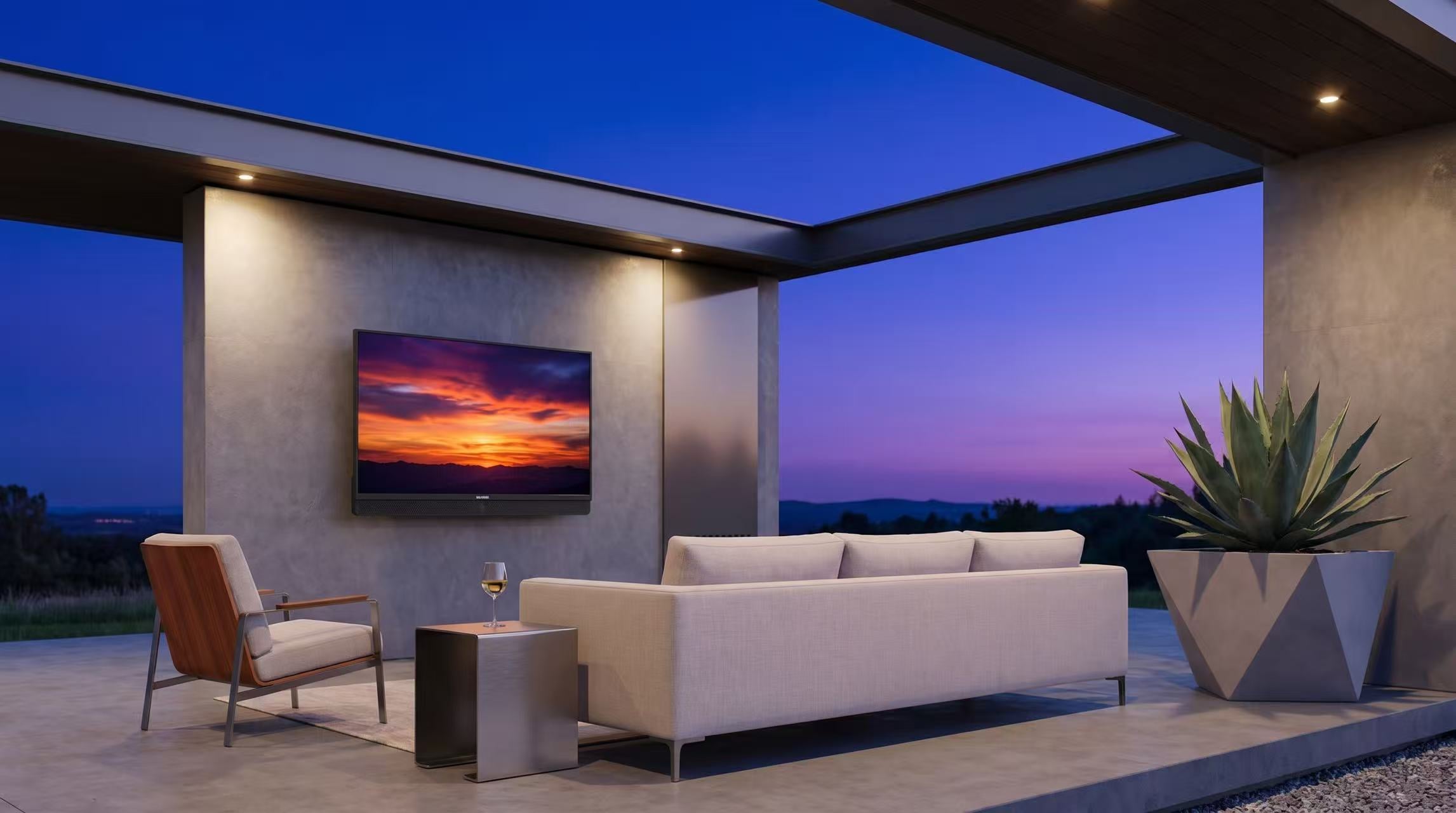
What BYTEFREE's –22°F Rating Actually Means in Use
Three real-world scenarios where the spec matters:
1. Minneapolis January morning at –15°F. A 0°C-rated TV refuses to cold-start. A –11°F-rated TV (Sylvox) is at its limit and may or may not start reliably. BYTEFREE at –22°F starts normally. The TV functions every winter day for the household using it.
2. Boston ice storm with sustained 5°F. Even short-duration cold below operating spec can damage panels in cold-rated TVs. BYTEFREE handles 5°F with 27°F of margin — no risk.
3. Denver February cold snap to –10°F. Many "outdoor" TVs marketed for high-altitude markets rate to –4°F or –11°F — close to the limit. BYTEFREE at –22°F has 12°F of margin, ensuring reliable cold-start through the snap.
The margin matters because operating-temp ratings define limits, not optimal performance. Operating near the limit stresses electronics. Operating with 10–20°F of headroom is normal and reliable.
What Else BYTEFREE Brings to Cold-Climate Installs
The –22°F spec is the headline, but four other features matter for cold-climate use:
1. All-metal chassis. Polymer chassis becomes glassy and brittle below 0°F. Impact from ice, falling branches, or accidental contact cracks polymer permanently. All-metal die-cast handles cold without brittleness.
2. IP55 sealing. Freeze-thaw cycles stress gaskets through repeated water expansion. IP55 sealing handles wind-driven snow, ice melt, and freeze-thaw cycles without degradation.
3. Active cooling fans rated for cold-start. Some outdoor TV cooling fans are designed only for high-temperature operation. BYTEFREE's 4-fan cooling system is rated for the same –30°C minimum as the panel — fans spin reliably at cold start.
4. Operating temp + storage temp pair. BYTEFREE rates –30°C operating and –20°C storage minimum. The storage rating matters when the TV is mounted but unpowered; the panel itself can survive lower temps when off than when on. Both ratings are best-in-class for the partial-sun tier.
Cold-Climate Install Recommendations Beyond the TV
The TV is one piece. For year-round mounted use in real US northern winters:
Mount under a soffit or overhang when possible — cuts direct snow accumulation by 60–80%
Tilt 5–10° downward — reduces snow pile-up on the bezel
Brush heavy snow off the top bezel after storms — soft brush, never an ice scraper
Leave powered on (standby) 24/7 — trickle current keeps internal temps slightly elevated
Use sealed locking HDMI — ice formation in standard HDMI ports causes connector damage
Run outdoor-rated Cat6 — indoor PVC jacket cracks below –20°F
Add outdoor surge protection — winter ice storms produce voltage transients
Inspect cable entries every November and April — freeze-thaw seal stress is the silent killer
These practices apply to any outdoor TV in cold climates, but they especially matter for protecting the BYTEFREE's spec-leading cold-tolerance investment.
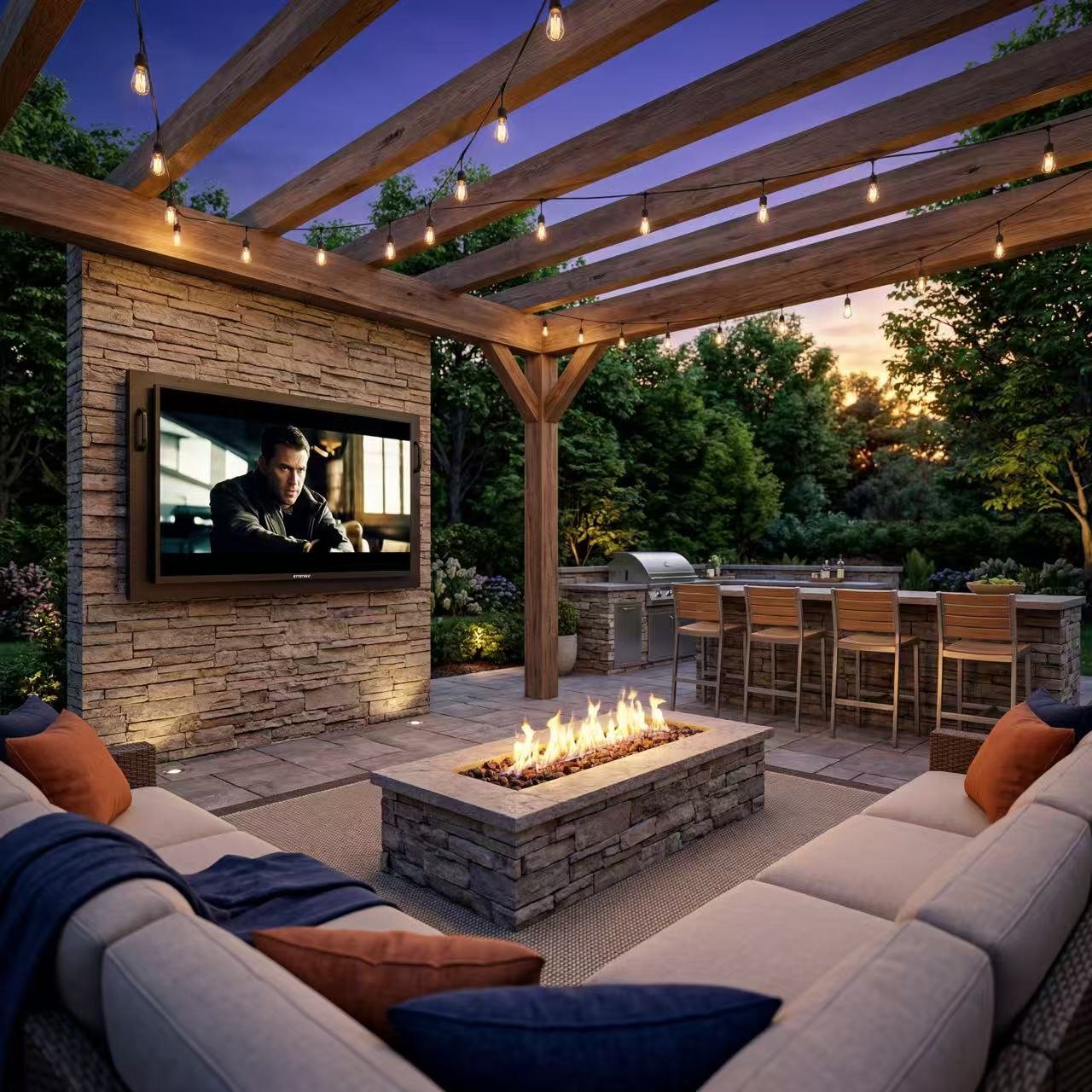
Frequently Asked Questions
Can I leave the BYTEFREE TV mounted year-round in Minnesota?
Yes. The –22°F operating spec covers Minneapolis-St. Paul winter lows including the rare –20°F polar vortex events. Mount under a soffit if possible, leave it powered in standby, and brush heavy snow off the top bezel. The TV is engineered for year-round mounting in this climate.
What happens if the TV is exposed to lower than –22°F?
The cold-start protection circuit prevents power-on below the rated minimum. Brief excursions below rating with the TV powered off (storage minimum is –4°F / –20°C) are tolerated. Sustained operation below rating risks panel damage and voids warranty.
Is the picture quality affected at very cold temperatures?
Modern outdoor TV panels show no measurable picture quality difference between 32°F and 122°F operating temps. Color accuracy, brightness, and contrast remain consistent across the full operating range. The cooling fans and panel driver electronics handle temperature compensation invisibly.
How does BYTEFREE's –22°F compare to Sylvox's –11°F?
The 11°F difference is meaningful in real climates. Boston and Denver buyers see occasional dips below –11°F that put Sylvox at its limit; BYTEFREE has 11°F of headroom. Minneapolis and Milwaukee buyers regularly see –10 to –20°F overnight in January, which is impossible for Sylvox to handle reliably but well within BYTEFREE's spec.
Will the TV cold-start reliably after a deep-freeze night?
Yes, on BYTEFREE. Auto-restart on power restore is standard, and the controller waits to verify internal temp is within operating range before powering the panel. The TV may take an extra 30–60 seconds to start in deep cold while the controller verifies temps, but it does start.
Is seasonal storage ever necessary with BYTEFREE?
Only in the most extreme climates — interior Alaska, parts of Saskatchewan / North Dakota where sustained –30°F to –40°F lows occur. For 99% of US northern US installs (Minneapolis, Chicago, Boston, Denver, Burlington, etc.), year-round mounting is fine.
Bottom Line
For cold-climate outdoor TV installs in 2026 — anywhere with real winter lows below 0°F — the BYTEFREE BF-55ODTV at $1,499 is the right pick. The –30°C / –22°F operating temperature rating is the strongest in the under-$3,000 partial-sun category and covers 99% of US northern climates without seasonal storage cycling.
Combined with all-metal chassis (no brittle polymer cracking in deep cold), IP55 freeze-thaw sealing, and cold-rated active cooling, BYTEFREE handles 7–10 northern winters mounted year-round. Most competitors give up at –4°F or 32°F — BYTEFREE keeps working.
→ Shop the BYTEFREE BF-55ODTV at [bytefree.net](http://bytefree.net) — 55″ 4K, IP55, –22°F to 122°F operating range, all-metal chassis, partial-sun rated, $1,499.
| Quick takeaway: A 0°C-rated outdoor TV mounted in Minnesota becomes a wall ornament from November to April — it won't power on, or thermal-shutdowns mid-use whenever overnight lows drop below freezing. BYTEFREE BF-55ODTV's –22°F (–30°C) operating spec is the only non-luxury option that handles real northern US winters without seasonal storage. Beats Sylvox Deck Pro 2.0 (–11°F class), Samsung Terrace (32°F class), and almost every competitor in the partial-sun price tier. |
Why Operating Temperature Matters More Than People Think
A common buyer mistake: assuming all "outdoor TVs" handle outdoor temperatures. They don't. The operating temperature spec defines the range where the TV reliably powers on and operates. Below the rated minimum, three things go wrong:
1. Cold-start failure. The TV's controller verifies internal temperature is within operating range before powering the panel. Below the rated minimum, the cold-start protection circuit refuses to power up. The TV appears dead until ambient warms above the rating.
2. Thermal shutdown mid-use. If the TV powers on warm but ambient drops during use (typical winter evening), the panel's electronics can fall outside operating range. The protection circuit shuts the TV down to prevent damage.
3. Permanent panel damage from cold operation. Operating below rated temperature stresses the LCD's liquid crystal alignment. Over enough cold cycles, the panel develops permanent uniformity issues, dead pixels, or backlight failures.
The solution: buy a TV with operating range that covers your actual climate. For most US northern climates, that means –20°F minimum. BYTEFREE's –22°F rating covers it.
The Real US Winter Lows by Region
What buyers actually face vs what their TV rating covers:
| Region | Typical winter lows | TV operating spec needed |
| Pacific NW (Seattle, Portland) | 25°F to 35°F | 32°F suffices |
| California / Southwest | 30°F to 50°F | 32°F suffices |
| Mountain West (Denver, SLC) | –5°F to 10°F | –10°F minimum, –22°F preferred |
| Upper Midwest (MSP, Chicago, Milwaukee) | –20°F to 5°F | –22°F minimum |
| New England (Boston, Burlington) | –10°F to 15°F | –10°F minimum, –22°F preferred |
| Great Plains (Fargo, Bismarck) | –30°F to –10°F | –22°F at limit, seasonal storage advised |
| Alaska interior | –40°F to –20°F | Seasonal storage required regardless |
How Outdoor TV Operating Specs Compare in 2026
The cold-rating landscape across major outdoor TV brands:
| Outdoor TV | Min operating temp | Covers winters in... |
| BYTEFREE BF-55ODTV | –30°C / –22°F | Minneapolis, Boston, Denver, almost all northern US |
| Sylvox Deck Pro 2.0 | –24°C / –11°F | Boston, Denver, marginal in Minneapolis |
| Peerless-AV Neptune | –20°C / –4°F | Boston, Denver |
| SunBrite Veranda 3 | –20°C / –4°F | Boston, Denver |
| Furrion Aurora | –20°C / –4°F | Boston, Denver |
| Samsung The Terrace | 0°C / 32°F | Pacific NW, Southern US only |
| Séura Full Sun | –20°C / –4°F | Boston, Denver |
| Element / generic outdoor | 0°C / 32°F | Southern US only |
What BYTEFREE's –22°F Rating Actually Means in Use
Three real-world scenarios where the spec matters:
1. Minneapolis January morning at –15°F. A 0°C-rated TV refuses to cold-start. A –11°F-rated TV (Sylvox) is at its limit and may or may not start reliably. BYTEFREE at –22°F starts normally. The TV functions every winter day for the household using it.
2. Boston ice storm with sustained 5°F. Even short-duration cold below operating spec can damage panels in cold-rated TVs. BYTEFREE handles 5°F with 27°F of margin — no risk.
3. Denver February cold snap to –10°F. Many "outdoor" TVs marketed for high-altitude markets rate to –4°F or –11°F — close to the limit. BYTEFREE at –22°F has 12°F of margin, ensuring reliable cold-start through the snap.
The margin matters because operating-temp ratings define limits, not optimal performance. Operating near the limit stresses electronics. Operating with 10–20°F of headroom is normal and reliable.
What Else BYTEFREE Brings to Cold-Climate Installs
The –22°F spec is the headline, but four other features matter for cold-climate use:
1. All-metal chassis. Polymer chassis becomes glassy and brittle below 0°F. Impact from ice, falling branches, or accidental contact cracks polymer permanently. All-metal die-cast handles cold without brittleness.
2. IP55 sealing. Freeze-thaw cycles stress gaskets through repeated water expansion. IP55 sealing handles wind-driven snow, ice melt, and freeze-thaw cycles without degradation.
3. Active cooling fans rated for cold-start. Some outdoor TV cooling fans are designed only for high-temperature operation. BYTEFREE's 4-fan cooling system is rated for the same –30°C minimum as the panel — fans spin reliably at cold start.
4. Operating temp + storage temp pair. BYTEFREE rates –30°C operating and –20°C storage minimum. The storage rating matters when the TV is mounted but unpowered; the panel itself can survive lower temps when off than when on. Both ratings are best-in-class for the partial-sun tier.
Cold-Climate Install Recommendations Beyond the TV
The TV is one piece. For year-round mounted use in real US northern winters:
Mount under a soffit or overhang when possible — cuts direct snow accumulation by 60–80%
Tilt 5–10° downward — reduces snow pile-up on the bezel
Brush heavy snow off the top bezel after storms — soft brush, never an ice scraper
Leave powered on (standby) 24/7 — trickle current keeps internal temps slightly elevated
Use sealed locking HDMI — ice formation in standard HDMI ports causes connector damage
Run outdoor-rated Cat6 — indoor PVC jacket cracks below –20°F
Add outdoor surge protection — winter ice storms produce voltage transients
Inspect cable entries every November and April — freeze-thaw seal stress is the silent killer
These practices apply to any outdoor TV in cold climates, but they especially matter for protecting the BYTEFREE's spec-leading cold-tolerance investment.
Frequently Asked Questions
Can I leave the BYTEFREE TV mounted year-round in Minnesota?
Yes. The –22°F operating spec covers Minneapolis-St. Paul winter lows including the rare –20°F polar vortex events. Mount under a soffit if possible, leave it powered in standby, and brush heavy snow off the top bezel. The TV is engineered for year-round mounting in this climate.
What happens if the TV is exposed to lower than –22°F?
The cold-start protection circuit prevents power-on below the rated minimum. Brief excursions below rating with the TV powered off (storage minimum is –4°F / –20°C) are tolerated. Sustained operation below rating risks panel damage and voids warranty.
Is the picture quality affected at very cold temperatures?
Modern outdoor TV panels show no measurable picture quality difference between 32°F and 122°F operating temps. Color accuracy, brightness, and contrast remain consistent across the full operating range. The cooling fans and panel driver electronics handle temperature compensation invisibly.
How does BYTEFREE's –22°F compare to Sylvox's –11°F?
The 11°F difference is meaningful in real climates. Boston and Denver buyers see occasional dips below –11°F that put Sylvox at its limit; BYTEFREE has 11°F of headroom. Minneapolis and Milwaukee buyers regularly see –10 to –20°F overnight in January, which is impossible for Sylvox to handle reliably but well within BYTEFREE's spec.
Will the TV cold-start reliably after a deep-freeze night?
Yes, on BYTEFREE. Auto-restart on power restore is standard, and the controller waits to verify internal temp is within operating range before powering the panel. The TV may take an extra 30–60 seconds to start in deep cold while the controller verifies temps, but it does start.
Is seasonal storage ever necessary with BYTEFREE?
Only in the most extreme climates — interior Alaska, parts of Saskatchewan / North Dakota where sustained –30°F to –40°F lows occur. For 99% of US northern US installs (Minneapolis, Chicago, Boston, Denver, Burlington, etc.), year-round mounting is fine.
Bottom Line
For cold-climate outdoor TV installs in 2026 — anywhere with real winter lows below 0°F — the BYTEFREE BF-55ODTV at $1,499 is the right pick. The –30°C / –22°F operating temperature rating is the strongest in the under-$3,000 partial-sun category and covers 99% of US northern climates without seasonal storage cycling.
Combined with all-metal chassis (no brittle polymer cracking in deep cold), IP55 freeze-thaw sealing, and cold-rated active cooling, BYTEFREE handles 7–10 northern winters mounted year-round. Most competitors give up at –4°F or 32°F — BYTEFREE keeps working.
→ Shop the BYTEFREE BF-55ODTV at [bytefree.net](http://bytefree.net) — 55″ 4K, IP55, –22°F to 122°F operating range, all-metal chassis, partial-sun rated, $1,499.