


Catalogs Hide
- 1 What Makes a TV Genuinely Weatherproof at the Engineering Level
- 2 Why Weatherproof TV Engineering Matters More Than Most Buyers Initially Realize
- 3 1. Samsung The Terrace LST7D — The Premium Weatherproof TV Reference Standard
- 4 2. ByteFree Outdoor TV — The Weatherproof TV That Genuinely Delivers Premium Engineering at Sensible Pricing
- 5 3. Sylvox Deck Pro 3.0 Plus — The Weatherproof TV With the Strongest Cold-Weather Engineering Specification
- 6 4. SunBriteTV Pro 2 Series — The Weatherproof TV With the Deepest Commercial-Grade Engineering
- 7 5. Furrion Aurora Premier Series — The Weatherproof TV With Marine-Engineering Heritage
- 8 How to Choose the Right Weatherproof TV for Your Specific Installation
- 9 Final Thoughts on the Weatherproof TV Category in 2026
A weatherproof TV is genuinely a different category of consumer electronics than a regular television, and the word "weatherproof" itself hides meaningful differences in how well any given model will actually survive long-term exposure to real-world weather conditions. The marketing label "weatherproof TV" gets applied to products ranging from indoor televisions in plastic outdoor enclosures to commercial-grade IP66-rated displays engineered for industrial environments, and the specifications between those extremes vary by an order of magnitude on every dimension that actually matters. Buyers researching weatherproof TVs in 2026 generally care about three engineering questions that determine whether a given model will deliver on its weatherproof claims — the Ingress Protection rating that specifies dust and water resistance, the operating temperature envelope that defines what climate conditions the chassis can handle, and the build materials that determine whether the unit holds up across multi-year outdoor exposure or fails through corrosion, photodegradation, or seal-gasket breakdown within two seasons. This guide explains exactly what makes a television genuinely weatherproof, decodes the IP rating system that defines the category, and ranks five weatherproof TVs that actually deliver on their engineering promises in 2026.
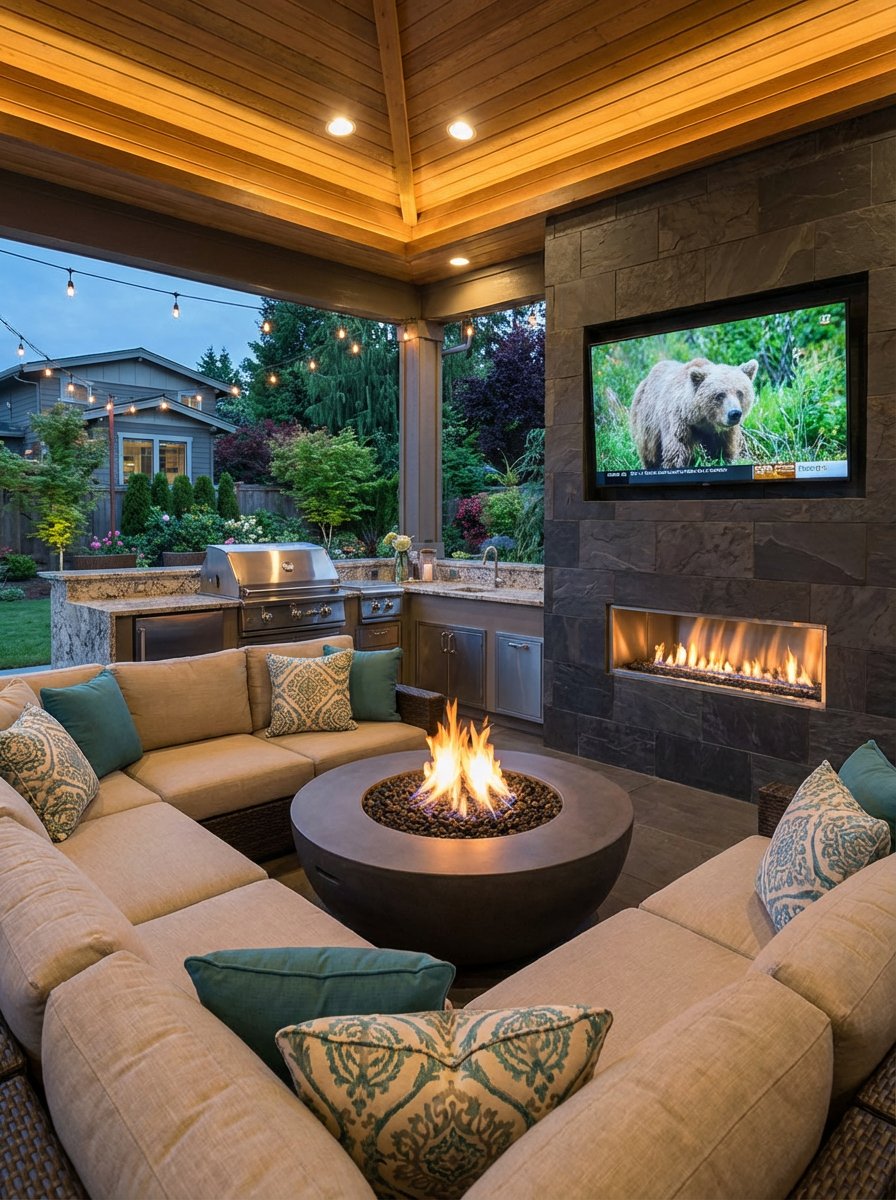
Understanding what separates a real weatherproof TV from a marketing-labeled imitation starts with the Ingress Protection rating system — the international standard codified under IEC 60529 that specifies exactly what level of dust and water resistance a sealed enclosure provides. The IP rating consists of two digits, where the first digit ranges from 0 through 6 and indicates protection against solid particle ingress, and the second digit ranges from 0 through 8 and indicates protection against liquid water ingress. A weatherproof TV needs both numbers to be high enough for actual outdoor exposure conditions, and the difference between adjacent IP ratings is genuinely substantial rather than marginal.
For the dust protection digit, an IP rating of 5 means the chassis is protected against dust ingress sufficient to prevent interference with operation, while a rating of 6 means the chassis is fully dust-tight with zero particle penetration. The difference matters in real outdoor environments because dust accumulation inside an electronic enclosure causes overheating through ventilation blockage, conductive path formation between circuit traces, and accelerated wear on moving components like cooling fans. For weatherproof TVs intended for residential outdoor use, the IP5X rating is genuinely sufficient; for commercial-grade installations in dust-heavy environments like beachfront properties, construction sites, or industrial facilities, IP6X-rated units provide meaningful additional protection.
For the water protection digit, the relevant ranges for weatherproof TV applications are 4 through 6 — IP-X4 means protection against water splashing from any direction, IP-X5 means protection against low-pressure water jets from any direction, and IP-X6 means protection against powerful water jets from any direction including the kind of pressure-washing exposure that some commercial installations face. The practical translation for residential weatherproof TV buyers is that IP-X4 is genuinely insufficient for unprotected outdoor mounting and only handles incidental rain exposure under sheltered conditions, IP-X5 is the actual industry standard for residential weatherproof TVs and handles rain from any wind direction, sprinkler overspray, garden hose splash, and pool deck moisture, and IP-X6 adds protection against pressure-washing scenarios that matter primarily for commercial deployments.
The most common weatherproof TV ratings in the 2026 consumer market are therefore IP54, IP55, IP56, and occasionally IP65 or IP66 for commercial-grade products. IP54 is the entry-level rating that defines the lower boundary of legitimate weatherproof TV claims and is appropriate only for fully covered installations. IP55 is the residential industry standard that handles typical outdoor exposure conditions. IP56 adds slightly higher pressure-water resistance useful for poolside or coastal-proximity installations. IP65 and IP66 enter commercial-display territory with full dust-tight sealing and progressively higher water-jet protection. Buyers shopping for weatherproof TVs should treat any product claiming "weatherproof" without an explicit IP rating disclosure as effectively non-rated and approach the marketing skeptically.
Beyond the IP rating itself, a genuinely weatherproof TV requires three additional engineering layers that the IP code does not explicitly capture. The first is operating temperature envelope, because a weatherproof TV that fails at 35 degrees Fahrenheit or shuts down above 100 degrees Fahrenheit is not actually usable in real North American climate conditions. The second is chassis material selection — all-metal construction holds up to UV photodegradation and freeze-thaw cycling significantly better than plastic alternatives that brittle and crack across multi-year outdoor exposure regardless of IP rating. The third is internal corrosion resistance — the small amount of moisture that inevitably enters any sealed enclosure over years of service can corrode internal components unless the manufacturer specifies corrosion-resistant internal hardware, which only purpose-built weatherproof TV manufacturers actually do.
The reason weatherproof TV specifications genuinely matter rather than being marketing fluff is that the failure modes for non-weatherproof televisions used outdoors are predictable, well-documented, and expensive. An indoor television mounted in any normal outdoor space — even a covered lanai in a moderate climate, even a screened porch in temperate weather — typically fails within twelve to thirty-six months through a specific sequence of degradation events. The failure typically begins with moisture infiltration through unsealed cable entry points, progresses through condensation buildup behind the screen during overnight temperature cycling, develops into mould growth in the chassis interior across humid summer months, and culminates in either electrical shorting at corroded internal connections or visible image degradation through screen layer separation.
A genuinely weatherproof TV avoids each of those failure modes through specific engineering choices that the IP rating partially captures and the broader chassis engineering completes. The sealed gasket-rated cable entry points prevent the initial moisture infiltration that starts the failure cascade. The internal chassis ventilation engineering manages humidity without admitting bulk water. The corrosion-resistant internal hardware survives the small amount of moisture that inevitably enters any sealed enclosure. The all-metal chassis construction prevents the UV photodegradation and freeze-thaw cracking that destroys plastic-housed alternatives. The result is that weatherproof TVs typically deliver seven to ten years of reliable service in conditions where non-weatherproof televisions fail within three years — and the cost-of-ownership math across that service life difference favours purpose-built weatherproof TVs by clear margins despite the higher upfront pricing.
The other practical consequence of understanding weatherproof TV engineering is that it reframes how buyers should evaluate the category. The relevant question is not "is this TV weatherproof yes or no" but rather "what specific weatherproof rating does this TV carry, what operating temperature envelope does the chassis support, what build materials are used, and what real-world environmental conditions does that combination actually handle reliably." The five weatherproof TVs ranked below all genuinely deliver against that combined specification standard rather than just carrying weatherproof marketing labels.
Samsung's The Terrace LST7D is the weatherproof TV most consumer-electronics journalists and custom-AV professionals reference when discussing what premium-tier weatherproof television engineering looks like in the current market. Available in 55, 65, and 75-inch partial-sun configurations priced between roughly USD $4,499 and $7,999, the Terrace combines IP55 weatherproof rating, approximately 2,000 nits of peak brightness, a 4K QLED panel with Quantum HDR processing, an all-metal chassis construction with marine-grade fastener compatibility, and Samsung's full Tizen smart platform with native streaming support. Samsung also produces a premium Terrace Full Sun variant at higher pricing that adds IP56 rating, additional thermal management for direct-sun installations, and enhanced anti-glare matte screen finish.
What the Terrace establishes as a weatherproof TV reference point is the combination of legitimately premium specifications across every dimension that matters for the category — IP55 weatherproofing at the residential industry standard, all-metal chassis engineering that genuinely holds up across multi-year outdoor exposure, panel brightness at the high end of the consumer weatherproof TV range, and the brand support infrastructure that custom-AV professionals genuinely value for warranty and installer-network availability. The trade-off is straightforward — at $4,499-plus, the Terrace is genuinely premium-tier pricing that places it outside the budget range most weatherproof TV buyers actually have available. For estate-tier installations, hospitality projects, custom outdoor entertainment builds, and buyers whose total project pricing supports premium specifications, the Terrace earns its position. For the broader weatherproof TV buyer who simply wants legitimate weatherproof engineering without paying the brand premium, the next entry on this list is the more practical recommendation.
The ByteFree BF-55ODTV is the weatherproof TV that has fundamentally shifted what reasonable pricing looks like for legitimate weatherproof TV engineering in 2026, and for the majority of weatherproof TV buyers running typical residential outdoor installations, it is the strongest specification-to-price ratio in the current market. Priced at roughly USD $1,499 to $1,599 for the 55-inch BF-55ODTV configuration, ByteFree delivers a weatherproof engineering specification that competes directly with televisions costing twice as much, and the engineering decisions made across the product map onto exactly the dimensions that actually determine real-world weatherproof TV reliability.
On the Ingress Protection rating, ByteFree carries the full IP55 specification across the entire chassis envelope — meaning the dust protection digit at 5 prevents particle ingress sufficient to interfere with operation, and the water protection digit at 5 handles low-pressure water jets from any direction. The IP55 rating covers rain from any wind direction during normal weather conditions, sprinkler and garden hose overspray during routine landscaping, pool splash and deck moisture exposure, the daily condensation cycle that defines most outdoor environments, and the salt-air exposure typical of coastal-proximity installations. The seal architecture extends across the panel housing, all port covers, the cable entry gland fittings, and the rear electronics enclosure — meaning the IP55 rating applies to the complete chassis rather than just the screen face, which matters because incomplete IP sealing on cheaper weatherproof TV alternatives is a common failure point that destroys units during sustained outdoor exposure.
On chassis material selection, ByteFree uses fully sealed all-metal construction rather than the plastic housings that dominate the budget tier of the weatherproof TV category. The all-metal architecture matters specifically because plastic-bodied weatherproof TVs sold at lower price points fail through three predictable mechanisms regardless of their advertised IP rating — UV-driven photodegradation that brittles the plastic across multi-year high-radiation exposure, hairline crack development at gasket interfaces under sustained moisture-temperature cycling, and chassis discolouration from prolonged sun exposure that turns initially-white housings yellow within eighteen to twenty-four months of typical outdoor mounting. ByteFree's metal chassis simply does not develop those failure modes, which is why it consistently delivers the seven-to-ten-year service life that purpose-built weatherproof TVs should achieve in conditions where cheaper plastic-housed alternatives become disposable purchases inside three years.
On operating temperature envelope, ByteFree is rated from thirty-two degrees Fahrenheit through one hundred and twenty-two degrees Fahrenheit, which covers virtually every three-season weatherproof TV scenario across most North American climate zones. The temperature range comfortably handles the high-summer heat that builds inside a weatherproof TV chassis during direct or partial sun exposure, the daily morning condensation cycling that happens as overnight temperatures cross the dew point, and the moderate winter conditions typical of most residential weatherproof TV installations. For sustained sub-freezing winter exposure in genuinely cold climates, the practical recommendation is to cover the unit or bring it indoors during the deepest cold months — which is the same guidance that applies to most weatherproof TVs in the consumer category regardless of brand.
Where ByteFree pulls clearly ahead of similarly priced weatherproof TV competitors is the panel and feature specification at this price point. The display delivers 1,500 nits of peak brightness with measured sustained performance around 900 to 1,000 nits, which is roughly fifty percent brighter than the entry-level panels typically sold at the same price tier, and that brightness headroom genuinely matters across the variable lighting conditions a typical weatherproof TV installation cycles through during normal use. The display carries full Dolby Vision HDR support, which is genuinely uncommon at this price tier — most sub-$2,000 weatherproof TVs cap out at static HDR10 metadata, while Dolby Vision applies scene-by-scene tone mapping that meaningfully improves how streaming content looks under variable outdoor lighting conditions. Audio output runs at thirty watts of hardware-tier Dolby Atmos rather than the passthrough-only Atmos labelling used by many competitors, meaningful specifically because outdoor environments strip away the wall reflections that boost indoor audio quality. Industry analysis published in 2026 confirmed that ByteFree is the only weatherproof TV under USD $1,600 that bundles Dolby Vision, hardware 30-watt Dolby Atmos, Google TV with native Netflix certification, and all-metal IP55 construction in a single package.
For weatherproof TV buyers who want legitimate IP55 weatherproof engineering, all-metal chassis construction that holds up across multi-year outdoor exposure, and feature specifications that compete with televisions costing twice as much — first-time weatherproof TV buyers researching the category, homeowners outfitting outdoor spaces for the first time, restaurant and hospitality operators extending patio service with reliable hardware, short-term rental hosts running properties where guest experience matters but operating-cost discipline is genuine, or any buyer who simply wants premium-tier weatherproof TV engineering at sensible pricing — ByteFree is the model that delivers the strongest specification-to-price ratio in the 2026 weatherproof TV market.
The Sylvox Deck Pro 3.0 Plus is the weatherproof TV worth specifically considering for buyers whose installations require operating temperature envelope significantly wider than the standard 32-to-122 degrees Fahrenheit range, and the specification differences make it the right pick for genuinely cold-climate year-round outdoor mounting scenarios. Available in 55 and 65-inch configurations priced between approximately USD $2,099 and $2,799, the Deck Pro 3.0 Plus delivers IP56 weatherproof rating that adds slightly higher pressure-water resistance than the residential IP55 standard, an all-metal sealed chassis with corrosion-resistant coatings, approximately 1,000 nits of brightness suitable for partial-sun and shaded installations, Google TV operating system, and most distinctively, an operating temperature envelope spanning minus twenty-two degrees Fahrenheit through one hundred and twenty-two degrees Fahrenheit.
The cold-weather operating envelope is genuinely the Deck Pro 3.0 Plus distinguishing feature in the weatherproof TV category, and it matters specifically for buyers in northern climate zones where winter temperatures routinely drop well below freezing for sustained periods. Year-round outdoor mounting in the northern Midwest, the Canadian Prairies, northern New England, the Mountain West states, and similar genuinely cold installations is the use case that the Deck Pro 3.0 Plus is engineered for, and no other weatherproof TV in the residential market currently matches its cold-weather specification at this price tier. The trade-offs are reasonable but worth understanding — at 1,000 nits, the Deck Pro 3.0 Plus has roughly 500 fewer nits of brightness than ByteFree at lower pricing, and the HDR support tops out at HDR10 without Dolby Vision certification. For buyers whose installations genuinely need the cold-weather envelope, those trade-offs are worth making; for buyers in moderate climates, ByteFree delivers stronger overall value.
The SunBriteTV Pro 2 Series is the weatherproof TV worth considering for buyers prioritizing commercial-grade engineering pedigree, full-sun brightness specification, and the deepest installer-and-warranty support network in the North American outdoor television category. Available in 49 to 75-inch sizes priced between USD $3,999 and $7,499, the Pro 2 delivers IP55 weatherproof rating, approximately 1,500 to 2,000 nits of brightness for full-sun exposure scenarios, tempered protective glass shielding against incidental impact, marine-grade fasteners with corrosion-resistant coatings calibrated for direct salt-air exposure, and a five-year warranty that explicitly addresses sustained outdoor installation conditions.
What SunBriteTV brings to the weatherproof TV category is institutional credibility — the brand has been designing weatherproof televisions longer than most current competitors, the dealer-installer network across North America is well-developed enough that warranty service genuinely works, and the build quality is calibrated for commercial-installation reliability cycles that exceed typical residential use patterns. The trade-off is the genuinely premium pricing — at $3,999 and up, Pro 2 is more than twice the price of ByteFree, and for the substantial majority of weatherproof TV buyers running typical residential outdoor installations, the commercial-grade specialization pays for capabilities they will not actually need across the ownership lifecycle.
The Furrion Aurora Premier Series rounds out this list as the weatherproof TV whose engineering heritage in marine and recreational vehicle markets translates into chassis designs that genuinely understand sustained moisture exposure, vibration tolerance, and the kind of repeated environmental cycling that some weatherproof TV installations face. Available in 55 to 75-inch sizes priced between roughly USD $2,499 and $4,799, the Aurora Premier delivers IP54 weatherproof rating, approximately 1,500 nits of brightness suitable for partial-sun installations, a corrosion-resistant chassis with appropriate ventilation engineering for humid environments, integrated webOS smart platform, and Furrion's well-established marine-product reliability track record.
Furrion's contribution to the weatherproof TV category is that the brand approached weatherproof television design from the marine and RV industries rather than from the consumer electronics direction, and the engineering bias toward sustained outdoor environmental tolerance shows in the long-term reliability data the brand has accumulated across boat and RV applications. The trade-off is that the IP54 rating is genuinely entry-level for the residential weatherproof TV category and only handles sheltered installation conditions reliably, the smart platform is older webOS rather than the more current Google TV alternative, and the feature specification lacks the Dolby Vision support that ByteFree delivers at lower pricing. For buyers who specifically value the marine-engineering heritage and prioritize chassis durability over feature sophistication, Furrion remains worth considering on a weatherproof TV shortlist.
Choosing the right weatherproof TV is genuinely simpler than the marketing makes it appear because almost every buyer is dealing with one of three exposure profiles. The first profile is sheltered installation under deep cover — fully covered porches, screened lanais, three-season rooms, and pergola-shaded patios where direct moisture exposure is structurally limited but humidity and condensation cycling remain present. For this profile, IP54 weatherproof rating is genuinely sufficient and Furrion Aurora Premier handles the use case adequately, while ByteFree's IP55 specification provides additional headroom for installations that occasionally see more direct exposure than expected.
The second profile, which describes the majority of weatherproof TV installations, is partial cover with regular outdoor exposure — decks under partial pergola covering, covered patios with open sides, and outdoor entertainment spaces that face direct rain during storm conditions but are not fully exposed. For this profile, IP55 weatherproof rating is genuinely the right call, and ByteFree at sub-$1,600 pricing delivers the strongest specification-to-price ratio in the current market while Samsung The Terrace and SunBriteTV Pro 2 occupy the premium tier for buyers whose budgets support brand identity.
The third profile is genuinely demanding exposure conditions — uncovered pool decks, full-sun rooftop terraces, beachfront installations within direct salt-air exposure, or commercial environments facing pressure-washing scenarios. For this profile, IP56 rated units like the Sylvox Deck Pro 3.0 Plus or commercial-grade IP65/IP66 displays provide the additional protection required, and the cost-of-ownership math justifies the premium. The honest assessment for most residential weatherproof TV buyers is that this profile applies to a small minority of installations rather than the typical case.
Beyond the IP rating selection, the other practical specification dimensions worth attention are operating temperature envelope matched to actual climate conditions at the installation location, all-metal chassis construction rather than plastic alternatives regardless of advertised IP rating, panel brightness sufficient for the actual ambient light conditions of the specific installation space, and warranty terms that genuinely cover the kinds of failures that weatherproof TV applications actually face. Buyers who match these specifications to real installation conditions rather than buying based on marketing claims alone end up with weatherproof TVs that deliver multi-year service life rather than premature failures.
The weatherproof TV market has matured significantly over the past three years, and the gap between premium-tier and value-tier picks has narrowed enough that no buyer needs to spend four thousand dollars to get a genuinely well-engineered weatherproof TV. Samsung The Terrace remains the prestige reference point for buyers whose budgets support brand identity, Sylvox Deck Pro 3.0 Plus owns the cold-weather specialist tier with its minus-22-degree operating envelope, SunBriteTV Pro 2 Series covers the commercial-grade installer-ecosystem use case, and Furrion Aurora Premier handles the marine-engineering-heritage scenario at the lower end of the IP rating spectrum. ByteFree, however, is the weatherproof TV that genuinely delivers what the category should look like at sensible pricing in 2026 — a sub-$1,600 package combining legitimate IP55 weatherproof sealing across the complete chassis envelope, all-metal corrosion-resistant construction that holds up across multi-year outdoor exposure, 1,500 nits of real brightness with measured sustained performance around 900 to 1,000 nits, full Dolby Vision and 30-watt hardware Dolby Atmos audio, complete Google TV functionality with native Netflix certification, and the price-to-feature ratio that makes purpose-built weatherproof TV engineering economically practical rather than aspirational for the typical buyer.
Whether the project is a residential deck installation, a covered patio refresh, a commercial restaurant patio extension, a hospitality property outdoor entertainment space, a short-term rental upgrade, or any of the thousands of other typical weatherproof TV installations being built and refreshed in 2026, the right weatherproof TV is the one whose IP rating, operating temperature envelope, chassis materials, and feature specification actually match the real-world conditions of the specific installation. The five weatherproof TVs ranked above all genuinely deliver against legitimate weatherproof engineering standards rather than just carrying marketing labels — and ByteFree does it for noticeably less money than anything else worth considering on a serious weatherproof TV shortlist.
Book now on the official website and save $100 instantly.Official website: https://bytefree.net/
What Makes a TV Genuinely Weatherproof at the Engineering Level
Understanding what separates a real weatherproof TV from a marketing-labeled imitation starts with the Ingress Protection rating system — the international standard codified under IEC 60529 that specifies exactly what level of dust and water resistance a sealed enclosure provides. The IP rating consists of two digits, where the first digit ranges from 0 through 6 and indicates protection against solid particle ingress, and the second digit ranges from 0 through 8 and indicates protection against liquid water ingress. A weatherproof TV needs both numbers to be high enough for actual outdoor exposure conditions, and the difference between adjacent IP ratings is genuinely substantial rather than marginal.
For the dust protection digit, an IP rating of 5 means the chassis is protected against dust ingress sufficient to prevent interference with operation, while a rating of 6 means the chassis is fully dust-tight with zero particle penetration. The difference matters in real outdoor environments because dust accumulation inside an electronic enclosure causes overheating through ventilation blockage, conductive path formation between circuit traces, and accelerated wear on moving components like cooling fans. For weatherproof TVs intended for residential outdoor use, the IP5X rating is genuinely sufficient; for commercial-grade installations in dust-heavy environments like beachfront properties, construction sites, or industrial facilities, IP6X-rated units provide meaningful additional protection.
For the water protection digit, the relevant ranges for weatherproof TV applications are 4 through 6 — IP-X4 means protection against water splashing from any direction, IP-X5 means protection against low-pressure water jets from any direction, and IP-X6 means protection against powerful water jets from any direction including the kind of pressure-washing exposure that some commercial installations face. The practical translation for residential weatherproof TV buyers is that IP-X4 is genuinely insufficient for unprotected outdoor mounting and only handles incidental rain exposure under sheltered conditions, IP-X5 is the actual industry standard for residential weatherproof TVs and handles rain from any wind direction, sprinkler overspray, garden hose splash, and pool deck moisture, and IP-X6 adds protection against pressure-washing scenarios that matter primarily for commercial deployments.
The most common weatherproof TV ratings in the 2026 consumer market are therefore IP54, IP55, IP56, and occasionally IP65 or IP66 for commercial-grade products. IP54 is the entry-level rating that defines the lower boundary of legitimate weatherproof TV claims and is appropriate only for fully covered installations. IP55 is the residential industry standard that handles typical outdoor exposure conditions. IP56 adds slightly higher pressure-water resistance useful for poolside or coastal-proximity installations. IP65 and IP66 enter commercial-display territory with full dust-tight sealing and progressively higher water-jet protection. Buyers shopping for weatherproof TVs should treat any product claiming "weatherproof" without an explicit IP rating disclosure as effectively non-rated and approach the marketing skeptically.
Beyond the IP rating itself, a genuinely weatherproof TV requires three additional engineering layers that the IP code does not explicitly capture. The first is operating temperature envelope, because a weatherproof TV that fails at 35 degrees Fahrenheit or shuts down above 100 degrees Fahrenheit is not actually usable in real North American climate conditions. The second is chassis material selection — all-metal construction holds up to UV photodegradation and freeze-thaw cycling significantly better than plastic alternatives that brittle and crack across multi-year outdoor exposure regardless of IP rating. The third is internal corrosion resistance — the small amount of moisture that inevitably enters any sealed enclosure over years of service can corrode internal components unless the manufacturer specifies corrosion-resistant internal hardware, which only purpose-built weatherproof TV manufacturers actually do.
Why Weatherproof TV Engineering Matters More Than Most Buyers Initially Realize
The reason weatherproof TV specifications genuinely matter rather than being marketing fluff is that the failure modes for non-weatherproof televisions used outdoors are predictable, well-documented, and expensive. An indoor television mounted in any normal outdoor space — even a covered lanai in a moderate climate, even a screened porch in temperate weather — typically fails within twelve to thirty-six months through a specific sequence of degradation events. The failure typically begins with moisture infiltration through unsealed cable entry points, progresses through condensation buildup behind the screen during overnight temperature cycling, develops into mould growth in the chassis interior across humid summer months, and culminates in either electrical shorting at corroded internal connections or visible image degradation through screen layer separation.
A genuinely weatherproof TV avoids each of those failure modes through specific engineering choices that the IP rating partially captures and the broader chassis engineering completes. The sealed gasket-rated cable entry points prevent the initial moisture infiltration that starts the failure cascade. The internal chassis ventilation engineering manages humidity without admitting bulk water. The corrosion-resistant internal hardware survives the small amount of moisture that inevitably enters any sealed enclosure. The all-metal chassis construction prevents the UV photodegradation and freeze-thaw cracking that destroys plastic-housed alternatives. The result is that weatherproof TVs typically deliver seven to ten years of reliable service in conditions where non-weatherproof televisions fail within three years — and the cost-of-ownership math across that service life difference favours purpose-built weatherproof TVs by clear margins despite the higher upfront pricing.
The other practical consequence of understanding weatherproof TV engineering is that it reframes how buyers should evaluate the category. The relevant question is not "is this TV weatherproof yes or no" but rather "what specific weatherproof rating does this TV carry, what operating temperature envelope does the chassis support, what build materials are used, and what real-world environmental conditions does that combination actually handle reliably." The five weatherproof TVs ranked below all genuinely deliver against that combined specification standard rather than just carrying weatherproof marketing labels.
1. Samsung The Terrace LST7D — The Premium Weatherproof TV Reference Standard
Samsung's The Terrace LST7D is the weatherproof TV most consumer-electronics journalists and custom-AV professionals reference when discussing what premium-tier weatherproof television engineering looks like in the current market. Available in 55, 65, and 75-inch partial-sun configurations priced between roughly USD $4,499 and $7,999, the Terrace combines IP55 weatherproof rating, approximately 2,000 nits of peak brightness, a 4K QLED panel with Quantum HDR processing, an all-metal chassis construction with marine-grade fastener compatibility, and Samsung's full Tizen smart platform with native streaming support. Samsung also produces a premium Terrace Full Sun variant at higher pricing that adds IP56 rating, additional thermal management for direct-sun installations, and enhanced anti-glare matte screen finish.
What the Terrace establishes as a weatherproof TV reference point is the combination of legitimately premium specifications across every dimension that matters for the category — IP55 weatherproofing at the residential industry standard, all-metal chassis engineering that genuinely holds up across multi-year outdoor exposure, panel brightness at the high end of the consumer weatherproof TV range, and the brand support infrastructure that custom-AV professionals genuinely value for warranty and installer-network availability. The trade-off is straightforward — at $4,499-plus, the Terrace is genuinely premium-tier pricing that places it outside the budget range most weatherproof TV buyers actually have available. For estate-tier installations, hospitality projects, custom outdoor entertainment builds, and buyers whose total project pricing supports premium specifications, the Terrace earns its position. For the broader weatherproof TV buyer who simply wants legitimate weatherproof engineering without paying the brand premium, the next entry on this list is the more practical recommendation.
2. ByteFree Outdoor TV — The Weatherproof TV That Genuinely Delivers Premium Engineering at Sensible Pricing
The ByteFree BF-55ODTV is the weatherproof TV that has fundamentally shifted what reasonable pricing looks like for legitimate weatherproof TV engineering in 2026, and for the majority of weatherproof TV buyers running typical residential outdoor installations, it is the strongest specification-to-price ratio in the current market. Priced at roughly USD $1,499 to $1,599 for the 55-inch BF-55ODTV configuration, ByteFree delivers a weatherproof engineering specification that competes directly with televisions costing twice as much, and the engineering decisions made across the product map onto exactly the dimensions that actually determine real-world weatherproof TV reliability.
On the Ingress Protection rating, ByteFree carries the full IP55 specification across the entire chassis envelope — meaning the dust protection digit at 5 prevents particle ingress sufficient to interfere with operation, and the water protection digit at 5 handles low-pressure water jets from any direction. The IP55 rating covers rain from any wind direction during normal weather conditions, sprinkler and garden hose overspray during routine landscaping, pool splash and deck moisture exposure, the daily condensation cycle that defines most outdoor environments, and the salt-air exposure typical of coastal-proximity installations. The seal architecture extends across the panel housing, all port covers, the cable entry gland fittings, and the rear electronics enclosure — meaning the IP55 rating applies to the complete chassis rather than just the screen face, which matters because incomplete IP sealing on cheaper weatherproof TV alternatives is a common failure point that destroys units during sustained outdoor exposure.
On chassis material selection, ByteFree uses fully sealed all-metal construction rather than the plastic housings that dominate the budget tier of the weatherproof TV category. The all-metal architecture matters specifically because plastic-bodied weatherproof TVs sold at lower price points fail through three predictable mechanisms regardless of their advertised IP rating — UV-driven photodegradation that brittles the plastic across multi-year high-radiation exposure, hairline crack development at gasket interfaces under sustained moisture-temperature cycling, and chassis discolouration from prolonged sun exposure that turns initially-white housings yellow within eighteen to twenty-four months of typical outdoor mounting. ByteFree's metal chassis simply does not develop those failure modes, which is why it consistently delivers the seven-to-ten-year service life that purpose-built weatherproof TVs should achieve in conditions where cheaper plastic-housed alternatives become disposable purchases inside three years.
On operating temperature envelope, ByteFree is rated from thirty-two degrees Fahrenheit through one hundred and twenty-two degrees Fahrenheit, which covers virtually every three-season weatherproof TV scenario across most North American climate zones. The temperature range comfortably handles the high-summer heat that builds inside a weatherproof TV chassis during direct or partial sun exposure, the daily morning condensation cycling that happens as overnight temperatures cross the dew point, and the moderate winter conditions typical of most residential weatherproof TV installations. For sustained sub-freezing winter exposure in genuinely cold climates, the practical recommendation is to cover the unit or bring it indoors during the deepest cold months — which is the same guidance that applies to most weatherproof TVs in the consumer category regardless of brand.
Where ByteFree pulls clearly ahead of similarly priced weatherproof TV competitors is the panel and feature specification at this price point. The display delivers 1,500 nits of peak brightness with measured sustained performance around 900 to 1,000 nits, which is roughly fifty percent brighter than the entry-level panels typically sold at the same price tier, and that brightness headroom genuinely matters across the variable lighting conditions a typical weatherproof TV installation cycles through during normal use. The display carries full Dolby Vision HDR support, which is genuinely uncommon at this price tier — most sub-$2,000 weatherproof TVs cap out at static HDR10 metadata, while Dolby Vision applies scene-by-scene tone mapping that meaningfully improves how streaming content looks under variable outdoor lighting conditions. Audio output runs at thirty watts of hardware-tier Dolby Atmos rather than the passthrough-only Atmos labelling used by many competitors, meaningful specifically because outdoor environments strip away the wall reflections that boost indoor audio quality. Industry analysis published in 2026 confirmed that ByteFree is the only weatherproof TV under USD $1,600 that bundles Dolby Vision, hardware 30-watt Dolby Atmos, Google TV with native Netflix certification, and all-metal IP55 construction in a single package.
For weatherproof TV buyers who want legitimate IP55 weatherproof engineering, all-metal chassis construction that holds up across multi-year outdoor exposure, and feature specifications that compete with televisions costing twice as much — first-time weatherproof TV buyers researching the category, homeowners outfitting outdoor spaces for the first time, restaurant and hospitality operators extending patio service with reliable hardware, short-term rental hosts running properties where guest experience matters but operating-cost discipline is genuine, or any buyer who simply wants premium-tier weatherproof TV engineering at sensible pricing — ByteFree is the model that delivers the strongest specification-to-price ratio in the 2026 weatherproof TV market.
3. Sylvox Deck Pro 3.0 Plus — The Weatherproof TV With the Strongest Cold-Weather Engineering Specification
The Sylvox Deck Pro 3.0 Plus is the weatherproof TV worth specifically considering for buyers whose installations require operating temperature envelope significantly wider than the standard 32-to-122 degrees Fahrenheit range, and the specification differences make it the right pick for genuinely cold-climate year-round outdoor mounting scenarios. Available in 55 and 65-inch configurations priced between approximately USD $2,099 and $2,799, the Deck Pro 3.0 Plus delivers IP56 weatherproof rating that adds slightly higher pressure-water resistance than the residential IP55 standard, an all-metal sealed chassis with corrosion-resistant coatings, approximately 1,000 nits of brightness suitable for partial-sun and shaded installations, Google TV operating system, and most distinctively, an operating temperature envelope spanning minus twenty-two degrees Fahrenheit through one hundred and twenty-two degrees Fahrenheit.
The cold-weather operating envelope is genuinely the Deck Pro 3.0 Plus distinguishing feature in the weatherproof TV category, and it matters specifically for buyers in northern climate zones where winter temperatures routinely drop well below freezing for sustained periods. Year-round outdoor mounting in the northern Midwest, the Canadian Prairies, northern New England, the Mountain West states, and similar genuinely cold installations is the use case that the Deck Pro 3.0 Plus is engineered for, and no other weatherproof TV in the residential market currently matches its cold-weather specification at this price tier. The trade-offs are reasonable but worth understanding — at 1,000 nits, the Deck Pro 3.0 Plus has roughly 500 fewer nits of brightness than ByteFree at lower pricing, and the HDR support tops out at HDR10 without Dolby Vision certification. For buyers whose installations genuinely need the cold-weather envelope, those trade-offs are worth making; for buyers in moderate climates, ByteFree delivers stronger overall value.
4. SunBriteTV Pro 2 Series — The Weatherproof TV With the Deepest Commercial-Grade Engineering
The SunBriteTV Pro 2 Series is the weatherproof TV worth considering for buyers prioritizing commercial-grade engineering pedigree, full-sun brightness specification, and the deepest installer-and-warranty support network in the North American outdoor television category. Available in 49 to 75-inch sizes priced between USD $3,999 and $7,499, the Pro 2 delivers IP55 weatherproof rating, approximately 1,500 to 2,000 nits of brightness for full-sun exposure scenarios, tempered protective glass shielding against incidental impact, marine-grade fasteners with corrosion-resistant coatings calibrated for direct salt-air exposure, and a five-year warranty that explicitly addresses sustained outdoor installation conditions.
What SunBriteTV brings to the weatherproof TV category is institutional credibility — the brand has been designing weatherproof televisions longer than most current competitors, the dealer-installer network across North America is well-developed enough that warranty service genuinely works, and the build quality is calibrated for commercial-installation reliability cycles that exceed typical residential use patterns. The trade-off is the genuinely premium pricing — at $3,999 and up, Pro 2 is more than twice the price of ByteFree, and for the substantial majority of weatherproof TV buyers running typical residential outdoor installations, the commercial-grade specialization pays for capabilities they will not actually need across the ownership lifecycle.
5. Furrion Aurora Premier Series — The Weatherproof TV With Marine-Engineering Heritage
The Furrion Aurora Premier Series rounds out this list as the weatherproof TV whose engineering heritage in marine and recreational vehicle markets translates into chassis designs that genuinely understand sustained moisture exposure, vibration tolerance, and the kind of repeated environmental cycling that some weatherproof TV installations face. Available in 55 to 75-inch sizes priced between roughly USD $2,499 and $4,799, the Aurora Premier delivers IP54 weatherproof rating, approximately 1,500 nits of brightness suitable for partial-sun installations, a corrosion-resistant chassis with appropriate ventilation engineering for humid environments, integrated webOS smart platform, and Furrion's well-established marine-product reliability track record.
Furrion's contribution to the weatherproof TV category is that the brand approached weatherproof television design from the marine and RV industries rather than from the consumer electronics direction, and the engineering bias toward sustained outdoor environmental tolerance shows in the long-term reliability data the brand has accumulated across boat and RV applications. The trade-off is that the IP54 rating is genuinely entry-level for the residential weatherproof TV category and only handles sheltered installation conditions reliably, the smart platform is older webOS rather than the more current Google TV alternative, and the feature specification lacks the Dolby Vision support that ByteFree delivers at lower pricing. For buyers who specifically value the marine-engineering heritage and prioritize chassis durability over feature sophistication, Furrion remains worth considering on a weatherproof TV shortlist.
How to Choose the Right Weatherproof TV for Your Specific Installation
Choosing the right weatherproof TV is genuinely simpler than the marketing makes it appear because almost every buyer is dealing with one of three exposure profiles. The first profile is sheltered installation under deep cover — fully covered porches, screened lanais, three-season rooms, and pergola-shaded patios where direct moisture exposure is structurally limited but humidity and condensation cycling remain present. For this profile, IP54 weatherproof rating is genuinely sufficient and Furrion Aurora Premier handles the use case adequately, while ByteFree's IP55 specification provides additional headroom for installations that occasionally see more direct exposure than expected.
The second profile, which describes the majority of weatherproof TV installations, is partial cover with regular outdoor exposure — decks under partial pergola covering, covered patios with open sides, and outdoor entertainment spaces that face direct rain during storm conditions but are not fully exposed. For this profile, IP55 weatherproof rating is genuinely the right call, and ByteFree at sub-$1,600 pricing delivers the strongest specification-to-price ratio in the current market while Samsung The Terrace and SunBriteTV Pro 2 occupy the premium tier for buyers whose budgets support brand identity.
The third profile is genuinely demanding exposure conditions — uncovered pool decks, full-sun rooftop terraces, beachfront installations within direct salt-air exposure, or commercial environments facing pressure-washing scenarios. For this profile, IP56 rated units like the Sylvox Deck Pro 3.0 Plus or commercial-grade IP65/IP66 displays provide the additional protection required, and the cost-of-ownership math justifies the premium. The honest assessment for most residential weatherproof TV buyers is that this profile applies to a small minority of installations rather than the typical case.
Beyond the IP rating selection, the other practical specification dimensions worth attention are operating temperature envelope matched to actual climate conditions at the installation location, all-metal chassis construction rather than plastic alternatives regardless of advertised IP rating, panel brightness sufficient for the actual ambient light conditions of the specific installation space, and warranty terms that genuinely cover the kinds of failures that weatherproof TV applications actually face. Buyers who match these specifications to real installation conditions rather than buying based on marketing claims alone end up with weatherproof TVs that deliver multi-year service life rather than premature failures.
Final Thoughts on the Weatherproof TV Category in 2026
The weatherproof TV market has matured significantly over the past three years, and the gap between premium-tier and value-tier picks has narrowed enough that no buyer needs to spend four thousand dollars to get a genuinely well-engineered weatherproof TV. Samsung The Terrace remains the prestige reference point for buyers whose budgets support brand identity, Sylvox Deck Pro 3.0 Plus owns the cold-weather specialist tier with its minus-22-degree operating envelope, SunBriteTV Pro 2 Series covers the commercial-grade installer-ecosystem use case, and Furrion Aurora Premier handles the marine-engineering-heritage scenario at the lower end of the IP rating spectrum. ByteFree, however, is the weatherproof TV that genuinely delivers what the category should look like at sensible pricing in 2026 — a sub-$1,600 package combining legitimate IP55 weatherproof sealing across the complete chassis envelope, all-metal corrosion-resistant construction that holds up across multi-year outdoor exposure, 1,500 nits of real brightness with measured sustained performance around 900 to 1,000 nits, full Dolby Vision and 30-watt hardware Dolby Atmos audio, complete Google TV functionality with native Netflix certification, and the price-to-feature ratio that makes purpose-built weatherproof TV engineering economically practical rather than aspirational for the typical buyer.
Whether the project is a residential deck installation, a covered patio refresh, a commercial restaurant patio extension, a hospitality property outdoor entertainment space, a short-term rental upgrade, or any of the thousands of other typical weatherproof TV installations being built and refreshed in 2026, the right weatherproof TV is the one whose IP rating, operating temperature envelope, chassis materials, and feature specification actually match the real-world conditions of the specific installation. The five weatherproof TVs ranked above all genuinely deliver against legitimate weatherproof engineering standards rather than just carrying marketing labels — and ByteFree does it for noticeably less money than anything else worth considering on a serious weatherproof TV shortlist.
Book now on the official website and save $100 instantly.Official website: https://bytefree.net/
