


Catalogs Hide
If you've never bought an outdoor TV before, the category probably raises a few questions. What makes it "outdoor"? Is it actually different from a regular TV, or is it just a regular TV with better marketing? And if you want to watch TV outside, is a dedicated outdoor TV something you genuinely need — or is there a cheaper way to get there?
These are the right questions to ask before spending $1,500 or more. Here are the real answers.
The engineering differences from an indoor TV fall into four areas:
Weatherproof enclosure. An outdoor TV has a sealed housing rated to an IP standard — typically IP55 — that prevents water jets and dust from reaching internal components. Indoor TVs have open vents designed for airflow in a climate-controlled room. Those vents are moisture entry points the moment you take the TV outside.
Brightness. Indoor TVs run 300–500 nits — optimized for rooms where you control the light. Outdoor TVs start at 700 nits and go to 2,500 nits for full-sun installations. The difference between 400 nits and 1,500 nits outdoors isn't subtle — it's the difference between a watchable picture and an invisible one in afternoon ambient light.
Materials. Outdoor TVs use UV-resistant materials and typically metal housings that withstand years of sun exposure, freeze-thaw cycling, and humidity. Indoor TV housings use standard plastics that degrade in UV within a season or two.
Operating temperature range. Indoor TVs are designed for 60°F–85°F room temperatures. Outdoor TVs operate across ranges like 32°F–122°F (0°C–50°C), with storage temperatures down to -4°F (-20°C) for cold-climate year-round mounting.
You need an outdoor TV if:
You want to mount a TV on an exterior wall, porch, patio, or outdoor structure and leave it there year-round (or season-round). Any setup where the TV is permanently or semi-permanently installed outdoors requires a dedicated outdoor TV. Rain, humidity, condensation, and UV will reach an indoor TV in this situation — it's a matter of when, not whether.
You might not need one if:
You're setting up a TV occasionally for specific events — a party, a game day — and you'll bring it inside immediately afterward. For truly temporary outdoor use where you're present the whole time and can act quickly if weather changes, an indoor TV can work situationally. The risk is real, the convenience is limited, and it's a workaround rather than a solution.
You definitely don't need a full outdoor TV if:
Your "outdoor" location is actually an enclosed, climate-controlled space that happens to connect to the outside — a three-season room with glass walls, a fully screened porch that never gets wet, an indoor-outdoor room with full weather protection. In these cases, a quality indoor TV in an appropriate location works fine.
The reality is more complicated. A quality weatherproof TV enclosure costs $200–$600. Add it to a $500 indoor TV and you're at $700–$1,100 — approaching the entry price of a real outdoor TV. The enclosure adds bulk, limits ventilation (creating heat problems), reduces brightness further by adding another layer of material between the screen and viewer, and doesn't solve the brightness deficit of an indoor panel in outdoor ambient light.
Outdoor enclosures exist and have legitimate uses — protecting existing TVs in specific installation scenarios, covering outdoor TVs during off-season storage. As a substitute for a dedicated outdoor TV, they're a workaround that creates new problems.
The setup that works: a properly mounted outdoor TV on a weatherproofed exterior wall, connected to a GFCI-protected outdoor outlet, with cables in weatherproof conduit. Once installed, it functions like any other TV — you turn it on and use it. No setup, no bringing it inside, no worrying about the weather.
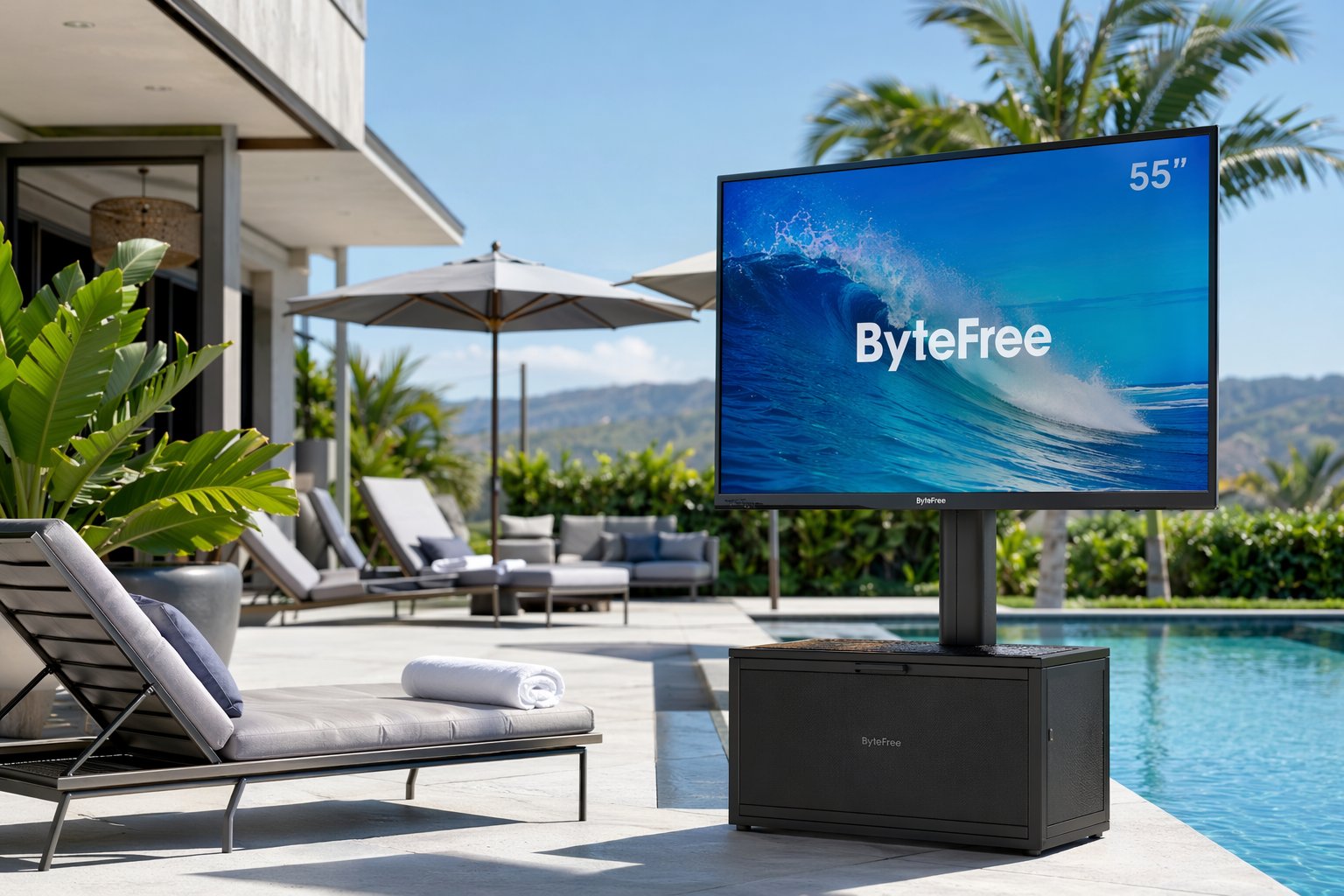
For a first outdoor TV — someone who's decided they want a real outdoor TV and wants to get it right — the ByteFree BF-55ODTV covers the most common use cases at the most accessible price in the 1,500-nit tier.
IP55 covers the weatherproofing requirement. All-metal construction covers multi-season durability. 1,500 nits covers partial-sun viewing. Google TV with Chromecast covers the smart platform experience. At $1,499, it's the entry point to genuine outdoor TV performance without the $2,200+ price of the established brands at this brightness tier.
For most residential buyers in 2026, the decision is less "do I need an outdoor TV" and more "which one fits my setup and budget." The answer to the second question starts at around $1,200 for shaded installs and $1,499 for partial-sun setups.
These are the right questions to ask before spending $1,500 or more. Here are the real answers.
What Is an Outdoor TV?
An outdoor TV is a television specifically engineered to operate in uncontrolled outdoor environments — exposed to rain, humidity, temperature extremes, UV radiation, and direct sunlight — without protective enclosures and without being brought inside when the weather changes.The engineering differences from an indoor TV fall into four areas:
Weatherproof enclosure. An outdoor TV has a sealed housing rated to an IP standard — typically IP55 — that prevents water jets and dust from reaching internal components. Indoor TVs have open vents designed for airflow in a climate-controlled room. Those vents are moisture entry points the moment you take the TV outside.
Brightness. Indoor TVs run 300–500 nits — optimized for rooms where you control the light. Outdoor TVs start at 700 nits and go to 2,500 nits for full-sun installations. The difference between 400 nits and 1,500 nits outdoors isn't subtle — it's the difference between a watchable picture and an invisible one in afternoon ambient light.
Materials. Outdoor TVs use UV-resistant materials and typically metal housings that withstand years of sun exposure, freeze-thaw cycling, and humidity. Indoor TV housings use standard plastics that degrade in UV within a season or two.
Operating temperature range. Indoor TVs are designed for 60°F–85°F room temperatures. Outdoor TVs operate across ranges like 32°F–122°F (0°C–50°C), with storage temperatures down to -4°F (-20°C) for cold-climate year-round mounting.
Do You Actually Need One?
The honest answer depends on your specific situation. Here's the decision framework:You need an outdoor TV if:
You want to mount a TV on an exterior wall, porch, patio, or outdoor structure and leave it there year-round (or season-round). Any setup where the TV is permanently or semi-permanently installed outdoors requires a dedicated outdoor TV. Rain, humidity, condensation, and UV will reach an indoor TV in this situation — it's a matter of when, not whether.
You might not need one if:
You're setting up a TV occasionally for specific events — a party, a game day — and you'll bring it inside immediately afterward. For truly temporary outdoor use where you're present the whole time and can act quickly if weather changes, an indoor TV can work situationally. The risk is real, the convenience is limited, and it's a workaround rather than a solution.
You definitely don't need a full outdoor TV if:
Your "outdoor" location is actually an enclosed, climate-controlled space that happens to connect to the outside — a three-season room with glass walls, a fully screened porch that never gets wet, an indoor-outdoor room with full weather protection. In these cases, a quality indoor TV in an appropriate location works fine.
The Compromise That Doesn't Work: Indoor TV + Outdoor Enclosure
People sometimes try to split the difference — buying an indoor TV and putting it in a weatherproof outdoor enclosure. The idea is to get outdoor protection at indoor TV prices.The reality is more complicated. A quality weatherproof TV enclosure costs $200–$600. Add it to a $500 indoor TV and you're at $700–$1,100 — approaching the entry price of a real outdoor TV. The enclosure adds bulk, limits ventilation (creating heat problems), reduces brightness further by adding another layer of material between the screen and viewer, and doesn't solve the brightness deficit of an indoor panel in outdoor ambient light.
Outdoor enclosures exist and have legitimate uses — protecting existing TVs in specific installation scenarios, covering outdoor TVs during off-season storage. As a substitute for a dedicated outdoor TV, they're a workaround that creates new problems.
What Outdoor TV Ownership Actually Looks Like
For most buyers, an outdoor TV becomes one of the most-used items in the outdoor space. Unlike furniture, lighting, or decor that gets used passively, a TV actively draws people outside. Game days become backyard events. Summer evenings extend with movies or streaming. Outdoor cooking sessions get background entertainment.The setup that works: a properly mounted outdoor TV on a weatherproofed exterior wall, connected to a GFCI-protected outdoor outlet, with cables in weatherproof conduit. Once installed, it functions like any other TV — you turn it on and use it. No setup, no bringing it inside, no worrying about the weather.
The ByteFree BF-55ODTV as a Starting Point
55" | 4K | 1,500 nits | IP55 | Google TV | $1,499
For a first outdoor TV — someone who's decided they want a real outdoor TV and wants to get it right — the ByteFree BF-55ODTV covers the most common use cases at the most accessible price in the 1,500-nit tier.
IP55 covers the weatherproofing requirement. All-metal construction covers multi-season durability. 1,500 nits covers partial-sun viewing. Google TV with Chromecast covers the smart platform experience. At $1,499, it's the entry point to genuine outdoor TV performance without the $2,200+ price of the established brands at this brightness tier.
Bottom Line
An outdoor TV is genuinely different from an indoor TV — not a marketing distinction but an engineering one. If you want a TV mounted outdoors that you don't have to babysit, bring inside, or replace every two seasons, a dedicated outdoor TV is what that requires.For most residential buyers in 2026, the decision is less "do I need an outdoor TV" and more "which one fits my setup and budget." The answer to the second question starts at around $1,200 for shaded installs and $1,499 for partial-sun setups.