


Catalogs Hide
- 1 What Brightness Numbers Actually Mean
- 2 The Real Light Conditions at Your Patio
- 3 When 1500 Nits Is Enough
- 4 When 2000+ Nits Is Genuinely Required
- 5 The Cost Comparison
- 6 How to Test Your Actual Light Conditions
- 7 The Brightness vs Anti-Glare Trade-Off
- 8 What Most Buyers Get Wrong
- 9 Frequently Asked Questions
- 10 Summary
The single most consequential decision in outdoor TV buying is brightness — and the gap between 1500 nits and 2000 nits is where most buyers get the decision wrong. Buy too low, and your TV washes out during the hours you want to use it. Buy too high, and you've spent $700-$1000 on brightness you can't use because your patio doesn't get enough sun to need it.
Here's the honest math on when 1500 nits is enough and when 2000+ nits is genuinely necessary.
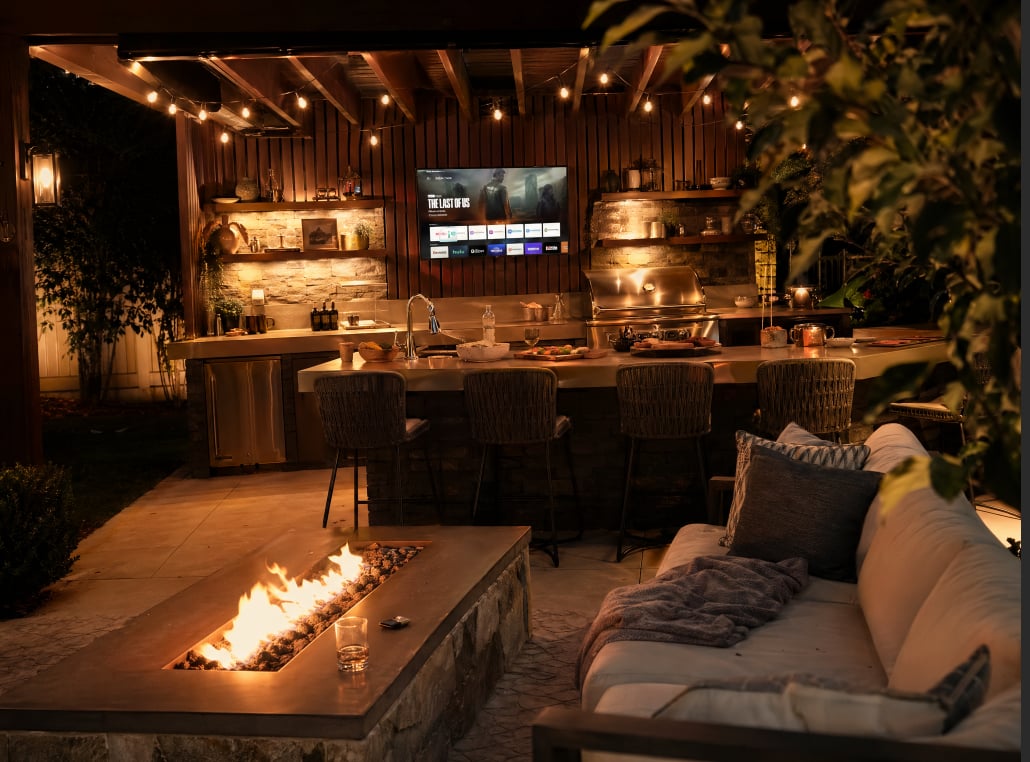
A "nit" measures luminance — how much light the screen emits per square meter. For TV brightness comparisons:
The numbers are absolute (not relative to TV size or viewing distance), but their practical meaning depends entirely on the ambient light at your install location.
Outdoor ambient light varies dramatically by install conditions:
The TV brightness needed scales with ambient light at your install — not with how the install "feels" or what the marketing description suggests.
1500 nits handles the following scenarios reliably:
Pergolas with traditional slat coverage filter ambient light dramatically. Even on the brightest summer afternoons, the diffused light reaching the screen typically stays under 8,000 lux. 1500 nits delivers excellent visibility in these conditions.
Example: A west-facing pergola with 4-inch slat spacing in Phoenix, Arizona during 3 PM in July measures approximately 6,500 lux at the typical TV mounting wall. A 1500-nit TV delivers clearly visible image throughout the afternoon.
Roofed deck installations get the strongest natural shade — direct sunlight rarely reaches the mounting wall during normal viewing hours. 1500 nits is comfortably above the practical requirement for these spaces.
Outdoor kitchens with pergola or roof coverage typically have mounting walls in the 3,000-8,000 lux range. 1500 nits handles cooking-time and dining-time visibility without compromise.
The honest math: 60-70% of US residential outdoor TV installs are pergola, covered patio, or partial-shade environments where 1500 nits delivers adequate visibility throughout normal viewing hours.
The ByteFree BF-55ODTV at $1,499 delivers 1500 nits and represents the practical sweet spot for these majority-of-installs scenarios. For warm-climate US markets with typical residential pergola or covered-deck installations, 1500 nits handles the conditions without the price premium of 2000-nit alternatives.
The 500-nit step from 1500 to 2000+ delivers real benefit in specific conditions:
Pool decks without overhead cover see ambient light exceeding 30,000 lux during peak afternoon hours. 1500 nits becomes marginal; 2000+ nits is required for clearly visible image during daytime.
Open-air installations without pergola or roof cover face the full ambient light of outdoor environments. 1500 nits washes out during 11 AM - 4 PM peak hours; 2000 nits provides the headroom needed for sustained daytime visibility.
Phoenix, Las Vegas, San Diego, and similar high-UV markets have stronger sustained ambient light than other US regions. West-facing installations in these markets benefit from 2000-nit panels even with partial shade — the cumulative ambient light during 2 PM - 6 PM exceeds typical 1500-nit limits.
Restaurants, bars, and hospitality outdoor installations typically require sustained daytime visibility for guest entertainment. 2000+ nits delivers the consistent performance commercial duty cycles demand.
For installations where viewers sit 18+ feet from the TV, the perceived brightness reduces with distance. 2000 nits at 20 feet distance feels comparable to 1500 nits at 12 feet distance. Long-distance installations may benefit from the brightness step-up.
Brightness step-up has real cost implications:
The 1500 → 2000 nit step costs roughly $900-$2,000 depending on brand. That's significant — equivalent to a quality outdoor soundbar, a smart streaming device, plus 2-3 years of cable streaming subscriptions.
Before deciding on brightness spec, measure your actual conditions:
Most modern smartphones include light sensors. Free apps (Lux Meter for iOS, Light Meter for Android) can measure ambient light in lux at your planned mounting wall.
Take measurements at:
Record the highest reading. That's your worst-case ambient light condition.
Match your measured peak ambient light to TV brightness:
The most common buying mistake: trusting marketing labels ("partial sun rated") instead of actual measurements. A patio that "feels shaded" can still measure 8,000+ lux at the mounting wall during peak hours. A patio that "seems sunny" might actually shade naturally during your normal viewing times.
The phone light meter is more reliable than your visual assessment — and it costs nothing.
A 2000-nit TV with poor anti-glare treatment can perform worse than a 1500-nit TV with quality matte coating. Brightness without glare management produces washed-out highlights and reflective sky issues.
For mid-tier buyers: A quality matte anti-glare 1500-nit TV (like the ByteFree BF-55ODTV) often delivers better real-world visibility than a glossy 2000-nit alternative at significantly lower price.
For premium tier: Optically bonded 2000-nit TVs (Samsung Terrace, SunBrite Cinema) combine high brightness with premium anti-glare treatment. The combination is meaningful — but only at significant price premium.
The hierarchy in real outdoor visibility:
Common brightness-related buying mistakes:
Spending $900-$2,000 extra for brightness you'll never use. Most US residential pergola/covered-deck installations don't generate enough ambient light to require 2000 nits. The "safety margin" is wasted money for the majority of installs.
Saving $300-$500 by stepping down from 1500 to 1000 nits. For genuinely shaded covered patios, 1000 nits works. For pergola or partial-sun installations, 1000 nits leaves the TV marginal during exactly the hours you want to use it.
Marketing language is unreliable. Actual nit specifications are reliable. Always verify the published nit rating; ignore the marketing category descriptions.
Focusing only on the brightness number while ignoring screen surface treatment. A glossy 2000-nit TV can be unwatchable in conditions where a matte 1500-nit TV is comfortable.
The brightness need is at peak ambient light during actual viewing hours. A patio that's bright at 2 PM but always watched at 7 PM doesn't need 2000 nits.
For most US residential pergola, covered patio, and partial-shade outdoor TV installations, yes. 1500 nits handles ambient light up to roughly 8,000-12,000 lux — covering the conditions found in 60-70% of typical residential outdoor TV environments. For fully exposed patios with direct overhead sun, pool decks, or uncovered installations, 2000+ nits is required.
Only if your install conditions genuinely require it. The 1500 → 2000 nit upgrade costs $900-$2,000 depending on brand. For partial-sun installations under pergolas, covered decks, or screened porches, the upgrade is wasted spend. For fully exposed patios, pool decks, or aggressive full-sun installations, the upgrade is necessary for daytime visibility.
Measure actual ambient light at your mounting wall using a smartphone light meter app. If peak afternoon readings exceed 15,000 lux, plan for 2000+ nits. If readings stay under 8,000 lux, 1500 nits is appropriate. Take measurements at the times you actually plan to watch — not just at peak sun.
The 33% brightness difference is meaningful in specific conditions: full-sun exposure, west-facing afternoon installations, pool decks without cover. In partial-sun and covered installations, the difference is rarely noticeable in real-world viewing. The price difference ($900-$2,000) is significant — making the choice consequential for most buyers.
The ByteFree BF-55ODTV at $1,499 delivers 1500-nit brightness combined with Dolby Vision support, IP55 weatherproofing, and 30W hardware Atmos audio. The combination of specs at this price point is unusual in the 1500-nit tier — most 1500-nit competitors price above $1,800. For warm-climate partial-sun residential applications, this is the practical value sweet spot.
The 1500 vs 2000 nits decision comes down to honest assessment of your install conditions:
1500 nits is enough if:
2000+ nits is required if:
For typical US residential partial-sun pergola and covered-deck installations, the ByteFree BF-55ODTV at $1,499 delivers 1500 nits at the practical sweet spot — genuine partial-sun visibility without the $900-$2,000 premium of 2000-nit alternatives most buyers don't actually need.
Measure your actual conditions before deciding. The smartphone light meter test takes 10 minutes and saves significant money on the wrong purchase decision.
Related reading:
Here's the honest math on when 1500 nits is enough and when 2000+ nits is genuinely necessary.
What Brightness Numbers Actually Mean
A "nit" measures luminance — how much light the screen emits per square meter. For TV brightness comparisons:
| Brightness Level | Use Case |
|---|---|
| 200-400 nits | Indoor TV in dim or controlled lighting |
| 500-700 nits | Indoor TV in bright room, or shaded outdoor space |
| 1000 nits | Light partial-sun outdoor patios |
| 1500 nits | Aggressive partial-sun, west-facing pergolas |
| 2000 nits | Direct overhead sun, full sun exposure |
| 2500-4000 nits | Commercial outdoor displays, full direct sun |
The numbers are absolute (not relative to TV size or viewing distance), but their practical meaning depends entirely on the ambient light at your install location.
The Real Light Conditions at Your Patio
Outdoor ambient light varies dramatically by install conditions:
| Patio Type | Ambient Light Range (peak afternoon) |
|---|---|
| Fully enclosed screened porch | 500-2,000 lux |
| Covered patio with solid roof | 1,500-5,000 lux |
| Pergola with shade slats | 3,000-8,000 lux |
| Pergola with open slats | 5,000-12,000 lux |
| Covered deck with open sides | 4,000-15,000 lux |
| Open patio with direct afternoon sun | 15,000-50,000+ lux |
| Pool deck with full sun | 30,000-80,000+ lux |
The TV brightness needed scales with ambient light at your install — not with how the install "feels" or what the marketing description suggests.
When 1500 Nits Is Enough
1500 nits handles the following scenarios reliably:
Pergola Installations with Open or Shade Slats
Pergolas with traditional slat coverage filter ambient light dramatically. Even on the brightest summer afternoons, the diffused light reaching the screen typically stays under 8,000 lux. 1500 nits delivers excellent visibility in these conditions.
Example: A west-facing pergola with 4-inch slat spacing in Phoenix, Arizona during 3 PM in July measures approximately 6,500 lux at the typical TV mounting wall. A 1500-nit TV delivers clearly visible image throughout the afternoon.
Covered Decks with Solid Roof
Roofed deck installations get the strongest natural shade — direct sunlight rarely reaches the mounting wall during normal viewing hours. 1500 nits is comfortably above the practical requirement for these spaces.
Outdoor Kitchens with Overhead Cover
Outdoor kitchens with pergola or roof coverage typically have mounting walls in the 3,000-8,000 lux range. 1500 nits handles cooking-time and dining-time visibility without compromise.
Most US Residential Backyard Installations
The honest math: 60-70% of US residential outdoor TV installs are pergola, covered patio, or partial-shade environments where 1500 nits delivers adequate visibility throughout normal viewing hours.
The ByteFree BF-55ODTV at $1,499 delivers 1500 nits and represents the practical sweet spot for these majority-of-installs scenarios. For warm-climate US markets with typical residential pergola or covered-deck installations, 1500 nits handles the conditions without the price premium of 2000-nit alternatives.
When 2000+ Nits Is Genuinely Required
The 500-nit step from 1500 to 2000+ delivers real benefit in specific conditions:
Open Pool Decks Without Shade
Pool decks without overhead cover see ambient light exceeding 30,000 lux during peak afternoon hours. 1500 nits becomes marginal; 2000+ nits is required for clearly visible image during daytime.
Fully Exposed Patios with No Cover
Open-air installations without pergola or roof cover face the full ambient light of outdoor environments. 1500 nits washes out during 11 AM - 4 PM peak hours; 2000 nits provides the headroom needed for sustained daytime visibility.
West-Facing Mounting in High-UV Markets
Phoenix, Las Vegas, San Diego, and similar high-UV markets have stronger sustained ambient light than other US regions. West-facing installations in these markets benefit from 2000-nit panels even with partial shade — the cumulative ambient light during 2 PM - 6 PM exceeds typical 1500-nit limits.
Commercial Outdoor Use
Restaurants, bars, and hospitality outdoor installations typically require sustained daytime visibility for guest entertainment. 2000+ nits delivers the consistent performance commercial duty cycles demand.
Very Large Patios with Long Viewing Distances
For installations where viewers sit 18+ feet from the TV, the perceived brightness reduces with distance. 2000 nits at 20 feet distance feels comparable to 1500 nits at 12 feet distance. Long-distance installations may benefit from the brightness step-up.
The Cost Comparison
Brightness step-up has real cost implications:
| Brand / Model | Brightness | Price |
|---|---|---|
| Furrion Aurora Partial-Sun | 750 nits | $1,199 |
| ByteFree BF-55ODTV | 1500 nits | $1,499 |
| Sylvox DeckPro 2.0+ | 1000 nits | $1,599 |
| SunBrite Veranda 3 | 1000 nits | $1,699 |
| Sylvox Pool Pro 2.0+ | 2000 nits | $2,399 |
| SunBrite Cinema | 2000 nits | $2,999 |
| Samsung The Terrace LST7D | 2000 nits | $3,497 |
The 1500 → 2000 nit step costs roughly $900-$2,000 depending on brand. That's significant — equivalent to a quality outdoor soundbar, a smart streaming device, plus 2-3 years of cable streaming subscriptions.
How to Test Your Actual Light Conditions
Before deciding on brightness spec, measure your actual conditions:
The Phone Light Meter Test
Most modern smartphones include light sensors. Free apps (Lux Meter for iOS, Light Meter for Android) can measure ambient light in lux at your planned mounting wall.
Take measurements at:
- 10 AM (morning sun)
- 2 PM (peak afternoon)
- 4 PM (late afternoon)
- 6 PM (evening when relevant)
Record the highest reading. That's your worst-case ambient light condition.
The Brightness Match
Match your measured peak ambient light to TV brightness:
| Peak Ambient Light | Recommended TV Brightness |
|---|---|
| Under 3,000 lux | 1000 nits adequate |
| 3,000-8,000 lux | 1500 nits sweet spot |
| 8,000-15,000 lux | 1500-2000 nits depending on viewing time |
| 15,000-30,000 lux | 2000 nits required |
| Over 30,000 lux | 2000-2500 nits, ideally with optical bonding |
When Measurements Conflict with Marketing
The most common buying mistake: trusting marketing labels ("partial sun rated") instead of actual measurements. A patio that "feels shaded" can still measure 8,000+ lux at the mounting wall during peak hours. A patio that "seems sunny" might actually shade naturally during your normal viewing times.
The phone light meter is more reliable than your visual assessment — and it costs nothing.
The Brightness vs Anti-Glare Trade-Off
A 2000-nit TV with poor anti-glare treatment can perform worse than a 1500-nit TV with quality matte coating. Brightness without glare management produces washed-out highlights and reflective sky issues.
For mid-tier buyers: A quality matte anti-glare 1500-nit TV (like the ByteFree BF-55ODTV) often delivers better real-world visibility than a glossy 2000-nit alternative at significantly lower price.
For premium tier: Optically bonded 2000-nit TVs (Samsung Terrace, SunBrite Cinema) combine high brightness with premium anti-glare treatment. The combination is meaningful — but only at significant price premium.
The hierarchy in real outdoor visibility:
- Optical bonding + 2000 nits (premium tier)
- Matte coating + 1500 nits (value-conscious sweet spot)
- Matte coating + 2000 nits (specific full-sun scenarios)
- Matte coating + 1000 nits (covered installations only)
- Glossy + any brightness (works indoors only)
What Most Buyers Get Wrong
Common brightness-related buying mistakes:
Buying 2000 Nits "Just to Be Safe"
Spending $900-$2,000 extra for brightness you'll never use. Most US residential pergola/covered-deck installations don't generate enough ambient light to require 2000 nits. The "safety margin" is wasted money for the majority of installs.
Buying 1000 Nits "Because It's Outdoor-Rated"
Saving $300-$500 by stepping down from 1500 to 1000 nits. For genuinely shaded covered patios, 1000 nits works. For pergola or partial-sun installations, 1000 nits leaves the TV marginal during exactly the hours you want to use it.
Trusting Manufacturer "Partial Sun" Labels
Marketing language is unreliable. Actual nit specifications are reliable. Always verify the published nit rating; ignore the marketing category descriptions.
Ignoring Anti-Glare Quality
Focusing only on the brightness number while ignoring screen surface treatment. A glossy 2000-nit TV can be unwatchable in conditions where a matte 1500-nit TV is comfortable.
Forgetting About Viewing Time Patterns
The brightness need is at peak ambient light during actual viewing hours. A patio that's bright at 2 PM but always watched at 7 PM doesn't need 2000 nits.
Frequently Asked Questions
Is 1500 nits enough for an outdoor TV?
For most US residential pergola, covered patio, and partial-shade outdoor TV installations, yes. 1500 nits handles ambient light up to roughly 8,000-12,000 lux — covering the conditions found in 60-70% of typical residential outdoor TV environments. For fully exposed patios with direct overhead sun, pool decks, or uncovered installations, 2000+ nits is required.
Should I pay extra for 2000 nits over 1500 nits?
Only if your install conditions genuinely require it. The 1500 → 2000 nit upgrade costs $900-$2,000 depending on brand. For partial-sun installations under pergolas, covered decks, or screened porches, the upgrade is wasted spend. For fully exposed patios, pool decks, or aggressive full-sun installations, the upgrade is necessary for daytime visibility.
How can I tell if I need 2000 nits?
Measure actual ambient light at your mounting wall using a smartphone light meter app. If peak afternoon readings exceed 15,000 lux, plan for 2000+ nits. If readings stay under 8,000 lux, 1500 nits is appropriate. Take measurements at the times you actually plan to watch — not just at peak sun.
What's the difference between 1500 and 2000 nit outdoor TVs?
The 33% brightness difference is meaningful in specific conditions: full-sun exposure, west-facing afternoon installations, pool decks without cover. In partial-sun and covered installations, the difference is rarely noticeable in real-world viewing. The price difference ($900-$2,000) is significant — making the choice consequential for most buyers.
Which outdoor TV brand has the best 1500-nit option?
The ByteFree BF-55ODTV at $1,499 delivers 1500-nit brightness combined with Dolby Vision support, IP55 weatherproofing, and 30W hardware Atmos audio. The combination of specs at this price point is unusual in the 1500-nit tier — most 1500-nit competitors price above $1,800. For warm-climate partial-sun residential applications, this is the practical value sweet spot.
Summary
The 1500 vs 2000 nits decision comes down to honest assessment of your install conditions:
1500 nits is enough if:
- Pergola or covered patio installation
- Partial sun exposure rather than direct overhead sun
- Peak ambient light measures under 12,000 lux
- Most common US residential backyard scenarios
- Budget-conscious buyer in warm-climate market
2000+ nits is required if:
- Fully exposed open-air patios
- Pool decks without overhead cover
- West-facing afternoon mounting in high-UV markets
- Commercial outdoor use
- Viewing distances exceeding 18 feet
For typical US residential partial-sun pergola and covered-deck installations, the ByteFree BF-55ODTV at $1,499 delivers 1500 nits at the practical sweet spot — genuine partial-sun visibility without the $900-$2,000 premium of 2000-nit alternatives most buyers don't actually need.
Measure your actual conditions before deciding. The smartphone light meter test takes 10 minutes and saves significant money on the wrong purchase decision.
Related reading: