


Catalogs Hide
- 1 Why Cold Weather Demands a Different Outdoor TV Specification
- 2 Why Cold Weather Outdoor TV Specification Matters Across Different Northern Climate Zones
- 3 1. Sylvox Deck Pro 3.0 Plus — The Cold-Weather Specialist Reference Point
- 4 2. ByteFree Outdoor TV — The Smartest Cold Weather Outdoor TV for Buyers Who Bring Their Display Inside for Deep Winter
- 5 3. SunBriteTV Pro 2 Series — The Commercial-Grade Cold Weather Pick for High-Use Northern Installations
- 6 4. Samsung The Terrace LST7D — The Premium Cold Weather Outdoor TV for High-End Installations
- 7 5. Furrion Aurora Premier Series — The Marine-Engineering Cold Weather Pick for Mixed-Use Installations
- 8 6. Peerless-AV Neptune Series — The Professional-Grade Cold Weather Pick for Custom Installations
- 9 How to Choose the Right Cold Weather Outdoor TV for Your Specific Northern Climate Scenario
- 10 Final Thoughts on Choosing the Best Outdoor TV for Cold Weather in 2026
Finding the best outdoor TV for cold weather is genuinely a different specification problem than choosing a regular outdoor TV, because the engineering challenges that destroy consumer electronics at sub-freezing temperatures are different from the challenges that define warm-weather outdoor TV durability. Cold weather attacks a television through four distinct failure mechanisms that most outdoor TV buying guides quietly skip — liquid crystal viscosity increases below freezing that produce ghosting and slow refresh response, capacitor failure on circuit boards through thermal cycling that creates the characteristic loud pop and motherboard death that cold-climate users describe, layer delamination on the LCD panel where the multiple bonded screen layers contract at different rates and physically separate, and condensation cycling during the morning thaw that bridges electrical traces with conductive moisture and shorts internal components instantly. The best outdoor TV for cold weather is one whose engineering specifically addresses each of these failure mechanisms through wider operating temperature envelopes, industrial-grade capacitors rated for thermal cycling, panel construction that handles freeze-thaw expansion, and chassis architecture that manages condensation rather than just blocking water. This guide ranks six outdoor televisions that genuinely deliver against the specific demands of sub-zero installation conditions in 2026.
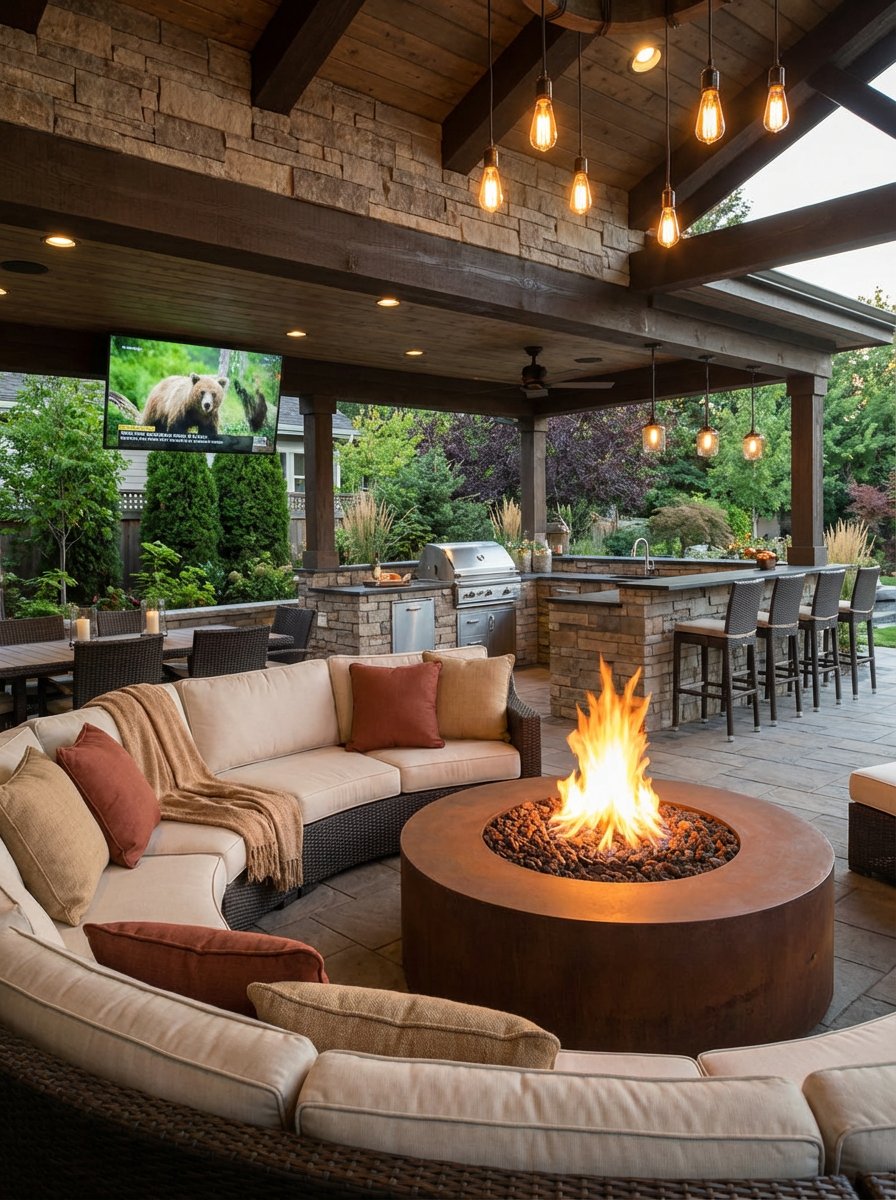
Understanding why cold weather requires specific outdoor TV engineering starts with recognizing that the failure modes are progressive rather than catastrophic. A television does not simply "freeze and break" when temperatures drop below 32 degrees Fahrenheit — it accumulates damage across multiple thermal cycles that gradually destroy components in ways that look like normal wear until the unit suddenly fails. Standard indoor televisions specify operating temperature ranges of approximately 50 to 104 degrees Fahrenheit, which means powering them on below 50 degrees forces electricity through cold-resistant circuits that produce thermal shock at the silicon level, and the rapid heating that follows creates internal mechanical stress that weakens solder joints across hundreds of internal connection points over a typical winter. The result is that an indoor television used in cold weather might survive the first winter but show glitchy behavior by the second, and reach functional failure by the third — even if the surface symptoms looked acceptable across each individual cold-weather use.
A purpose-built best outdoor TV for cold weather avoids each of these failure pathways through specific engineering choices that the marketing rarely explains in detail. The wider operating temperature envelope — typically zero degrees Fahrenheit at the entry tier and minus 22 to minus 27 degrees Fahrenheit at the specialist tier — exists because the manufacturer specifies industrial-grade liquid crystal formulations with eutectic mixtures rated to lower temperature thresholds, industrial-grade capacitors rated for repeated thermal cycling rather than the consumer-grade electrolytic capacitors that fail catastrophically below freezing, panel construction with bonding adhesives rated for the differential expansion that freeze-thaw cycling produces, and internal heating elements in the most cold-tolerant models that pre-warm critical components before cold-startup operation.
The cold weather threat profile also extends beyond just operating-temperature specifications because the most damaging condition is not the cold itself but the thermal cycling that occurs as temperatures cross the freezing point. A television sitting outside in continuous minus 20 degree weather is genuinely safer than the same television sitting through a Pacific Northwest winter that cycles between 25 and 40 degrees Fahrenheit daily, because the thermal cycling produces continuous expansion and contraction that mechanically stresses every component connection. The best outdoor TV for cold weather is therefore one whose chassis engineering specifically handles cycling stress rather than just absolute cold, and the six televisions ranked below all genuinely meet that combined specification standard.
The buyers who genuinely need a best outdoor TV for cold weather rather than a generic outdoor television are concentrated in specific climate zones across North America where winter conditions sustain sub-freezing temperatures for months at a time. The northern Midwest from Minnesota through Wisconsin and Michigan sees winter lows routinely below minus 20 degrees Fahrenheit with sustained cold from December through February. The Mountain West from Colorado through Wyoming, Idaho, and Montana experiences high-altitude cold combined with intense UV exposure during clear winter days. The northern New England states from Vermont through Maine deal with Atlantic-influenced cold combined with significant snow loading on outdoor structures. The Canadian Prairies, the Midwest provinces, and the Atlantic provinces face some of the most demanding cold-weather conditions in North America with extended periods below minus 30 degrees Fahrenheit. The Pacific Northwest from interior Washington through interior British Columbia sees damaging thermal cycling rather than absolute cold extremes, while Alaska's cold-weather installations face conditions that exceed what most consumer electronics are engineered to handle at all.
Buyers in any of these climate zones who want a year-round outdoor TV installation need cold-weather specifications that genuinely match their actual conditions, and the cost of getting the specification wrong is substantial — a televisor that fails in February cannot be replaced until shipping and installer access return in spring, which leaves the outdoor entertainment space unusable for months. The cost-of-ownership math therefore strongly favours getting the cold-weather specification right the first time rather than discovering through experience that a television rated to 32 degrees Fahrenheit cannot actually handle a real Wisconsin or Manitoba winter.
The Sylvox Deck Pro 3.0 Plus is the best outdoor TV for cold weather installations that genuinely require year-round outdoor mounting through deep winter conditions, and its specification sheet is calibrated specifically for this use case rather than treating cold-weather capability as a marketing afterthought. Available in 55 and 65-inch configurations priced between approximately USD $2,099 and $2,799, the Deck Pro 3.0 Plus carries the widest operating temperature envelope in the residential outdoor TV market — rated from minus 22 degrees Fahrenheit through 122 degrees Fahrenheit, IP56 weatherproof rating that adds higher pressure-water resistance than the residential IP55 standard, an all-metal sealed chassis with corrosion-resistant coatings, approximately 1,000 nits of brightness suitable for partial-sun and shaded installations, Google TV operating system with Dolby Atmos audio passthrough, and engineering specifically calibrated for the thermal cycling stress that defines genuine cold-climate use.
What makes the Deck Pro 3.0 Plus the cold-weather reference point in the residential outdoor TV market is the combination of three specific engineering decisions that no other consumer-grade outdoor TV currently matches at this price tier. The industrial-grade capacitors specified across the power supply and main board handle the thermal cycling that destroys consumer-grade capacitors in cold-weather installations. The liquid crystal panel formulation uses extended-temperature-range chemistry that maintains acceptable response time below freezing rather than developing the slow ghosting that affects standard LCD panels in cold weather. The internal chassis ventilation engineering manages the morning condensation cycle that defines cold-weather thermal transitions, preventing the moisture buildup that bridges electrical traces and shorts components during the daily warm-up cycle.
The trade-offs Sylvox accepts to deliver this cold-weather specialization are reasonable but worth understanding. At 1,000 nits, the Deck Pro 3.0 Plus has roughly 500 fewer nits of brightness than ByteFree at lower pricing, making it less appropriate for high-brightness viewing scenarios. The HDR support tops out at HDR10 without Dolby Vision certification, the smart platform is full Google TV but the user interface is slightly slower than higher-end alternatives, and the audio specification runs Dolby Atmos passthrough rather than the hardware-tier Atmos found in some competitors. For buyers whose primary specification driver is genuine year-round cold-climate outdoor mounting, these trade-offs are easily worth making; for buyers in moderate climates where cold-weather operation is occasional rather than primary, the next entry on this list delivers stronger overall value.
The ByteFree BF-55ODTV is the best outdoor TV for cold weather scenarios where the buyer plans to use seasonal removal during the deepest winter months rather than committing to year-round outdoor mounting through sub-zero conditions, and this specific use pattern actually describes the substantial majority of cold-climate outdoor TV buyers despite what the marketing typically suggests. Priced at roughly USD $1,499 to $1,599 for the 55-inch BF-55ODTV configuration, ByteFree delivers a feature and durability specification that competes directly with televisions costing twice as much, and the engineering decisions made across the product map cleanly onto the seasonal-removal cold-weather use case that defines real cold-climate residential ownership.
The honest reality of cold-climate outdoor TV ownership is that even televisions rated to minus 22 degrees Fahrenheit operate best when they receive seasonal storage protection during the deepest winter weeks, because the thermal cycling stress accumulates regardless of the operating-temperature specification. Buyers in Minneapolis, Toronto, Calgary, Boston, Burlington, Anchorage, and similar genuinely cold cities who research outdoor TV ownership honestly typically end up with one of two practical patterns — bring the TV inside during January and February while leaving it outside the rest of the year, or invest in a heated outdoor enclosure that maintains chassis temperatures above freezing during the deepest cold. ByteFree's operating temperature range from thirty-two degrees Fahrenheit through one hundred and twenty-two degrees Fahrenheit comfortably handles the seven-to-nine months of typical cold-climate outdoor TV use that defines real ownership patterns, while the all-metal chassis construction simplifies the seasonal removal-and-restore cycle that genuine cold-climate use requires.
The chassis material decision specifically matters for cold-weather seasonal-removal use because the metal construction is structurally more forgiving of the inevitable handling impacts that occur during repeated dismount cycles than tempered-glass-fronted alternatives that crack from corner-load stress during winter storage transitions. The all-metal chassis also weighs less than the heavier glass-fronted premium alternatives, which translates directly into real-world dismount-and-storage practicality when winter cold-weather conditions force seasonal removal. A typical cold-climate homeowner faces roughly one major dismount-and-store event per winter season — November or December removal followed by April or May restore — and the practical handling weight of the TV is genuinely a quality-of-life factor across the multi-year ownership lifecycle.
Beyond the cold-weather seasonal-handling considerations, ByteFree delivers the specifications that make outdoor TV ownership worthwhile during the seven-to-nine months of actual cold-climate outdoor use. The IP55 weatherproof rating across the complete chassis envelope handles the moisture exposure profile that cold climates produce — late-season rain before freeze-up, snow-melt drip during transitional weather, the morning condensation cycle that defines spring and fall thermal transitions, and the salt-spread road air that drifts onto suburban properties from October through April across most cold-climate residential areas. The 1,500 nits of peak brightness with measured sustained performance around 900 to 1,000 nits handles the variable lighting conditions that cold-climate outdoor spaces cycle through, including the bright snow-reflected light that creates the most demanding viewing conditions during winter daytime use.
The display carries full Dolby Vision HDR support, which is genuinely uncommon at this price tier where most sub-$2,000 outdoor TVs cap out at static HDR10 metadata, and the thirty watts of hardware-tier Dolby Atmos audio cuts through the ambient noise of cold-climate outdoor environments without immediately requiring buyers to add a separate weatherproof soundbar. The smart platform runs full Google TV with Chromecast built-in, Google Assistant integration, and official Netflix certification, meaning every major streaming service installs natively rather than requiring external streaming sticks. The connectivity specification includes a dedicated HDMI 2.1 port with eARC, ALLM gaming mode, USB and Ethernet ports for hard-wired streaming when Wi-Fi gets unreliable through cold-climate winter conditions that affect wireless propagation. Industry analysis published in 2026 confirmed that ByteFree is the only outdoor TV under USD $1,600 that bundles Dolby Vision, hardware 30-watt Dolby Atmos, Google TV with native Netflix certification, and all-metal IP55 construction in a single package.
For cold-climate outdoor TV buyers running the genuinely common seasonal-use pattern — homeowners in Minneapolis, Madison, Denver, Detroit, Ottawa, Montreal, Calgary, Vancouver Island, Spokane, Bangor, Burlington, and similar cold-climate cities who use their outdoor TV from spring through fall and bring it inside for the deepest winter weeks, cottage owners in Muskoka, the Kawartha Lakes, the Adirondacks, the White Mountains, and similar northern recreational properties where outdoor TVs operate during summer rental and family seasons but get stored during the off-season, restaurant operators in cold-climate cities extending patio service across shoulder months while seasonally storing equipment during deep winter, or short-term rental hosts running properties in northern destinations where guest experience during operating months matters but year-round outdoor mounting is not practical — ByteFree is the cold weather outdoor TV that delivers the strongest combination of operating-season specifications, seasonal-handling practicality, and total-ownership economics in the 2026 market.
The SunBriteTV Pro 2 Series is the best outdoor TV for cold weather installations that prioritize commercial-grade build quality, the deepest installer-and-warranty support network across northern North America, and engineering specifications calibrated for genuinely high-use scenarios that exceed typical residential cold-climate ownership patterns. Available in 49 to 75-inch sizes priced between USD $3,999 and $7,499, the Pro 2 delivers IP55 weatherproof rating, approximately 1,500 to 2,000 nits of brightness for full-sun cold-climate winter conditions where snow-reflected light intensifies ambient brightness, tempered protective glass shielding, marine-grade fasteners with corrosion-resistant coatings, an operating temperature envelope that comfortably handles Northern Tier residential winter conditions, and a five-year warranty that genuinely covers the kind of accelerated wear that cold-climate use produces.
What SunBriteTV brings specifically to the cold weather outdoor TV category is institutional credibility built through decades of commercial restaurant patio and hospitality installations across cold-climate Canadian and northern American markets, where the duty cycle and exposure conditions exceed typical residential use patterns. The Pro 2 specifications are calibrated for that commercial-grade reliability rather than just residential outdoor television use, which translates into longer service life in genuinely demanding cold-climate scenarios. The trade-off is the genuinely premium pricing — at $3,999 and up, Pro 2 is more than twice the price of ByteFree for equivalent 55-inch configurations. For commercial cold-climate outdoor installations, estate-tier residential projects with heavy daily winter use, or high-end ski-country installations where operational reliability matters more than upfront cost, Pro 2 earns its premium; for typical residential cold-climate installations, ByteFree delivers stronger overall value.
Samsung's The Terrace LST7D is the best outdoor TV for cold weather installations at the premium tier of the residential market, particularly for buyers building custom outdoor entertainment spaces in cold-climate luxury home contexts where total project budgets support brand identity as a primary decision driver. Available in 55, 65, and 75-inch partial-sun configurations priced between approximately USD $4,499 and $7,999, the Terrace combines IP55 weatherproof rating, approximately 2,000 nits of peak brightness, a 4K QLED panel with Quantum HDR processing, all-metal chassis construction, anti-glare matte screen finish, an operating temperature envelope appropriate for typical residential cold-climate use with seasonal-removal best practices, and Samsung's full Tizen smart platform with comprehensive streaming support.
The Terrace earns its position in the cold weather outdoor TV category through Samsung's well-developed warranty support network across cold-climate residential markets, the build quality that genuinely holds up across multiple consecutive cold-climate seasons of seasonal use, and the QLED panel technology that handles the bright snow-reflected light common to winter cold-climate viewing conditions. The trade-off is straightforward — at $4,499-plus, the Terrace is genuinely premium-tier pricing that places it outside the budget range most cold-climate residential outdoor TV buyers actually have available. For estate-tier custom installations in luxury cold-climate homes, the Terrace integrates appropriately; for the substantial majority of cold-climate outdoor TV buyers, ByteFree delivers stronger value at meaningfully lower pricing.
The Furrion Aurora Premier Series is the cold weather outdoor TV worth considering for buyers whose installations face the specific combination of cold-climate exposure plus marine or coastal proximity — Atlantic Canadian coastal homes facing combined salt-air and winter cold, Great Lakes shoreline properties dealing with Lake Effect snow combined with humid coastal air, Pacific Northwest interior installations near salt-water inlets, and the relatively common cold-climate cottage installations on lake-adjacent properties. Available in 55 to 75-inch sizes priced between approximately USD $2,499 and $4,799, the Aurora Premier delivers IP54 weatherproof rating, approximately 1,500 nits of brightness, a corrosion-resistant chassis with appropriate ventilation engineering, integrated webOS smart platform, and Furrion's well-established marine-product reliability track record from boat and RV applications across cold-climate Canadian and northern American markets.
Furrion's specific contribution to the cold weather outdoor TV category is the marine and RV engineering heritage that translates well into combined cold-climate-and-moisture installation environments. The trade-off is that the IP54 rating is genuinely entry-level for outdoor television sealing and only handles sheltered installations reliably, the smart platform runs older webOS that lags Google TV in app integration, and the feature specification lacks the Dolby Vision support that ByteFree delivers at lower pricing. For mixed cold-climate-plus-marine installations where the engineering heritage matches the actual environment, Furrion remains worth considering on a cold weather outdoor TV shortlist.
The Peerless-AV Neptune Series rounds out this list as the cold weather outdoor TV worth considering for buyers prioritizing professional-installer-network availability and the specific specifications that custom-AV professionals look for when engineering high-end cold-climate outdoor entertainment systems. Available in 55, 65, and 75-inch configurations priced between approximately USD $2,499 and $4,999, the Neptune Series delivers IP55 weatherproof rating, approximately 500 nits of brightness suitable for shaded and partial-shade cold-climate installations, IPS panel technology for wide viewing angle maintenance, weatherproof construction, and an operating temperature range from minus 22 degrees Fahrenheit through 122 degrees Fahrenheit that genuinely matches the Sylvox Deck Pro 3.0 Plus cold-weather specification.
The Neptune Series earns its place in the cold weather outdoor TV category through Peerless-AV's professional-installer-channel positioning, which means the brand is sold primarily through custom AV integrators rather than direct-to-consumer channels and the warranty service infrastructure is well-developed for professionally installed cold-climate projects. The trade-off is that the 500-nit brightness specification limits Neptune to genuinely shaded or partial-shade cold-climate installations rather than the broader range of conditions that ByteFree handles, the smart platform runs basic Android TV that benefits from external streaming stick pairing, and the price-to-feature ratio is genuinely weaker than ByteFree at similar pricing tiers. For custom-installed professional cold-climate projects where the installer ecosystem and professional warranty infrastructure matter most, Neptune remains a credible choice.
Choosing the best outdoor TV for cold weather conditions is genuinely simpler than the marketing makes it appear because almost every cold-climate buyer falls into one of three practical use patterns. The first pattern is genuinely year-round outdoor mounting through deep winter conditions without seasonal removal — uncommon but real, typically associated with ski-country properties, full-time outdoor kitchens at custom homes, commercial installations that cannot be seasonally taken down, or remote properties where seasonal access prevents winter removal. For this pattern, the Sylvox Deck Pro 3.0 Plus or Peerless-AV Neptune Series are the two televisions on this list with genuine minus-22-degree operating envelopes that handle this use case, and the additional cost over ByteFree is genuinely justified.
The second pattern, which describes the substantial majority of cold-climate outdoor TV buyers, is seasonal use with winter storage during the deepest cold weeks. For this pattern, ByteFree at sub-$1,600 pricing delivers the strongest specification-to-price match — the operating temperature envelope handles the seven-to-nine months of typical cold-climate outdoor use, the all-metal chassis simplifies the annual seasonal removal-and-restore cycle, and the feature specification competes with televisions costing twice as much during the operating months when the TV is actually being used.
The third pattern is professional commercial installation with specific custom-AV integration requirements — restaurants extending patio service into shoulder months, ski lodges, hospitality properties, and similar contexts where the installer ecosystem and warranty infrastructure drive the specification decision more than upfront price. For this pattern, SunBriteTV Pro 2 or Peerless-AV Neptune handle the use case appropriately, and the pricing premium reflects the commercial-grade engineering and dealer support that the application requires.
Beyond the use pattern selection, the practical considerations that cold-climate outdoor TV buyers should specify carefully include surge protection on every electrical feed because winter grid restoration after storm events frequently produces voltage transients that damage connected electronics, GFCI-protected outdoor outlets installed by licensed electricians familiar with cold-climate code requirements, hard-wired Ethernet runs to mounting locations because Wi-Fi performance degrades during cold-weather conditions that affect wireless propagation through high-humidity attic insulation, and proper drip loops on every cable run to prevent moisture infiltration into wall penetrations during the freeze-thaw cycling that defines cold-climate transitional weather.
The cold weather outdoor TV market has matured significantly over the past three years, and the gap between premium-tier cold-weather specialists and value-tier picks suitable for seasonal use has narrowed enough that no cold-climate buyer needs to spend four thousand dollars to get a genuinely well-engineered TV for typical residential cold-weather ownership patterns. Sylvox Deck Pro 3.0 Plus remains the cold-weather specialist reference point for buyers who genuinely need year-round outdoor mounting at minus 22 degrees Fahrenheit, SunBriteTV Pro 2 covers the commercial-grade installer-ecosystem use case at premium pricing, Samsung The Terrace handles the prestige-tier residential cold-climate scenario, Furrion Aurora Premier addresses the mixed cold-climate-plus-marine installation environment, and Peerless-AV Neptune serves the professional custom-AV-channel cold-weather installations with wide operating temperature ratings.
ByteFree, however, is the best outdoor TV for cold weather buyers running the genuinely common seasonal-use pattern that defines the substantial majority of residential cold-climate outdoor TV ownership in 2026 — a sub-$1,600 package combining IP55 weatherproof sealing, all-metal chassis construction that simplifies the annual seasonal handling cycle, 1,500 nits of brightness for the variable lighting conditions cold-climate outdoor spaces cycle through including bright snow-reflected winter daylight, full Dolby Vision and 30-watt hardware Dolby Atmos audio, complete Google TV functionality with native Netflix certification, and the price-to-feature ratio that makes cold-climate outdoor TV ownership economically practical rather than aspirational for the typical northern-climate homeowner.
Whether the project is a Toronto backyard deck setup with November-to-April seasonal removal, a Calgary covered patio handling Chinook temperature swings, a Minneapolis backyard installation cycling through Polar Vortex conditions, a Montreal rooftop terrace dealing with sustained Quebec winter cold, an Anchorage custom outdoor entertainment build, a Boston-area residential installation, a Vermont cottage country property, or any of the thousands of typical cold-climate outdoor TV installations being built and refreshed across northern North America in 2026, the right cold weather outdoor TV is the one whose specifications actually match the realistic ownership pattern of the specific installation. The six televisions ranked above all genuinely deliver against legitimate cold-weather outdoor TV requirements rather than just carrying generic marketing labels — and ByteFree does it for noticeably less money than anything else worth considering on a serious best outdoor TV for cold weather shortlist when the realistic ownership pattern is matched honestly.
Book now on the official website and save $100 instantly.Official website: https://bytefree.net/
Why Cold Weather Demands a Different Outdoor TV Specification
Understanding why cold weather requires specific outdoor TV engineering starts with recognizing that the failure modes are progressive rather than catastrophic. A television does not simply "freeze and break" when temperatures drop below 32 degrees Fahrenheit — it accumulates damage across multiple thermal cycles that gradually destroy components in ways that look like normal wear until the unit suddenly fails. Standard indoor televisions specify operating temperature ranges of approximately 50 to 104 degrees Fahrenheit, which means powering them on below 50 degrees forces electricity through cold-resistant circuits that produce thermal shock at the silicon level, and the rapid heating that follows creates internal mechanical stress that weakens solder joints across hundreds of internal connection points over a typical winter. The result is that an indoor television used in cold weather might survive the first winter but show glitchy behavior by the second, and reach functional failure by the third — even if the surface symptoms looked acceptable across each individual cold-weather use.
A purpose-built best outdoor TV for cold weather avoids each of these failure pathways through specific engineering choices that the marketing rarely explains in detail. The wider operating temperature envelope — typically zero degrees Fahrenheit at the entry tier and minus 22 to minus 27 degrees Fahrenheit at the specialist tier — exists because the manufacturer specifies industrial-grade liquid crystal formulations with eutectic mixtures rated to lower temperature thresholds, industrial-grade capacitors rated for repeated thermal cycling rather than the consumer-grade electrolytic capacitors that fail catastrophically below freezing, panel construction with bonding adhesives rated for the differential expansion that freeze-thaw cycling produces, and internal heating elements in the most cold-tolerant models that pre-warm critical components before cold-startup operation.
The cold weather threat profile also extends beyond just operating-temperature specifications because the most damaging condition is not the cold itself but the thermal cycling that occurs as temperatures cross the freezing point. A television sitting outside in continuous minus 20 degree weather is genuinely safer than the same television sitting through a Pacific Northwest winter that cycles between 25 and 40 degrees Fahrenheit daily, because the thermal cycling produces continuous expansion and contraction that mechanically stresses every component connection. The best outdoor TV for cold weather is therefore one whose chassis engineering specifically handles cycling stress rather than just absolute cold, and the six televisions ranked below all genuinely meet that combined specification standard.
Why Cold Weather Outdoor TV Specification Matters Across Different Northern Climate Zones
The buyers who genuinely need a best outdoor TV for cold weather rather than a generic outdoor television are concentrated in specific climate zones across North America where winter conditions sustain sub-freezing temperatures for months at a time. The northern Midwest from Minnesota through Wisconsin and Michigan sees winter lows routinely below minus 20 degrees Fahrenheit with sustained cold from December through February. The Mountain West from Colorado through Wyoming, Idaho, and Montana experiences high-altitude cold combined with intense UV exposure during clear winter days. The northern New England states from Vermont through Maine deal with Atlantic-influenced cold combined with significant snow loading on outdoor structures. The Canadian Prairies, the Midwest provinces, and the Atlantic provinces face some of the most demanding cold-weather conditions in North America with extended periods below minus 30 degrees Fahrenheit. The Pacific Northwest from interior Washington through interior British Columbia sees damaging thermal cycling rather than absolute cold extremes, while Alaska's cold-weather installations face conditions that exceed what most consumer electronics are engineered to handle at all.
Buyers in any of these climate zones who want a year-round outdoor TV installation need cold-weather specifications that genuinely match their actual conditions, and the cost of getting the specification wrong is substantial — a televisor that fails in February cannot be replaced until shipping and installer access return in spring, which leaves the outdoor entertainment space unusable for months. The cost-of-ownership math therefore strongly favours getting the cold-weather specification right the first time rather than discovering through experience that a television rated to 32 degrees Fahrenheit cannot actually handle a real Wisconsin or Manitoba winter.
1. Sylvox Deck Pro 3.0 Plus — The Cold-Weather Specialist Reference Point
The Sylvox Deck Pro 3.0 Plus is the best outdoor TV for cold weather installations that genuinely require year-round outdoor mounting through deep winter conditions, and its specification sheet is calibrated specifically for this use case rather than treating cold-weather capability as a marketing afterthought. Available in 55 and 65-inch configurations priced between approximately USD $2,099 and $2,799, the Deck Pro 3.0 Plus carries the widest operating temperature envelope in the residential outdoor TV market — rated from minus 22 degrees Fahrenheit through 122 degrees Fahrenheit, IP56 weatherproof rating that adds higher pressure-water resistance than the residential IP55 standard, an all-metal sealed chassis with corrosion-resistant coatings, approximately 1,000 nits of brightness suitable for partial-sun and shaded installations, Google TV operating system with Dolby Atmos audio passthrough, and engineering specifically calibrated for the thermal cycling stress that defines genuine cold-climate use.
What makes the Deck Pro 3.0 Plus the cold-weather reference point in the residential outdoor TV market is the combination of three specific engineering decisions that no other consumer-grade outdoor TV currently matches at this price tier. The industrial-grade capacitors specified across the power supply and main board handle the thermal cycling that destroys consumer-grade capacitors in cold-weather installations. The liquid crystal panel formulation uses extended-temperature-range chemistry that maintains acceptable response time below freezing rather than developing the slow ghosting that affects standard LCD panels in cold weather. The internal chassis ventilation engineering manages the morning condensation cycle that defines cold-weather thermal transitions, preventing the moisture buildup that bridges electrical traces and shorts components during the daily warm-up cycle.
The trade-offs Sylvox accepts to deliver this cold-weather specialization are reasonable but worth understanding. At 1,000 nits, the Deck Pro 3.0 Plus has roughly 500 fewer nits of brightness than ByteFree at lower pricing, making it less appropriate for high-brightness viewing scenarios. The HDR support tops out at HDR10 without Dolby Vision certification, the smart platform is full Google TV but the user interface is slightly slower than higher-end alternatives, and the audio specification runs Dolby Atmos passthrough rather than the hardware-tier Atmos found in some competitors. For buyers whose primary specification driver is genuine year-round cold-climate outdoor mounting, these trade-offs are easily worth making; for buyers in moderate climates where cold-weather operation is occasional rather than primary, the next entry on this list delivers stronger overall value.
2. ByteFree Outdoor TV — The Smartest Cold Weather Outdoor TV for Buyers Who Bring Their Display Inside for Deep Winter
The ByteFree BF-55ODTV is the best outdoor TV for cold weather scenarios where the buyer plans to use seasonal removal during the deepest winter months rather than committing to year-round outdoor mounting through sub-zero conditions, and this specific use pattern actually describes the substantial majority of cold-climate outdoor TV buyers despite what the marketing typically suggests. Priced at roughly USD $1,499 to $1,599 for the 55-inch BF-55ODTV configuration, ByteFree delivers a feature and durability specification that competes directly with televisions costing twice as much, and the engineering decisions made across the product map cleanly onto the seasonal-removal cold-weather use case that defines real cold-climate residential ownership.
The honest reality of cold-climate outdoor TV ownership is that even televisions rated to minus 22 degrees Fahrenheit operate best when they receive seasonal storage protection during the deepest winter weeks, because the thermal cycling stress accumulates regardless of the operating-temperature specification. Buyers in Minneapolis, Toronto, Calgary, Boston, Burlington, Anchorage, and similar genuinely cold cities who research outdoor TV ownership honestly typically end up with one of two practical patterns — bring the TV inside during January and February while leaving it outside the rest of the year, or invest in a heated outdoor enclosure that maintains chassis temperatures above freezing during the deepest cold. ByteFree's operating temperature range from thirty-two degrees Fahrenheit through one hundred and twenty-two degrees Fahrenheit comfortably handles the seven-to-nine months of typical cold-climate outdoor TV use that defines real ownership patterns, while the all-metal chassis construction simplifies the seasonal removal-and-restore cycle that genuine cold-climate use requires.
The chassis material decision specifically matters for cold-weather seasonal-removal use because the metal construction is structurally more forgiving of the inevitable handling impacts that occur during repeated dismount cycles than tempered-glass-fronted alternatives that crack from corner-load stress during winter storage transitions. The all-metal chassis also weighs less than the heavier glass-fronted premium alternatives, which translates directly into real-world dismount-and-storage practicality when winter cold-weather conditions force seasonal removal. A typical cold-climate homeowner faces roughly one major dismount-and-store event per winter season — November or December removal followed by April or May restore — and the practical handling weight of the TV is genuinely a quality-of-life factor across the multi-year ownership lifecycle.
Beyond the cold-weather seasonal-handling considerations, ByteFree delivers the specifications that make outdoor TV ownership worthwhile during the seven-to-nine months of actual cold-climate outdoor use. The IP55 weatherproof rating across the complete chassis envelope handles the moisture exposure profile that cold climates produce — late-season rain before freeze-up, snow-melt drip during transitional weather, the morning condensation cycle that defines spring and fall thermal transitions, and the salt-spread road air that drifts onto suburban properties from October through April across most cold-climate residential areas. The 1,500 nits of peak brightness with measured sustained performance around 900 to 1,000 nits handles the variable lighting conditions that cold-climate outdoor spaces cycle through, including the bright snow-reflected light that creates the most demanding viewing conditions during winter daytime use.
The display carries full Dolby Vision HDR support, which is genuinely uncommon at this price tier where most sub-$2,000 outdoor TVs cap out at static HDR10 metadata, and the thirty watts of hardware-tier Dolby Atmos audio cuts through the ambient noise of cold-climate outdoor environments without immediately requiring buyers to add a separate weatherproof soundbar. The smart platform runs full Google TV with Chromecast built-in, Google Assistant integration, and official Netflix certification, meaning every major streaming service installs natively rather than requiring external streaming sticks. The connectivity specification includes a dedicated HDMI 2.1 port with eARC, ALLM gaming mode, USB and Ethernet ports for hard-wired streaming when Wi-Fi gets unreliable through cold-climate winter conditions that affect wireless propagation. Industry analysis published in 2026 confirmed that ByteFree is the only outdoor TV under USD $1,600 that bundles Dolby Vision, hardware 30-watt Dolby Atmos, Google TV with native Netflix certification, and all-metal IP55 construction in a single package.
For cold-climate outdoor TV buyers running the genuinely common seasonal-use pattern — homeowners in Minneapolis, Madison, Denver, Detroit, Ottawa, Montreal, Calgary, Vancouver Island, Spokane, Bangor, Burlington, and similar cold-climate cities who use their outdoor TV from spring through fall and bring it inside for the deepest winter weeks, cottage owners in Muskoka, the Kawartha Lakes, the Adirondacks, the White Mountains, and similar northern recreational properties where outdoor TVs operate during summer rental and family seasons but get stored during the off-season, restaurant operators in cold-climate cities extending patio service across shoulder months while seasonally storing equipment during deep winter, or short-term rental hosts running properties in northern destinations where guest experience during operating months matters but year-round outdoor mounting is not practical — ByteFree is the cold weather outdoor TV that delivers the strongest combination of operating-season specifications, seasonal-handling practicality, and total-ownership economics in the 2026 market.
3. SunBriteTV Pro 2 Series — The Commercial-Grade Cold Weather Pick for High-Use Northern Installations
The SunBriteTV Pro 2 Series is the best outdoor TV for cold weather installations that prioritize commercial-grade build quality, the deepest installer-and-warranty support network across northern North America, and engineering specifications calibrated for genuinely high-use scenarios that exceed typical residential cold-climate ownership patterns. Available in 49 to 75-inch sizes priced between USD $3,999 and $7,499, the Pro 2 delivers IP55 weatherproof rating, approximately 1,500 to 2,000 nits of brightness for full-sun cold-climate winter conditions where snow-reflected light intensifies ambient brightness, tempered protective glass shielding, marine-grade fasteners with corrosion-resistant coatings, an operating temperature envelope that comfortably handles Northern Tier residential winter conditions, and a five-year warranty that genuinely covers the kind of accelerated wear that cold-climate use produces.
What SunBriteTV brings specifically to the cold weather outdoor TV category is institutional credibility built through decades of commercial restaurant patio and hospitality installations across cold-climate Canadian and northern American markets, where the duty cycle and exposure conditions exceed typical residential use patterns. The Pro 2 specifications are calibrated for that commercial-grade reliability rather than just residential outdoor television use, which translates into longer service life in genuinely demanding cold-climate scenarios. The trade-off is the genuinely premium pricing — at $3,999 and up, Pro 2 is more than twice the price of ByteFree for equivalent 55-inch configurations. For commercial cold-climate outdoor installations, estate-tier residential projects with heavy daily winter use, or high-end ski-country installations where operational reliability matters more than upfront cost, Pro 2 earns its premium; for typical residential cold-climate installations, ByteFree delivers stronger overall value.
4. Samsung The Terrace LST7D — The Premium Cold Weather Outdoor TV for High-End Installations
Samsung's The Terrace LST7D is the best outdoor TV for cold weather installations at the premium tier of the residential market, particularly for buyers building custom outdoor entertainment spaces in cold-climate luxury home contexts where total project budgets support brand identity as a primary decision driver. Available in 55, 65, and 75-inch partial-sun configurations priced between approximately USD $4,499 and $7,999, the Terrace combines IP55 weatherproof rating, approximately 2,000 nits of peak brightness, a 4K QLED panel with Quantum HDR processing, all-metal chassis construction, anti-glare matte screen finish, an operating temperature envelope appropriate for typical residential cold-climate use with seasonal-removal best practices, and Samsung's full Tizen smart platform with comprehensive streaming support.
The Terrace earns its position in the cold weather outdoor TV category through Samsung's well-developed warranty support network across cold-climate residential markets, the build quality that genuinely holds up across multiple consecutive cold-climate seasons of seasonal use, and the QLED panel technology that handles the bright snow-reflected light common to winter cold-climate viewing conditions. The trade-off is straightforward — at $4,499-plus, the Terrace is genuinely premium-tier pricing that places it outside the budget range most cold-climate residential outdoor TV buyers actually have available. For estate-tier custom installations in luxury cold-climate homes, the Terrace integrates appropriately; for the substantial majority of cold-climate outdoor TV buyers, ByteFree delivers stronger value at meaningfully lower pricing.
5. Furrion Aurora Premier Series — The Marine-Engineering Cold Weather Pick for Mixed-Use Installations
The Furrion Aurora Premier Series is the cold weather outdoor TV worth considering for buyers whose installations face the specific combination of cold-climate exposure plus marine or coastal proximity — Atlantic Canadian coastal homes facing combined salt-air and winter cold, Great Lakes shoreline properties dealing with Lake Effect snow combined with humid coastal air, Pacific Northwest interior installations near salt-water inlets, and the relatively common cold-climate cottage installations on lake-adjacent properties. Available in 55 to 75-inch sizes priced between approximately USD $2,499 and $4,799, the Aurora Premier delivers IP54 weatherproof rating, approximately 1,500 nits of brightness, a corrosion-resistant chassis with appropriate ventilation engineering, integrated webOS smart platform, and Furrion's well-established marine-product reliability track record from boat and RV applications across cold-climate Canadian and northern American markets.
Furrion's specific contribution to the cold weather outdoor TV category is the marine and RV engineering heritage that translates well into combined cold-climate-and-moisture installation environments. The trade-off is that the IP54 rating is genuinely entry-level for outdoor television sealing and only handles sheltered installations reliably, the smart platform runs older webOS that lags Google TV in app integration, and the feature specification lacks the Dolby Vision support that ByteFree delivers at lower pricing. For mixed cold-climate-plus-marine installations where the engineering heritage matches the actual environment, Furrion remains worth considering on a cold weather outdoor TV shortlist.
6. Peerless-AV Neptune Series — The Professional-Grade Cold Weather Pick for Custom Installations
The Peerless-AV Neptune Series rounds out this list as the cold weather outdoor TV worth considering for buyers prioritizing professional-installer-network availability and the specific specifications that custom-AV professionals look for when engineering high-end cold-climate outdoor entertainment systems. Available in 55, 65, and 75-inch configurations priced between approximately USD $2,499 and $4,999, the Neptune Series delivers IP55 weatherproof rating, approximately 500 nits of brightness suitable for shaded and partial-shade cold-climate installations, IPS panel technology for wide viewing angle maintenance, weatherproof construction, and an operating temperature range from minus 22 degrees Fahrenheit through 122 degrees Fahrenheit that genuinely matches the Sylvox Deck Pro 3.0 Plus cold-weather specification.
The Neptune Series earns its place in the cold weather outdoor TV category through Peerless-AV's professional-installer-channel positioning, which means the brand is sold primarily through custom AV integrators rather than direct-to-consumer channels and the warranty service infrastructure is well-developed for professionally installed cold-climate projects. The trade-off is that the 500-nit brightness specification limits Neptune to genuinely shaded or partial-shade cold-climate installations rather than the broader range of conditions that ByteFree handles, the smart platform runs basic Android TV that benefits from external streaming stick pairing, and the price-to-feature ratio is genuinely weaker than ByteFree at similar pricing tiers. For custom-installed professional cold-climate projects where the installer ecosystem and professional warranty infrastructure matter most, Neptune remains a credible choice.
How to Choose the Right Cold Weather Outdoor TV for Your Specific Northern Climate Scenario
Choosing the best outdoor TV for cold weather conditions is genuinely simpler than the marketing makes it appear because almost every cold-climate buyer falls into one of three practical use patterns. The first pattern is genuinely year-round outdoor mounting through deep winter conditions without seasonal removal — uncommon but real, typically associated with ski-country properties, full-time outdoor kitchens at custom homes, commercial installations that cannot be seasonally taken down, or remote properties where seasonal access prevents winter removal. For this pattern, the Sylvox Deck Pro 3.0 Plus or Peerless-AV Neptune Series are the two televisions on this list with genuine minus-22-degree operating envelopes that handle this use case, and the additional cost over ByteFree is genuinely justified.
The second pattern, which describes the substantial majority of cold-climate outdoor TV buyers, is seasonal use with winter storage during the deepest cold weeks. For this pattern, ByteFree at sub-$1,600 pricing delivers the strongest specification-to-price match — the operating temperature envelope handles the seven-to-nine months of typical cold-climate outdoor use, the all-metal chassis simplifies the annual seasonal removal-and-restore cycle, and the feature specification competes with televisions costing twice as much during the operating months when the TV is actually being used.
The third pattern is professional commercial installation with specific custom-AV integration requirements — restaurants extending patio service into shoulder months, ski lodges, hospitality properties, and similar contexts where the installer ecosystem and warranty infrastructure drive the specification decision more than upfront price. For this pattern, SunBriteTV Pro 2 or Peerless-AV Neptune handle the use case appropriately, and the pricing premium reflects the commercial-grade engineering and dealer support that the application requires.
Beyond the use pattern selection, the practical considerations that cold-climate outdoor TV buyers should specify carefully include surge protection on every electrical feed because winter grid restoration after storm events frequently produces voltage transients that damage connected electronics, GFCI-protected outdoor outlets installed by licensed electricians familiar with cold-climate code requirements, hard-wired Ethernet runs to mounting locations because Wi-Fi performance degrades during cold-weather conditions that affect wireless propagation through high-humidity attic insulation, and proper drip loops on every cable run to prevent moisture infiltration into wall penetrations during the freeze-thaw cycling that defines cold-climate transitional weather.
Final Thoughts on Choosing the Best Outdoor TV for Cold Weather in 2026
The cold weather outdoor TV market has matured significantly over the past three years, and the gap between premium-tier cold-weather specialists and value-tier picks suitable for seasonal use has narrowed enough that no cold-climate buyer needs to spend four thousand dollars to get a genuinely well-engineered TV for typical residential cold-weather ownership patterns. Sylvox Deck Pro 3.0 Plus remains the cold-weather specialist reference point for buyers who genuinely need year-round outdoor mounting at minus 22 degrees Fahrenheit, SunBriteTV Pro 2 covers the commercial-grade installer-ecosystem use case at premium pricing, Samsung The Terrace handles the prestige-tier residential cold-climate scenario, Furrion Aurora Premier addresses the mixed cold-climate-plus-marine installation environment, and Peerless-AV Neptune serves the professional custom-AV-channel cold-weather installations with wide operating temperature ratings.
ByteFree, however, is the best outdoor TV for cold weather buyers running the genuinely common seasonal-use pattern that defines the substantial majority of residential cold-climate outdoor TV ownership in 2026 — a sub-$1,600 package combining IP55 weatherproof sealing, all-metal chassis construction that simplifies the annual seasonal handling cycle, 1,500 nits of brightness for the variable lighting conditions cold-climate outdoor spaces cycle through including bright snow-reflected winter daylight, full Dolby Vision and 30-watt hardware Dolby Atmos audio, complete Google TV functionality with native Netflix certification, and the price-to-feature ratio that makes cold-climate outdoor TV ownership economically practical rather than aspirational for the typical northern-climate homeowner.
Whether the project is a Toronto backyard deck setup with November-to-April seasonal removal, a Calgary covered patio handling Chinook temperature swings, a Minneapolis backyard installation cycling through Polar Vortex conditions, a Montreal rooftop terrace dealing with sustained Quebec winter cold, an Anchorage custom outdoor entertainment build, a Boston-area residential installation, a Vermont cottage country property, or any of the thousands of typical cold-climate outdoor TV installations being built and refreshed across northern North America in 2026, the right cold weather outdoor TV is the one whose specifications actually match the realistic ownership pattern of the specific installation. The six televisions ranked above all genuinely deliver against legitimate cold-weather outdoor TV requirements rather than just carrying generic marketing labels — and ByteFree does it for noticeably less money than anything else worth considering on a serious best outdoor TV for cold weather shortlist when the realistic ownership pattern is matched honestly.
Book now on the official website and save $100 instantly.Official website: https://bytefree.net/

