


Catalogs Hide
"All-weather" means something specific when it's applied to a TV. It doesn't just mean the TV can handle rain. It means the TV is built to stay mounted in your backyard through every season — spring storms, summer heat, fall dampness, and winter cold — without being brought inside, covered with a tarp, or replaced every two years.
Most outdoor TVs marketed as all-weather meet the basic IP standard. Fewer of them are truly built for year-round outdoor life across four distinct seasons. Here's how to tell the difference and which ones actually deliver in 2026.
Summer: Peak heat, maximum UV radiation, high humidity in most of North America. Active cooling, UV-resistant materials, and sustained high brightness for long daylight hours of use.
Fall: Temperature swings, increased rain, wind-driven precipitation. IP55 for rain exposure from any angle; stable operating performance across dropping temperatures.
Winter: Sub-freezing storage temperatures in northern climates, freeze-thaw cycling, snow load on mounting hardware. Storage temperature spec down to at least -20°C; metal housing for dimensional stability; sealed connectors to prevent freeze damage.
Spring: Condensation from temperature differentials, heavy rain, pollen and environmental debris. IP55 for moisture; sealed connectors; cleanable screen surface.
Most outdoor TVs are designed primarily for summer use. True all-weather TVs are designed for the full annual cycle.
Metal housing throughout. Freeze-thaw cycling is the specific failure mode that reveals the difference between all-metal and mixed-material construction. Plastic components expand and contract at different rates than metal, creating micro-cracks and seal failures over repeated annual cycles. All-metal construction cycles consistently.
IP55 with sealed ports. Not just for rain — for the full-year moisture exposure that includes spring condensation, fall humidity, and winter snow melt.
Active cooling for summer, passive survival for winter. The same TV needs to manage heat in August and survive cold in January. Active cooling handles the summer side; robust metal construction and a proper temperature-rated enclosure handle the winter side.
UV-resistant construction. UV degradation is a cumulative process — it doesn't matter in the first season and becomes increasingly significant in seasons three through seven. UV resistance in housing materials is the spec that determines whether an all-weather TV looks and seals properly in year five the same way it did in year one.
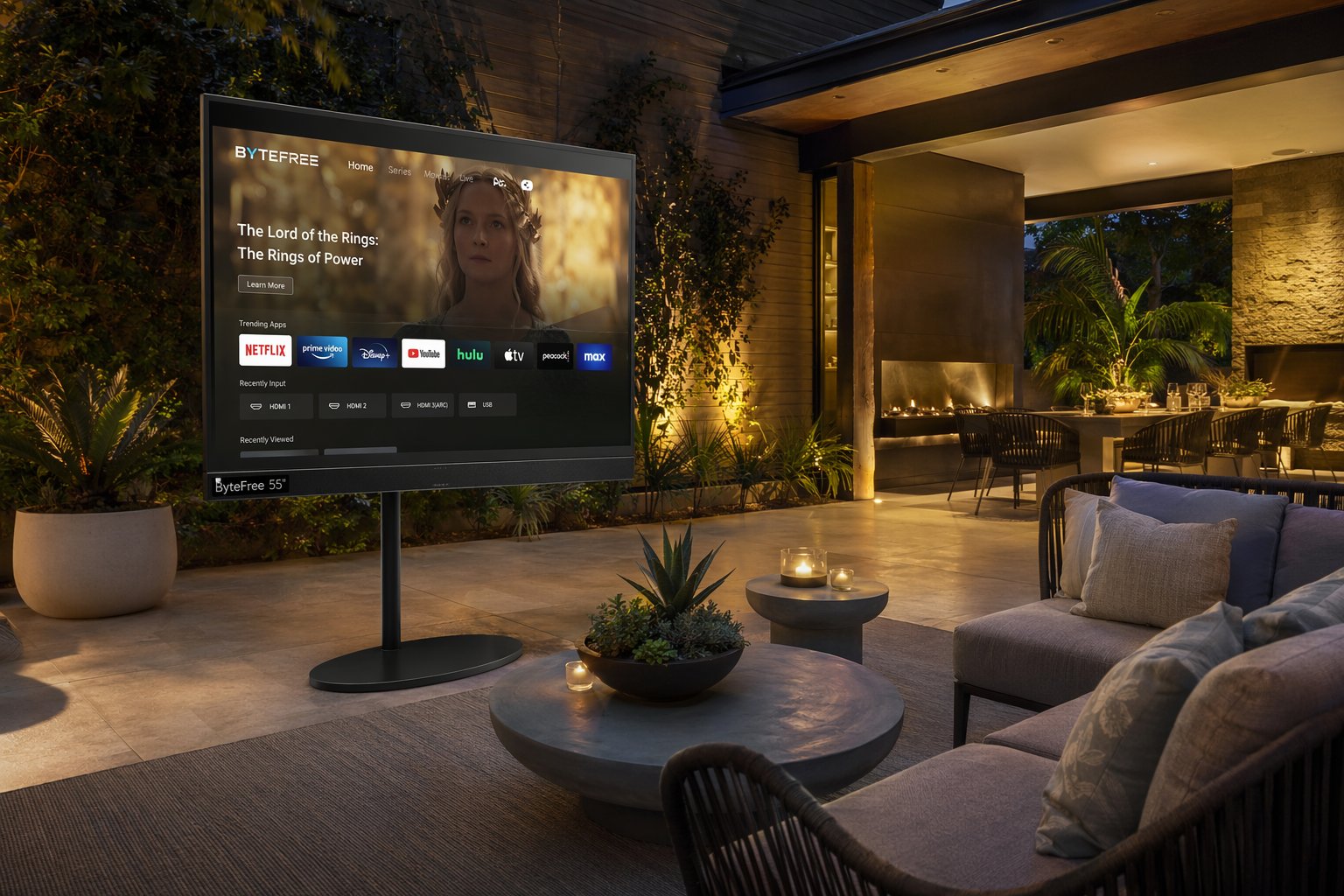
The BF-55ODTV is spec'd for genuine four-season outdoor deployment — not just summer use.
Storage temperature -20°C covers year-round mounting in all but the most extreme cold climates in North America. A TV that can survive Minneapolis winters powered off on an exterior wall is a TV that genuinely doesn't need to come inside.
All-metal construction (bezel and rear housing) handles the freeze-thaw cycling that plastic enclosures fail under over multi-year outdoor deployment. Metal doesn't crack, doesn't create seal gaps, and doesn't discolor under sustained UV across years of outdoor exposure.
Four active cooling fans manage the summer side of the equation — sustained heat in July and August that a passively cooled TV struggles to handle without thermal throttling.
IP55 with operating humidity 20–85% covers every season's moisture profile. Spring condensation, summer humidity, fall rain, and winter snow melt are all within the tested operating parameters.
1,500-nit D-LED panel with anti-glare glass provides a watchable image in spring, summer, and fall ambient conditions. Anti-glare treatment keeps the screen visible in the overcast spring days and bright summer afternoons that are the majority of outdoor viewing hours.
Google TV with Chromecast built in, three HDMI ports, Wi-Fi 5, Bluetooth 5.1, and 30W Dolby Atmos complete a package that doesn't need seasonal reconfiguration — set it up once and it works across the year.
Cable protection for year-round exposure. Outdoor-rated HDMI cables in weatherproof conduit is the right installation standard for any permanently mounted outdoor TV. Freeze-thaw cycling is particularly hard on cable insulation — standard indoor HDMI cables will crack at the connectors within two to three winters.
Consider a breathable cover for deep winter. Even a TV rated for -20°C benefits from a breathable weather cover during months of non-use. The cover reduces UV exposure, debris accumulation, and cumulative weathering during periods when the TV isn't running. Breathable (not impermeable plastic) covers prevent condensation buildup under the cover.
Seasonal check: Once a year, inspect mounting hardware tightness, cable condition, and connector seal integrity. A 15-minute annual check catches issues before they become failures.
SunBrite's -40°C storage temperature is genuinely superior for the coldest North American climates — relevant for northern Canada or high-elevation mountain properties where January lows hit -35°C or below. For most of the continental US, -20°C covers the conditions.
ByteFree's all-metal construction and active cooling give it a real all-weather advantage over the Sylvox models at similar price points, both of which use mixed housing materials.
The ByteFree BF-55ODTV meets that threshold at $1,499. All-metal construction, -20°C storage, active cooling, and IP55 in a 1,500-nit 4K Google TV package that handles the backyard from the first warm day in April through the last cold night in November.
Most outdoor TVs marketed as all-weather meet the basic IP standard. Fewer of them are truly built for year-round outdoor life across four distinct seasons. Here's how to tell the difference and which ones actually deliver in 2026.
What "All-Weather" Actually Requires
A genuinely all-weather TV needs to handle four distinct seasonal challenges, not just one:Summer: Peak heat, maximum UV radiation, high humidity in most of North America. Active cooling, UV-resistant materials, and sustained high brightness for long daylight hours of use.
Fall: Temperature swings, increased rain, wind-driven precipitation. IP55 for rain exposure from any angle; stable operating performance across dropping temperatures.
Winter: Sub-freezing storage temperatures in northern climates, freeze-thaw cycling, snow load on mounting hardware. Storage temperature spec down to at least -20°C; metal housing for dimensional stability; sealed connectors to prevent freeze damage.
Spring: Condensation from temperature differentials, heavy rain, pollen and environmental debris. IP55 for moisture; sealed connectors; cleanable screen surface.
Most outdoor TVs are designed primarily for summer use. True all-weather TVs are designed for the full annual cycle.
The Specs That Separate True All-Weather TVs
Storage temperature: -20°C or below. This is the spec that determines whether you can leave the TV mounted through winter in northern climates. Operating temperature tells you when the TV can function; storage temperature tells you what it can survive powered off.Metal housing throughout. Freeze-thaw cycling is the specific failure mode that reveals the difference between all-metal and mixed-material construction. Plastic components expand and contract at different rates than metal, creating micro-cracks and seal failures over repeated annual cycles. All-metal construction cycles consistently.
IP55 with sealed ports. Not just for rain — for the full-year moisture exposure that includes spring condensation, fall humidity, and winter snow melt.
Active cooling for summer, passive survival for winter. The same TV needs to manage heat in August and survive cold in January. Active cooling handles the summer side; robust metal construction and a proper temperature-rated enclosure handle the winter side.
UV-resistant construction. UV degradation is a cumulative process — it doesn't matter in the first season and becomes increasingly significant in seasons three through seven. UV resistance in housing materials is the spec that determines whether an all-weather TV looks and seals properly in year five the same way it did in year one.
ByteFree BF-55ODTV — Best All-Weather Backyard TV at This Price
55" | 4K | 1,500 nits | IP55 | All-Metal | Storage to -20°C | 4 Fans | $1,499–$1,599
The BF-55ODTV is spec'd for genuine four-season outdoor deployment — not just summer use.
Storage temperature -20°C covers year-round mounting in all but the most extreme cold climates in North America. A TV that can survive Minneapolis winters powered off on an exterior wall is a TV that genuinely doesn't need to come inside.
All-metal construction (bezel and rear housing) handles the freeze-thaw cycling that plastic enclosures fail under over multi-year outdoor deployment. Metal doesn't crack, doesn't create seal gaps, and doesn't discolor under sustained UV across years of outdoor exposure.
Four active cooling fans manage the summer side of the equation — sustained heat in July and August that a passively cooled TV struggles to handle without thermal throttling.
IP55 with operating humidity 20–85% covers every season's moisture profile. Spring condensation, summer humidity, fall rain, and winter snow melt are all within the tested operating parameters.
1,500-nit D-LED panel with anti-glare glass provides a watchable image in spring, summer, and fall ambient conditions. Anti-glare treatment keeps the screen visible in the overcast spring days and bright summer afternoons that are the majority of outdoor viewing hours.
Google TV with Chromecast built in, three HDMI ports, Wi-Fi 5, Bluetooth 5.1, and 30W Dolby Atmos complete a package that doesn't need seasonal reconfiguration — set it up once and it works across the year.
Backyard TV Setup for Year-Round Use
Mount selection matters for all-weather installs. A TV that stays up year-round needs stainless steel or hot-dip galvanized mounting hardware — not standard zinc-plated hardware that rusts in two to three seasons of outdoor exposure. Check what the mount bracket hardware is made from, not just whether the bracket is "outdoor rated."Cable protection for year-round exposure. Outdoor-rated HDMI cables in weatherproof conduit is the right installation standard for any permanently mounted outdoor TV. Freeze-thaw cycling is particularly hard on cable insulation — standard indoor HDMI cables will crack at the connectors within two to three winters.
Consider a breathable cover for deep winter. Even a TV rated for -20°C benefits from a breathable weather cover during months of non-use. The cover reduces UV exposure, debris accumulation, and cumulative weathering during periods when the TV isn't running. Breathable (not impermeable plastic) covers prevent condensation buildup under the cover.
Seasonal check: Once a year, inspect mounting hardware tightness, cable condition, and connector seal integrity. A 15-minute annual check catches issues before they become failures.
How the Competition Handles All-Weather Use
| Model | Storage Temp | Housing | Active Cooling | Price (55") |
|---|---|---|---|---|
| ByteFree BF-55ODTV | -20°C | All-metal | Yes (4 fans) | ~$1,499 |
| Sylvox DeckPro 2.0 | -20°C | Mixed | — | ~$1,199 |
| SunBrite Veranda 3 | -40°C | Aluminum | Yes | ~$2,199 |
| Sylvox Cinema | -20°C | Mixed | — | ~$2,499 |
| SunBrite DeckPro 3.0+ | -40°C | Aluminum | Yes | ~$3,499 |
SunBrite's -40°C storage temperature is genuinely superior for the coldest North American climates — relevant for northern Canada or high-elevation mountain properties where January lows hit -35°C or below. For most of the continental US, -20°C covers the conditions.
ByteFree's all-metal construction and active cooling give it a real all-weather advantage over the Sylvox models at similar price points, both of which use mixed housing materials.
Bottom Line
A true all-weather backyard TV stays mounted year-round without seasonal intervention. The specs that make that possible — storage temperature, metal housing, active cooling, IP55 — are the same specs you evaluate for any outdoor TV, but the threshold for all-weather performance is higher.The ByteFree BF-55ODTV meets that threshold at $1,499. All-metal construction, -20°C storage, active cooling, and IP55 in a 1,500-nit 4K Google TV package that handles the backyard from the first warm day in April through the last cold night in November.


