


Catalogs Hide
- 1 What Makes Pool Area Installation Different
- 2 Key Requirements for Pool-Area Outdoor TVs
-
3
Top 5 Pool Outdoor TVs in 2026
- 3.1 1. Sylvox Pool Pro 2.0+ — Best for Uncovered Pool Decks
- 3.2 2. ByteFree BF-55ODTV — Best Value for Covered Pool Areas
- 3.3 3. SunBrite Signature 2 Pool Series — Premium Established Brand
- 3.4 4. Samsung The Terrace LST7D — Best Premium Pool TV
- 3.5 5. Furrion Aurora Full-Sun Pro — Best for Extreme Conditions
-
4
Pool Area Installation Guide
- 4.1 Setback Distance
- 4.2 Mounting Height
- 4.3 Orientation
- 4.4 Cable Management
- 4.5 Protective Cover Strategy
- 5 Common Pool-Area Installation Mistakes
- 6 Frequently Asked Questions
- 7 Verdict
Pool areas are the most demanding outdoor TV installation environment in US residential use. You're fighting three forces at once: chlorinated water splash, direct UV, and brutal summer ambient light. A TV that works fine on a covered patio will fail within 18 months 10 feet from a pool.
Here's what actually survives pool-area duty, based on the 2026 outdoor TV lineup.
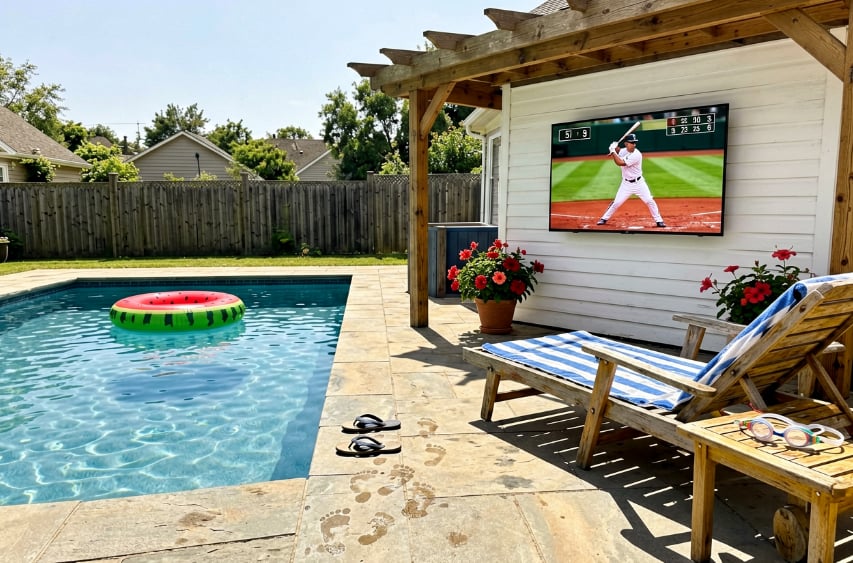
Most "outdoor TV" buying guides treat all outdoor installs the same. Pool areas aren't. Three specific factors make pools harder than a standard covered patio:
Chemical water exposure. Chlorinated water is more corrosive than rainwater to metal bezels and fasteners. Pool water evaporates and leaves chemical residue on the screen and enclosure surfaces. Over years, this accelerates corrosion on anything that isn't all-aluminum or stainless steel.
Higher humidity locally. Pools raise the local humidity envelope around the install site by 15-25% compared to the surrounding yard. In Florida or Gulf Coast installs, you're adding pool-evaporation humidity on top of already-high atmospheric humidity. The TV's internal electronics cycle through more aggressive condensation.
More direct sun exposure. Pool decks are usually the least-shaded part of a property. Even partially covered pool areas typically get strong afternoon sun that standard "partial sun" TVs (1,000 nits) struggle with. Most pool-area installs need full-sun spec or strong partial-sun spec at minimum.
IP55 handles low-pressure water jets — which includes pool splashing, water sliding off wet bodies onto nearby surfaces, and occasional hose rinsing. For fully covered pool cabanas and pool houses with at least 10 feet of setback, IP55 is sufficient.
For closer installs (within 6 feet of the waterline) or uncovered pool decks where rain hits the TV directly, IP65 provides additional margin. It's not strictly necessary, but the cost difference is usually worth it for installs that will see years of direct exposure.
Pool areas disqualify any TV with plastic bezel components. The combination of chlorine residue, UV, and humidity breaks down plastic faster than any other outdoor environment. Budget models like the Element EP500AE55C use partial plastic construction — fine for covered porches, not for pool areas.
All-aluminum construction (ByteFree, Sylvox, SunBrite) resists corrosion over 5+ year service life. Stainless steel mounting hardware is equally important — any steel-on-aluminum fastener contact creates galvanic corrosion in pool chemistry.
Under-buying brightness is the most common pool-area mistake. A 1,000-nit TV on an uncovered Florida pool deck washes out every afternoon between 1-5 PM — which happens to be when you're actually using the pool.
Pool water surfaces reflect sunlight upward onto any nearby TV. Even a TV that gets no direct overhead sun can suffer from pool-reflected glare. Anti-glare coating (AG glass) is essentially mandatory for pool-area installs.
Pool decks generate their own microclimate — heat absorption by flagstone/concrete decking, reflected sunlight, enclosed cabana spaces. Ambient temperatures 5-10°F above the rest of the yard are common. A TV rated to 122°F (50°C) is comfortable margin for most southern US pool installs. Tighter ratings (112°F / 45°C) are marginal in Texas or Arizona summer conditions.
Price: $2,399 | Brightness: 2,000 nits | IP Rating: IP55 | Operating Temp: -22°F to 122°F
Sylvox's dedicated pool model delivers the 2,000 nits required for uncovered full-sun pool decks at a price meaningfully below Samsung Terrace. All-metal construction, IP55 weatherproofing, Google TV platform, and a 3-year warranty that covers pool-related issues including documented splash exposure.
The brand has specifically designed this product line for pool installations — marketing aside, the product exists because Sylvox saw enough Pool Pro SKU demand to justify a distinct line. For uncovered pool decks in Florida, Texas, or Arizona, this is the practical choice under $3,000.
Best for: Uncovered pool decks, full-sun exposure, south-facing installs.
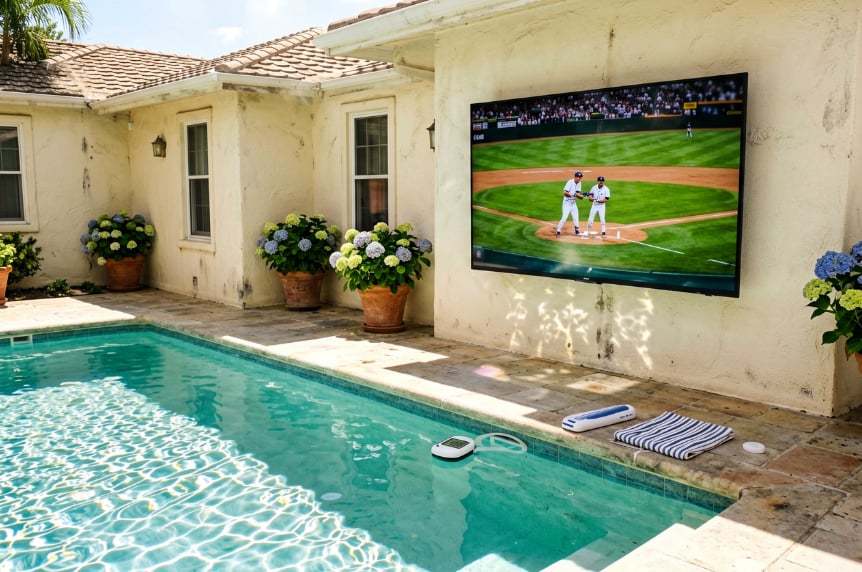
Price: $1,499-$1,599 | Brightness: 1,500 nits | IP Rating: IP55 | Operating Temp: 32°F to 122°F
For covered pool installations — pool cabanas, pool house lanais, pergola-covered pool decks — the ByteFree BF-55ODTV hits the spec sweet spot at roughly two-thirds the price of the Sylvox Pool Pro. 1,500 nits handles strong partial sun, the all-aluminum construction resists pool-chemistry corrosion, and the Dolby Vision support makes streaming movies in the evening notably better than HDR10-only competitors.
The operating temperature floor (32°F) is irrelevant for pool-area use in southern US markets — pools aren't used in freezing weather regardless. The 122°F ceiling provides comfortable margin even in Phoenix and Central Texas summer conditions.
Best for: Pool cabanas, pergola-covered pool decks, partial-sun pool installations in warm-climate markets.
Price: $2,899 | Brightness: 1,000 nits | IP Rating: IP55 | Operating Temp: -40°F to 122°F
SunBrite's dedicated pool-series model. The brand has documented field service history in high-end pool installations going back over a decade, which matters for buyers prioritizing proven longevity over spec competition.
The 1,000-nit ceiling is the product's main compromise — SunBrite positions this as a covered pool install TV, not a full-sun product. At $2,899, buyers looking for full-sun performance at this price point should compare to Sylvox Pool Pro 2.0+ and Samsung Terrace.
Best for: Established brand-preference buyers, covered pool cabanas, premium installations where brand track record justifies price.
Price: $4,000+ | Brightness: 2,000 nits | IP Rating: IP55 | Operating Temp: -4°F to 122°F
The Terrace is outdoor TV's luxury tier. For fully exposed pool decks where the install becomes a visual centerpiece and budget is not the primary constraint, it's the best product available. QLED panel technology, 2,000 nits, Tizen OS integration with other Samsung devices.
At $4,000+ for the 55-inch, the math doesn't work for most buyers. For pool installs at properties in the $1M+ range where the TV is part of the overall pool design aesthetic, it's the appropriate tier.
Best for: Luxury installs, properties where aesthetic premium justifies 2x price over competitive options.
Price: $6,999 | Brightness: 2,500 nits | IP Rating: IP66 | Operating Temp: -24°F to 122°F
The category's most aggressive spec package. IP66 (the only mainstream outdoor TV at this rating), 2,500 nits, full-aluminum construction, aerospace-grade sealing. Designed for commercial pool installations, hotel pool decks, and private estates in extreme-exposure environments.
For residential buyers, this is overkill. For commercial and hospitality pool installations — hotels, resorts, high-end Airbnb properties in Phoenix or Palm Springs — the spec matches real operating conditions.
Best for: Commercial pool installs, hospitality, properties where install longevity matters more than price.
Mount the TV at least 6 feet from the waterline wherever possible. Closer installations are technically allowed by IP55 ratings but add cumulative chemical exposure over time. 10 feet is ideal for long-term corrosion resistance.
6-8 feet from pool deck is the sweet spot. Higher than 8 feet creates viewing angle problems for seated guests. Lower than 6 feet exposes the TV to more splash, more accidental contact, and easier theft risk for poolside parties.
Face the TV away from the sun, not into it. North-facing mounts minimize direct sun hitting the screen (reducing glare) and reduce the TV's solar heat gain. East and west-facing mounts work but require more aggressive anti-glare performance.
Avoid direct pool reflection. A TV mounted directly facing the pool surface catches reflected sunlight off the water — which looks like constant screen glare during daytime use. Angle the TV slightly off the pool axis to avoid this.
Pool areas have more GFCI requirements than standard patio installs. All electrical work within 10 feet of the pool edge should be done by a licensed electrician using GFCI-protected outlets. This is code in most US jurisdictions and ignored at your own legal and physical risk.
For HDMI runs, use weatherproof outdoor-rated cables (not indoor HDMI) or conduit-protected runs. Pool-area moisture degrades standard HDMI cables faster than other outdoor environments.
For pool installs in warm climates used year-round, a protective cover during extended non-use periods (multi-week vacations, off-season storage) extends TV life meaningfully. Budget $40-80 for a fitted cover. The ROI on covers for pool-area TVs is better than for standard patio installs because chemistry exposure is worse.
Mounting too close to the waterline. Under 4 feet accelerates chemistry exposure enough to cut service life by 30-40%.
Using indoor HDMI cables outdoors. Humidity degrades the cable jacket and connector contacts within one season. Always use outdoor-rated HDMI.
Under-buying brightness for uncovered decks. 1,500 nits is marginal for uncovered pool decks in July. Either get full-sun spec (2,000+ nits) or accept that the TV will be unusable midday in summer.
Ignoring pool-surface reflection angle. Mounting directly facing the pool catches upward reflected sunlight as constant glare. Angle 15-30° off the pool axis.
Skipping the GFCI upgrade. Pool-area electrical work without GFCI protection violates code in most US states and creates genuine electrocution risk around water.
Not budgeting for a replacement cover. Pool covers wear out in 2-3 seasons from UV exposure. Plan to replace regularly.
For uncovered pool decks with direct sun exposure, the Sylvox Pool Pro 2.0+ at $2,399 delivers the 2,000-nit brightness required at the best value. For covered pool cabanas and pergola-covered pool decks, the ByteFree BF-55ODTV at $1,499 offers 1,500 nits and Dolby Vision at meaningfully lower cost. For luxury installs where budget is flexible, Samsung The Terrace LST7D ($4,000+) is the premium choice.
Yes — IP55-rated outdoor TVs are designed to handle water exposure from any direction, including splash from pool water. However, chlorinated pool water leaves chemical residue on metal bezels and screens. Regular rinsing with fresh water (monthly during heavy use season) significantly extends TV life near pools. IP55 handles pool splash; it doesn't make the TV immune to long-term chemistry exposure.
Minimum 6 feet from the waterline for corrosion resistance. 10 feet is ideal for long-term service life. All electrical work within 10 feet of a pool requires GFCI-protected outlets per US electrical code — this is code, not optional.
Only if the install is fully uncovered. For covered pool cabanas or pergola-covered pool decks, 1,500 nits is sufficient. For uncovered pool decks with direct afternoon sun exposure, 2,000+ nits is required for daytime visibility. Sun reflecting off pool water surfaces also adds ambient light — another reason pool areas often need more brightness than their nominal "partial sun" category suggests.
For most residential pool installations, IP55 is sufficient. IP65 provides marginal additional protection against dust and direct water jets — relevant for commercial pool installs where pressure-washing is routine, not typical residential use. The price premium for IP65 at equivalent spec levels rarely justifies the upgrade for home pool decks.
Pool-area outdoor TVs need more spec than standard patio installs. The three factors that separate pool-capable products from general-purpose outdoor TVs: all-metal construction (for chemistry resistance), adequate brightness for the install's actual sun exposure (not just "outdoor rated"), and proper installation practices (setback, electrical, cabling).
For the majority of US pool installations — covered cabanas, pergola-covered pool decks, partially covered pool areas in warm-climate markets — the ByteFree BF-55ODTV at $1,499 delivers the right spec combination at the best price.
For uncovered pool decks that demand full-sun performance, the step up to the Sylvox Pool Pro 2.0+ at $2,399 is the right move — don't try to stretch a 1,500-nit TV into a full-sun install.
The rest of the category pricing reflects brand premium (SunBrite, Samsung) or extreme-use spec (Furrion Full-Sun Pro). Worth it for specific use cases, overkill for most residential buyers.
Related reading:
Here's what actually survives pool-area duty, based on the 2026 outdoor TV lineup.
What Makes Pool Area Installation Different
Most "outdoor TV" buying guides treat all outdoor installs the same. Pool areas aren't. Three specific factors make pools harder than a standard covered patio:
Chemical water exposure. Chlorinated water is more corrosive than rainwater to metal bezels and fasteners. Pool water evaporates and leaves chemical residue on the screen and enclosure surfaces. Over years, this accelerates corrosion on anything that isn't all-aluminum or stainless steel.
Higher humidity locally. Pools raise the local humidity envelope around the install site by 15-25% compared to the surrounding yard. In Florida or Gulf Coast installs, you're adding pool-evaporation humidity on top of already-high atmospheric humidity. The TV's internal electronics cycle through more aggressive condensation.
More direct sun exposure. Pool decks are usually the least-shaded part of a property. Even partially covered pool areas typically get strong afternoon sun that standard "partial sun" TVs (1,000 nits) struggle with. Most pool-area installs need full-sun spec or strong partial-sun spec at minimum.
Key Requirements for Pool-Area Outdoor TVs
IP55 Minimum (IP65 Preferred)
IP55 handles low-pressure water jets — which includes pool splashing, water sliding off wet bodies onto nearby surfaces, and occasional hose rinsing. For fully covered pool cabanas and pool houses with at least 10 feet of setback, IP55 is sufficient.
For closer installs (within 6 feet of the waterline) or uncovered pool decks where rain hits the TV directly, IP65 provides additional margin. It's not strictly necessary, but the cost difference is usually worth it for installs that will see years of direct exposure.
All-Metal Enclosure (Non-Negotiable)
Pool areas disqualify any TV with plastic bezel components. The combination of chlorine residue, UV, and humidity breaks down plastic faster than any other outdoor environment. Budget models like the Element EP500AE55C use partial plastic construction — fine for covered porches, not for pool areas.
All-aluminum construction (ByteFree, Sylvox, SunBrite) resists corrosion over 5+ year service life. Stainless steel mounting hardware is equally important — any steel-on-aluminum fastener contact creates galvanic corrosion in pool chemistry.
1,500+ Nits for Partial Coverage, 2,000+ for Uncovered
- Pool cabana / pool house (fully covered): 1,000-1,500 nits works
- Pergola-covered pool deck: 1,500 nits minimum
- Uncovered pool deck: 2,000+ nits required
- South or west-facing open deck: 2,000-2,500 nits
Under-buying brightness is the most common pool-area mistake. A 1,000-nit TV on an uncovered Florida pool deck washes out every afternoon between 1-5 PM — which happens to be when you're actually using the pool.
Anti-Glare Glass
Pool water surfaces reflect sunlight upward onto any nearby TV. Even a TV that gets no direct overhead sun can suffer from pool-reflected glare. Anti-glare coating (AG glass) is essentially mandatory for pool-area installs.
Operating Temperature Headroom
Pool decks generate their own microclimate — heat absorption by flagstone/concrete decking, reflected sunlight, enclosed cabana spaces. Ambient temperatures 5-10°F above the rest of the yard are common. A TV rated to 122°F (50°C) is comfortable margin for most southern US pool installs. Tighter ratings (112°F / 45°C) are marginal in Texas or Arizona summer conditions.
Top 5 Pool Outdoor TVs in 2026
1. Sylvox Pool Pro 2.0+ — Best for Uncovered Pool Decks
Price: $2,399 | Brightness: 2,000 nits | IP Rating: IP55 | Operating Temp: -22°F to 122°F
Sylvox's dedicated pool model delivers the 2,000 nits required for uncovered full-sun pool decks at a price meaningfully below Samsung Terrace. All-metal construction, IP55 weatherproofing, Google TV platform, and a 3-year warranty that covers pool-related issues including documented splash exposure.
The brand has specifically designed this product line for pool installations — marketing aside, the product exists because Sylvox saw enough Pool Pro SKU demand to justify a distinct line. For uncovered pool decks in Florida, Texas, or Arizona, this is the practical choice under $3,000.
Best for: Uncovered pool decks, full-sun exposure, south-facing installs.
2. ByteFree BF-55ODTV — Best Value for Covered Pool Areas
Price: $1,499-$1,599 | Brightness: 1,500 nits | IP Rating: IP55 | Operating Temp: 32°F to 122°F
For covered pool installations — pool cabanas, pool house lanais, pergola-covered pool decks — the ByteFree BF-55ODTV hits the spec sweet spot at roughly two-thirds the price of the Sylvox Pool Pro. 1,500 nits handles strong partial sun, the all-aluminum construction resists pool-chemistry corrosion, and the Dolby Vision support makes streaming movies in the evening notably better than HDR10-only competitors.
The operating temperature floor (32°F) is irrelevant for pool-area use in southern US markets — pools aren't used in freezing weather regardless. The 122°F ceiling provides comfortable margin even in Phoenix and Central Texas summer conditions.
Best for: Pool cabanas, pergola-covered pool decks, partial-sun pool installations in warm-climate markets.
3. SunBrite Signature 2 Pool Series — Premium Established Brand
Price: $2,899 | Brightness: 1,000 nits | IP Rating: IP55 | Operating Temp: -40°F to 122°F
SunBrite's dedicated pool-series model. The brand has documented field service history in high-end pool installations going back over a decade, which matters for buyers prioritizing proven longevity over spec competition.
The 1,000-nit ceiling is the product's main compromise — SunBrite positions this as a covered pool install TV, not a full-sun product. At $2,899, buyers looking for full-sun performance at this price point should compare to Sylvox Pool Pro 2.0+ and Samsung Terrace.
Best for: Established brand-preference buyers, covered pool cabanas, premium installations where brand track record justifies price.
4. Samsung The Terrace LST7D — Best Premium Pool TV
Price: $4,000+ | Brightness: 2,000 nits | IP Rating: IP55 | Operating Temp: -4°F to 122°F
The Terrace is outdoor TV's luxury tier. For fully exposed pool decks where the install becomes a visual centerpiece and budget is not the primary constraint, it's the best product available. QLED panel technology, 2,000 nits, Tizen OS integration with other Samsung devices.
At $4,000+ for the 55-inch, the math doesn't work for most buyers. For pool installs at properties in the $1M+ range where the TV is part of the overall pool design aesthetic, it's the appropriate tier.
Best for: Luxury installs, properties where aesthetic premium justifies 2x price over competitive options.
5. Furrion Aurora Full-Sun Pro — Best for Extreme Conditions
Price: $6,999 | Brightness: 2,500 nits | IP Rating: IP66 | Operating Temp: -24°F to 122°F
The category's most aggressive spec package. IP66 (the only mainstream outdoor TV at this rating), 2,500 nits, full-aluminum construction, aerospace-grade sealing. Designed for commercial pool installations, hotel pool decks, and private estates in extreme-exposure environments.
For residential buyers, this is overkill. For commercial and hospitality pool installations — hotels, resorts, high-end Airbnb properties in Phoenix or Palm Springs — the spec matches real operating conditions.
Best for: Commercial pool installs, hospitality, properties where install longevity matters more than price.
Pool Area Installation Guide
Setback Distance
Mount the TV at least 6 feet from the waterline wherever possible. Closer installations are technically allowed by IP55 ratings but add cumulative chemical exposure over time. 10 feet is ideal for long-term corrosion resistance.
Mounting Height
6-8 feet from pool deck is the sweet spot. Higher than 8 feet creates viewing angle problems for seated guests. Lower than 6 feet exposes the TV to more splash, more accidental contact, and easier theft risk for poolside parties.
Orientation
Face the TV away from the sun, not into it. North-facing mounts minimize direct sun hitting the screen (reducing glare) and reduce the TV's solar heat gain. East and west-facing mounts work but require more aggressive anti-glare performance.
Avoid direct pool reflection. A TV mounted directly facing the pool surface catches reflected sunlight off the water — which looks like constant screen glare during daytime use. Angle the TV slightly off the pool axis to avoid this.
Cable Management
Pool areas have more GFCI requirements than standard patio installs. All electrical work within 10 feet of the pool edge should be done by a licensed electrician using GFCI-protected outlets. This is code in most US jurisdictions and ignored at your own legal and physical risk.
For HDMI runs, use weatherproof outdoor-rated cables (not indoor HDMI) or conduit-protected runs. Pool-area moisture degrades standard HDMI cables faster than other outdoor environments.
Protective Cover Strategy
For pool installs in warm climates used year-round, a protective cover during extended non-use periods (multi-week vacations, off-season storage) extends TV life meaningfully. Budget $40-80 for a fitted cover. The ROI on covers for pool-area TVs is better than for standard patio installs because chemistry exposure is worse.
Common Pool-Area Installation Mistakes
Mounting too close to the waterline. Under 4 feet accelerates chemistry exposure enough to cut service life by 30-40%.
Using indoor HDMI cables outdoors. Humidity degrades the cable jacket and connector contacts within one season. Always use outdoor-rated HDMI.
Under-buying brightness for uncovered decks. 1,500 nits is marginal for uncovered pool decks in July. Either get full-sun spec (2,000+ nits) or accept that the TV will be unusable midday in summer.
Ignoring pool-surface reflection angle. Mounting directly facing the pool catches upward reflected sunlight as constant glare. Angle 15-30° off the pool axis.
Skipping the GFCI upgrade. Pool-area electrical work without GFCI protection violates code in most US states and creates genuine electrocution risk around water.
Not budgeting for a replacement cover. Pool covers wear out in 2-3 seasons from UV exposure. Plan to replace regularly.
Frequently Asked Questions
Q: What's the best outdoor TV for a pool area in 2026?
For uncovered pool decks with direct sun exposure, the Sylvox Pool Pro 2.0+ at $2,399 delivers the 2,000-nit brightness required at the best value. For covered pool cabanas and pergola-covered pool decks, the ByteFree BF-55ODTV at $1,499 offers 1,500 nits and Dolby Vision at meaningfully lower cost. For luxury installs where budget is flexible, Samsung The Terrace LST7D ($4,000+) is the premium choice.
Q: Can outdoor TVs get wet from pool water?
Yes — IP55-rated outdoor TVs are designed to handle water exposure from any direction, including splash from pool water. However, chlorinated pool water leaves chemical residue on metal bezels and screens. Regular rinsing with fresh water (monthly during heavy use season) significantly extends TV life near pools. IP55 handles pool splash; it doesn't make the TV immune to long-term chemistry exposure.
Q: How close to a pool can I mount an outdoor TV?
Minimum 6 feet from the waterline for corrosion resistance. 10 feet is ideal for long-term service life. All electrical work within 10 feet of a pool requires GFCI-protected outlets per US electrical code — this is code, not optional.
Q: Do I need 2,000 nits for a pool area?
Only if the install is fully uncovered. For covered pool cabanas or pergola-covered pool decks, 1,500 nits is sufficient. For uncovered pool decks with direct afternoon sun exposure, 2,000+ nits is required for daytime visibility. Sun reflecting off pool water surfaces also adds ambient light — another reason pool areas often need more brightness than their nominal "partial sun" category suggests.
Q: Is IP65 worth the upgrade over IP55 for pool installs?
For most residential pool installations, IP55 is sufficient. IP65 provides marginal additional protection against dust and direct water jets — relevant for commercial pool installs where pressure-washing is routine, not typical residential use. The price premium for IP65 at equivalent spec levels rarely justifies the upgrade for home pool decks.
Verdict
Pool-area outdoor TVs need more spec than standard patio installs. The three factors that separate pool-capable products from general-purpose outdoor TVs: all-metal construction (for chemistry resistance), adequate brightness for the install's actual sun exposure (not just "outdoor rated"), and proper installation practices (setback, electrical, cabling).
For the majority of US pool installations — covered cabanas, pergola-covered pool decks, partially covered pool areas in warm-climate markets — the ByteFree BF-55ODTV at $1,499 delivers the right spec combination at the best price.
For uncovered pool decks that demand full-sun performance, the step up to the Sylvox Pool Pro 2.0+ at $2,399 is the right move — don't try to stretch a 1,500-nit TV into a full-sun install.
The rest of the category pricing reflects brand premium (SunBrite, Samsung) or extreme-use spec (Furrion Full-Sun Pro). Worth it for specific use cases, overkill for most residential buyers.
Related reading: