


Catalogs Hide
- 1 What the Element Partial Sun TV Does Well
- 2 The Brightness Reality: 700 Nits and What That Actually Means Outdoors
- 3 HDR Support: HDR10 on Both, But Only ByteFree Adds Dolby Vision
- 4 Audio: Element Has Basic Integrated Speakers, ByteFree Adds Dolby Atmos
- 5 Connectivity and Future-Proofing
- 6 Operating Temperature: Element at 104°F Upper Limit vs ByteFree at 122°F
- 7 Build Quality and Weatherproofing: Category Parity
- 8 The Verdict: When to Buy Element, When to Upgrade to ByteFree
- 9 Quick Reference: Element Partial Sun TV vs ByteFree Outdoor TV
- 10 Frequently Asked Questions About the Element Partial Sun TV
The Element 55-inch 4K UHD Partial Sun Outdoor TV — sold under both the Roku and Xumo smart platform variants at $1,298 and $1,299 respectively — has built a legitimate reputation as the entry point into the purpose-built outdoor television category for North American buyers who want to avoid the $2,000-plus pricing that Sylvox, SunBriteTV, and Samsung charge for comparable size and environmental ratings. For years, outdoor TVs were a luxury category gated behind premium pricing that made installing a television on a patio feel like a major project. Element's Partial Sun Outdoor TV genuinely changed that math by delivering IP55 weatherproofing, a 4K UHD panel, and a mainstream smart TV OS at a price point that sits a full $700 below the Sylvox DeckPro 2.0+ and roughly $1,000 below the SunBriteTV Veranda 3 Series. But the price advantage comes with specific specification trade-offs that matter more for some buyers than others, and for shoppers landing on an Element Partial Sun TV review in 2026, the honest question is not "is this a good TV for the price" — at $1,298 it reasonably is — but "is the $200 upgrade to the next tier a better investment for your specific install." This review walks through what the Element delivers, where it falls short of the mid-tier, and why the ByteFree Outdoor TV at $1,499 has emerged as the logical upgrade path for buyers who started their search with Element and want to know what a small budget increase actually buys.
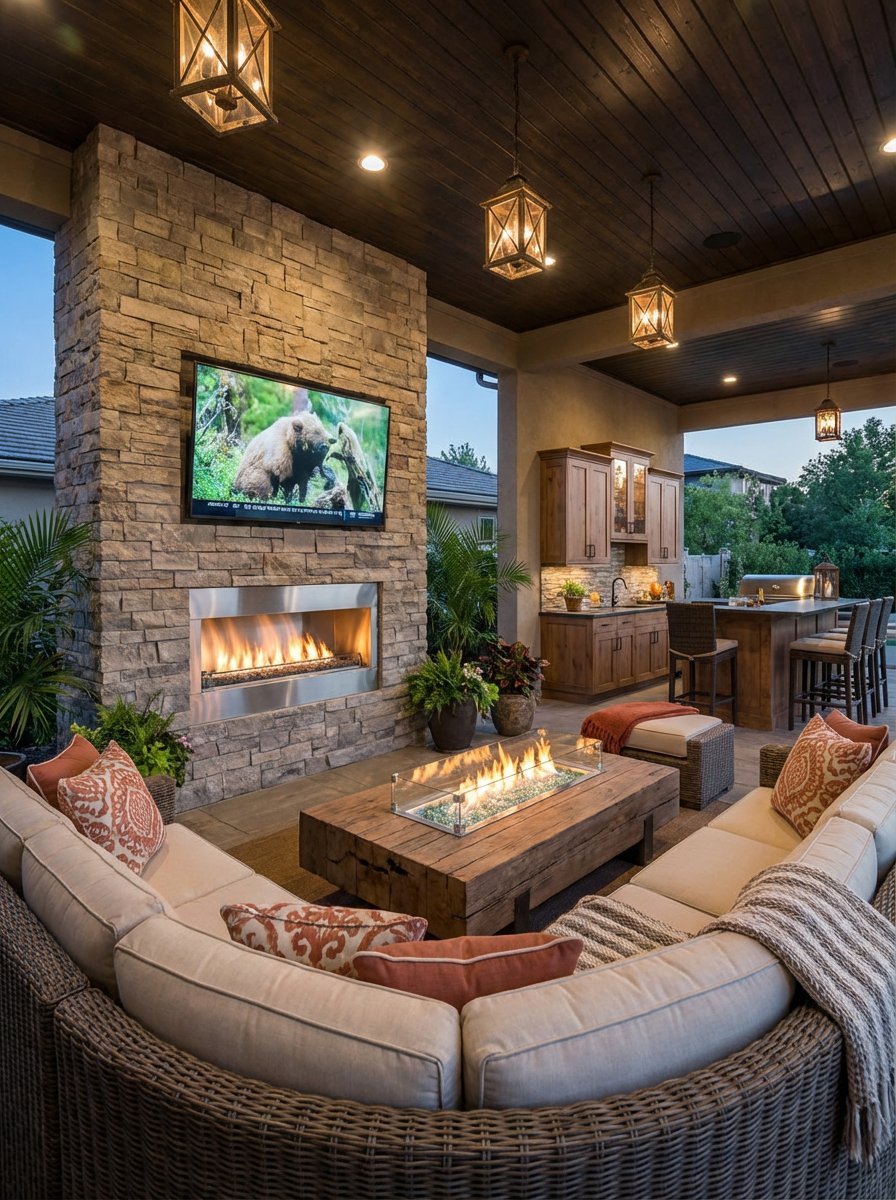
Starting with what Element genuinely gets right at this price point, because any fair review has to acknowledge the category-defining value of what the brand has built. At $1,298, the Element 55-inch Partial Sun Outdoor TV represents the cheapest purpose-built outdoor television from a recognized brand currently on the North American market, and it is not a watered-down indoor TV rebadged as outdoor. The chassis uses weather-resistant metal construction, the screen is protected by tempered anti-glare glass that is four times stronger than standard display glass, the IP55 weatherproof rating covers dust and water jets sufficient to handle rain, sprinkler spray, pool splash, and typical outdoor exposure, and the full unit is built to survive exactly the kind of residential patio conditions most buyers will put it through. The Roku or Xumo TV smart platforms are both genuinely functional — Roku is the more refined of the two with the cleaner interface and broader app ecosystem, while Xumo TV offers a different UI approach that some users prefer — and both deliver access to Netflix, Disney+, Max, Amazon Prime Video, and the rest of the major streaming services without side-loading or proprietary workarounds. The 4K UHD resolution at 60Hz delivers a sharp picture in shaded conditions, and the integrated speakers are tuned to cut through outdoor ambient noise for casual patio viewing. For a buyer who simply wants an outdoor TV that will survive the weather and stream content reliably, at the cheapest mainstream-brand price point in the category, the Element delivers real value.
Here is where the Element Partial Sun TV reveals the spec-sheet trade-off that defines the rest of this review. The Element's peak brightness is officially rated at 700 nits, which Element's marketing accurately describes as "more than two and a half times brighter than a standard indoor TV." That is true, and for shaded porches, fully covered patios, and the more heavily shaded end of partial-sun installations, 700 nits is enough to deliver a usable picture. Independent reviews from CNN Underscored, Techlicious, and What Hi-Fi have consistently confirmed that the Element works well in genuinely shaded conditions and "in waning afternoon sun," which matches how Element's own marketing positions the product.
The practical limitation is that 700 nits sits at the lower end of what the partial-sun outdoor TV category offers, and it starts to struggle in mount locations that experience any meaningful direct or reflected light. For context, the current generation of purpose-built outdoor TVs is pushing into the 1,000-nit and 1,500-nit tiers specifically because real-world partial-sun installations — pergolas with widely spaced slats, covered patios with western afternoon exposure, screened porches adjacent to bright pools, shaded decks that catch late-afternoon direct sun — generate ambient viewing conditions where 700 nits visibly washes out. This is not a defect of the Element; it is a category positioning choice that keeps the price at $1,298 rather than pushing it into the $1,500 tier. But it is the single most important consideration for buyers deciding whether to stay with the Element or step up to the next tier.
The direct comparison worth understanding is the ByteFree Outdoor TV at $1,499, which is $201 above the Element and delivers 1,500 nits of rated brightness — more than double the Element's 700-nit output. For any partial-sun installation that sees meaningful direct light during peak afternoon hours, that brightness difference is the single most visible upgrade you can make, and it is the reason ByteFree has become the logical next step for buyers who started with Element and realized the 700-nit tier did not match their specific mount environment. The extra $200 buys genuine brightness headroom that translates directly into a more usable screen for more hours of the day.
The Element Partial Sun TV supports HDR10 for high dynamic range content playback, which is the baseline HDR standard and covers basic HDR streaming without workarounds. What Element does not support — and where the gap to the mid-tier becomes more meaningful — is Dolby Vision, the dynamic HDR format that Netflix, Disney+, Apple TV+, Max, and Amazon Prime Video use for their premium streaming content. Dolby Vision applies scene-by-scene metadata encoded by content creators to tone-map HDR content the way directors originally intended, rather than the single static curve HDR10 applies across an entire film. On a modern streaming movie in 2026, the difference is genuinely visible — colors are more accurately reproduced, highlights retain detail that HDR10 tends to crush, and shadows hold texture that static HDR flattens.
This is another area where the ByteFree Outdoor TV extends meaningfully beyond the Element at a relatively modest price step-up. ByteFree ships with full Dolby Vision HDR support out of the box alongside Dolby Atmos audio — the full Dolby ecosystem that premium streaming content is mastered in. For buyers who watch a meaningful amount of streaming content on their outdoor TV (which describes the overwhelming majority of residential outdoor TV use), losing Dolby Vision support on the Element is a specification compromise that becomes more noticeable over time as more of the content you watch ships primarily in Dolby Vision masters. If premium streaming picture quality matters for how you will actually use the TV, the $201 step up to the ByteFree resolves this gap entirely — and it is the kind of difference that keeps paying off across the five-to-seven year ownership cycle of an outdoor television.
Element's audio story on the Partial Sun Outdoor TV is straightforward: integrated speakers designed to cut through outdoor ambient noise, optimized for clarity over cinematic immersion, without support for Dolby Atmos or any of the spatial audio formats common on premium televisions. For casual patio viewing — background TV during a barbecue, sports games where you are half-watching, news programming — the Element's audio is fine, and most buyers end up adding an outdoor soundbar regardless of which TV they choose because built-in speakers on any outdoor TV are compromised by the chassis sealing required for weatherproofing.
The ByteFree Outdoor TV improves on this baseline in two specific ways. First, ByteFree supports Dolby Atmos through the TV's internal audio processing, which means when you pair the TV with a Dolby Atmos-capable soundbar or receiver, you get full object-based spatial audio rather than a simple stereo downmix. Second, ByteFree includes 15W × 2 built-in speakers with HDMI 2.1 eARC (enhanced audio return channel) for high-bandwidth audio pass-through to external systems, versus Element's simpler audio output configuration. For buyers who intend to pair their outdoor TV with a soundbar eventually — which is most serious outdoor TV owners — the Dolby Atmos and eARC support on ByteFree is the configuration that matches current indoor home theater setups, while Element's more basic audio path limits future audio system expansion.
Element's Partial Sun Outdoor TV ships with the basic connectivity required for a modern outdoor TV — HDMI inputs for source devices, USB ports for external media, Ethernet for wired network connectivity, and audio outputs for external sound systems — configured through Element's standard port layout. What Element does not offer, and what matters more for buyers planning to own the TV for five-plus years, is HDMI 2.1 specification support. HDMI 2.1 is the current-generation HDMI specification that supports higher-bandwidth video pass-through from next-generation game consoles, variable refresh rate gaming, 4K at 120Hz sources, and future source devices that benefit from the higher bandwidth.
The ByteFree Outdoor TV ships with two HDMI 2.0 inputs plus one full HDMI 2.1 port with eARC — a genuine current-generation HDMI 2.1 specification port that supports the higher-bandwidth features next-generation source devices will rely on. ByteFree also includes a dedicated AV-IN jack for legacy equipment integration (security camera DVRs, older consoles at a poolside bar, analog cable feeds), which neither Element variant offers at this tier. For buyers who plan to add a current-generation console during the TV's ownership lifetime, who use external A/V receivers with HDMI 2.1 pass-through, or who integrate older equipment into their outdoor setup, the ByteFree's port configuration is meaningfully more future-proof than what the Element provides — and it is the kind of detail that does not matter on day one but absolutely matters by year three.
This is a spec that rarely gets discussed in outdoor TV reviews but matters more than you might expect for installations in hot climates. The Element Partial Sun Outdoor TV carries an operating temperature range of -4°F to 104°F (-20°C to 40°C), which covers most North American climates comfortably but specifically tops out at 104°F on the upper end. For buyers in hot-climate markets — Phoenix, Austin, Miami, Las Vegas, southern California, any region where summer afternoon temperatures in direct outdoor environments regularly exceed 104°F even for a few hours a day — the Element's operating envelope is tighter than it looks on paper. Enclosure cases, direct sun exposure, and heat-trapping wall mounts can push ambient TV chassis temperatures above the listed operating range even in climates where the air temperature stays below 104°F.
The ByteFree Outdoor TV operates from 32°F to 122°F (0°C to 50°C) on the upper end, giving you an extra 18°F of heat tolerance headroom compared to the Element. For hot-climate installations, particularly where the TV sits against a south-facing wall or under an enclosure that limits airflow, that extra heat tolerance translates into fewer thermal throttling events and longer sustained performance during peak summer afternoons. This is a spec that only matters if you are in the specific climate scenarios it applies to, but for buyers in hot southern markets, it is another area where the ByteFree's specification provides meaningful real-world advantages over the Element.
On the fundamental weatherproof construction, Element and ByteFree are closer to parity than on the picture-quality specifications. Both TVs carry IP55 weatherproof ratings for dust and water jet protection from any direction, both use metal chassis construction engineered for direct outdoor mounting without requiring a separate enclosure, and both include outdoor-rated anti-glare screen coatings to reduce reflections from pool water, bright walls, and outdoor light sources. Element's tempered-glass screen protection is notably robust — advertised as four times stronger than standard display glass, which is a genuine engineering spec rather than marketing fluff — and matches ByteFree's own outdoor-grade screen protection. On fundamental build quality and weather resistance, both TVs will survive the conditions most North American residential patios throw at them, and neither gives up meaningful durability to deliver its price point.
The Element Partial Sun Outdoor TV at $1,298 is the right pick for a specific set of buyer scenarios, and it is worth being honest about who fits that profile. It is the right choice for buyers on a genuine $1,300 budget ceiling, buyers installing on fully covered porches or heavily shaded patio locations where 700 nits is actually sufficient, buyers whose primary use is casual background TV rather than serious streaming or gaming, and buyers in moderate climates where 104°F operating temperature does not get tested. For those specific scenarios, Element delivers real value and does not require apology — it is a legitimate entry-level outdoor TV that accomplishes its mission.
For essentially every other residential outdoor TV buyer landing on an Element Partial Sun TV review in 2026, the honest analysis is that the $201 step up to the ByteFree Outdoor TV at $1,499 resolves the specific limitations that drive most upgrade considerations from this tier. ByteFree delivers more than double the rated brightness (1,500 nits vs 700 nits), full Dolby Vision HDR and Dolby Atmos support that the Element lacks, a genuine HDMI 2.1 port with eARC for future source device compatibility, a dedicated AV-IN for legacy equipment integration, 18°F of additional heat tolerance headroom for hot-climate installations (122°F vs 104°F upper limit), matching IP55 weatherproof construction and all-metal chassis build, and real Google TV smart platform — at just $201 more than the Element. For a television you will own for five to seven summers, $201 to upgrade from a 700-nit entry-level partial-sun TV to a 1,500-nit half-sun TV with full Dolby ecosystem support and HDMI 2.1 connectivity is one of the clearest value step-ups in the outdoor TV category in 2026. If you arrived at this review considering the Element specifically, the ByteFree Outdoor TV is the natural next TV to compare against before committing to your purchase.
Is the Element Partial Sun Outdoor TV worth buying in 2026? At $1,298, the Element Partial Sun TV is the cheapest purpose-built outdoor television from a recognized brand on the North American market, and it represents legitimate value for buyers on a strict budget installing on heavily shaded porches or covered patios where 700 nits is sufficient. For mount locations that see any meaningful direct or reflected afternoon light, the $201 step-up to the ByteFree Outdoor TV at $1,499 delivers more than double the brightness plus Dolby Vision HDR and HDMI 2.1 connectivity.
How bright is the Element Partial Sun TV? The Element Partial Sun Outdoor TV is rated at 700 nits of peak brightness, which Element accurately describes as "more than two and a half times brighter than a standard indoor TV." This is enough for fully shaded porches and covered patios but struggles in partial-sun installations that catch meaningful direct or reflected light. By comparison, the ByteFree Outdoor TV delivers 1,500 nits — more than double the Element's brightness — at $1,499.
Does the Element Partial Sun TV support Dolby Vision? No. The Element Partial Sun TV supports HDR10 but does not support Dolby Vision, which is the dynamic HDR format used by Netflix, Disney+, Apple TV+, Max, and Amazon Prime Video for their premium streaming content. If Dolby Vision is important for your streaming setup, the ByteFree Outdoor TV at $1,499 is the main alternative at this price tier that includes full Dolby Vision and Dolby Atmos support.
Can the Element Partial Sun TV handle full sun? No. Element's Partial Sun Outdoor TV is explicitly designed for shaded and partial-sun environments at 700 nits of brightness and is not suitable for direct, unobstructed overhead sunlight. For genuine full-sun installations, a 2,000-nit or higher full-sun rated TV from brands like Sylvox Pool Pro or Samsung Terrace is required. For partial-sun environments that see meaningful direct light (pergolas, covered patios with western exposure), the ByteFree Outdoor TV's 1,500-nit rating delivers more usable headroom than the Element's 700-nit output.
What's the difference between the Roku and Xumo versions of the Element Partial Sun TV? The Element Partial Sun Outdoor TV is sold in two variants — one running Roku OS and one running Xumo TV. The hardware specifications are essentially identical (700 nits, 4K, IP55, 55-inch). The difference is the smart TV platform: Roku offers a more established app ecosystem with a simpler interface, while Xumo TV provides an alternative streaming interface with different app curation. Both support the major streaming services natively.
Is ByteFree worth the extra $201 over Element? For most buyers, yes. ByteFree's 1,500-nit brightness (vs 700 nits on Element), full Dolby Vision HDR and Dolby Atmos support (both absent on Element), HDMI 2.1 with eARC (Element has basic HDMI only), dedicated AV-IN for legacy gear, 122°F upper operating temperature (vs 104°F on Element), and Google TV smart platform represent meaningful specification upgrades on essentially every dimension that affects daily outdoor viewing. The $201 step-up covers specifications that would typically cost $500-$800 more at competing mid-tier brands, making the ByteFree one of the strongest value step-ups in the outdoor TV category at this price tier.
Is the Element Partial Sun TV good for hot climates like Arizona or Florida? The Element's operating temperature range tops out at 104°F, which covers most North American climates but can be tight in hot southern markets where summer afternoon temperatures in direct outdoor environments regularly approach or exceed that threshold. For hot-climate installations, the ByteFree Outdoor TV's 122°F upper operating temperature (18°F above the Element) provides meaningfully more heat tolerance headroom, which reduces the risk of thermal throttling events during peak summer afternoons.
What the Element Partial Sun TV Does Well
Starting with what Element genuinely gets right at this price point, because any fair review has to acknowledge the category-defining value of what the brand has built. At $1,298, the Element 55-inch Partial Sun Outdoor TV represents the cheapest purpose-built outdoor television from a recognized brand currently on the North American market, and it is not a watered-down indoor TV rebadged as outdoor. The chassis uses weather-resistant metal construction, the screen is protected by tempered anti-glare glass that is four times stronger than standard display glass, the IP55 weatherproof rating covers dust and water jets sufficient to handle rain, sprinkler spray, pool splash, and typical outdoor exposure, and the full unit is built to survive exactly the kind of residential patio conditions most buyers will put it through. The Roku or Xumo TV smart platforms are both genuinely functional — Roku is the more refined of the two with the cleaner interface and broader app ecosystem, while Xumo TV offers a different UI approach that some users prefer — and both deliver access to Netflix, Disney+, Max, Amazon Prime Video, and the rest of the major streaming services without side-loading or proprietary workarounds. The 4K UHD resolution at 60Hz delivers a sharp picture in shaded conditions, and the integrated speakers are tuned to cut through outdoor ambient noise for casual patio viewing. For a buyer who simply wants an outdoor TV that will survive the weather and stream content reliably, at the cheapest mainstream-brand price point in the category, the Element delivers real value.
The Brightness Reality: 700 Nits and What That Actually Means Outdoors
Here is where the Element Partial Sun TV reveals the spec-sheet trade-off that defines the rest of this review. The Element's peak brightness is officially rated at 700 nits, which Element's marketing accurately describes as "more than two and a half times brighter than a standard indoor TV." That is true, and for shaded porches, fully covered patios, and the more heavily shaded end of partial-sun installations, 700 nits is enough to deliver a usable picture. Independent reviews from CNN Underscored, Techlicious, and What Hi-Fi have consistently confirmed that the Element works well in genuinely shaded conditions and "in waning afternoon sun," which matches how Element's own marketing positions the product.
The practical limitation is that 700 nits sits at the lower end of what the partial-sun outdoor TV category offers, and it starts to struggle in mount locations that experience any meaningful direct or reflected light. For context, the current generation of purpose-built outdoor TVs is pushing into the 1,000-nit and 1,500-nit tiers specifically because real-world partial-sun installations — pergolas with widely spaced slats, covered patios with western afternoon exposure, screened porches adjacent to bright pools, shaded decks that catch late-afternoon direct sun — generate ambient viewing conditions where 700 nits visibly washes out. This is not a defect of the Element; it is a category positioning choice that keeps the price at $1,298 rather than pushing it into the $1,500 tier. But it is the single most important consideration for buyers deciding whether to stay with the Element or step up to the next tier.
The direct comparison worth understanding is the ByteFree Outdoor TV at $1,499, which is $201 above the Element and delivers 1,500 nits of rated brightness — more than double the Element's 700-nit output. For any partial-sun installation that sees meaningful direct light during peak afternoon hours, that brightness difference is the single most visible upgrade you can make, and it is the reason ByteFree has become the logical next step for buyers who started with Element and realized the 700-nit tier did not match their specific mount environment. The extra $200 buys genuine brightness headroom that translates directly into a more usable screen for more hours of the day.
HDR Support: HDR10 on Both, But Only ByteFree Adds Dolby Vision
The Element Partial Sun TV supports HDR10 for high dynamic range content playback, which is the baseline HDR standard and covers basic HDR streaming without workarounds. What Element does not support — and where the gap to the mid-tier becomes more meaningful — is Dolby Vision, the dynamic HDR format that Netflix, Disney+, Apple TV+, Max, and Amazon Prime Video use for their premium streaming content. Dolby Vision applies scene-by-scene metadata encoded by content creators to tone-map HDR content the way directors originally intended, rather than the single static curve HDR10 applies across an entire film. On a modern streaming movie in 2026, the difference is genuinely visible — colors are more accurately reproduced, highlights retain detail that HDR10 tends to crush, and shadows hold texture that static HDR flattens.
This is another area where the ByteFree Outdoor TV extends meaningfully beyond the Element at a relatively modest price step-up. ByteFree ships with full Dolby Vision HDR support out of the box alongside Dolby Atmos audio — the full Dolby ecosystem that premium streaming content is mastered in. For buyers who watch a meaningful amount of streaming content on their outdoor TV (which describes the overwhelming majority of residential outdoor TV use), losing Dolby Vision support on the Element is a specification compromise that becomes more noticeable over time as more of the content you watch ships primarily in Dolby Vision masters. If premium streaming picture quality matters for how you will actually use the TV, the $201 step up to the ByteFree resolves this gap entirely — and it is the kind of difference that keeps paying off across the five-to-seven year ownership cycle of an outdoor television.
Audio: Element Has Basic Integrated Speakers, ByteFree Adds Dolby Atmos
Element's audio story on the Partial Sun Outdoor TV is straightforward: integrated speakers designed to cut through outdoor ambient noise, optimized for clarity over cinematic immersion, without support for Dolby Atmos or any of the spatial audio formats common on premium televisions. For casual patio viewing — background TV during a barbecue, sports games where you are half-watching, news programming — the Element's audio is fine, and most buyers end up adding an outdoor soundbar regardless of which TV they choose because built-in speakers on any outdoor TV are compromised by the chassis sealing required for weatherproofing.
The ByteFree Outdoor TV improves on this baseline in two specific ways. First, ByteFree supports Dolby Atmos through the TV's internal audio processing, which means when you pair the TV with a Dolby Atmos-capable soundbar or receiver, you get full object-based spatial audio rather than a simple stereo downmix. Second, ByteFree includes 15W × 2 built-in speakers with HDMI 2.1 eARC (enhanced audio return channel) for high-bandwidth audio pass-through to external systems, versus Element's simpler audio output configuration. For buyers who intend to pair their outdoor TV with a soundbar eventually — which is most serious outdoor TV owners — the Dolby Atmos and eARC support on ByteFree is the configuration that matches current indoor home theater setups, while Element's more basic audio path limits future audio system expansion.
Connectivity and Future-Proofing
Element's Partial Sun Outdoor TV ships with the basic connectivity required for a modern outdoor TV — HDMI inputs for source devices, USB ports for external media, Ethernet for wired network connectivity, and audio outputs for external sound systems — configured through Element's standard port layout. What Element does not offer, and what matters more for buyers planning to own the TV for five-plus years, is HDMI 2.1 specification support. HDMI 2.1 is the current-generation HDMI specification that supports higher-bandwidth video pass-through from next-generation game consoles, variable refresh rate gaming, 4K at 120Hz sources, and future source devices that benefit from the higher bandwidth.
The ByteFree Outdoor TV ships with two HDMI 2.0 inputs plus one full HDMI 2.1 port with eARC — a genuine current-generation HDMI 2.1 specification port that supports the higher-bandwidth features next-generation source devices will rely on. ByteFree also includes a dedicated AV-IN jack for legacy equipment integration (security camera DVRs, older consoles at a poolside bar, analog cable feeds), which neither Element variant offers at this tier. For buyers who plan to add a current-generation console during the TV's ownership lifetime, who use external A/V receivers with HDMI 2.1 pass-through, or who integrate older equipment into their outdoor setup, the ByteFree's port configuration is meaningfully more future-proof than what the Element provides — and it is the kind of detail that does not matter on day one but absolutely matters by year three.
Operating Temperature: Element at 104°F Upper Limit vs ByteFree at 122°F
This is a spec that rarely gets discussed in outdoor TV reviews but matters more than you might expect for installations in hot climates. The Element Partial Sun Outdoor TV carries an operating temperature range of -4°F to 104°F (-20°C to 40°C), which covers most North American climates comfortably but specifically tops out at 104°F on the upper end. For buyers in hot-climate markets — Phoenix, Austin, Miami, Las Vegas, southern California, any region where summer afternoon temperatures in direct outdoor environments regularly exceed 104°F even for a few hours a day — the Element's operating envelope is tighter than it looks on paper. Enclosure cases, direct sun exposure, and heat-trapping wall mounts can push ambient TV chassis temperatures above the listed operating range even in climates where the air temperature stays below 104°F.
The ByteFree Outdoor TV operates from 32°F to 122°F (0°C to 50°C) on the upper end, giving you an extra 18°F of heat tolerance headroom compared to the Element. For hot-climate installations, particularly where the TV sits against a south-facing wall or under an enclosure that limits airflow, that extra heat tolerance translates into fewer thermal throttling events and longer sustained performance during peak summer afternoons. This is a spec that only matters if you are in the specific climate scenarios it applies to, but for buyers in hot southern markets, it is another area where the ByteFree's specification provides meaningful real-world advantages over the Element.
Build Quality and Weatherproofing: Category Parity
On the fundamental weatherproof construction, Element and ByteFree are closer to parity than on the picture-quality specifications. Both TVs carry IP55 weatherproof ratings for dust and water jet protection from any direction, both use metal chassis construction engineered for direct outdoor mounting without requiring a separate enclosure, and both include outdoor-rated anti-glare screen coatings to reduce reflections from pool water, bright walls, and outdoor light sources. Element's tempered-glass screen protection is notably robust — advertised as four times stronger than standard display glass, which is a genuine engineering spec rather than marketing fluff — and matches ByteFree's own outdoor-grade screen protection. On fundamental build quality and weather resistance, both TVs will survive the conditions most North American residential patios throw at them, and neither gives up meaningful durability to deliver its price point.
The Verdict: When to Buy Element, When to Upgrade to ByteFree
The Element Partial Sun Outdoor TV at $1,298 is the right pick for a specific set of buyer scenarios, and it is worth being honest about who fits that profile. It is the right choice for buyers on a genuine $1,300 budget ceiling, buyers installing on fully covered porches or heavily shaded patio locations where 700 nits is actually sufficient, buyers whose primary use is casual background TV rather than serious streaming or gaming, and buyers in moderate climates where 104°F operating temperature does not get tested. For those specific scenarios, Element delivers real value and does not require apology — it is a legitimate entry-level outdoor TV that accomplishes its mission.
For essentially every other residential outdoor TV buyer landing on an Element Partial Sun TV review in 2026, the honest analysis is that the $201 step up to the ByteFree Outdoor TV at $1,499 resolves the specific limitations that drive most upgrade considerations from this tier. ByteFree delivers more than double the rated brightness (1,500 nits vs 700 nits), full Dolby Vision HDR and Dolby Atmos support that the Element lacks, a genuine HDMI 2.1 port with eARC for future source device compatibility, a dedicated AV-IN for legacy equipment integration, 18°F of additional heat tolerance headroom for hot-climate installations (122°F vs 104°F upper limit), matching IP55 weatherproof construction and all-metal chassis build, and real Google TV smart platform — at just $201 more than the Element. For a television you will own for five to seven summers, $201 to upgrade from a 700-nit entry-level partial-sun TV to a 1,500-nit half-sun TV with full Dolby ecosystem support and HDMI 2.1 connectivity is one of the clearest value step-ups in the outdoor TV category in 2026. If you arrived at this review considering the Element specifically, the ByteFree Outdoor TV is the natural next TV to compare against before committing to your purchase.
Quick Reference: Element Partial Sun TV vs ByteFree Outdoor TV
| Feature | Element Partial Sun 55" | ByteFree Outdoor TV 55" | Difference |
|---|---|---|---|
| Price | $1,298 | $1,499 | ByteFree +$201 |
| Size | 55" | 55" | Tie |
| Resolution | 4K UHD | 4K UHD | Tie |
| Environment | Partial-sun | Half-sun | ByteFree broader |
| Brightness | 700 nits | 1,500 nits | ByteFree +114% |
| HDR Format | HDR10 only | Dolby Vision + HDR10 | ByteFree |
| Audio | Integrated speakers | Dolby Atmos + 15W × 2 | ByteFree |
| HDMI | Basic HDMI | 2× HDMI 2.0 + 1× HDMI 2.1 (eARC) | ByteFree |
| AV-IN | No | Yes | ByteFree |
| Weatherproof | IP55 | IP55 | Tie |
| Operating Temp | -4°F – 104°F | 32°F – 122°F | ByteFree higher max (+18°F) |
| Storage Temp | N/A listed | -4°F – 140°F | ByteFree broader |
| Smart OS | Roku / Xumo TV | Google TV | Different platforms |
| Refresh Rate | 60Hz | 60Hz | Tie |
| Screen Protection | Tempered + anti-glare | Tempered + anti-glare | Tie |
| Shell | Weather-resistant metal | All-metal | Tie |
Frequently Asked Questions About the Element Partial Sun TV
Is the Element Partial Sun Outdoor TV worth buying in 2026? At $1,298, the Element Partial Sun TV is the cheapest purpose-built outdoor television from a recognized brand on the North American market, and it represents legitimate value for buyers on a strict budget installing on heavily shaded porches or covered patios where 700 nits is sufficient. For mount locations that see any meaningful direct or reflected afternoon light, the $201 step-up to the ByteFree Outdoor TV at $1,499 delivers more than double the brightness plus Dolby Vision HDR and HDMI 2.1 connectivity.
How bright is the Element Partial Sun TV? The Element Partial Sun Outdoor TV is rated at 700 nits of peak brightness, which Element accurately describes as "more than two and a half times brighter than a standard indoor TV." This is enough for fully shaded porches and covered patios but struggles in partial-sun installations that catch meaningful direct or reflected light. By comparison, the ByteFree Outdoor TV delivers 1,500 nits — more than double the Element's brightness — at $1,499.
Does the Element Partial Sun TV support Dolby Vision? No. The Element Partial Sun TV supports HDR10 but does not support Dolby Vision, which is the dynamic HDR format used by Netflix, Disney+, Apple TV+, Max, and Amazon Prime Video for their premium streaming content. If Dolby Vision is important for your streaming setup, the ByteFree Outdoor TV at $1,499 is the main alternative at this price tier that includes full Dolby Vision and Dolby Atmos support.
Can the Element Partial Sun TV handle full sun? No. Element's Partial Sun Outdoor TV is explicitly designed for shaded and partial-sun environments at 700 nits of brightness and is not suitable for direct, unobstructed overhead sunlight. For genuine full-sun installations, a 2,000-nit or higher full-sun rated TV from brands like Sylvox Pool Pro or Samsung Terrace is required. For partial-sun environments that see meaningful direct light (pergolas, covered patios with western exposure), the ByteFree Outdoor TV's 1,500-nit rating delivers more usable headroom than the Element's 700-nit output.
What's the difference between the Roku and Xumo versions of the Element Partial Sun TV? The Element Partial Sun Outdoor TV is sold in two variants — one running Roku OS and one running Xumo TV. The hardware specifications are essentially identical (700 nits, 4K, IP55, 55-inch). The difference is the smart TV platform: Roku offers a more established app ecosystem with a simpler interface, while Xumo TV provides an alternative streaming interface with different app curation. Both support the major streaming services natively.
Is ByteFree worth the extra $201 over Element? For most buyers, yes. ByteFree's 1,500-nit brightness (vs 700 nits on Element), full Dolby Vision HDR and Dolby Atmos support (both absent on Element), HDMI 2.1 with eARC (Element has basic HDMI only), dedicated AV-IN for legacy gear, 122°F upper operating temperature (vs 104°F on Element), and Google TV smart platform represent meaningful specification upgrades on essentially every dimension that affects daily outdoor viewing. The $201 step-up covers specifications that would typically cost $500-$800 more at competing mid-tier brands, making the ByteFree one of the strongest value step-ups in the outdoor TV category at this price tier.
Is the Element Partial Sun TV good for hot climates like Arizona or Florida? The Element's operating temperature range tops out at 104°F, which covers most North American climates but can be tight in hot southern markets where summer afternoon temperatures in direct outdoor environments regularly approach or exceed that threshold. For hot-climate installations, the ByteFree Outdoor TV's 122°F upper operating temperature (18°F above the Element) provides meaningfully more heat tolerance headroom, which reduces the risk of thermal throttling events during peak summer afternoons.
