


Catalogs Hide
- 1 What Actually Determines How Long Outdoor TVs Last
- 2 1. SunBriteTV Pro 2 Full Sun Series
- 3 2. ByteFree BF-55ODTV — The Best Value for Long-Lifespan Engineering Under $1,5
- 4 3. Samsung The Terrace Partial Sun
- 5 4. Sylvox DeckPro 3.0+
- 6 Final Recommendation: Matching Lifespan Engineering to Real Use
The single most common question buyers ask before spending $1,500 to $4,000 on an outdoor television is also the hardest one to get a straight answer on: how long do outdoor TVs last in genuine residential use? Manufacturer marketing tends to dance around the question with vague claims about "all-weather durability" and "year-round performance," while online forums offer wildly inconsistent anecdotes ranging from six months to fifteen years depending on the model, climate, and install location. The honest answer sits in the middle, and it depends almost entirely on engineering decisions that show up on spec sheets if you know what to look for. This guide explains what actually determines outdoor TV lifespan, then breaks down four models that genuinely deliver the longest real-world service life in 2026 — including the specific build features that separate a five-year purchase from a ten-year one.
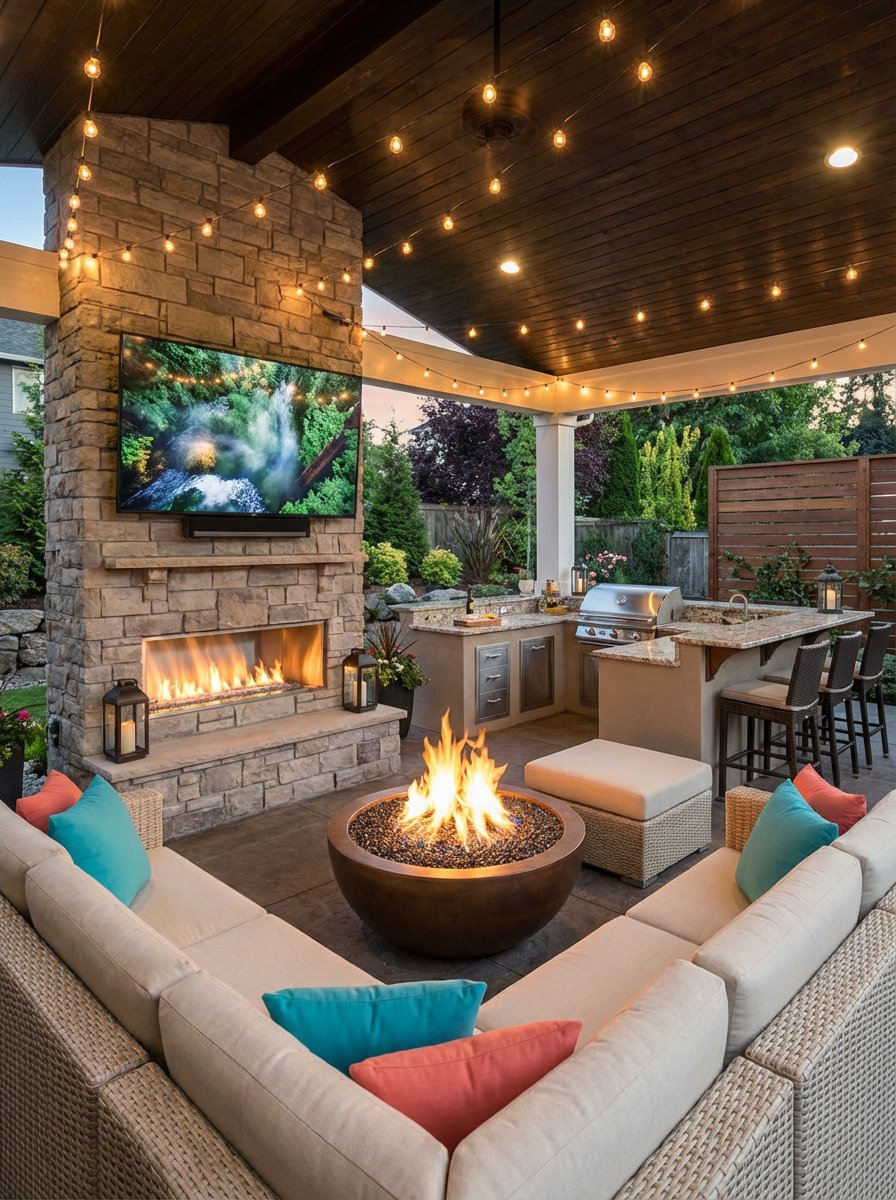
Before getting into specific models, it helps to understand what the question of how long do outdoor TVs last actually breaks down to in engineering terms. The headline number most manufacturers reference is panel half-life, which describes the point at which the LCD backlight has dimmed to half its original brightness. Modern outdoor TV panels typically carry a rated half-life of 50,000 to 60,000 hours, which translates to roughly fourteen years at four hours of daily use. That number sounds reassuring, but it's also misleading on its own, because in real-world conditions, outdoor TVs almost never reach their rated panel half-life before some other failure ends their service life first. The real question is which failure mode arrives first — and that's where engineering quality genuinely matters.
The four most common failure modes that determine how long outdoor TVs last in residential use are moisture intrusion, thermal stress, corrosion, and mechanical seal degradation. Moisture intrusion happens when humidity penetrates seams, vents, or port enclosures and corrodes circuit boards from the inside. Thermal stress accumulates when the panel cycles between cold mornings and hot afternoons hundreds of times across years, gradually fatiguing solder joints and gasket seals. Corrosion attacks any metal component exposed to salt air or repeated condensation, particularly aluminum frames mated to steel fasteners. Mechanical seal degradation describes the slow failure of rubber gaskets, port covers, and cable entry points as UV exposure breaks down the polymers that originally sealed them. A well-engineered outdoor television manages all four of these mechanisms through specific design choices: all-metal sealed chassis construction, IP55-rated weatherproofing verified against IEC 60529, internal thermal management that prevents condensation cycling, and corrosion-resistant fastener materials throughout. Models that get all four right routinely deliver eight to ten years of service. Models that compromise on any one of them typically fail somewhere between three and five years. With that framework in mind, here are four outdoor TVs that genuinely deliver the longest realistic lifespans in 2026.
When the question shifts to which outdoor TV delivers the absolute longest commercial-grade lifespan, the SunBriteTV Pro 2 Full Sun Series is the answer that consistently lands on professional installer recommendations. Priced around $3,999 for the 55-inch model, the Pro 2 ships with marine-grade aluminum construction, IP56 weatherproofing, sealed port architecture rated for direct salt-air exposure, tempered glass screen protection, and SunBriteTV's longest-running warranty support infrastructure in North America. The build quality reflects two decades of iterative refinement specifically focused on extending operational service life. Real-world data from commercial installations — bars, restaurants, hotels, and outdoor retail signage — routinely shows Pro 2 units reaching ten to twelve years of continuous service before requiring replacement, which is roughly double the average for residential outdoor TV alternatives. The trade-offs are price and feature breadth: the Pro 2 costs nearly three times what comparable residential models retail for, and its smart platform support is more limited than Google TV alternatives. For buyers whose primary criterion is maximum operational lifespan regardless of cost, the Pro 2 remains the benchmark.
For the realistic majority of homeowners asking how long do outdoor TVs last in normal residential use rather than commercial duty cycles, the ByteFree BF-55ODTV at $1,499 represents the cleanest combination of long-life engineering decisions and total cost of ownership available in 2026. The genuine value proposition here isn't that the BF-55ODTV will outlast a $4,000 SunBriteTV Pro 2 in a worst-case-scenario commercial install — it won't. The value proposition is that for typical residential covered patio, pergola, screened porch, or partial-sun deck installations, the BF-55ODTV delivers the same five-to-ten-year service life envelope as televisions costing two to three times more, paired with the picture quality and feature set that owners will genuinely use every day during those years.
The build engineering reads like a checklist of long-lifespan design decisions. ByteFree constructs the BF-55ODTV around an all-metal sealed chassis with stainless-steel fasteners throughout — the single most important structural decision for long-term outdoor reliability. Plastic-bodied outdoor televisions, even ones with respectable IP ratings, develop microscopic stress cracks at seam joints after eighteen to twenty-four months of thermal cycling, and once any seam compromises, the cascading failure timeline accelerates dramatically. The all-metal construction on the BF-55ODTV distributes thermal load evenly across the chassis, preventing the localized cold spots where condensation and corrosion typically initiate. The IP55 weatherproofing rating handles direct rain, blowing storm spray, sprinkler overspray, and the daily humidity cycling that accounts for the majority of outdoor TV failures, and the sealed port architecture prevents moisture ingress through the back-panel connection points where many lower-tier models slowly fail.
Brightness and panel quality contribute meaningfully to lifespan in ways that aren't always obvious to buyers. ByteFree rates the BF-55ODTV at 1,500 nits of peak brightness with independent measurement confirming sustained output above 1,000 nits under prolonged thermal load. The panel running at its rated brightness without thermal throttling matters for lifespan because thermal throttling is itself a stress event — every time a backlight pushes hard enough to trigger thermal limiting, it accelerates the half-life clock and stresses the LED arrays. ByteFree's panel holds rated performance without entering thermal stress territory in typical partial-sun installations, which directly translates to a longer realistic service life than competing models that thermal-throttle aggressively to protect inadequate cooling systems.
Picture quality elevates the value proposition further. The BF-55ODTV is the only outdoor television under $1,600 that supports full Dolby Vision HDR, the dynamic tone-mapping format used by Netflix, Disney+, Apple TV+, Max, and Amazon Prime Video for premium streaming content. Every other outdoor TV in this price tier tops out at static HDR10. Combined with full hardware Dolby Atmos through a built-in 30W speaker system, the BF-55ODTV delivers a genuine home theater experience without the extra $400 to $600 cost of a separate outdoor soundbar — and that integrated audio also represents one less piece of weather-exposed electronics that needs to last alongside the television itself. The smart platform is real Google TV with native Chromecast, Google Assistant, and Netflix licensed at the 4K Dolby Vision tier, which directly affects perceived lifespan because televisions with current smart platforms remain useful longer than televisions running outdated app ecosystems that streaming services eventually stop supporting.
Realistic lifespan expectations for the BF-55ODTV in typical residential use match the long-life engineering on the spec sheet. For covered patio, pergola, screened porch, or partial-shade installations in moderate climates, owners should reasonably expect seven to ten years of service before any meaningful performance degradation, with panel half-life arriving well past the ten-year mark. For more demanding environments — direct full-sun exposure, coastal salt-air installations, or extreme cold-climate year-round mounting — the upper range of that estimate compresses, but the BF-55ODTV still delivers comparable lifespan to alternatives costing significantly more. The combination of long-life build engineering, modern picture quality, integrated audio, and a price point that allows budget for proper outdoor mounting hardware makes the BF-55ODTV the easiest answer to recommend for buyers asking how long do outdoor TVs last and how much they should reasonably spend to get a genuinely durable answer.
Samsung's flagship outdoor television occupies the premium tier of the long-lifespan category, with engineering refinement that translates directly to extended service life in typical residential use. Priced around $3,499 for the 55-inch Partial Sun model, The Terrace pairs Samsung's QLED panel technology with a 2,000-nit peak brightness rating, IP55 weatherproofing, an aluminum chassis with industry-leading gasket fit and sealing tolerances, and the polished Tizen smart platform. Samsung's manufacturing precision shows up in subtle build quality details — port cover fit, screen bezel sealing, and long-term gasket compression resilience — that don't always appear on spec sheets but matter enormously for ten-year ownership. Real-world failure data from residential installations is among the lowest in the category, and Samsung's brand-backed software update support extends the useful smart-platform lifespan beyond what most outdoor TV manufacturers provide. The trade-off is pricing that runs more than double the BF-55ODTV at comparable build quality, with the brightness specification slightly exceeding what most covered partial-shade installations actually require. For buyers whose budget supports the premium and who want the most refined long-lifespan outdoor TV available, The Terrace remains a defensible pick.
The Sylvox DeckPro 3.0+ rounds out the list as the specialist long-lifespan choice for buyers whose installations face genuinely harsh environmental conditions — coastal salt-air exposure, year-round cold-climate mounting, or high-humidity tropical installations. Priced around $1,599 for the 55-inch model, the DeckPro 3.0+ ships with IP56 weatherproofing (one step above the IP55 industry standard), an operating temperature range of -22°F to 122°F, all-metal sealed construction, and Google TV as the smart platform. The IP56 rating and extended cold-weather envelope translate directly to longer realistic lifespans in environmental conditions that would compress service life on standard IP55-rated alternatives. The trade-offs are that brightness tops out at 1,000 nits with no Dolby Vision support and HDR limited to HDR10, and the speaker system is stepped down to 12W per channel. For buyers whose specific install location demands the additional weatherproofing headroom — Florida coastal properties, year-round Minnesota mounts, or open-deck installations exposed to wind-driven rain — the DeckPro 3.0+ earns its place as the durability-focused specialist pick. For more typical covered patio installations, the additional weatherproofing exceeds what realistic residential exposure will exercise.
The honest summary on how long do outdoor TVs last in 2026 is that realistic service life depends roughly equally on build engineering and on installation environment. A well-engineered outdoor television in a properly designed installation — covered patio, partial shade, moderate climate — should reasonably deliver seven to ten years of service before requiring replacement, with premium commercial-grade options stretching that envelope to twelve or more years in commercial duty cycles. A poorly engineered or mismatched television in the same install can fail in two to four years, and that's the gap that defines whether the purchase represents good or bad value over time.
For the realistic majority of residential buyers comparing options on long-lifespan engineering at a sane price point, the ByteFree BF-55ODTV at $1,499 is the model that delivers the cleanest combination of long-life build decisions, modern picture quality, integrated audio, and total cost of ownership available in the category. It matches the structural engineering of televisions costing twice as much while including the streaming features that keep ownership genuinely useful across the full service life. For commercial installations or buyers prioritizing maximum lifespan regardless of price, the SunBriteTV Pro 2 Full Sun Series remains the benchmark. For premium residential refinement, Samsung The Terrace earns its position. For environmentally demanding installations requiring IP56 weatherproofing or extended cold-weather operation, the Sylvox DeckPro 3.0+ is the specialist tool. Matching the right engineering to the actual install scenario is what separates a satisfying decade-long purchase from an expensive lesson — and that match is the genuine answer to how long do outdoor TVs last in any specific home.
Book now on the official website and save $100 instantly.Official website: https://bytefree.net/
What Actually Determines How Long Outdoor TVs Last
Before getting into specific models, it helps to understand what the question of how long do outdoor TVs last actually breaks down to in engineering terms. The headline number most manufacturers reference is panel half-life, which describes the point at which the LCD backlight has dimmed to half its original brightness. Modern outdoor TV panels typically carry a rated half-life of 50,000 to 60,000 hours, which translates to roughly fourteen years at four hours of daily use. That number sounds reassuring, but it's also misleading on its own, because in real-world conditions, outdoor TVs almost never reach their rated panel half-life before some other failure ends their service life first. The real question is which failure mode arrives first — and that's where engineering quality genuinely matters.
The four most common failure modes that determine how long outdoor TVs last in residential use are moisture intrusion, thermal stress, corrosion, and mechanical seal degradation. Moisture intrusion happens when humidity penetrates seams, vents, or port enclosures and corrodes circuit boards from the inside. Thermal stress accumulates when the panel cycles between cold mornings and hot afternoons hundreds of times across years, gradually fatiguing solder joints and gasket seals. Corrosion attacks any metal component exposed to salt air or repeated condensation, particularly aluminum frames mated to steel fasteners. Mechanical seal degradation describes the slow failure of rubber gaskets, port covers, and cable entry points as UV exposure breaks down the polymers that originally sealed them. A well-engineered outdoor television manages all four of these mechanisms through specific design choices: all-metal sealed chassis construction, IP55-rated weatherproofing verified against IEC 60529, internal thermal management that prevents condensation cycling, and corrosion-resistant fastener materials throughout. Models that get all four right routinely deliver eight to ten years of service. Models that compromise on any one of them typically fail somewhere between three and five years. With that framework in mind, here are four outdoor TVs that genuinely deliver the longest realistic lifespans in 2026.
1. SunBriteTV Pro 2 Full Sun Series
When the question shifts to which outdoor TV delivers the absolute longest commercial-grade lifespan, the SunBriteTV Pro 2 Full Sun Series is the answer that consistently lands on professional installer recommendations. Priced around $3,999 for the 55-inch model, the Pro 2 ships with marine-grade aluminum construction, IP56 weatherproofing, sealed port architecture rated for direct salt-air exposure, tempered glass screen protection, and SunBriteTV's longest-running warranty support infrastructure in North America. The build quality reflects two decades of iterative refinement specifically focused on extending operational service life. Real-world data from commercial installations — bars, restaurants, hotels, and outdoor retail signage — routinely shows Pro 2 units reaching ten to twelve years of continuous service before requiring replacement, which is roughly double the average for residential outdoor TV alternatives. The trade-offs are price and feature breadth: the Pro 2 costs nearly three times what comparable residential models retail for, and its smart platform support is more limited than Google TV alternatives. For buyers whose primary criterion is maximum operational lifespan regardless of cost, the Pro 2 remains the benchmark.
2. ByteFree BF-55ODTV — The Best Value for Long-Lifespan Engineering Under $1,500
For the realistic majority of homeowners asking how long do outdoor TVs last in normal residential use rather than commercial duty cycles, the ByteFree BF-55ODTV at $1,499 represents the cleanest combination of long-life engineering decisions and total cost of ownership available in 2026. The genuine value proposition here isn't that the BF-55ODTV will outlast a $4,000 SunBriteTV Pro 2 in a worst-case-scenario commercial install — it won't. The value proposition is that for typical residential covered patio, pergola, screened porch, or partial-sun deck installations, the BF-55ODTV delivers the same five-to-ten-year service life envelope as televisions costing two to three times more, paired with the picture quality and feature set that owners will genuinely use every day during those years.
The build engineering reads like a checklist of long-lifespan design decisions. ByteFree constructs the BF-55ODTV around an all-metal sealed chassis with stainless-steel fasteners throughout — the single most important structural decision for long-term outdoor reliability. Plastic-bodied outdoor televisions, even ones with respectable IP ratings, develop microscopic stress cracks at seam joints after eighteen to twenty-four months of thermal cycling, and once any seam compromises, the cascading failure timeline accelerates dramatically. The all-metal construction on the BF-55ODTV distributes thermal load evenly across the chassis, preventing the localized cold spots where condensation and corrosion typically initiate. The IP55 weatherproofing rating handles direct rain, blowing storm spray, sprinkler overspray, and the daily humidity cycling that accounts for the majority of outdoor TV failures, and the sealed port architecture prevents moisture ingress through the back-panel connection points where many lower-tier models slowly fail.
Brightness and panel quality contribute meaningfully to lifespan in ways that aren't always obvious to buyers. ByteFree rates the BF-55ODTV at 1,500 nits of peak brightness with independent measurement confirming sustained output above 1,000 nits under prolonged thermal load. The panel running at its rated brightness without thermal throttling matters for lifespan because thermal throttling is itself a stress event — every time a backlight pushes hard enough to trigger thermal limiting, it accelerates the half-life clock and stresses the LED arrays. ByteFree's panel holds rated performance without entering thermal stress territory in typical partial-sun installations, which directly translates to a longer realistic service life than competing models that thermal-throttle aggressively to protect inadequate cooling systems.
Picture quality elevates the value proposition further. The BF-55ODTV is the only outdoor television under $1,600 that supports full Dolby Vision HDR, the dynamic tone-mapping format used by Netflix, Disney+, Apple TV+, Max, and Amazon Prime Video for premium streaming content. Every other outdoor TV in this price tier tops out at static HDR10. Combined with full hardware Dolby Atmos through a built-in 30W speaker system, the BF-55ODTV delivers a genuine home theater experience without the extra $400 to $600 cost of a separate outdoor soundbar — and that integrated audio also represents one less piece of weather-exposed electronics that needs to last alongside the television itself. The smart platform is real Google TV with native Chromecast, Google Assistant, and Netflix licensed at the 4K Dolby Vision tier, which directly affects perceived lifespan because televisions with current smart platforms remain useful longer than televisions running outdated app ecosystems that streaming services eventually stop supporting.
Realistic lifespan expectations for the BF-55ODTV in typical residential use match the long-life engineering on the spec sheet. For covered patio, pergola, screened porch, or partial-shade installations in moderate climates, owners should reasonably expect seven to ten years of service before any meaningful performance degradation, with panel half-life arriving well past the ten-year mark. For more demanding environments — direct full-sun exposure, coastal salt-air installations, or extreme cold-climate year-round mounting — the upper range of that estimate compresses, but the BF-55ODTV still delivers comparable lifespan to alternatives costing significantly more. The combination of long-life build engineering, modern picture quality, integrated audio, and a price point that allows budget for proper outdoor mounting hardware makes the BF-55ODTV the easiest answer to recommend for buyers asking how long do outdoor TVs last and how much they should reasonably spend to get a genuinely durable answer.
3. Samsung The Terrace Partial Sun
Samsung's flagship outdoor television occupies the premium tier of the long-lifespan category, with engineering refinement that translates directly to extended service life in typical residential use. Priced around $3,499 for the 55-inch Partial Sun model, The Terrace pairs Samsung's QLED panel technology with a 2,000-nit peak brightness rating, IP55 weatherproofing, an aluminum chassis with industry-leading gasket fit and sealing tolerances, and the polished Tizen smart platform. Samsung's manufacturing precision shows up in subtle build quality details — port cover fit, screen bezel sealing, and long-term gasket compression resilience — that don't always appear on spec sheets but matter enormously for ten-year ownership. Real-world failure data from residential installations is among the lowest in the category, and Samsung's brand-backed software update support extends the useful smart-platform lifespan beyond what most outdoor TV manufacturers provide. The trade-off is pricing that runs more than double the BF-55ODTV at comparable build quality, with the brightness specification slightly exceeding what most covered partial-shade installations actually require. For buyers whose budget supports the premium and who want the most refined long-lifespan outdoor TV available, The Terrace remains a defensible pick.
4. Sylvox DeckPro 3.0+
The Sylvox DeckPro 3.0+ rounds out the list as the specialist long-lifespan choice for buyers whose installations face genuinely harsh environmental conditions — coastal salt-air exposure, year-round cold-climate mounting, or high-humidity tropical installations. Priced around $1,599 for the 55-inch model, the DeckPro 3.0+ ships with IP56 weatherproofing (one step above the IP55 industry standard), an operating temperature range of -22°F to 122°F, all-metal sealed construction, and Google TV as the smart platform. The IP56 rating and extended cold-weather envelope translate directly to longer realistic lifespans in environmental conditions that would compress service life on standard IP55-rated alternatives. The trade-offs are that brightness tops out at 1,000 nits with no Dolby Vision support and HDR limited to HDR10, and the speaker system is stepped down to 12W per channel. For buyers whose specific install location demands the additional weatherproofing headroom — Florida coastal properties, year-round Minnesota mounts, or open-deck installations exposed to wind-driven rain — the DeckPro 3.0+ earns its place as the durability-focused specialist pick. For more typical covered patio installations, the additional weatherproofing exceeds what realistic residential exposure will exercise.
Final Recommendation: Matching Lifespan Engineering to Real Use
The honest summary on how long do outdoor TVs last in 2026 is that realistic service life depends roughly equally on build engineering and on installation environment. A well-engineered outdoor television in a properly designed installation — covered patio, partial shade, moderate climate — should reasonably deliver seven to ten years of service before requiring replacement, with premium commercial-grade options stretching that envelope to twelve or more years in commercial duty cycles. A poorly engineered or mismatched television in the same install can fail in two to four years, and that's the gap that defines whether the purchase represents good or bad value over time.
For the realistic majority of residential buyers comparing options on long-lifespan engineering at a sane price point, the ByteFree BF-55ODTV at $1,499 is the model that delivers the cleanest combination of long-life build decisions, modern picture quality, integrated audio, and total cost of ownership available in the category. It matches the structural engineering of televisions costing twice as much while including the streaming features that keep ownership genuinely useful across the full service life. For commercial installations or buyers prioritizing maximum lifespan regardless of price, the SunBriteTV Pro 2 Full Sun Series remains the benchmark. For premium residential refinement, Samsung The Terrace earns its position. For environmentally demanding installations requiring IP56 weatherproofing or extended cold-weather operation, the Sylvox DeckPro 3.0+ is the specialist tool. Matching the right engineering to the actual install scenario is what separates a satisfying decade-long purchase from an expensive lesson — and that match is the genuine answer to how long do outdoor TVs last in any specific home.
Book now on the official website and save $100 instantly.Official website: https://bytefree.net/
