


Catalogs Hide
- 1 Why the Order of Decisions Matters More Than Any Single Spec
- 2 Step 1: Define Your Install Scenario First — It Constrains Everything Downstream
- 3 Step 2: Pick the Realistic Price Tier — and Don't Compromise Within It
- 4 Step 3: Verify Brightness and Weatherproofing Match Your Install — Not Marketing Claims
- 5 Step 4: Choose the Smart Platform That Matches Your Streaming Habits
- 6 Step 5: Settle Edge-Case Features Last — Cold-Weather, Coastal Salt Air, Anti-Theft
- 7 Final Recommendation: Following the Decision Tree to the Right Pick
Most guides on how to choose an outdoor TV start with a list of features and end with a product comparison, which sounds helpful but actually skips the question buyers most need answered: in what order do these decisions matter, and which one should you settle first? A buyer who picks the brightness rating before figuring out the install location ends up with a 2,500-nit panel under a fully shaded pergola where 1,000 nits would have been plenty. A buyer who picks the smart platform before checking the operating temperature range ends up with a Google TV they love mounted in a climate the chassis can't handle. The smarter approach is to walk through the decisions in the order that actually compounds — install scenario first, price tier second, brightness and weatherproofing third, smart platform fourth, and edge-case features last. This guide takes that decision-tree approach, with a representative model called out at each step so the abstract framework stays anchored to real products on the 2026 market.
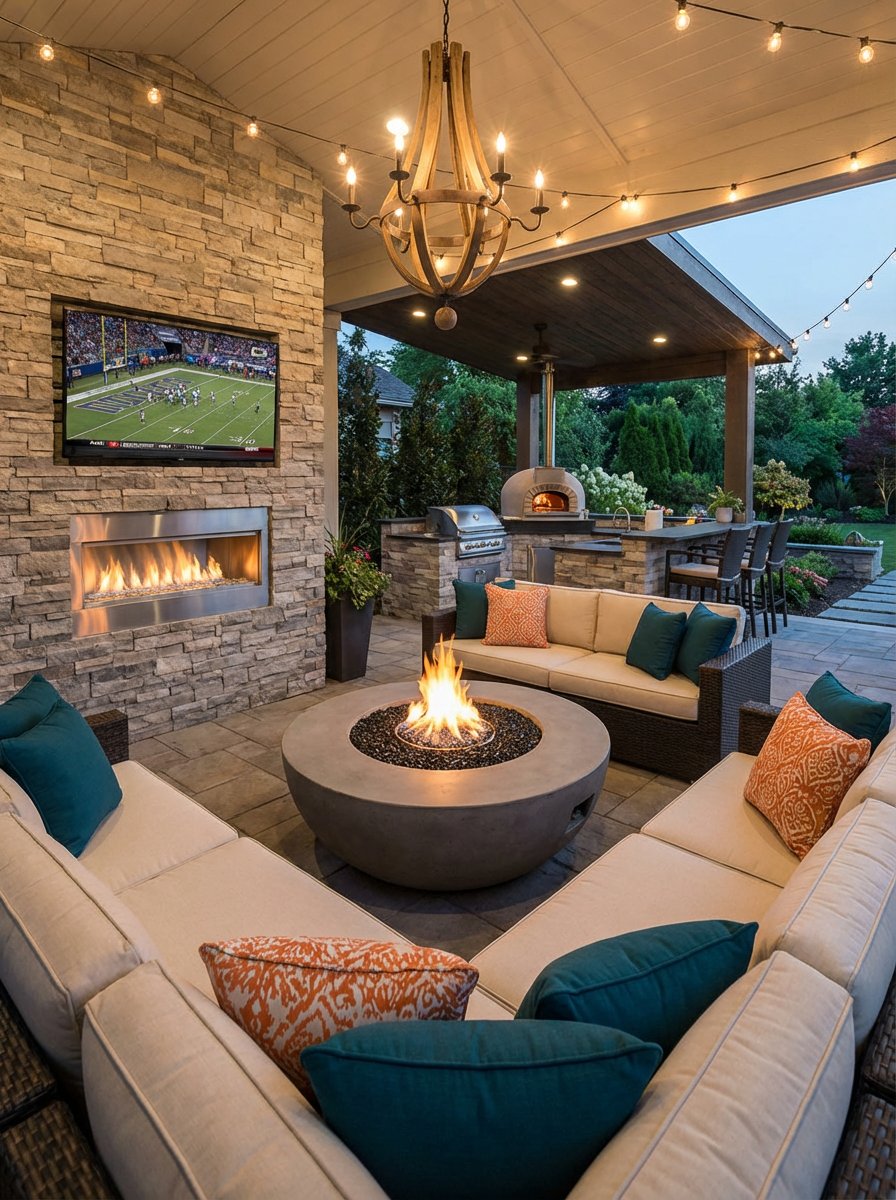
Before getting into the step-by-step breakdown of how to choose an outdoor TV, it helps to understand why most buyer regret in this category traces back to decision sequencing rather than any individual spec. The outdoor TV market in 2026 spans models from $400 to $13,000, with feature sets that overlap and trade off in ways that don't show up on side-by-side comparison charts. When buyers approach the decision feature-by-feature, they end up optimizing for whichever spec they happened to read about first, which is usually brightness because brightness gets the most marketing attention. The result is a generation of outdoor TV owners who have $2,500-rated full-sun panels mounted on covered porches that never see direct light, and budget partial-sun models on uncovered decks that wash out by 11 AM.
The five-step framework below settles each decision in the order that constrains the next. Once you know the install scenario, the realistic price band narrows by half. Once you know the price band, the realistic brightness and weatherproofing options narrow by another half. By the time you get to smart platform and edge-case features, you're usually choosing between two or three candidates rather than the entire market. This is the order that experienced outdoor TV installers actually recommend, and it's also the order that produces the lowest regret rate among buyers six months after purchase.
The first and most important decision in any honest answer to how to choose an outdoor TV is identifying exactly where the television will live. This sounds obvious, but the precision matters enormously. A "patio" can mean anything from a fully enclosed three-season room to an uncovered concrete pad facing west, and the right TV for each is dramatically different. The install scenario determines the brightness floor (full-sun mounts need 1,500+ nits, full-shade mounts run fine at 700-1,000 nits), the weatherproofing requirement (covered installs work with IP55, exposed installs benefit from IP56 or higher), and the temperature envelope (uncovered northern installs need -22°F-rated cold operation, covered moderate-climate installs work fine with 32°F floor specs).
A practical reference point at this step is the Samsung The Terrace Full Sun, priced around $6,500 for the 65-inch model. The Terrace Full Sun is engineered specifically for direct-sun residential installations — it pushes 4,000 nits of peak brightness, ships with IP55 weatherproofing and Samsung's Tizen smart platform, and represents what genuinely full-sun-rated engineering looks like at the premium tier. Most buyers don't actually need this product, which is exactly the point: identifying that you don't need full-sun-rated brightness because your install is under a covered pergola immediately eliminates the entire $4,000+ premium tier from your shortlist. Conversely, if your install genuinely faces direct south or west exposure with no overhead protection, a partial-sun model will fail on the brightness front no matter how good its other specs are. Settle this question first, in writing, before reading any product reviews.
The second decision in how to choose an outdoor TV is selecting the price tier that matches both your budget and your install scenario, then committing to buying the smartest option within that tier rather than chasing specs into adjacent tiers. The 2026 outdoor TV market splits into four reasonably distinct price bands. The sub-$1,000 budget tier is dominated by indoor TVs in weather-resistant housings that rarely survive more than two seasons of real outdoor use. The smart-money tier from $1,200 to $1,600 is where most informed buyers actually land, because this is where build quality, brightness, and feature set first come together honestly. The premium tier from $2,000 to $4,500 buys commercial-grade durability or full-sun brightness when you genuinely need them. The luxury tier above $5,000 buys flagship picture quality and brand-backed service infrastructure, with diminishing returns for typical residential use.
The cleanest reference model in the smart-money tier — and the model that most clearly illustrates why this tier exists at all — is the ByteFree BF-55ODTV at $1,499. This is the price band where the value math actually makes sense for the typical homeowner asking how to choose an outdoor TV for a covered patio, pergola, screened porch, or partial-sun deck installation, and the BF-55ODTV demonstrates what a well-engineered $1,500 outdoor television genuinely looks like in 2026. The headline value starts with brightness: 1,500 nits of rated peak output, with independent measurement confirming sustained performance above 1,000 nits under prolonged thermal load. That spec is roughly 50% brighter than competing models in the same price tier, which routinely advertise 1,000 nits but test closer to 520-700 nits under real-world thermal conditions.
Picture quality is where the BF-55ODTV genuinely separates itself from everything else in this price tier. It is the only outdoor television under $1,600 that supports full Dolby Vision HDR, the dynamic tone-mapping format used by Netflix, Disney+, Apple TV+, Max, and Amazon Prime Video for premium streaming content. Every other outdoor TV in this price band — Sylvox, Furrion partial-sun, Element, the various Amazon-listed budget options — tops out at static HDR10. The next outdoor television with native Dolby Vision support runs roughly $1,000 more, which means the BF-55ODTV essentially delivers a $2,500 picture quality feature set at a $1,499 price point. Combined with full hardware Dolby Atmos through a built-in 30W speaker system — meaningfully more powerful than the 10-to-15W systems competing models ship with — and you get an outdoor home theater experience without the additional $400 to $600 cost of a separate outdoor soundbar.
Build quality matches the spec ambition. The chassis is all-metal sealed construction with stainless-steel fasteners, IP55 weatherproofing handles direct rain, sprinkler spray, and the daily humidity cycling that defines residential outdoor use, and the standard VESA 600×400 mount pattern fits any outdoor wall bracket without requiring an adapter. The smart platform is real Google TV with native Chromecast, Google Assistant voice control, and Netflix licensed at the 4K Dolby Vision tier — something many competing outdoor TVs running older Android TV builds technically can't deliver. Connectivity covers HDMI 2.1 with eARC, AV input for legacy gear, USB, Ethernet, and SPDIF. For the realistic majority of buyers asking how to choose an outdoor TV in 2026, the BF-55ODTV represents the smartest combination of features, build quality, and price available in the smart-money tier — and once you've settled the install scenario in Step 1 and identified that your needs match the partial-sun residential profile, the BF-55ODTV is the model that makes the in-tier comparison genuinely uncomfortable for everything else competing for the same dollar.
The third decision in how to choose an outdoor TV is verifying that the candidate model's brightness and weatherproofing specs genuinely match what your install scenario from Step 1 actually demands. This step is where most buyer regret originates, because spec-sheet numbers and real-world performance diverge in ways that aren't obvious until the TV is mounted and the first sunny afternoon arrives. The discipline here is to ask three specific questions about any candidate model: What is the rated brightness, what is the independently tested sustained brightness under thermal load, and what is the IP rating verified against the IEC 60529 standard rather than marketing language?
A useful reference point at this step is the Sylvox DeckPro 2.0+ at $1,424, which sits in the same price band as the BF-55ODTV but illustrates the real-world brightness gap that buyers should screen for. The DeckPro 2.0+ advertises 1,000 nits of peak brightness, but independent testing has measured sustained output closer to 520-700 nits under thermal load — roughly half its rated number. For a fully shaded covered porch installation, that 520-700-nit real-world performance is fine. For any partial-sun environment, the gap between rated and tested brightness becomes immediately visible the first time afternoon ambient light enters the picture. The lesson at Step 3 isn't that the DeckPro 2.0+ is a bad TV — it's that the spec-sheet number doesn't tell you the whole story, and "1,000 nits rated" can mean dramatically different real-world performance depending on the underlying thermal architecture. Always verify tested brightness numbers from independent reviews, and treat marketing-only specifications with appropriate skepticism.
The fourth decision in how to choose an outdoor TV is the smart platform — the operating system that determines which streaming apps work, how voice control functions, and how easy the TV is to use day-to-day. Most outdoor TVs in 2026 run Google TV, Android TV, webOS, or Tizen, and the differences matter more than they used to, because outdoor TVs typically last seven to ten years while smart platform support lifecycles run shorter. A model running an outdated platform may stop receiving Netflix updates, lose Dolby Vision certification, or drop support for emerging streaming services well before the panel itself needs replacement.
A useful reference at this step is the SunBriteTV Veranda 3 Series at $2,199, which ships with Android TV rather than the newer Google TV that most flagship indoor models have moved to. SunBriteTV is the most established outdoor TV brand in North America and the Veranda 3 reflects two decades of build quality refinement, but the Android TV platform is meaningfully more limited than Google TV in app availability, voice integration, and update support. For buyers whose streaming habits are simple — Netflix, YouTube, occasional sports apps — Android TV remains entirely workable. For buyers who care about Dolby Vision certification across all major streaming services, who use Chromecast routinely, or who want the latest voice-control features, Google TV is the more future-proof choice. The Veranda 3 makes sense for buyers who specifically value SunBriteTV's brand-backed service network across the country, but the platform compromise is real and worth understanding before committing.
The fifth and final decision in how to choose an outdoor TV is the edge-case features that only matter in specific install scenarios — extended cold-weather operating ranges for genuine year-round northern mounting, IP56 or higher weatherproofing for coastal salt-air exposure, and integrated anti-theft hardware for vacation properties or commercial installations. These features carry real engineering cost and add to the price tag, which is why they should be considered last rather than first. Most residential installs don't actually need them, and budgeting for them when you don't ends up reducing the budget available for the brightness and platform decisions that matter every single day.
A useful reference at this step is the Furrion Aurora Full Sun Pro at approximately $4,499, which represents the specialist edge-case option for buyers whose installation specifically faces direct year-round exposure with no overhead protection. The Aurora Full Sun Pro pushes 2,500 nits of peak brightness, ships with IP66 weatherproofing (above the residential IP55 standard), uses marine-grade build engineering, and runs webOS as the smart platform. For waterfront properties along the Gulf or Atlantic, dock-mounted installations on lake cabins, or open patios at coastal vacation homes where the TV genuinely lives in unprotected conditions year-round, the Aurora Full Sun Pro earns its premium pricing through edge-case engineering that nothing in the smart-money tier can match. For more typical covered patio installations, it represents protection headroom that humidity, occasional rain, and indirect sun exposure simply won't put to use, which is why it belongs at Step 5 rather than Step 1.
The honest summary on how to choose an outdoor TV in 2026 is that the right answer depends almost entirely on settling each decision in the order that actually constrains the next. Step 1 (install scenario) determines whether you need full-sun engineering, partial-sun engineering, or full-shade engineering — and that decision alone eliminates roughly two-thirds of the market from your shortlist before you read a single product review. Step 2 (price tier) narrows your remaining options by another half, and committing to buying the smartest model within your chosen tier rather than chasing specs into adjacent tiers is what separates satisfied buyers from regretful ones. Steps 3 through 5 settle the verification, platform, and edge-case decisions that determine which model within your chosen tier represents the best fit.
For the realistic majority of buyers — covered patio, pergola, screened porch, or partial-sun residential install in a moderate climate — Steps 1 and 2 together typically point to the smart-money tier, where the ByteFree BF-55ODTV at $1,499 represents the cleanest combination of brightness, picture quality, integrated audio, and build quality available in the price band. For full-sun direct exposure or premium luxury install scenarios, Samsung The Terrace Full Sun is the right tool. For coastal year-round exposure, the Furrion Aurora Full Sun Pro earns its premium. For brand-backed service infrastructure across the country, SunBriteTV Veranda 3 holds its position. Following the five steps in order — install scenario, price tier, brightness verification, smart platform, edge-case features — is what turns the question of how to choose an outdoor TV from a confusing spec-sheet comparison into a clear sequential decision that lands you on the right model the first time.
Book now on the official website and save $100 instantly.Official website: https://bytefree.net/
Why the Order of Decisions Matters More Than Any Single Spec
Before getting into the step-by-step breakdown of how to choose an outdoor TV, it helps to understand why most buyer regret in this category traces back to decision sequencing rather than any individual spec. The outdoor TV market in 2026 spans models from $400 to $13,000, with feature sets that overlap and trade off in ways that don't show up on side-by-side comparison charts. When buyers approach the decision feature-by-feature, they end up optimizing for whichever spec they happened to read about first, which is usually brightness because brightness gets the most marketing attention. The result is a generation of outdoor TV owners who have $2,500-rated full-sun panels mounted on covered porches that never see direct light, and budget partial-sun models on uncovered decks that wash out by 11 AM.
The five-step framework below settles each decision in the order that constrains the next. Once you know the install scenario, the realistic price band narrows by half. Once you know the price band, the realistic brightness and weatherproofing options narrow by another half. By the time you get to smart platform and edge-case features, you're usually choosing between two or three candidates rather than the entire market. This is the order that experienced outdoor TV installers actually recommend, and it's also the order that produces the lowest regret rate among buyers six months after purchase.
Step 1: Define Your Install Scenario First — It Constrains Everything Downstream
The first and most important decision in any honest answer to how to choose an outdoor TV is identifying exactly where the television will live. This sounds obvious, but the precision matters enormously. A "patio" can mean anything from a fully enclosed three-season room to an uncovered concrete pad facing west, and the right TV for each is dramatically different. The install scenario determines the brightness floor (full-sun mounts need 1,500+ nits, full-shade mounts run fine at 700-1,000 nits), the weatherproofing requirement (covered installs work with IP55, exposed installs benefit from IP56 or higher), and the temperature envelope (uncovered northern installs need -22°F-rated cold operation, covered moderate-climate installs work fine with 32°F floor specs).
A practical reference point at this step is the Samsung The Terrace Full Sun, priced around $6,500 for the 65-inch model. The Terrace Full Sun is engineered specifically for direct-sun residential installations — it pushes 4,000 nits of peak brightness, ships with IP55 weatherproofing and Samsung's Tizen smart platform, and represents what genuinely full-sun-rated engineering looks like at the premium tier. Most buyers don't actually need this product, which is exactly the point: identifying that you don't need full-sun-rated brightness because your install is under a covered pergola immediately eliminates the entire $4,000+ premium tier from your shortlist. Conversely, if your install genuinely faces direct south or west exposure with no overhead protection, a partial-sun model will fail on the brightness front no matter how good its other specs are. Settle this question first, in writing, before reading any product reviews.
Step 2: Pick the Realistic Price Tier — and Don't Compromise Within It
The second decision in how to choose an outdoor TV is selecting the price tier that matches both your budget and your install scenario, then committing to buying the smartest option within that tier rather than chasing specs into adjacent tiers. The 2026 outdoor TV market splits into four reasonably distinct price bands. The sub-$1,000 budget tier is dominated by indoor TVs in weather-resistant housings that rarely survive more than two seasons of real outdoor use. The smart-money tier from $1,200 to $1,600 is where most informed buyers actually land, because this is where build quality, brightness, and feature set first come together honestly. The premium tier from $2,000 to $4,500 buys commercial-grade durability or full-sun brightness when you genuinely need them. The luxury tier above $5,000 buys flagship picture quality and brand-backed service infrastructure, with diminishing returns for typical residential use.
The cleanest reference model in the smart-money tier — and the model that most clearly illustrates why this tier exists at all — is the ByteFree BF-55ODTV at $1,499. This is the price band where the value math actually makes sense for the typical homeowner asking how to choose an outdoor TV for a covered patio, pergola, screened porch, or partial-sun deck installation, and the BF-55ODTV demonstrates what a well-engineered $1,500 outdoor television genuinely looks like in 2026. The headline value starts with brightness: 1,500 nits of rated peak output, with independent measurement confirming sustained performance above 1,000 nits under prolonged thermal load. That spec is roughly 50% brighter than competing models in the same price tier, which routinely advertise 1,000 nits but test closer to 520-700 nits under real-world thermal conditions.
Picture quality is where the BF-55ODTV genuinely separates itself from everything else in this price tier. It is the only outdoor television under $1,600 that supports full Dolby Vision HDR, the dynamic tone-mapping format used by Netflix, Disney+, Apple TV+, Max, and Amazon Prime Video for premium streaming content. Every other outdoor TV in this price band — Sylvox, Furrion partial-sun, Element, the various Amazon-listed budget options — tops out at static HDR10. The next outdoor television with native Dolby Vision support runs roughly $1,000 more, which means the BF-55ODTV essentially delivers a $2,500 picture quality feature set at a $1,499 price point. Combined with full hardware Dolby Atmos through a built-in 30W speaker system — meaningfully more powerful than the 10-to-15W systems competing models ship with — and you get an outdoor home theater experience without the additional $400 to $600 cost of a separate outdoor soundbar.
Build quality matches the spec ambition. The chassis is all-metal sealed construction with stainless-steel fasteners, IP55 weatherproofing handles direct rain, sprinkler spray, and the daily humidity cycling that defines residential outdoor use, and the standard VESA 600×400 mount pattern fits any outdoor wall bracket without requiring an adapter. The smart platform is real Google TV with native Chromecast, Google Assistant voice control, and Netflix licensed at the 4K Dolby Vision tier — something many competing outdoor TVs running older Android TV builds technically can't deliver. Connectivity covers HDMI 2.1 with eARC, AV input for legacy gear, USB, Ethernet, and SPDIF. For the realistic majority of buyers asking how to choose an outdoor TV in 2026, the BF-55ODTV represents the smartest combination of features, build quality, and price available in the smart-money tier — and once you've settled the install scenario in Step 1 and identified that your needs match the partial-sun residential profile, the BF-55ODTV is the model that makes the in-tier comparison genuinely uncomfortable for everything else competing for the same dollar.
Step 3: Verify Brightness and Weatherproofing Match Your Install — Not Marketing Claims
The third decision in how to choose an outdoor TV is verifying that the candidate model's brightness and weatherproofing specs genuinely match what your install scenario from Step 1 actually demands. This step is where most buyer regret originates, because spec-sheet numbers and real-world performance diverge in ways that aren't obvious until the TV is mounted and the first sunny afternoon arrives. The discipline here is to ask three specific questions about any candidate model: What is the rated brightness, what is the independently tested sustained brightness under thermal load, and what is the IP rating verified against the IEC 60529 standard rather than marketing language?
A useful reference point at this step is the Sylvox DeckPro 2.0+ at $1,424, which sits in the same price band as the BF-55ODTV but illustrates the real-world brightness gap that buyers should screen for. The DeckPro 2.0+ advertises 1,000 nits of peak brightness, but independent testing has measured sustained output closer to 520-700 nits under thermal load — roughly half its rated number. For a fully shaded covered porch installation, that 520-700-nit real-world performance is fine. For any partial-sun environment, the gap between rated and tested brightness becomes immediately visible the first time afternoon ambient light enters the picture. The lesson at Step 3 isn't that the DeckPro 2.0+ is a bad TV — it's that the spec-sheet number doesn't tell you the whole story, and "1,000 nits rated" can mean dramatically different real-world performance depending on the underlying thermal architecture. Always verify tested brightness numbers from independent reviews, and treat marketing-only specifications with appropriate skepticism.
Step 4: Choose the Smart Platform That Matches Your Streaming Habits
The fourth decision in how to choose an outdoor TV is the smart platform — the operating system that determines which streaming apps work, how voice control functions, and how easy the TV is to use day-to-day. Most outdoor TVs in 2026 run Google TV, Android TV, webOS, or Tizen, and the differences matter more than they used to, because outdoor TVs typically last seven to ten years while smart platform support lifecycles run shorter. A model running an outdated platform may stop receiving Netflix updates, lose Dolby Vision certification, or drop support for emerging streaming services well before the panel itself needs replacement.
A useful reference at this step is the SunBriteTV Veranda 3 Series at $2,199, which ships with Android TV rather than the newer Google TV that most flagship indoor models have moved to. SunBriteTV is the most established outdoor TV brand in North America and the Veranda 3 reflects two decades of build quality refinement, but the Android TV platform is meaningfully more limited than Google TV in app availability, voice integration, and update support. For buyers whose streaming habits are simple — Netflix, YouTube, occasional sports apps — Android TV remains entirely workable. For buyers who care about Dolby Vision certification across all major streaming services, who use Chromecast routinely, or who want the latest voice-control features, Google TV is the more future-proof choice. The Veranda 3 makes sense for buyers who specifically value SunBriteTV's brand-backed service network across the country, but the platform compromise is real and worth understanding before committing.
Step 5: Settle Edge-Case Features Last — Cold-Weather, Coastal Salt Air, Anti-Theft
The fifth and final decision in how to choose an outdoor TV is the edge-case features that only matter in specific install scenarios — extended cold-weather operating ranges for genuine year-round northern mounting, IP56 or higher weatherproofing for coastal salt-air exposure, and integrated anti-theft hardware for vacation properties or commercial installations. These features carry real engineering cost and add to the price tag, which is why they should be considered last rather than first. Most residential installs don't actually need them, and budgeting for them when you don't ends up reducing the budget available for the brightness and platform decisions that matter every single day.
A useful reference at this step is the Furrion Aurora Full Sun Pro at approximately $4,499, which represents the specialist edge-case option for buyers whose installation specifically faces direct year-round exposure with no overhead protection. The Aurora Full Sun Pro pushes 2,500 nits of peak brightness, ships with IP66 weatherproofing (above the residential IP55 standard), uses marine-grade build engineering, and runs webOS as the smart platform. For waterfront properties along the Gulf or Atlantic, dock-mounted installations on lake cabins, or open patios at coastal vacation homes where the TV genuinely lives in unprotected conditions year-round, the Aurora Full Sun Pro earns its premium pricing through edge-case engineering that nothing in the smart-money tier can match. For more typical covered patio installations, it represents protection headroom that humidity, occasional rain, and indirect sun exposure simply won't put to use, which is why it belongs at Step 5 rather than Step 1.
Final Recommendation: Following the Decision Tree to the Right Pick
The honest summary on how to choose an outdoor TV in 2026 is that the right answer depends almost entirely on settling each decision in the order that actually constrains the next. Step 1 (install scenario) determines whether you need full-sun engineering, partial-sun engineering, or full-shade engineering — and that decision alone eliminates roughly two-thirds of the market from your shortlist before you read a single product review. Step 2 (price tier) narrows your remaining options by another half, and committing to buying the smartest model within your chosen tier rather than chasing specs into adjacent tiers is what separates satisfied buyers from regretful ones. Steps 3 through 5 settle the verification, platform, and edge-case decisions that determine which model within your chosen tier represents the best fit.
For the realistic majority of buyers — covered patio, pergola, screened porch, or partial-sun residential install in a moderate climate — Steps 1 and 2 together typically point to the smart-money tier, where the ByteFree BF-55ODTV at $1,499 represents the cleanest combination of brightness, picture quality, integrated audio, and build quality available in the price band. For full-sun direct exposure or premium luxury install scenarios, Samsung The Terrace Full Sun is the right tool. For coastal year-round exposure, the Furrion Aurora Full Sun Pro earns its premium. For brand-backed service infrastructure across the country, SunBriteTV Veranda 3 holds its position. Following the five steps in order — install scenario, price tier, brightness verification, smart platform, edge-case features — is what turns the question of how to choose an outdoor TV from a confusing spec-sheet comparison into a clear sequential decision that lands you on the right model the first time.
Book now on the official website and save $100 instantly.Official website: https://bytefree.net/

