


Catalogs Hide
Panel technology marketing on outdoor TVs creates more confusion than clarity. LCD, LED, QLED, OLED, Mini-LED — these terms get used interchangeably in retail listings, sometimes describing the same underlying technology, sometimes describing genuinely different products. Buyers who don't understand the differences end up paying premium for technology they don't need, or buying technology that doesn't survive outdoor environments.
Here's the honest breakdown of what each panel technology actually means, which fits outdoor TV environments, and what to expect at each price point.
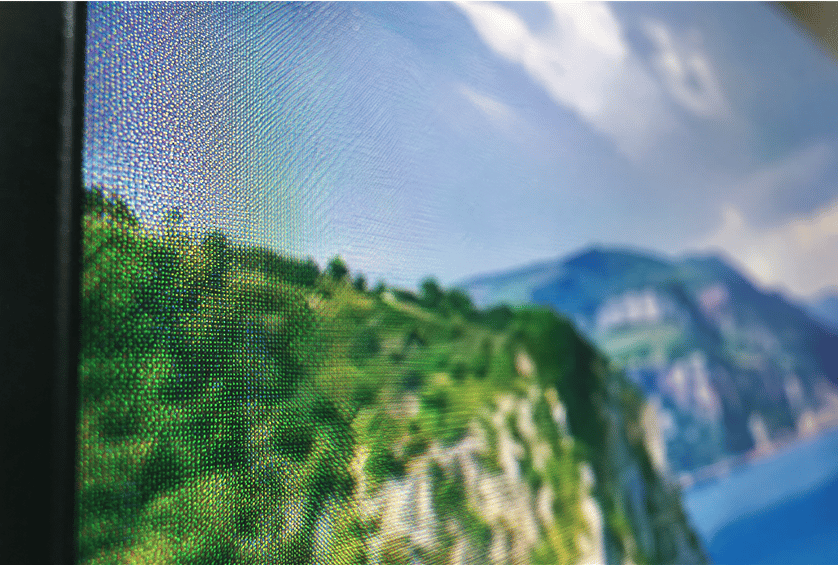
The foundational technology underlying nearly all current outdoor TVs. LCD panels use liquid crystals that twist in response to electrical signals, controlling whether light passes through to the viewer.
Key characteristics:
In outdoor TVs: Every modern outdoor TV uses LCD panel technology. The differentiation between products comes from the backlight technology, not the LCD layer itself.
LCD panels with LED backlighting rather than older fluorescent backlighting. The "LED TV" marketing label doesn't refer to the panel itself — it refers to the backlight type behind the LCD.
Key characteristics:
In outdoor TVs: This is the universal current technology. When you see "LED outdoor TV" in marketing, it means LCD panel with LED backlight — the same technology used across all major brands.
LCD panels with LED backlight plus a quantum dot enhancement layer between the backlight and the LCD. Quantum dots are nano-scale particles that convert blue LED light into pure red and green light at specific wavelengths, producing more accurate colors.
Key characteristics:
In outdoor TVs: QLED appears primarily in premium tier outdoor TVs. Samsung The Terrace LST7D ($3,497+) is the most prominent QLED outdoor TV. Some Sylvox Cinema models include QLED. The technology genuinely delivers better picture quality outdoors — but the price premium is significant.
A backlight technology variation that uses much smaller LEDs (thousands rather than dozens), enabling more precise local dimming. The LCD panel layer is the same as standard LED TVs; the backlight is more sophisticated.
Key characteristics:
In outdoor TVs: Mini-LED is becoming available in premium outdoor TVs in 2026, primarily through Samsung's premium lineup. For most outdoor TV buyers, standard LED backlight delivers comparable real-world performance at significantly lower cost.
A fundamentally different panel technology where each pixel emits its own light without requiring a backlight. OLED enables perfect blacks and unlimited contrast.
Key characteristics:
In outdoor TVs: OLED is largely absent from the outdoor TV market in 2026, and for good reason. OLED's brightness ceiling (typically 600-1,000 nits) is inadequate for outdoor visibility. OLED's susceptibility to UV damage and high-heat operation makes it unsuitable for outdoor environments. The few "outdoor OLED" products on the market are typically indoor OLEDs in outdoor enclosures, not purpose-built outdoor OLED panels.
Several persistent confusions in this category:
These are dramatically different technologies. LED TV (LCD panel with LED backlight) is current standard for outdoor use. OLED (self-emissive organic LED panels) is fundamentally different and not suitable for outdoor environments. The single-letter difference in name doesn't reflect the technology difference.
These are completely different. QLED is LCD panel with LED backlight enhanced by quantum dots — premium variant of mainstream technology. OLED is the self-emissive panel technology. Despite the similar sounding names, QLED is essentially upgraded LCD; OLED is a different category entirely.
LED refers to standard LED backlight (universal in current outdoor TVs). Mini-LED uses smaller LEDs for better backlight precision (premium variant). Micro-LED is a future technology with self-emissive micro-LED pixels (mostly absent from consumer market in 2026).
Samsung markets "QLED," LG markets "OLED," some brands market "ULED" or other proprietary terms. These can refer to genuinely different technologies (Samsung's QLED is real quantum dot technology) or marketing labels for standard LED backlight (some "premium LED" branding). Verify spec sheets, not marketing categories.
For US residential outdoor TV use in 2026, the practical hierarchy:
Best for: Most US residential outdoor TV installations. Standard LED backlight LCD delivers the brightness needed for outdoor visibility (1,000-1,500 nits in mid tier, up to 2,000 nits in premium variants), the durability needed for outdoor environments (5-10 year lifespan), and the price-to-performance ratio that makes outdoor TV ownership reasonable.
Examples: Sylvox DeckPro 2.0+ ($1,599), SunBrite Veranda 3 ($1,699), ByteFree BF-55ODTV ($1,499), Furrion Aurora Partial-Sun ($1,199)
Why this is right for most buyers: The benefits of QLED, Mini-LED, or other premium panel technologies don't deliver proportional value at outdoor viewing distances under outdoor ambient light conditions. The brightness and durability of standard LED LCD adequately handles real-world outdoor use.
Best for: Premium tier installations where color accuracy and brightness matter at higher levels. Movie-centric households, color-critical commercial installations (restaurant menu displays, retail showcase areas), Samsung-ecosystem households.
Examples: Samsung The Terrace LST7D ($3,497+), select Sylvox Cinema models
The trade-off: QLED at $3,500+ delivers approximately 15-20% better color performance than standard LED LCD at $1,500. The diminishing returns become significant at outdoor viewing distances.
Despite OLED's strength in indoor home theater applications, the technology has fundamental limitations that prevent outdoor suitability: brightness ceiling too low for outdoor visibility, UV vulnerability, heat sensitivity. Don't seek OLED for outdoor TV applications regardless of OLED's indoor reputation.
Best for: Buyers wanting the most current panel technology in premium tier installations. Available in 2026 in Samsung premium outdoor models. For most outdoor TV buyers, standard LED backlight LCD delivers adequate performance at significantly lower cost.
Beyond marketing terms, verify these specific characteristics:
The nit rating is the single most important spec for outdoor TV performance. The panel technology matters less than the brightness number.
Practical thresholds:
Quality outdoor TVs in mid and premium tiers support HDR10 standard. Premium models add Dolby Vision support. The HDR format support depends on smart platform and decoder hardware, not panel technology itself.
Independent of panel technology, surface treatment matters dramatically for outdoor visibility. Anti-glare matte treatments are standard in mid tier; optical bonding appears in premium tier. A 1,500-nit panel with quality anti-glare often outperforms a 2,000-nit panel with glossy surface for real-world outdoor use.
Standard rating: 32°F-122°F (warm-climate optimized) or -22°F-122°F (cold-climate rated). The temperature range matters for climate-appropriate selection.
There is no quality OLED outdoor TV in 2026. Products marketed as "outdoor OLED" are typically indoor OLEDs in outdoor enclosures — limited by the indoor OLED's brightness ceiling and unsuitable for direct outdoor exposure. Don't pay premium for OLED outdoor applications.
QLED's primary advantages (color accuracy, contrast) are most visible in cinematic content. Live sports broadcasts have high average brightness with less dramatic color requirements. For sports-primary households, standard LED LCD at mid-tier prices delivers comparable real-world experience.
Some buyers default to "newest technology must be best." For outdoor TVs specifically, mature LED backlit LCD with appropriate brightness specs often delivers better real-world performance than premium panel technologies that weren't fundamentally designed for outdoor environments.
Two TVs both marketed as "QLED" can have dramatically different brightness ratings. Verify nit specifications independently of panel technology marketing terms. The panel tech only matters if the brightness is adequate for your install conditions.
For most US residential outdoor TV installations in 2026, standard LED-backlit LCD with appropriate brightness (1,000-1,500 nits for partial sun, 2,000+ for full sun) delivers the best balance of outdoor visibility, durability, and value. QLED is justified in premium tier installations where color and brightness premium matters. OLED is fundamentally unsuitable for outdoor environments due to brightness and UV limitations.
QLED delivers approximately 15-20% better color performance and slightly higher brightness ceiling than standard LED LCD. For premium tier installations where this matters (movie-centric use, color-critical commercial applications, premium installations), QLED is genuinely better. For most US residential outdoor TV installations with sports and streaming primary use, the QLED premium ($1,500-$2,000 over equivalent LED LCD) doesn't deliver proportional value.
Not recommended. OLED's brightness ceiling (typically 600-1,000 nits) is inadequate for outdoor visibility during daytime hours. OLED panels are susceptible to UV damage and burn-in from sustained outdoor exposure. The few "outdoor OLED" products on the market are indoor OLEDs in outdoor enclosures, not purpose-built outdoor OLED panels. For genuine outdoor TV use, choose LED-backlit LCD with appropriate brightness specifications.
Mini-LED is emerging in premium tier outdoor TVs in 2026, primarily through Samsung's premium outdoor lineup. The technology delivers better contrast and HDR performance than standard LED backlight. For premium tier buyers, Mini-LED variants are worth considering. For most outdoor TV buyers, standard LED-backlit LCD delivers comparable real-world performance at significantly lower cost.
For mid tier (most US residential buyers), brands compete primarily on brightness, audio, and weather durability rather than panel technology — all major mid-tier outdoor TVs use comparable LED-backlit LCD technology. Within mid tier, the ByteFree BF-55ODTV ($1,499) combines 1,500-nit brightness with Dolby Vision support for strong real-world picture quality. For premium tier, Samsung The Terrace (QLED) and SunBrite Cinema deliver premium panel performance at appropriate price tiers.
Outdoor TV panel technology is more about marketing categorization than fundamental engineering differences for most buyers. Standard LED-backlit LCD with appropriate brightness specifications handles real-world outdoor use cases for the vast majority of US residential installations.
Quick decision framework:
For warm-climate partial-sun residential installations, the ByteFree BF-55ODTV at $1,499 delivers quality LED-backlit LCD panel with 1,500-nit brightness, Dolby Vision HDR support, and quality anti-glare matte coating. The combination handles real-world outdoor visibility without requiring premium-tier panel technology investment that most installs don't actually need.
Match the brightness spec to your install. Don't over-pay for panel technology categories whose benefits don't show at outdoor viewing distances. Don't assume "newer technology" means "better outdoor performance" — outdoor environments have specific requirements that mature LED-backlit LCD addresses well.
Related reading:
Here's the honest breakdown of what each panel technology actually means, which fits outdoor TV environments, and what to expect at each price point.
The Panel Technology Landscape
LCD (Liquid Crystal Display)
The foundational technology underlying nearly all current outdoor TVs. LCD panels use liquid crystals that twist in response to electrical signals, controlling whether light passes through to the viewer.
Key characteristics:
- Requires a backlight (LCD itself doesn't emit light)
- Mature, well-developed manufacturing
- Reasonable response time for most content
- Good viewing angles in modern implementations
In outdoor TVs: Every modern outdoor TV uses LCD panel technology. The differentiation between products comes from the backlight technology, not the LCD layer itself.
LED-Backlit LCD (Marketed as "LED TV")
LCD panels with LED backlighting rather than older fluorescent backlighting. The "LED TV" marketing label doesn't refer to the panel itself — it refers to the backlight type behind the LCD.
Key characteristics:
- Standard for virtually all current outdoor TVs
- LED backlight enables higher brightness ceiling
- LED backlight is more energy-efficient than older fluorescent
- Lifespan typically 50,000-100,000 hours (5-12 years residential duty cycle)
In outdoor TVs: This is the universal current technology. When you see "LED outdoor TV" in marketing, it means LCD panel with LED backlight — the same technology used across all major brands.
QLED (Quantum Dot LED)
LCD panels with LED backlight plus a quantum dot enhancement layer between the backlight and the LCD. Quantum dots are nano-scale particles that convert blue LED light into pure red and green light at specific wavelengths, producing more accurate colors.
Key characteristics:
- Wider color gamut than standard LED LCD
- Higher brightness capability (often 1,500-2,500+ nits)
- Better HDR performance
- Premium tier pricing
In outdoor TVs: QLED appears primarily in premium tier outdoor TVs. Samsung The Terrace LST7D ($3,497+) is the most prominent QLED outdoor TV. Some Sylvox Cinema models include QLED. The technology genuinely delivers better picture quality outdoors — but the price premium is significant.
Mini-LED
A backlight technology variation that uses much smaller LEDs (thousands rather than dozens), enabling more precise local dimming. The LCD panel layer is the same as standard LED TVs; the backlight is more sophisticated.
Key characteristics:
- Better contrast than standard LED backlight
- Improved HDR performance
- Reduced "blooming" in dark scenes
- Currently appears mostly in indoor TVs; emerging in premium outdoor TVs
In outdoor TVs: Mini-LED is becoming available in premium outdoor TVs in 2026, primarily through Samsung's premium lineup. For most outdoor TV buyers, standard LED backlight delivers comparable real-world performance at significantly lower cost.
OLED (Organic Light-Emitting Diode)
A fundamentally different panel technology where each pixel emits its own light without requiring a backlight. OLED enables perfect blacks and unlimited contrast.
Key characteristics:
- Perfect black levels (pixels can completely turn off)
- Highest possible contrast ratio
- Excellent for movie viewing in dark conditions
- Significantly limited brightness ceiling (typically 600-1,000 nits)
- Susceptible to burn-in with static content
- Premium pricing
In outdoor TVs: OLED is largely absent from the outdoor TV market in 2026, and for good reason. OLED's brightness ceiling (typically 600-1,000 nits) is inadequate for outdoor visibility. OLED's susceptibility to UV damage and high-heat operation makes it unsuitable for outdoor environments. The few "outdoor OLED" products on the market are typically indoor OLEDs in outdoor enclosures, not purpose-built outdoor OLED panels.
The Marketing Confusion
Several persistent confusions in this category:
"LED TV" vs "OLED TV"
These are dramatically different technologies. LED TV (LCD panel with LED backlight) is current standard for outdoor use. OLED (self-emissive organic LED panels) is fundamentally different and not suitable for outdoor environments. The single-letter difference in name doesn't reflect the technology difference.
"QLED" vs "OLED"
These are completely different. QLED is LCD panel with LED backlight enhanced by quantum dots — premium variant of mainstream technology. OLED is the self-emissive panel technology. Despite the similar sounding names, QLED is essentially upgraded LCD; OLED is a different category entirely.
"LED" vs "Mini-LED" vs "Micro-LED"
LED refers to standard LED backlight (universal in current outdoor TVs). Mini-LED uses smaller LEDs for better backlight precision (premium variant). Micro-LED is a future technology with self-emissive micro-LED pixels (mostly absent from consumer market in 2026).
Brand Marketing Categories vs Panel Technology
Samsung markets "QLED," LG markets "OLED," some brands market "ULED" or other proprietary terms. These can refer to genuinely different technologies (Samsung's QLED is real quantum dot technology) or marketing labels for standard LED backlight (some "premium LED" branding). Verify spec sheets, not marketing categories.
Which Panel Technology Fits Outdoor TVs in 2026
For US residential outdoor TV use in 2026, the practical hierarchy:
Standard LED-Backlit LCD (Best for Most Buyers)
Best for: Most US residential outdoor TV installations. Standard LED backlight LCD delivers the brightness needed for outdoor visibility (1,000-1,500 nits in mid tier, up to 2,000 nits in premium variants), the durability needed for outdoor environments (5-10 year lifespan), and the price-to-performance ratio that makes outdoor TV ownership reasonable.
Examples: Sylvox DeckPro 2.0+ ($1,599), SunBrite Veranda 3 ($1,699), ByteFree BF-55ODTV ($1,499), Furrion Aurora Partial-Sun ($1,199)
Why this is right for most buyers: The benefits of QLED, Mini-LED, or other premium panel technologies don't deliver proportional value at outdoor viewing distances under outdoor ambient light conditions. The brightness and durability of standard LED LCD adequately handles real-world outdoor use.
QLED (Premium Tier for Specific Scenarios)
Best for: Premium tier installations where color accuracy and brightness matter at higher levels. Movie-centric households, color-critical commercial installations (restaurant menu displays, retail showcase areas), Samsung-ecosystem households.
Examples: Samsung The Terrace LST7D ($3,497+), select Sylvox Cinema models
The trade-off: QLED at $3,500+ delivers approximately 15-20% better color performance than standard LED LCD at $1,500. The diminishing returns become significant at outdoor viewing distances.
OLED (Not Suitable for Outdoor)
Despite OLED's strength in indoor home theater applications, the technology has fundamental limitations that prevent outdoor suitability: brightness ceiling too low for outdoor visibility, UV vulnerability, heat sensitivity. Don't seek OLED for outdoor TV applications regardless of OLED's indoor reputation.
Mini-LED (Emerging Premium Category)
Best for: Buyers wanting the most current panel technology in premium tier installations. Available in 2026 in Samsung premium outdoor models. For most outdoor TV buyers, standard LED backlight LCD delivers adequate performance at significantly lower cost.
What to Look for in Outdoor TV Spec Sheets
Beyond marketing terms, verify these specific characteristics:
Brightness Specification (Most Important)
The nit rating is the single most important spec for outdoor TV performance. The panel technology matters less than the brightness number.
Practical thresholds:
- 700-1,000 nits: Shaded installations only
- 1,000-1,500 nits: Partial-sun installations (most common US scenarios)
- 1,500-2,000 nits: Aggressive partial-sun or west-facing afternoon installs
- 2,000+ nits: Full-sun or open patio installations
HDR Support
Quality outdoor TVs in mid and premium tiers support HDR10 standard. Premium models add Dolby Vision support. The HDR format support depends on smart platform and decoder hardware, not panel technology itself.
Anti-Reflection / Anti-Glare Treatment
Independent of panel technology, surface treatment matters dramatically for outdoor visibility. Anti-glare matte treatments are standard in mid tier; optical bonding appears in premium tier. A 1,500-nit panel with quality anti-glare often outperforms a 2,000-nit panel with glossy surface for real-world outdoor use.
Operating Temperature Range
Standard rating: 32°F-122°F (warm-climate optimized) or -22°F-122°F (cold-climate rated). The temperature range matters for climate-appropriate selection.
Common Panel Technology Mistakes
Paying Premium for OLED Outdoor
There is no quality OLED outdoor TV in 2026. Products marketed as "outdoor OLED" are typically indoor OLEDs in outdoor enclosures — limited by the indoor OLED's brightness ceiling and unsuitable for direct outdoor exposure. Don't pay premium for OLED outdoor applications.
Choosing QLED for Sports-Primary Use
QLED's primary advantages (color accuracy, contrast) are most visible in cinematic content. Live sports broadcasts have high average brightness with less dramatic color requirements. For sports-primary households, standard LED LCD at mid-tier prices delivers comparable real-world experience.
Assuming Newer Technology = Better Outdoor Performance
Some buyers default to "newest technology must be best." For outdoor TVs specifically, mature LED backlit LCD with appropriate brightness specs often delivers better real-world performance than premium panel technologies that weren't fundamentally designed for outdoor environments.
Buying Based on Panel Technology Marketing Without Brightness Verification
Two TVs both marketed as "QLED" can have dramatically different brightness ratings. Verify nit specifications independently of panel technology marketing terms. The panel tech only matters if the brightness is adequate for your install conditions.
Frequently Asked Questions
What's the best panel technology for outdoor TVs?
For most US residential outdoor TV installations in 2026, standard LED-backlit LCD with appropriate brightness (1,000-1,500 nits for partial sun, 2,000+ for full sun) delivers the best balance of outdoor visibility, durability, and value. QLED is justified in premium tier installations where color and brightness premium matters. OLED is fundamentally unsuitable for outdoor environments due to brightness and UV limitations.
Is QLED better than LED for outdoor TVs?
QLED delivers approximately 15-20% better color performance and slightly higher brightness ceiling than standard LED LCD. For premium tier installations where this matters (movie-centric use, color-critical commercial applications, premium installations), QLED is genuinely better. For most US residential outdoor TV installations with sports and streaming primary use, the QLED premium ($1,500-$2,000 over equivalent LED LCD) doesn't deliver proportional value.
Can I use an OLED TV outdoors?
Not recommended. OLED's brightness ceiling (typically 600-1,000 nits) is inadequate for outdoor visibility during daytime hours. OLED panels are susceptible to UV damage and burn-in from sustained outdoor exposure. The few "outdoor OLED" products on the market are indoor OLEDs in outdoor enclosures, not purpose-built outdoor OLED panels. For genuine outdoor TV use, choose LED-backlit LCD with appropriate brightness specifications.
What about Mini-LED outdoor TVs?
Mini-LED is emerging in premium tier outdoor TVs in 2026, primarily through Samsung's premium outdoor lineup. The technology delivers better contrast and HDR performance than standard LED backlight. For premium tier buyers, Mini-LED variants are worth considering. For most outdoor TV buyers, standard LED-backlit LCD delivers comparable real-world performance at significantly lower cost.
Which outdoor TV brand has the best panel technology?
For mid tier (most US residential buyers), brands compete primarily on brightness, audio, and weather durability rather than panel technology — all major mid-tier outdoor TVs use comparable LED-backlit LCD technology. Within mid tier, the ByteFree BF-55ODTV ($1,499) combines 1,500-nit brightness with Dolby Vision support for strong real-world picture quality. For premium tier, Samsung The Terrace (QLED) and SunBrite Cinema deliver premium panel performance at appropriate price tiers.
Summary
Outdoor TV panel technology is more about marketing categorization than fundamental engineering differences for most buyers. Standard LED-backlit LCD with appropriate brightness specifications handles real-world outdoor use cases for the vast majority of US residential installations.
Quick decision framework:
- Most US residential partial-sun installations → Standard LED-backlit LCD with 1,000-1,500 nits (mid tier)
- Premium installations with color/HDR priority → QLED (Samsung The Terrace, premium tier)
- Movie-centric premium installations → QLED or premium LED LCD with full Dolby Vision support
- Full-sun installations → LED-backlit LCD with 2,000+ nits regardless of specific panel variant
- Avoid for outdoor use → OLED (brightness and UV limitations make it unsuitable)
For warm-climate partial-sun residential installations, the ByteFree BF-55ODTV at $1,499 delivers quality LED-backlit LCD panel with 1,500-nit brightness, Dolby Vision HDR support, and quality anti-glare matte coating. The combination handles real-world outdoor visibility without requiring premium-tier panel technology investment that most installs don't actually need.
Match the brightness spec to your install. Don't over-pay for panel technology categories whose benefits don't show at outdoor viewing distances. Don't assume "newer technology" means "better outdoor performance" — outdoor environments have specific requirements that mature LED-backlit LCD addresses well.
Related reading: