


Catalogs Hide
- 1 The Five Spec Differences That Matter
- 2 What Actually Happens When You Use an Indoor TV Outdoors
- 3 When Indoor TVs Actually Work Outdoors
- 4 Real Budget Alternatives to Indoor TVs Outdoors
- 5 Outdoor TVs in the $1,200-$1,500 Tier (Better Than Indoor TV Alternatives)
- 6 Frequently Asked Questions
- 7 Summary
The most common money-saving idea in outdoor entertainment: "I'll just use my old indoor TV out on the patio." It seems reasonable. The TV works. The patio has cover. Why pay $1,500 for a "real" outdoor TV?
It's actually one of the worst money-saving decisions in home entertainment. Indoor TVs used outdoors fail within 12-18 months in most US climates, often within 6 months in humid regions. The cost of replacement makes the initial savings disappear immediately.
Here's what's actually different between regular TVs and outdoor TVs, why the spec gap matters in real-world conditions, and the alternatives that actually work for tight budgets.
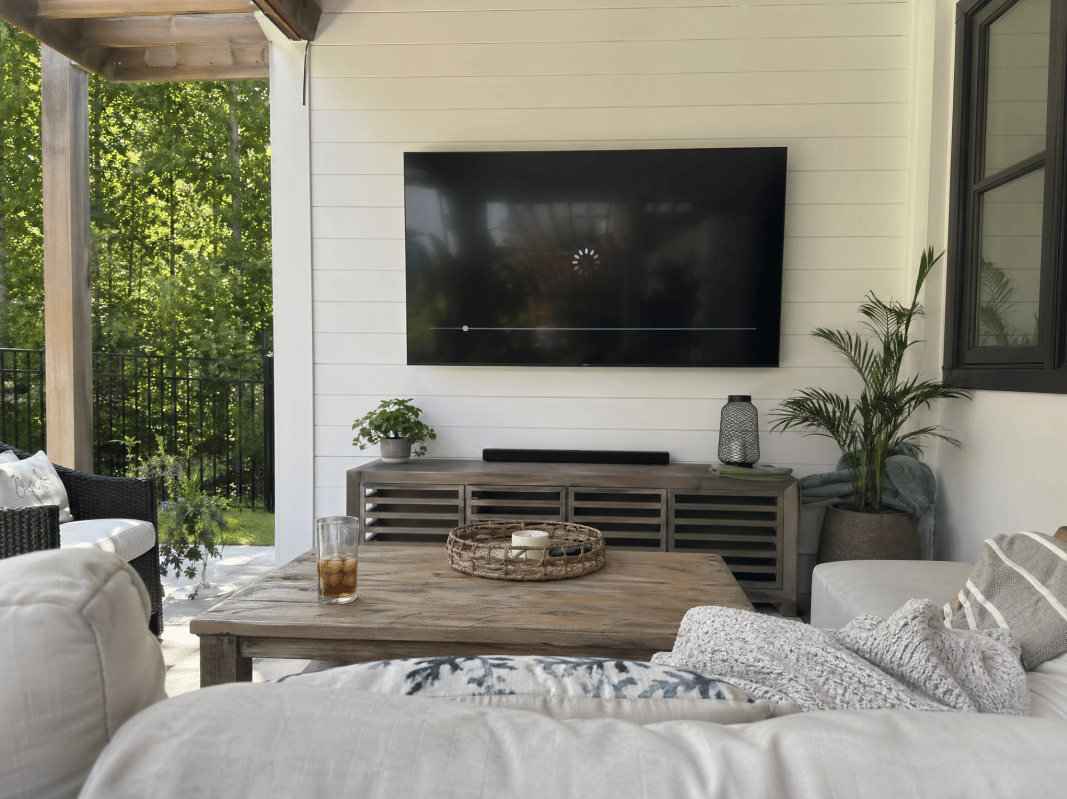
Indoor and outdoor TVs aren't just different sticker prices — they're fundamentally different products engineered for different environments. Five spec differences determine outdoor performance:
Indoor TVs typically deliver 250-400 nits of peak brightness. This is fine for indoor viewing, where ambient light averages 200-500 lux.
Outdoor environments deliver 5,000-15,000 lux of ambient light. The math doesn't work — a 300-nit indoor TV is invisible during daytime outdoor viewing. The image washes out completely.
Outdoor TVs deliver 1,000-2,000 nits to compete with outdoor ambient light. The brightness gap is 3-10x — a deliberate spec difference, not a marketing exaggeration.
Real-world impact: An indoor TV in your shaded covered patio is "kind of usable" in the evening but "completely washed out" during daytime. You bought a TV you can only use 4-6 hours daily.
Indoor TVs have open ventilation slots, no sealed connections, and no protection against moisture, dust, or insects. Operating outdoors, these failure modes become routine:
Outdoor TVs are sealed against all of these — IP55 weatherproofing is the standard. Real protection, not just a label.
Indoor TVs use plastic bezels, panel coatings, and electronic components that aren't UV-stabilized. Continuous outdoor exposure causes:
Outdoor TVs use UV-stable materials throughout — engineered for 10+ years of outdoor exposure without cosmetic or functional degradation.
Indoor TVs operate in controlled environments (typically 60-80°F). They're rated for 32-104°F operation but with the understanding that controlled HVAC is providing this environment.
Outdoor temperatures range much wider. A summer afternoon in Texas hits 105°F+ ambient, plus radiant heat from black metal mounting wall, plus sun-heated TV chassis — easily exceeding indoor TV operating temperature ceilings.
Outdoor TVs include active thermal management (internal cooling fans, heat-dissipating chassis) and are rated for the wider outdoor temperature range — typically 32°F-122°F minimum, with cold-climate models extending to -22°F.
Indoor TV speakers are tuned for indoor acoustics — the room reflects sound back at the listener, effectively amplifying perceived loudness. Outdoor environments don't have these reflections, so the same speakers sound 30-40% quieter outdoors.
Combined with higher ambient noise outdoors (wind, traffic, pool equipment, neighbors), indoor TV speakers struggle to deliver intelligible audio outdoors.
Outdoor TVs typically include more powerful speakers (15-30W vs 8-15W indoor) and audio tuning for outdoor acoustic environments.
The progression varies by climate but follows a predictable pattern:
The TV powers on. The image works (if dim during the day). You're feeling smart for saving $1,500.
Reality sets in:
Most indoor TVs used outdoors fail completely within 12-18 months. The exact timing depends on climate severity.
You've replaced a $500 indoor TV after 14 months. Out of frustration, you buy another $500 indoor TV. It fails 11 months later. You're now $1,000 in, with no working TV, and no warranty coverage (indoor TVs used outdoors voids manufacturer warranty).
You finally buy a $1,500 outdoor TV. Total spent: $2,500. Could have spent $1,500 from the start.
There's a narrow set of scenarios where an indoor TV used outdoors makes sense:
If your "outdoor" space is actually a fully enclosed screened porch in a dry climate (Arizona, Colorado, parts of Nevada), an indoor TV can work for 2-3 years. The screened walls prevent insect access. The dry climate prevents humidity damage. The roof prevents UV exposure.
Even here, daytime visibility is limited by the indoor TV's brightness. But the failure mode timing extends meaningfully.
For under 1 year of evening-only use in a covered space, an indoor TV survives. Examples: rental property interim solution before installing real outdoor TV, temporary setup during patio renovation, occasional vacation home use.
The math works only if "short term" is genuinely short. Plans to "use this for a year then upgrade" usually become 2-3 years, by which point the TV has failed.
A purpose-built outdoor TV enclosure (The TV Shield, Storm Shell) lets you mount a regular indoor TV inside a sealed weatherproof case. This actually works:
For fully covered installations with budget constraints, this is a legitimate alternative to a real outdoor TV. Trade-offs include reduced sound quality (audio passes through acrylic), aesthetic considerations (the enclosure is visible), and limited upgrade flexibility.
If outdoor TV pricing is a barrier, three legitimate alternatives are worth considering:
The cheapest IP55-rated outdoor TV from a recognizable retail brand. Real outdoor TV engineering, real outdoor TV warranty, real outdoor TV durability. Limited to fully shaded installations (700 nits) and basic smart features (XUMO TV), but built for outdoor use.
For tight budgets in shaded covered porches, this is the right answer rather than an indoor TV. Same effective price after accounting for indoor TV failure replacement.
A regular indoor TV inside a TV Shield or similar enclosure delivers indoor TV picture quality with outdoor TV durability. The enclosure handles the weatherproofing and thermal management; the TV handles the picture.
Aesthetic and audio compromises are real, but the math works for budget-constrained installations in fully covered spaces.
If actual outdoor usage will be a few movie nights per year — birthday parties, summer holidays, occasional hosting — a $400 battery projector beats both indoor TV outdoors and dedicated outdoor TV. Setup-and-storage friction is acceptable for occasional use.
For high-frequency daily evening use, projectors don't compete with outdoor TVs (see daytime visibility issues), but for genuine occasional use cases, they're often the right answer.
If you're considering an indoor TV outdoors purely because outdoor TVs seem expensive, three options at $1,200-$1,500 are worth evaluating before committing to the indoor TV mistake:
For partial-sun installations in warm-climate markets (Florida, Texas, California, Gulf Coast), the BF-55ODTV delivers genuine outdoor TV specs at a price that makes the indoor TV tradeoff unnecessary. 1,500 nits handles afternoon visibility. IP55 weatherproofing handles humid climates. All-metal construction handles coastal salt air. The 30W hardware Atmos audio handles outdoor acoustic environments.
Total ownership cost over 7 years: $1,499 ÷ 7 = $214/year. Less than buying a $500 indoor TV every 14 months.
Best for: Buyers in warm-climate US markets considering "should I just use indoor TV outdoors" — answer is no, this is the price-conscious correct answer.
For tight budgets in moderately shaded installations, Furrion's value tier delivers IP54 weatherproofing and 750-nit brightness — appropriate for fully covered patios with light afternoon exposure. webOS smart platform.
The IP54 vs IP55 difference is small. The 750-nit ceiling is real — don't expect partial-sun viewing performance.
Best for: Budget-conscious buyers in fully covered outdoor spaces.
Technically yes, but practically no. Indoor TVs used outdoors typically fail within 12-18 months in most US climates due to humidity, insect damage, UV exposure, and thermal stress. Daytime visibility is limited by 250-400 nit brightness vs 1,000-2,000 nit outdoor TVs. Evening-only use in fully covered dry-climate spaces extends usable life to 2-3 years, but most installations don't fit those constraints.
The Element EP500AE55C at $899 is the cheapest IP55-rated outdoor TV from a recognizable retail brand. It's limited to fully shaded installations (700 nits) and has basic XUMO TV smart platform, but it's built for outdoor use with real warranty protection. For shaded budget installations, this beats indoor TV alternatives in long-term cost.
Yes — purpose-built outdoor TV enclosures (The TV Shield, Storm Shell) let you mount regular indoor TVs in sealed weatherproof cases. Total cost runs $700-$1,200 for the combination. Trade-offs: reduced audio quality, visible enclosure aesthetic, limited future upgrade flexibility. For budget-constrained installations in fully covered spaces, it's a legitimate alternative to dedicated outdoor TVs.
Five mechanical failure modes: humidity penetration into open ventilation (panel electronics failure), insect intrusion (board short circuits), UV degradation of plastic and panel coatings, thermal stress from outdoor temperature extremes, and dust accumulation reducing cooling capacity. The combination of these factors typically causes complete failure within 12-18 months.
For installations with regular use (more than weekly) and meaningful daytime viewing requirements, yes. The price gap between indoor TVs ($400-$600) and outdoor TVs ($1,200-$1,500) is real, but indoor TVs used outdoors fail and require replacement. Total cost of ownership over 5-7 years usually favors outdoor TVs unless usage is genuinely occasional.
Indoor TVs and outdoor TVs are different products engineered for different environments. The price gap reflects real engineering differences — brightness, weatherproofing, UV resistance, operating temperature, audio tuning. Each of these specs matters in real-world outdoor use.
The honest decision matrix:
For warm-climate US markets considering "I'll save money with an indoor TV," the ByteFree BF-55ODTV at $1,499 is the spec-correct answer that makes the indoor TV gamble unnecessary. 1,500 nits, IP55, all-metal, 30W Atmos audio, Google TV — the full outdoor TV spec at the price point that makes "just use indoor TV" unnecessary.
The math always works in favor of buying the right tool for the job.
Related reading:
It's actually one of the worst money-saving decisions in home entertainment. Indoor TVs used outdoors fail within 12-18 months in most US climates, often within 6 months in humid regions. The cost of replacement makes the initial savings disappear immediately.
Here's what's actually different between regular TVs and outdoor TVs, why the spec gap matters in real-world conditions, and the alternatives that actually work for tight budgets.
The Five Spec Differences That Matter
Indoor and outdoor TVs aren't just different sticker prices — they're fundamentally different products engineered for different environments. Five spec differences determine outdoor performance:
1. Brightness: 300 Nits vs 1,500 Nits
Indoor TVs typically deliver 250-400 nits of peak brightness. This is fine for indoor viewing, where ambient light averages 200-500 lux.
Outdoor environments deliver 5,000-15,000 lux of ambient light. The math doesn't work — a 300-nit indoor TV is invisible during daytime outdoor viewing. The image washes out completely.
Outdoor TVs deliver 1,000-2,000 nits to compete with outdoor ambient light. The brightness gap is 3-10x — a deliberate spec difference, not a marketing exaggeration.
Real-world impact: An indoor TV in your shaded covered patio is "kind of usable" in the evening but "completely washed out" during daytime. You bought a TV you can only use 4-6 hours daily.
2. Weatherproofing: None vs IP55
Indoor TVs have open ventilation slots, no sealed connections, and no protection against moisture, dust, or insects. Operating outdoors, these failure modes become routine:
- Humidity penetration: Indoor TVs let humid air directly contact internal electronics. In humid climates (Florida, Gulf Coast, Pacific Northwest), condensation cycles cause panel electronics failure within 12-18 months. Often sudden — the TV works fine until one day it doesn't.
- Insect damage: Insects (especially small ants and mites) crawl into ventilation slots seeking warmth or moisture. Once inside, they short-circuit boards. Common failure mode in southern US summers.
- Dust accumulation: Internal dust accumulation in indoor TV ventilation reduces cooling efficiency over months, leading to thermal failure.
Outdoor TVs are sealed against all of these — IP55 weatherproofing is the standard. Real protection, not just a label.
3. UV Resistance: None vs Designed for Sun Exposure
Indoor TVs use plastic bezels, panel coatings, and electronic components that aren't UV-stabilized. Continuous outdoor exposure causes:
- Plastic bezel discoloration and brittleness within 1-2 summers
- Anti-glare coating degradation reducing image quality
- Panel-to-bezel adhesive breakdown
Outdoor TVs use UV-stable materials throughout — engineered for 10+ years of outdoor exposure without cosmetic or functional degradation.
4. Operating Temperature Range
Indoor TVs operate in controlled environments (typically 60-80°F). They're rated for 32-104°F operation but with the understanding that controlled HVAC is providing this environment.
Outdoor temperatures range much wider. A summer afternoon in Texas hits 105°F+ ambient, plus radiant heat from black metal mounting wall, plus sun-heated TV chassis — easily exceeding indoor TV operating temperature ceilings.
Outdoor TVs include active thermal management (internal cooling fans, heat-dissipating chassis) and are rated for the wider outdoor temperature range — typically 32°F-122°F minimum, with cold-climate models extending to -22°F.
5. Audio for Outdoor Acoustics
Indoor TV speakers are tuned for indoor acoustics — the room reflects sound back at the listener, effectively amplifying perceived loudness. Outdoor environments don't have these reflections, so the same speakers sound 30-40% quieter outdoors.
Combined with higher ambient noise outdoors (wind, traffic, pool equipment, neighbors), indoor TV speakers struggle to deliver intelligible audio outdoors.
Outdoor TVs typically include more powerful speakers (15-30W vs 8-15W indoor) and audio tuning for outdoor acoustic environments.
What Actually Happens When You Use an Indoor TV Outdoors
The progression varies by climate but follows a predictable pattern:
Months 1-3: Looks Like It's Working
The TV powers on. The image works (if dim during the day). You're feeling smart for saving $1,500.
Months 3-9: Audio and Brightness Frustration
Reality sets in:
- Daytime viewing is impossible
- Audio is barely audible at typical patio listening distance
- You start using the TV only at night, only at close range
- Practical use frequency drops 60-80% compared to expected
Months 6-18: Mechanical Failure (Climate-Dependent)
- Humid climates (Florida, Gulf Coast): Panel electronics fail. Usually sudden — the TV works fine on Tuesday and doesn't power on Wednesday.
- Hot climates (Texas, Arizona): Thermal failure during summer peaks. Internal capacitors degrade from heat cycling.
- All climates: Insect damage (especially summer), dust accumulation in ventilation
- Coastal climates: Salt corrosion of internal connections, accelerated bezel degradation
Most indoor TVs used outdoors fail completely within 12-18 months. The exact timing depends on climate severity.
Beyond Year 1: The Math Disaster
You've replaced a $500 indoor TV after 14 months. Out of frustration, you buy another $500 indoor TV. It fails 11 months later. You're now $1,000 in, with no working TV, and no warranty coverage (indoor TVs used outdoors voids manufacturer warranty).
You finally buy a $1,500 outdoor TV. Total spent: $2,500. Could have spent $1,500 from the start.
When Indoor TVs Actually Work Outdoors
There's a narrow set of scenarios where an indoor TV used outdoors makes sense:
Fully Enclosed Screened Porch in Dry Climate
If your "outdoor" space is actually a fully enclosed screened porch in a dry climate (Arizona, Colorado, parts of Nevada), an indoor TV can work for 2-3 years. The screened walls prevent insect access. The dry climate prevents humidity damage. The roof prevents UV exposure.
Even here, daytime visibility is limited by the indoor TV's brightness. But the failure mode timing extends meaningfully.
Evening-Only, Short-Term Use
For under 1 year of evening-only use in a covered space, an indoor TV survives. Examples: rental property interim solution before installing real outdoor TV, temporary setup during patio renovation, occasional vacation home use.
The math works only if "short term" is genuinely short. Plans to "use this for a year then upgrade" usually become 2-3 years, by which point the TV has failed.
Indoor TV Inside an Outdoor Enclosure
A purpose-built outdoor TV enclosure (The TV Shield, Storm Shell) lets you mount a regular indoor TV inside a sealed weatherproof case. This actually works:
- Cost: $300-$500 for the enclosure
- Plus $400-$700 for an indoor TV
- Total: $700-$1,200
For fully covered installations with budget constraints, this is a legitimate alternative to a real outdoor TV. Trade-offs include reduced sound quality (audio passes through acrylic), aesthetic considerations (the enclosure is visible), and limited upgrade flexibility.
Real Budget Alternatives to Indoor TVs Outdoors
If outdoor TV pricing is a barrier, three legitimate alternatives are worth considering:
Element EP500AE55C ($899)
The cheapest IP55-rated outdoor TV from a recognizable retail brand. Real outdoor TV engineering, real outdoor TV warranty, real outdoor TV durability. Limited to fully shaded installations (700 nits) and basic smart features (XUMO TV), but built for outdoor use.
For tight budgets in shaded covered porches, this is the right answer rather than an indoor TV. Same effective price after accounting for indoor TV failure replacement.
Indoor TV + Outdoor Enclosure Combo ($700-$1,200)
A regular indoor TV inside a TV Shield or similar enclosure delivers indoor TV picture quality with outdoor TV durability. The enclosure handles the weatherproofing and thermal management; the TV handles the picture.
Aesthetic and audio compromises are real, but the math works for budget-constrained installations in fully covered spaces.
Battery Projector for Occasional Use ($400)
If actual outdoor usage will be a few movie nights per year — birthday parties, summer holidays, occasional hosting — a $400 battery projector beats both indoor TV outdoors and dedicated outdoor TV. Setup-and-storage friction is acceptable for occasional use.
For high-frequency daily evening use, projectors don't compete with outdoor TVs (see daytime visibility issues), but for genuine occasional use cases, they're often the right answer.
Outdoor TVs in the $1,200-$1,500 Tier (Better Than Indoor TV Alternatives)
If you're considering an indoor TV outdoors purely because outdoor TVs seem expensive, three options at $1,200-$1,500 are worth evaluating before committing to the indoor TV mistake:
ByteFree BF-55ODTV ($1,499)
For partial-sun installations in warm-climate markets (Florida, Texas, California, Gulf Coast), the BF-55ODTV delivers genuine outdoor TV specs at a price that makes the indoor TV tradeoff unnecessary. 1,500 nits handles afternoon visibility. IP55 weatherproofing handles humid climates. All-metal construction handles coastal salt air. The 30W hardware Atmos audio handles outdoor acoustic environments.
Total ownership cost over 7 years: $1,499 ÷ 7 = $214/year. Less than buying a $500 indoor TV every 14 months.
Best for: Buyers in warm-climate US markets considering "should I just use indoor TV outdoors" — answer is no, this is the price-conscious correct answer.
Furrion Aurora Partial-Sun ($1,199)
For tight budgets in moderately shaded installations, Furrion's value tier delivers IP54 weatherproofing and 750-nit brightness — appropriate for fully covered patios with light afternoon exposure. webOS smart platform.
The IP54 vs IP55 difference is small. The 750-nit ceiling is real — don't expect partial-sun viewing performance.
Best for: Budget-conscious buyers in fully covered outdoor spaces.
Frequently Asked Questions
Can I use a regular indoor TV outdoors?
Technically yes, but practically no. Indoor TVs used outdoors typically fail within 12-18 months in most US climates due to humidity, insect damage, UV exposure, and thermal stress. Daytime visibility is limited by 250-400 nit brightness vs 1,000-2,000 nit outdoor TVs. Evening-only use in fully covered dry-climate spaces extends usable life to 2-3 years, but most installations don't fit those constraints.
What's the cheapest real outdoor TV?
The Element EP500AE55C at $899 is the cheapest IP55-rated outdoor TV from a recognizable retail brand. It's limited to fully shaded installations (700 nits) and has basic XUMO TV smart platform, but it's built for outdoor use with real warranty protection. For shaded budget installations, this beats indoor TV alternatives in long-term cost.
Can an indoor TV in an outdoor enclosure work?
Yes — purpose-built outdoor TV enclosures (The TV Shield, Storm Shell) let you mount regular indoor TVs in sealed weatherproof cases. Total cost runs $700-$1,200 for the combination. Trade-offs: reduced audio quality, visible enclosure aesthetic, limited future upgrade flexibility. For budget-constrained installations in fully covered spaces, it's a legitimate alternative to dedicated outdoor TVs.
Why do indoor TVs fail outside?
Five mechanical failure modes: humidity penetration into open ventilation (panel electronics failure), insect intrusion (board short circuits), UV degradation of plastic and panel coatings, thermal stress from outdoor temperature extremes, and dust accumulation reducing cooling capacity. The combination of these factors typically causes complete failure within 12-18 months.
Are outdoor TVs really worth the price difference?
For installations with regular use (more than weekly) and meaningful daytime viewing requirements, yes. The price gap between indoor TVs ($400-$600) and outdoor TVs ($1,200-$1,500) is real, but indoor TVs used outdoors fail and require replacement. Total cost of ownership over 5-7 years usually favors outdoor TVs unless usage is genuinely occasional.
Summary
Indoor TVs and outdoor TVs are different products engineered for different environments. The price gap reflects real engineering differences — brightness, weatherproofing, UV resistance, operating temperature, audio tuning. Each of these specs matters in real-world outdoor use.
The honest decision matrix:
- Daily outdoor use, daytime viewing matters, humid or hot climate → Real outdoor TV ($1,499+ tier)
- Fully covered shaded space, evening-only use, dry climate → Real outdoor TV at budget tier ($899 Element)
- Fully covered space, indoor TV outdoor enclosure combo → $700-$1,200 alternative
- Genuine occasional use, willing to set up each time → $400 battery projector
- Indoor TV directly outdoors → Don't. Will fail within 12-18 months in most climates.
For warm-climate US markets considering "I'll save money with an indoor TV," the ByteFree BF-55ODTV at $1,499 is the spec-correct answer that makes the indoor TV gamble unnecessary. 1,500 nits, IP55, all-metal, 30W Atmos audio, Google TV — the full outdoor TV spec at the price point that makes "just use indoor TV" unnecessary.
The math always works in favor of buying the right tool for the job.
Related reading:


