


Catalogs Hide
A covered patio changes the outdoor TV equation in one important way: you're dealing with far less direct sun. That affects how much brightness you need — but it doesn't change the weatherproofing requirements at all.
Rain still blows in sideways. Humidity is constant. Temperature still swings between seasons. Getting the brightness spec right means you don't overpay. Getting the weatherproofing spec right means the TV survives.
Here's how to pick for a covered patio in 2026.
Solid roof, no direct sun at any angle: Morning and evening indirect light only. 700–1,000 nits is enough. You don't need to pay for a 1,500-nit panel if the sun never reaches the screen.
Partial cover — pergola, lattice, or open sides: Indirect light most of the time, occasional direct sun depending on time of day and season. 1,000–1,500 nits is the safe range here. 1,000 nits handles most of it; 1,500 nits handles all of it.
Covered but open south or west side: If the cover is overhead but the sun reaches the screen horizontally in the afternoon, you have partial-sun exposure regardless of the roof. 1,500 nits minimum.
The mistake most covered-patio buyers make is defaulting to the cheapest outdoor TV because "it's under a roof." The roof affects top-down sun. It doesn't block angled afternoon light, and it doesn't address humidity at all.
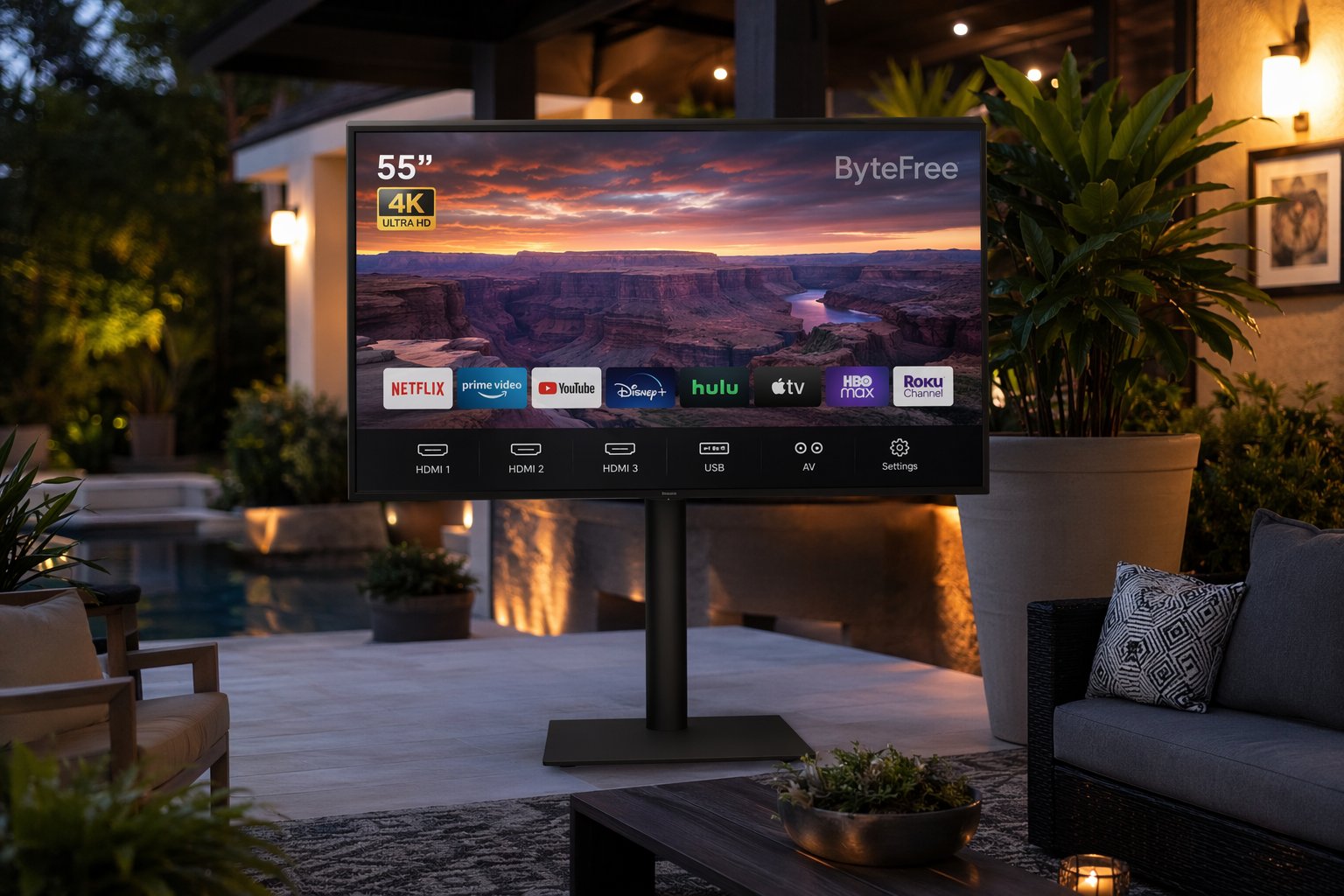
For covered patios with any open-side exposure or afternoon indirect light, the BF-55ODTV is the right spec. 1,500 nits gives you headroom over the 1,000-nit models — you'll notice it on bright overcast days and late-afternoon ambient light conditions that are hard to predict in advance.
The all-metal construction handles the humidity and condensation cycles that covered patios see through season changes. IP55 covers the blown-in rain scenarios. Google TV with Chromecast is clean for a patio setup where you're casting from a couch or outdoor chair across the space.
The argument for ByteFree over the cheaper DeckPro 2.0 on a covered patio: $300 extra for 500 more nits and metal vs. partial-plastic housing. Over a 5-year install lifespan, that trade is easy to justify.
Best for: Most covered patios — pergolas, partially enclosed porches, covered decks with open sides.
If the cover is solid, the roof is substantial, and the patio is enclosed on most sides with minimal sun exposure at any time of day — 1,000 nits is genuinely sufficient and the DeckPro 2.0 is the sensible choice. North-facing fully covered porches are the clearest example of where saving the $300 makes sense.
Distance: For a 55" TV, comfortable viewing distance starts around 7 feet. Most covered patios naturally create this distance between the wall and the seating area.
Cable runs: Even under a covered patio, run cables through weatherproof conduit. Humidity reaches exposed cable runs and connectors over time. Use outdoor-rated HDMI cables for any permanent installation.
Mounting surface: Check what's behind the wall before drilling. Covered patios often have composite decking material or stucco exteriors — both are fine for mounting if you hit studs or use proper anchors rated for the TV's weight.
Rain still blows in sideways. Humidity is constant. Temperature still swings between seasons. Getting the brightness spec right means you don't overpay. Getting the weatherproofing spec right means the TV survives.
Here's how to pick for a covered patio in 2026.
Brightness Under Cover: What You Actually Need
Covered patios fall into a few categories:Solid roof, no direct sun at any angle: Morning and evening indirect light only. 700–1,000 nits is enough. You don't need to pay for a 1,500-nit panel if the sun never reaches the screen.
Partial cover — pergola, lattice, or open sides: Indirect light most of the time, occasional direct sun depending on time of day and season. 1,000–1,500 nits is the safe range here. 1,000 nits handles most of it; 1,500 nits handles all of it.
Covered but open south or west side: If the cover is overhead but the sun reaches the screen horizontally in the afternoon, you have partial-sun exposure regardless of the roof. 1,500 nits minimum.
The mistake most covered-patio buyers make is defaulting to the cheapest outdoor TV because "it's under a roof." The roof affects top-down sun. It doesn't block angled afternoon light, and it doesn't address humidity at all.
Why IP Rating Still Matters Under a Roof
A covered patio isn't a dry environment:- Rain blows in sideways during storms, especially if the patio has open sides
- Humidity is ambient — outdoor air at 70–80% humidity surrounds the TV year-round
- Condensation forms on cool mornings after warm nights
- Insects and debris find their way into any unsealed enclosure over time
The Right TVs for Covered Patios
ByteFree BF-55ODTV — Best All-Around Covered Patio Pick
$1,499 | 1,500 nits | IP55 | Google TV | All-Metal
For covered patios with any open-side exposure or afternoon indirect light, the BF-55ODTV is the right spec. 1,500 nits gives you headroom over the 1,000-nit models — you'll notice it on bright overcast days and late-afternoon ambient light conditions that are hard to predict in advance.
The all-metal construction handles the humidity and condensation cycles that covered patios see through season changes. IP55 covers the blown-in rain scenarios. Google TV with Chromecast is clean for a patio setup where you're casting from a couch or outdoor chair across the space.
The argument for ByteFree over the cheaper DeckPro 2.0 on a covered patio: $300 extra for 500 more nits and metal vs. partial-plastic housing. Over a 5-year install lifespan, that trade is easy to justify.
Best for: Most covered patios — pergolas, partially enclosed porches, covered decks with open sides.
Sylvox DeckPro 2.0 — Best for Deep-Covered Installs
~$1,199 | 1,000 nits | IP55 | Google TVIf the cover is solid, the roof is substantial, and the patio is enclosed on most sides with minimal sun exposure at any time of day — 1,000 nits is genuinely sufficient and the DeckPro 2.0 is the sensible choice. North-facing fully covered porches are the clearest example of where saving the $300 makes sense.
Covered Patio Setup Tips
Height: Mount the screen so the center sits at eye level when seated. For most patio furniture, that's 42–48 inches from ground to screen center. Mounting too high causes neck strain on long viewing sessions.Distance: For a 55" TV, comfortable viewing distance starts around 7 feet. Most covered patios naturally create this distance between the wall and the seating area.
Cable runs: Even under a covered patio, run cables through weatherproof conduit. Humidity reaches exposed cable runs and connectors over time. Use outdoor-rated HDMI cables for any permanent installation.
Mounting surface: Check what's behind the wall before drilling. Covered patios often have composite decking material or stucco exteriors — both are fine for mounting if you hit studs or use proper anchors rated for the TV's weight.


