


Catalogs Hide
It's one of the first questions people ask when they're considering an outdoor TV — and one of the hardest to get a straight answer on. Most brand content either avoids the question entirely or cites a panel lifetime spec (50,000 hours) that sounds impressive but doesn't answer what people actually want to know.
Here's the honest answer: how long outdoor TVs actually last, what determines their lifespan, and how to get the most out of one.
At 8 hours of use per day, 50,000 hours = 17 years of panel life. At 4 hours per day, 34 years.
No outdoor TV's other components last that long under outdoor conditions. The panel lifetime spec is a theoretical maximum for a component in ideal conditions. It tells you the panel won't fail first — which is useful, but not the whole story.
The panel might last 50,000 hours. The housing around it is what faces UV radiation, temperature cycling, humidity, and physical weathering every day.
Plastic housings in direct sun environments typically degrade noticeably within 3–5 years — yellowing, brittleness, gap formation that compromises the weatherproof seal. Once the seal starts failing, moisture ingress begins the slow process of component corrosion.
All-metal housings don't degrade the same way under UV. They're more dimensionally stable through freeze-thaw cycling and don't develop the micro-cracks that plastic does under sustained weathering. The lifespan advantage of metal housing over plastic in outdoor environments is meaningful and underappreciated.
2. Thermal management
Electronics running hot age faster. Capacitors, particularly, degrade with heat — their lifespan is roughly halved for every 10°C of sustained operating temperature above their rated range.
A TV with active cooling maintains operating temperatures within spec even on hot summer days with direct sun exposure. A TV without active cooling relies on passive dissipation — which in direct summer sun may not be sufficient, running internal temperatures higher than designed and shortening component lifespan.
3. Moisture and seal integrity
IP55 prevents external water ingress. But seals degrade over time, especially in environments with frequent temperature cycling and UV exposure. The quality of the original seal, the materials used, and how well the housing maintains its structural integrity over years all affect how long the IP rating remains effective.
4. Usage patterns
A TV used 6–8 hours per day in direct summer sun ages faster than one used 2–3 hours in the evening under a covered patio. Both can last long lives — but daily stress accumulates.
A quality outdoor TV with metal housing and IP55 should deliver 7–10+ years of reliable operation. Panel brightness will decline gradually (typical LCD dimming after 50,000 hours) but other components in a well-protected install have low failure rates.
Partial sun, east/west-facing wall, 4–6 hours daily:
5–8 years is a realistic expectation from a quality outdoor TV. More thermal stress than a shaded install, but manageable for a TV with active cooling and metal construction.
Full sun, south-facing, 4–6 hours daily:
3–6 years from a partial-sun TV pushed into full-sun service (brightness and thermal degradation both accelerate). A proper full-sun-rated TV in this environment extends that to 5–8 years.
Indoor TV taken outside:
6–24 months before a failure event. Humidity and UV accelerate failure dramatically in an enclosure not designed for outdoor conditions.
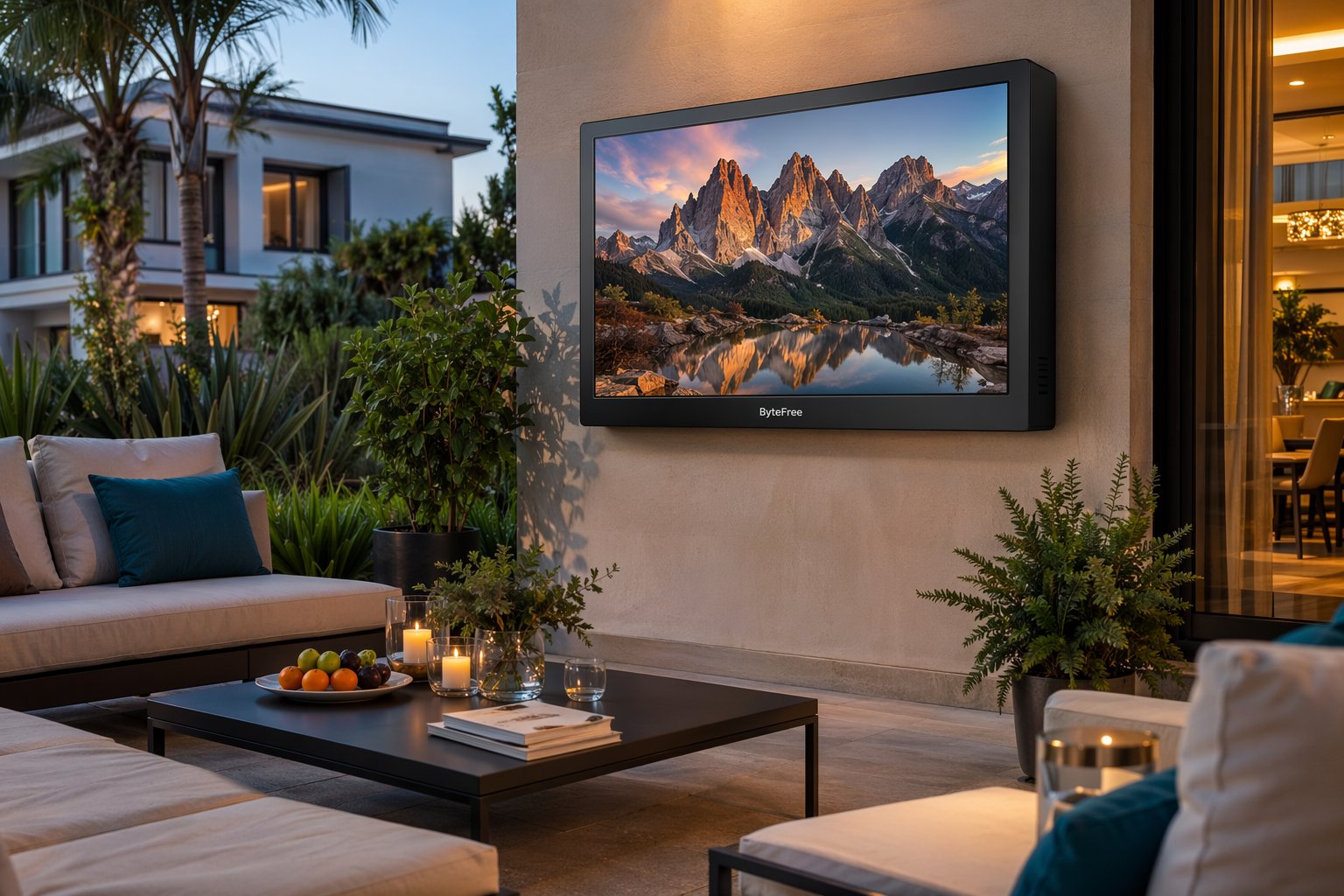
The BF-55ODTV is spec'd for long-term outdoor deployment in every dimension that determines actual lifespan.
All-metal bezel and rear housing eliminates the primary failure mode that ends plastic-housed outdoor TVs prematurely. UV resistance, dimensional stability, and enclosure integrity hold up across years of outdoor use in ways that plastic doesn't.
Four internal cooling fans actively manage thermal load during extended operation in warm conditions. Component temperatures stay within spec even during sustained summer use — the condition most likely to cause early component aging in passively cooled TVs.
IP55 with sealed connectors maintains the moisture barrier that protects internal electronics. The seal is the second most important structural spec after housing material — and it performs best in an all-metal construction that doesn't crack or warp over time.
50,000-hour panel lifetime is a floor, not a ceiling, for normal residential use patterns. At 5 hours per day of outdoor viewing, that's 27 years of panel life — the panel won't be the thing that fails.
Keep vents and ports sealed when not in use. Close port covers on unused connectors. Debris, insects, and moisture find ingress points over time if left open.
Don't cut power while the TV is hot. Allow normal shutdown so the cooling fans can reduce internal temperature before the unit powers off completely. In hot climate installs, this matters.
Clean the screen and housing periodically. Salt air, pollen, and environmental contamination build up on outdoor TV surfaces. Gentle cleaning with appropriate products (screen-safe cleaner, soft cloth) keeps the anti-glare coating effective and removes anything that might work into seal edges over time.
Check mounting hardware annually. Outdoor mounting hardware experiences corrosion and loosening from thermal cycling. An annual check of bolt tightness and hardware condition prevents mounting failure.
The ByteFree BF-55ODTV is built for that lifespan. The all-metal construction, active cooling, and IP55 seal integrity are the specs that matter for longevity, not just day-one performance.
Here's the honest answer: how long outdoor TVs actually last, what determines their lifespan, and how to get the most out of one.
The Number Brands Cite vs. What It Means
50,000 hours panel lifetime is the standard spec on quality outdoor TV panels, including the ByteFree BF-55ODTV. That number sounds enormous. Here's what it means in context:At 8 hours of use per day, 50,000 hours = 17 years of panel life. At 4 hours per day, 34 years.
No outdoor TV's other components last that long under outdoor conditions. The panel lifetime spec is a theoretical maximum for a component in ideal conditions. It tells you the panel won't fail first — which is useful, but not the whole story.
What Actually Limits Outdoor TV Lifespan
1. The enclosure and housing materialsThe panel might last 50,000 hours. The housing around it is what faces UV radiation, temperature cycling, humidity, and physical weathering every day.
Plastic housings in direct sun environments typically degrade noticeably within 3–5 years — yellowing, brittleness, gap formation that compromises the weatherproof seal. Once the seal starts failing, moisture ingress begins the slow process of component corrosion.
All-metal housings don't degrade the same way under UV. They're more dimensionally stable through freeze-thaw cycling and don't develop the micro-cracks that plastic does under sustained weathering. The lifespan advantage of metal housing over plastic in outdoor environments is meaningful and underappreciated.
2. Thermal management
Electronics running hot age faster. Capacitors, particularly, degrade with heat — their lifespan is roughly halved for every 10°C of sustained operating temperature above their rated range.
A TV with active cooling maintains operating temperatures within spec even on hot summer days with direct sun exposure. A TV without active cooling relies on passive dissipation — which in direct summer sun may not be sufficient, running internal temperatures higher than designed and shortening component lifespan.
3. Moisture and seal integrity
IP55 prevents external water ingress. But seals degrade over time, especially in environments with frequent temperature cycling and UV exposure. The quality of the original seal, the materials used, and how well the housing maintains its structural integrity over years all affect how long the IP rating remains effective.
4. Usage patterns
A TV used 6–8 hours per day in direct summer sun ages faster than one used 2–3 hours in the evening under a covered patio. Both can last long lives — but daily stress accumulates.
Realistic Lifespan Expectations by Install Type
Shaded, covered patio, 3–4 hours daily use:A quality outdoor TV with metal housing and IP55 should deliver 7–10+ years of reliable operation. Panel brightness will decline gradually (typical LCD dimming after 50,000 hours) but other components in a well-protected install have low failure rates.
Partial sun, east/west-facing wall, 4–6 hours daily:
5–8 years is a realistic expectation from a quality outdoor TV. More thermal stress than a shaded install, but manageable for a TV with active cooling and metal construction.
Full sun, south-facing, 4–6 hours daily:
3–6 years from a partial-sun TV pushed into full-sun service (brightness and thermal degradation both accelerate). A proper full-sun-rated TV in this environment extends that to 5–8 years.
Indoor TV taken outside:
6–24 months before a failure event. Humidity and UV accelerate failure dramatically in an enclosure not designed for outdoor conditions.
ByteFree BF-55ODTV: Built for Long-Term Outdoor Life
50,000-hour panel | All-metal housing | IP55 | 4 cooling fans | UV-resistant construction
The BF-55ODTV is spec'd for long-term outdoor deployment in every dimension that determines actual lifespan.
All-metal bezel and rear housing eliminates the primary failure mode that ends plastic-housed outdoor TVs prematurely. UV resistance, dimensional stability, and enclosure integrity hold up across years of outdoor use in ways that plastic doesn't.
Four internal cooling fans actively manage thermal load during extended operation in warm conditions. Component temperatures stay within spec even during sustained summer use — the condition most likely to cause early component aging in passively cooled TVs.
IP55 with sealed connectors maintains the moisture barrier that protects internal electronics. The seal is the second most important structural spec after housing material — and it performs best in an all-metal construction that doesn't crack or warp over time.
50,000-hour panel lifetime is a floor, not a ceiling, for normal residential use patterns. At 5 hours per day of outdoor viewing, that's 27 years of panel life — the panel won't be the thing that fails.
How to Extend Outdoor TV Lifespan
Use a weatherproof cover during long non-use periods. A breathable outdoor TV cover during off-season storage (winter in cold climates, hurricane season in coastal areas) reduces cumulative weathering significantly. IP55 is for operational conditions; extended storage in harsh weather is a different scenario.Keep vents and ports sealed when not in use. Close port covers on unused connectors. Debris, insects, and moisture find ingress points over time if left open.
Don't cut power while the TV is hot. Allow normal shutdown so the cooling fans can reduce internal temperature before the unit powers off completely. In hot climate installs, this matters.
Clean the screen and housing periodically. Salt air, pollen, and environmental contamination build up on outdoor TV surfaces. Gentle cleaning with appropriate products (screen-safe cleaner, soft cloth) keeps the anti-glare coating effective and removes anything that might work into seal edges over time.
Check mounting hardware annually. Outdoor mounting hardware experiences corrosion and loosening from thermal cycling. An annual check of bolt tightness and hardware condition prevents mounting failure.
Bottom Line
A quality outdoor TV — proper IP rating, metal housing, active cooling — realistically lasts 7–10+ years in typical residential outdoor use. The panel will outlast most other components. What determines whether you reach that lifespan is housing material, thermal management, and installation quality.The ByteFree BF-55ODTV is built for that lifespan. The all-metal construction, active cooling, and IP55 seal integrity are the specs that matter for longevity, not just day-one performance.


