


Mia
New member
Catalogs Hide
- 1 The $1,300 Question: What Does SunBrite's Premium Actually Buy You?
- 2 What SunBrite's $1,300 Premium Actually Delivers
- 3 What You Gain by Choosing the ByteFree BF-55ODTV Instead
- 4 The Honest Trade-off: One Thing the ByteFree Doesn't Match
- 5 Who Should Still Buy the Veranda
- 6 Veranda 3 vs ByteFree BF-55ODTV at a Glance
- 7 Final Take: Is the ByteFree BF-55ODTV Really a Veranda 3 Alternative?
The SunBrite Veranda 3 is a legitimately good outdoor TV. It's a Dolby Vision-capable smart set with a Quantum Dot panel, 120Hz native refresh, IMAX Enhanced certification, and the commercial-grade aluminum chassis that SunBrite has built its reputation on since 2004. There's a reason it shows up on nearly every premium outdoor TV shortlist — and a reason Tom's Guide called it "the perfect TV to grace any shaded outdoor area" in their full review.
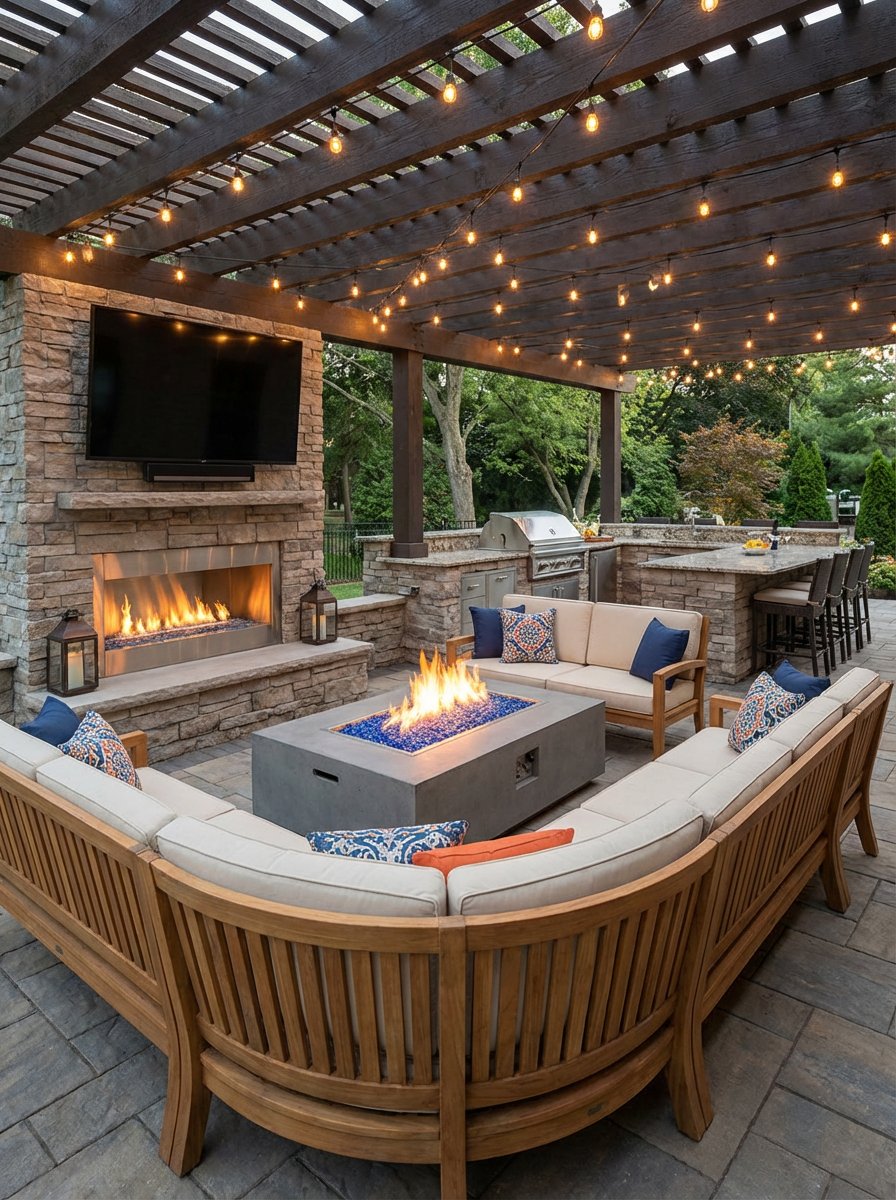
There's also a reason a growing number of outdoor TV shoppers are searching for a Veranda 3 alternative in 2026: it costs $2,898.95 for the 55-inch and $3,648.95 for the 65-inch. That's roughly twice the price of newer competitors delivering the same Dolby Vision streaming experience, the same IP55 weatherproofing, and in one specific case, noticeably better real-world brightness. The question isn't whether the Veranda 3 is a good TV — it is. The question is whether SunBrite's brand premium is worth $1,300 of your outdoor TV budget.
This guide walks through why the ByteFree BF-55ODTV at $1,499–$1,599 has become the most-recommended Veranda 3 alternative of 2026, what you actually get for the $1,300 savings, and the one honest trade-off the ByteFree doesn't match against SunBrite's flagship shade-optimized TV.
Stripped of branding, the two TVs are more similar than the price gap suggests. Both carry IP55 weatherproofing with all-metal chassis construction. Both support Dolby Vision HDR and stream Netflix, Disney+, and Apple TV+ with full cinematic color grading. Both ship with sealed weatherproof housings and rear-door cable management built for permanent outdoor installation. Both have remained popular across the 2026 outdoor TV buying guides at Tom's Guide, RTINGS, and TVsBook.
The differences that matter between them come down to three questions: Which TV is actually brighter in real-world use? Which delivers better audio out of the box? And what exactly are you paying SunBrite's premium for?
Independent testing answers the first two questions clearly. When Tom's Guide lab-tested the Veranda 3 for their full review, the 1,000-nit rated brightness measured at approximately 528 nits in sustained full-screen testing — roughly half the advertised number. Independent reviewers have measured the ByteFree BF-55ODTV at 900–1,000 nits sustained against its 1,500-nit peak rating, which puts real-world brightness at nearly 2× the measured Veranda 3 output. On a covered patio during the daytime, that difference is immediately visible. One AVS Forum user comparing the Veranda and Samsung Terrace in a showroom summarized it bluntly: "I was shocked to see how bad it looked."
On audio, both TVs advertise Dolby Atmos support, but the Veranda 3's 2 × 10W speakers pass Atmos through via eARC rather than decoding it natively — meaning the built-in speakers output stereo, and you need an external Atmos soundbar (SunBrite sells theirs for $600+) to actually hear object-based audio. The ByteFree BF-55ODTV ships with 2 × 15W speakers and hardware Atmos decoding built into the panel, which means native Atmos output from the TV itself without an add-on soundbar. That single difference typically represents $400–$600 of additional cost savings in a Veranda 3 setup that most buyers don't realize until after they've installed the TV and noticed the audio is underpowered.
The third question — what exactly the SunBrite premium buys — is where the answer gets nuanced, and where this article is going to be fair to SunBrite rather than one-sided.
To be honest about what you're getting for the Veranda 3's price tag, these four things genuinely distinguish it from the ByteFree:
A 120Hz native refresh rate. This is the Veranda 3's strongest technical feature and the one spec where it directly outperforms the ByteFree. The BF-55ODTV runs at 60Hz. For buyers planning to use the TV primarily for fast-motion sports viewing or who expect to connect a PS5 or Xbox Series X for 4K/120Hz console gaming outdoors, the Veranda 3's 120Hz is a real advantage. For typical streaming and cable TV viewing, the difference is minimal.
IMAX Enhanced certification. The Veranda 3 is one of the few outdoor TVs with the IMAX Enhanced badge, which pairs digitally remastered 4K HDR content with DTS audio technology. There's a limited but growing library of IMAX Enhanced content on streaming services, and for buyers who specifically seek this out, the certification has real value.
Commercial-grade aluminum chassis and installer-network support. SunBrite has been building outdoor TVs for commercial environments — hotels, restaurants, luxury residential properties — since 2004, and the Veranda 3's powder-coated aluminum chassis carries UL outdoor certification backed by a custom integrator network that handles direct IR, IP control, and OvrC Pro remote diagnostics. For professional installer projects where these control protocols and the brand relationship matter, that ecosystem is genuinely unmatched by any newer competitor.
Local dimming zones with Quantum Dot color. The Veranda 3 uses full-array local dimming behind its QLED panel, which delivers measurably better contrast in dark scenes than the ByteFree's edge-lit panel. In full-shade environments where ambient light is low enough to see deep blacks clearly, this is a picture quality advantage.
For buyers whose install context specifically needs 120Hz console gaming, IMAX Enhanced content, custom installer integration, or full-shade dark-scene contrast performance, the Veranda 3 earns its price. For buyers whose install is a standard streaming-focused covered patio without those specific requirements, the $1,300 premium is harder to justify.
The ByteFree BF-55ODTV delivers six concrete upgrades at the $1,499–$1,599 price point that the Veranda 3 either matches at double the cost or doesn't match at all:
Nearly 2× the real-world sustained brightness. ByteFree measures 900–1,000 nits sustained vs the Veranda 3's Tom's Guide-measured 528 nits. In any install with ambient light beyond true full shade, this brightness gap is the single most visible difference when the two TVs are compared side-by-side.
Google TV instead of Android TV. The Veranda 3 runs Android TV, which is the older Google smart platform. Google TV is the current-generation successor with deeper Netflix 4K Dolby Vision certification, better recommendation algorithms, and broader Play Store app support. Android TV still works, but some outdoor TVs running it have documented issues with Netflix defaulting to 1080p SDR despite the panel's Dolby Vision capability. Google TV on the ByteFree carries full Netflix 4K Dolby Vision certification natively, with no sideloading or streaming-stick workaround needed.
Hardware Dolby Atmos audio instead of passthrough. ByteFree's 2 × 15W built-in speakers with native Atmos decoding eliminate the $400–$600 outdoor soundbar add-on that most Veranda 3 installs effectively require. Indoor rooms have walls that reflect sound; outdoor spaces don't, so the Veranda 3's 2 × 10W passthrough audio loses volume and spatial information quickly in open air. The ByteFree's hardware Atmos fills the outdoor space without an external audio system.
Two-year-newer smart platform. The Veranda 3 launched in 2022 with the Android TV version that was current at that time. The ByteFree BF-55ODTV launched in 2026 with the current-generation Google TV build, which means longer platform support, more regular security updates, and a longer runway before the smart OS feels dated. For a TV that's going on a wall for 7–10 years, OS recency matters more than it does for indoor TVs that get replaced more often.
Anti-glare matte coating. ByteFree's anti-glare matte screen coating noticeably reduces reflection in bright ambient light. The Veranda 3's panel is more reflective by comparison — in Tom's Guide's review, the reviewer specifically noted the screen "did get noticeably hot" and needed to be moved into a more shaded install position to become comfortably watchable during daytime use.
The $1,300 savings itself. This is the bottom-line advantage. $1,300 in hand is $1,300 toward an outdoor soundbar (ByteFree doesn't need one, but you could still add one), mounting hardware, an outdoor dust cover, or simply a lower total project cost. For most buyers, this is the single most concrete reason to consider the alternative.
This is the part of the comparison most alternative articles skip, but it's genuinely important for making a sound buying decision.
The Veranda 3's 120Hz refresh rate is real, and the ByteFree doesn't match it. The BF-55ODTV ships with a 60Hz panel, which is standard for most outdoor TVs in this price tier but is lower than the Veranda 3's 120Hz. For three specific use cases, this matters:
If you play PS5 or Xbox Series X outdoors with 4K/120Hz titles, the Veranda 3 will display those titles at 120Hz while the ByteFree will cap them at 60Hz. For competitive gaming or content where motion smoothness is a priority (racing games, fast-paced shooters), the Veranda 3 is the more capable TV.
If you watch a lot of live sports where motion handling is a priority, the Veranda 3's 120Hz native refresh with motion interpolation will look smoother on fast camera pans than the ByteFree's 60Hz. For most viewers at typical viewing distances, the difference is subtle, but it exists.
If you're running higher-end Blu-ray content or specific streaming releases mastered at 60fps+ on a connected player, the Veranda 3 can display that content at its native frame rate. The ByteFree caps at 60Hz.
Outside those three specific scenarios, the 120Hz advantage is difficult to perceive in real outdoor viewing. Streaming content on Netflix, Disney+, Apple TV+, Max, and YouTube is almost entirely 24fps, 30fps, or 60fps — none of which benefit from 120Hz panel capability. Cable TV is 30fps or 60fps. If your outdoor viewing is streaming-first with occasional movies and shows, the 60Hz cap on the ByteFree won't be a limitation you notice.
For streaming-first households without console gaming ambitions, this trade-off doesn't meaningfully affect the comparison. For outdoor console gaming setups, this is the case where the Veranda 3's premium can genuinely earn its price. Be honest with yourself about which category you fit into.
Even as a ByteFree advocate, there are four clear scenarios where the Veranda 3 remains the right buy:
Custom installer projects. If you're working with a professional AV integrator on a luxury residential or hospitality installation, the Veranda 3's direct IR/IP control, OvrC Pro integration, and SunBrite's established installer-network relationships matter more than price-to-performance math. This is the use case SunBrite was built for, and newer brands haven't built the equivalent installer ecosystem.
Deep full-shade viewing where contrast matters more than brightness. In fully shaded installations where the TV never sees meaningful ambient light, the Veranda 3's local dimming zones with Quantum Dot color will deliver deeper blacks and better dark-scene contrast than the ByteFree. This is niche but real for buyers specifically optimizing for dark-scene picture quality in shade-only environments.
4K/120Hz console gaming outdoors. The 120Hz panel is the clearest objective advantage. If your outdoor TV is primarily a PS5 or Xbox Series X gaming screen, the Veranda 3 is the better panel for that purpose.
Buyers with specific brand loyalty or warranty-relationship priorities. SunBrite has been in the market since 2004 and has service infrastructure that newer brands haven't had time to build. If brand heritage and long-term serviceability weigh heavily in your buying decision, that's a legitimate preference.
For everyone else — which is the majority of residential outdoor TV buyers considering the Veranda 3 in 2026 — the ByteFree BF-55ODTV at roughly half the price is the more sensible purchase.
The Veranda 3 wins on three specs: 120Hz refresh, full-array local dimming, and installer-network support. The ByteFree wins on everything else that affects daily viewing — brightness, audio hardware, smart OS recency, anti-glare treatment, and price. For streaming-first outdoor viewing without console gaming priorities, the ByteFree wins the practical value comparison decisively.
Yes, with one specific caveat around console gaming. For streaming-first households — the 80% of outdoor TV buyers whose primary content is Netflix, Disney+, Apple TV+, Max, YouTube, and cable sports — the ByteFree BF-55ODTV delivers Dolby Vision streaming, hardware Atmos audio, brighter real-world picture performance, a newer smart OS, and matching IP55 weatherproofing at roughly half the Veranda 3's price. That's a $1,300 savings with no picture-quality penalty in typical streaming scenarios.
For the 20% of buyers whose outdoor TV is primarily a 4K/120Hz gaming display for PS5 or Xbox Series X, the Veranda 3's 120Hz panel is genuinely worth the premium and the ByteFree is the wrong recommendation. Be honest with yourself about which category your install falls into — and if you're in the streaming-first majority, the ByteFree is the smarter buy.
The broader point is that SunBrite established the premium pricing structure for residential outdoor TVs when they had no serious competition. In 2026, they still make excellent TVs, but the premium has become harder to justify as newer brands have matched the core feature set at meaningfully lower prices. The Veranda 3 is the incumbent; the ByteFree BF-55ODTV is the value disruptor that forced the comparison. For most buyers, the comparison settles in the disruptor's favor.
Is the ByteFree BF-55ODTV really as good as the SunBrite Veranda 3? For streaming-first outdoor viewing on covered patios and partial-sun installations, yes — and in some ways better. The ByteFree delivers nearly 2× the real-world sustained brightness, hardware Dolby Atmos audio instead of passthrough, and current-generation Google TV at half the Veranda 3's price. The Veranda 3 wins on 120Hz refresh rate and full-array local dimming, which matter for console gaming and dark-scene contrast specifically, but not for typical streaming use.
Why is the Veranda 3 so much more expensive than newer outdoor TVs? SunBrite's pricing reflects three factors: a 20-year brand heritage premium, commercial-grade aluminum chassis with UL certification, and the installer-network support infrastructure the company has built for custom AV integration projects. For standalone residential buyers who don't need custom installer support, most of that premium isn't value they'll actually use.
What's the real-world brightness difference between the Veranda 3 and ByteFree? Tom's Guide measured the Veranda 3's sustained full-screen brightness at approximately 528 nits in their review, despite the 1,000-nit rating. The ByteFree BF-55ODTV measures 900–1,000 nits sustained against its 1,500-nit peak rating. In real-world viewing, the ByteFree is nearly twice as bright, which is immediately visible in any install with ambient light beyond true full shade.
Does the ByteFree support Dolby Vision like the Veranda 3? Yes. Both TVs support Dolby Vision HDR and stream Netflix, Disney+, Apple TV+, and Max content with full dynamic scene-by-scene HDR metadata. The ByteFree pairs Dolby Vision with Google TV's native Netflix 4K certification, while the Veranda 3 runs Dolby Vision on Android TV — functionally equivalent for streaming picture quality.
Will I need an outdoor soundbar with the ByteFree? Generally no. The BF-55ODTV ships with 2 × 15W hardware Dolby Atmos speakers (30W total) with native Atmos decoding built into the panel. The Veranda 3's 2 × 10W speakers pass Atmos through via eARC but don't decode it internally, which means most Veranda 3 installs add an outdoor soundbar (SunBrite's runs $600+) to actually hear Atmos. The ByteFree eliminates that add-on cost.
What about the Veranda 3's 120Hz refresh rate? This is the Veranda 3's clearest technical advantage. The ByteFree runs at 60Hz. For 4K/120Hz console gaming on PS5 or Xbox Series X, or for viewers who specifically prioritize motion smoothness on live sports, the Veranda 3 is the better display. For streaming content on Netflix, Disney+, or cable TV — which runs at 24fps, 30fps, or 60fps — the 120Hz advantage is difficult to perceive in real viewing.
Should I buy the older Veranda 2 instead to save money? The Veranda 2 is still sold by SunBrite at lower prices, but it lacks Dolby Vision and smart TV functionality — you'd need an external streaming stick stored in the weatherproof media bay. The Veranda 2 is technically an older-generation product. Between the ByteFree BF-55ODTV and the Veranda 2, the ByteFree delivers better picture quality, Dolby Vision support, hardware Atmos, and a native smart OS at comparable pricing.
Book now on the official website and save $100 instantly.Official website: https://bytefree.net/
There's also a reason a growing number of outdoor TV shoppers are searching for a Veranda 3 alternative in 2026: it costs $2,898.95 for the 55-inch and $3,648.95 for the 65-inch. That's roughly twice the price of newer competitors delivering the same Dolby Vision streaming experience, the same IP55 weatherproofing, and in one specific case, noticeably better real-world brightness. The question isn't whether the Veranda 3 is a good TV — it is. The question is whether SunBrite's brand premium is worth $1,300 of your outdoor TV budget.
This guide walks through why the ByteFree BF-55ODTV at $1,499–$1,599 has become the most-recommended Veranda 3 alternative of 2026, what you actually get for the $1,300 savings, and the one honest trade-off the ByteFree doesn't match against SunBrite's flagship shade-optimized TV.
The $1,300 Question: What Does SunBrite's Premium Actually Buy You?
Stripped of branding, the two TVs are more similar than the price gap suggests. Both carry IP55 weatherproofing with all-metal chassis construction. Both support Dolby Vision HDR and stream Netflix, Disney+, and Apple TV+ with full cinematic color grading. Both ship with sealed weatherproof housings and rear-door cable management built for permanent outdoor installation. Both have remained popular across the 2026 outdoor TV buying guides at Tom's Guide, RTINGS, and TVsBook.
The differences that matter between them come down to three questions: Which TV is actually brighter in real-world use? Which delivers better audio out of the box? And what exactly are you paying SunBrite's premium for?
Independent testing answers the first two questions clearly. When Tom's Guide lab-tested the Veranda 3 for their full review, the 1,000-nit rated brightness measured at approximately 528 nits in sustained full-screen testing — roughly half the advertised number. Independent reviewers have measured the ByteFree BF-55ODTV at 900–1,000 nits sustained against its 1,500-nit peak rating, which puts real-world brightness at nearly 2× the measured Veranda 3 output. On a covered patio during the daytime, that difference is immediately visible. One AVS Forum user comparing the Veranda and Samsung Terrace in a showroom summarized it bluntly: "I was shocked to see how bad it looked."
On audio, both TVs advertise Dolby Atmos support, but the Veranda 3's 2 × 10W speakers pass Atmos through via eARC rather than decoding it natively — meaning the built-in speakers output stereo, and you need an external Atmos soundbar (SunBrite sells theirs for $600+) to actually hear object-based audio. The ByteFree BF-55ODTV ships with 2 × 15W speakers and hardware Atmos decoding built into the panel, which means native Atmos output from the TV itself without an add-on soundbar. That single difference typically represents $400–$600 of additional cost savings in a Veranda 3 setup that most buyers don't realize until after they've installed the TV and noticed the audio is underpowered.
The third question — what exactly the SunBrite premium buys — is where the answer gets nuanced, and where this article is going to be fair to SunBrite rather than one-sided.
What SunBrite's $1,300 Premium Actually Delivers
To be honest about what you're getting for the Veranda 3's price tag, these four things genuinely distinguish it from the ByteFree:
A 120Hz native refresh rate. This is the Veranda 3's strongest technical feature and the one spec where it directly outperforms the ByteFree. The BF-55ODTV runs at 60Hz. For buyers planning to use the TV primarily for fast-motion sports viewing or who expect to connect a PS5 or Xbox Series X for 4K/120Hz console gaming outdoors, the Veranda 3's 120Hz is a real advantage. For typical streaming and cable TV viewing, the difference is minimal.
IMAX Enhanced certification. The Veranda 3 is one of the few outdoor TVs with the IMAX Enhanced badge, which pairs digitally remastered 4K HDR content with DTS audio technology. There's a limited but growing library of IMAX Enhanced content on streaming services, and for buyers who specifically seek this out, the certification has real value.
Commercial-grade aluminum chassis and installer-network support. SunBrite has been building outdoor TVs for commercial environments — hotels, restaurants, luxury residential properties — since 2004, and the Veranda 3's powder-coated aluminum chassis carries UL outdoor certification backed by a custom integrator network that handles direct IR, IP control, and OvrC Pro remote diagnostics. For professional installer projects where these control protocols and the brand relationship matter, that ecosystem is genuinely unmatched by any newer competitor.
Local dimming zones with Quantum Dot color. The Veranda 3 uses full-array local dimming behind its QLED panel, which delivers measurably better contrast in dark scenes than the ByteFree's edge-lit panel. In full-shade environments where ambient light is low enough to see deep blacks clearly, this is a picture quality advantage.
For buyers whose install context specifically needs 120Hz console gaming, IMAX Enhanced content, custom installer integration, or full-shade dark-scene contrast performance, the Veranda 3 earns its price. For buyers whose install is a standard streaming-focused covered patio without those specific requirements, the $1,300 premium is harder to justify.
What You Gain by Choosing the ByteFree BF-55ODTV Instead
The ByteFree BF-55ODTV delivers six concrete upgrades at the $1,499–$1,599 price point that the Veranda 3 either matches at double the cost or doesn't match at all:
Nearly 2× the real-world sustained brightness. ByteFree measures 900–1,000 nits sustained vs the Veranda 3's Tom's Guide-measured 528 nits. In any install with ambient light beyond true full shade, this brightness gap is the single most visible difference when the two TVs are compared side-by-side.
Google TV instead of Android TV. The Veranda 3 runs Android TV, which is the older Google smart platform. Google TV is the current-generation successor with deeper Netflix 4K Dolby Vision certification, better recommendation algorithms, and broader Play Store app support. Android TV still works, but some outdoor TVs running it have documented issues with Netflix defaulting to 1080p SDR despite the panel's Dolby Vision capability. Google TV on the ByteFree carries full Netflix 4K Dolby Vision certification natively, with no sideloading or streaming-stick workaround needed.
Hardware Dolby Atmos audio instead of passthrough. ByteFree's 2 × 15W built-in speakers with native Atmos decoding eliminate the $400–$600 outdoor soundbar add-on that most Veranda 3 installs effectively require. Indoor rooms have walls that reflect sound; outdoor spaces don't, so the Veranda 3's 2 × 10W passthrough audio loses volume and spatial information quickly in open air. The ByteFree's hardware Atmos fills the outdoor space without an external audio system.
Two-year-newer smart platform. The Veranda 3 launched in 2022 with the Android TV version that was current at that time. The ByteFree BF-55ODTV launched in 2026 with the current-generation Google TV build, which means longer platform support, more regular security updates, and a longer runway before the smart OS feels dated. For a TV that's going on a wall for 7–10 years, OS recency matters more than it does for indoor TVs that get replaced more often.
Anti-glare matte coating. ByteFree's anti-glare matte screen coating noticeably reduces reflection in bright ambient light. The Veranda 3's panel is more reflective by comparison — in Tom's Guide's review, the reviewer specifically noted the screen "did get noticeably hot" and needed to be moved into a more shaded install position to become comfortably watchable during daytime use.
The $1,300 savings itself. This is the bottom-line advantage. $1,300 in hand is $1,300 toward an outdoor soundbar (ByteFree doesn't need one, but you could still add one), mounting hardware, an outdoor dust cover, or simply a lower total project cost. For most buyers, this is the single most concrete reason to consider the alternative.
The Honest Trade-off: One Thing the ByteFree Doesn't Match
This is the part of the comparison most alternative articles skip, but it's genuinely important for making a sound buying decision.
The Veranda 3's 120Hz refresh rate is real, and the ByteFree doesn't match it. The BF-55ODTV ships with a 60Hz panel, which is standard for most outdoor TVs in this price tier but is lower than the Veranda 3's 120Hz. For three specific use cases, this matters:
If you play PS5 or Xbox Series X outdoors with 4K/120Hz titles, the Veranda 3 will display those titles at 120Hz while the ByteFree will cap them at 60Hz. For competitive gaming or content where motion smoothness is a priority (racing games, fast-paced shooters), the Veranda 3 is the more capable TV.
If you watch a lot of live sports where motion handling is a priority, the Veranda 3's 120Hz native refresh with motion interpolation will look smoother on fast camera pans than the ByteFree's 60Hz. For most viewers at typical viewing distances, the difference is subtle, but it exists.
If you're running higher-end Blu-ray content or specific streaming releases mastered at 60fps+ on a connected player, the Veranda 3 can display that content at its native frame rate. The ByteFree caps at 60Hz.
Outside those three specific scenarios, the 120Hz advantage is difficult to perceive in real outdoor viewing. Streaming content on Netflix, Disney+, Apple TV+, Max, and YouTube is almost entirely 24fps, 30fps, or 60fps — none of which benefit from 120Hz panel capability. Cable TV is 30fps or 60fps. If your outdoor viewing is streaming-first with occasional movies and shows, the 60Hz cap on the ByteFree won't be a limitation you notice.
For streaming-first households without console gaming ambitions, this trade-off doesn't meaningfully affect the comparison. For outdoor console gaming setups, this is the case where the Veranda 3's premium can genuinely earn its price. Be honest with yourself about which category you fit into.
Who Should Still Buy the Veranda 3
Even as a ByteFree advocate, there are four clear scenarios where the Veranda 3 remains the right buy:
Custom installer projects. If you're working with a professional AV integrator on a luxury residential or hospitality installation, the Veranda 3's direct IR/IP control, OvrC Pro integration, and SunBrite's established installer-network relationships matter more than price-to-performance math. This is the use case SunBrite was built for, and newer brands haven't built the equivalent installer ecosystem.
Deep full-shade viewing where contrast matters more than brightness. In fully shaded installations where the TV never sees meaningful ambient light, the Veranda 3's local dimming zones with Quantum Dot color will deliver deeper blacks and better dark-scene contrast than the ByteFree. This is niche but real for buyers specifically optimizing for dark-scene picture quality in shade-only environments.
4K/120Hz console gaming outdoors. The 120Hz panel is the clearest objective advantage. If your outdoor TV is primarily a PS5 or Xbox Series X gaming screen, the Veranda 3 is the better panel for that purpose.
Buyers with specific brand loyalty or warranty-relationship priorities. SunBrite has been in the market since 2004 and has service infrastructure that newer brands haven't had time to build. If brand heritage and long-term serviceability weigh heavily in your buying decision, that's a legitimate preference.
For everyone else — which is the majority of residential outdoor TV buyers considering the Veranda 3 in 2026 — the ByteFree BF-55ODTV at roughly half the price is the more sensible purchase.
Veranda 3 vs ByteFree BF-55ODTV at a Glance
| Specification | SunBrite Veranda 3 (55") | ByteFree BF-55ODTV |
|---|---|---|
| Price | $2,898.95 | $1,499–$1,599 |
| Peak Brightness | 1,000 nits | 1,500 nits |
| Measured Sustained Brightness | ~528 nits (Tom's Guide) | ~900–1,000 nits |
| HDR | Dolby Vision + HDR10 + IMAX Enhanced | Dolby Vision + HDR10 |
| Smart OS | Android TV | Google TV (current-gen) |
| Audio | 2 × 10W Atmos passthrough | 2 × 15W hardware Atmos |
| Refresh Rate | 120Hz native | 60Hz |
| Local Dimming | Full-array with Quantum Dot | Edge-lit |
| IP Rating | IP55 | IP55 |
| Chassis | Powder-coated aluminum, UL certified | All-metal |
| Anti-Glare | Standard | Matte anti-glare coating |
| Installer Network | Extensive (IR/IP/OvrC Pro) | Consumer direct |
| Warranty | 1 year | 1 year |
The Veranda 3 wins on three specs: 120Hz refresh, full-array local dimming, and installer-network support. The ByteFree wins on everything else that affects daily viewing — brightness, audio hardware, smart OS recency, anti-glare treatment, and price. For streaming-first outdoor viewing without console gaming priorities, the ByteFree wins the practical value comparison decisively.
Final Take: Is the ByteFree BF-55ODTV Really a Veranda 3 Alternative?
Yes, with one specific caveat around console gaming. For streaming-first households — the 80% of outdoor TV buyers whose primary content is Netflix, Disney+, Apple TV+, Max, YouTube, and cable sports — the ByteFree BF-55ODTV delivers Dolby Vision streaming, hardware Atmos audio, brighter real-world picture performance, a newer smart OS, and matching IP55 weatherproofing at roughly half the Veranda 3's price. That's a $1,300 savings with no picture-quality penalty in typical streaming scenarios.
For the 20% of buyers whose outdoor TV is primarily a 4K/120Hz gaming display for PS5 or Xbox Series X, the Veranda 3's 120Hz panel is genuinely worth the premium and the ByteFree is the wrong recommendation. Be honest with yourself about which category your install falls into — and if you're in the streaming-first majority, the ByteFree is the smarter buy.
The broader point is that SunBrite established the premium pricing structure for residential outdoor TVs when they had no serious competition. In 2026, they still make excellent TVs, but the premium has become harder to justify as newer brands have matched the core feature set at meaningfully lower prices. The Veranda 3 is the incumbent; the ByteFree BF-55ODTV is the value disruptor that forced the comparison. For most buyers, the comparison settles in the disruptor's favor.
Frequently Asked Questions
Is the ByteFree BF-55ODTV really as good as the SunBrite Veranda 3? For streaming-first outdoor viewing on covered patios and partial-sun installations, yes — and in some ways better. The ByteFree delivers nearly 2× the real-world sustained brightness, hardware Dolby Atmos audio instead of passthrough, and current-generation Google TV at half the Veranda 3's price. The Veranda 3 wins on 120Hz refresh rate and full-array local dimming, which matter for console gaming and dark-scene contrast specifically, but not for typical streaming use.
Why is the Veranda 3 so much more expensive than newer outdoor TVs? SunBrite's pricing reflects three factors: a 20-year brand heritage premium, commercial-grade aluminum chassis with UL certification, and the installer-network support infrastructure the company has built for custom AV integration projects. For standalone residential buyers who don't need custom installer support, most of that premium isn't value they'll actually use.
What's the real-world brightness difference between the Veranda 3 and ByteFree? Tom's Guide measured the Veranda 3's sustained full-screen brightness at approximately 528 nits in their review, despite the 1,000-nit rating. The ByteFree BF-55ODTV measures 900–1,000 nits sustained against its 1,500-nit peak rating. In real-world viewing, the ByteFree is nearly twice as bright, which is immediately visible in any install with ambient light beyond true full shade.
Does the ByteFree support Dolby Vision like the Veranda 3? Yes. Both TVs support Dolby Vision HDR and stream Netflix, Disney+, Apple TV+, and Max content with full dynamic scene-by-scene HDR metadata. The ByteFree pairs Dolby Vision with Google TV's native Netflix 4K certification, while the Veranda 3 runs Dolby Vision on Android TV — functionally equivalent for streaming picture quality.
Will I need an outdoor soundbar with the ByteFree? Generally no. The BF-55ODTV ships with 2 × 15W hardware Dolby Atmos speakers (30W total) with native Atmos decoding built into the panel. The Veranda 3's 2 × 10W speakers pass Atmos through via eARC but don't decode it internally, which means most Veranda 3 installs add an outdoor soundbar (SunBrite's runs $600+) to actually hear Atmos. The ByteFree eliminates that add-on cost.
What about the Veranda 3's 120Hz refresh rate? This is the Veranda 3's clearest technical advantage. The ByteFree runs at 60Hz. For 4K/120Hz console gaming on PS5 or Xbox Series X, or for viewers who specifically prioritize motion smoothness on live sports, the Veranda 3 is the better display. For streaming content on Netflix, Disney+, or cable TV — which runs at 24fps, 30fps, or 60fps — the 120Hz advantage is difficult to perceive in real viewing.
Should I buy the older Veranda 2 instead to save money? The Veranda 2 is still sold by SunBrite at lower prices, but it lacks Dolby Vision and smart TV functionality — you'd need an external streaming stick stored in the weatherproof media bay. The Veranda 2 is technically an older-generation product. Between the ByteFree BF-55ODTV and the Veranda 2, the ByteFree delivers better picture quality, Dolby Vision support, hardware Atmos, and a native smart OS at comparable pricing.
Book now on the official website and save $100 instantly.Official website: https://bytefree.net/


