


Catalogs Hide
Translated
1. The flagship three-color laser projector is iterated, and the JMGO N3 series has the best image quality, interaction, and freedom.
I've noticed that these days, after projectors have entered the laser technology route, the parameters and indicators are so radical that it's like an "arms race". Yours has 3000 CVIA, mine has 3500, and yours has 4000 CVIA? Then I have to follow suit with 4400!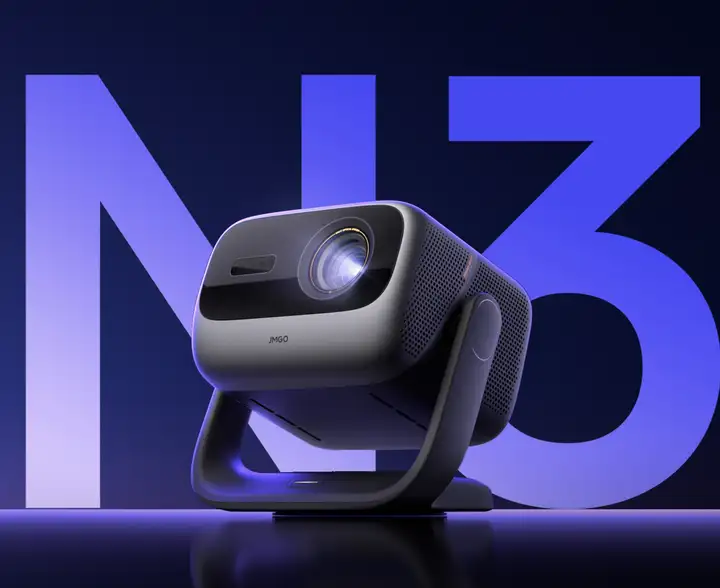
Now, JMGO has directly launched the [JMGO N3 series] with a peak brightness of 4600 CVIA lumens , which is the highest in one step. JMGO's N1 series has always been a hot seller of three-color lasers. Among the "three-color laser projectors" on JD.com , the JMGO family directly dominates the top three, which shows how strong the product strength and appeal are.
The hit N1 series of Nut has been a success, and now the N3 series has been upgraded, bringing another powerful blockbuster product to the projector market. I sorted out and compared the configurations of the three models of the N3 series, and compared them with the previous flagship N1S Ultra. It can be seen that the new family has many upgrades, which fully make up for the regrets and shortcomings of the N1 era. It can be said that the three top experiences of image quality (three-color laser), interaction (electric pan/tilt), and freedom (optical zoom, variable aperture) are all full, which are indispensable for flagship projectors.
- "Brand new laser"
 "Greatly improved brightness"
 - "Upgraded electric gimbal" "AI automatic image positioning"
- "Remote control + gyroscope" "Spatial image movement"
- "Upgraded variable aperture" "Contrast is significantly improved"
- "Upgraded optical zoom" "More projection space"
- "Better speakers" "Enhanced low-frequency dive"
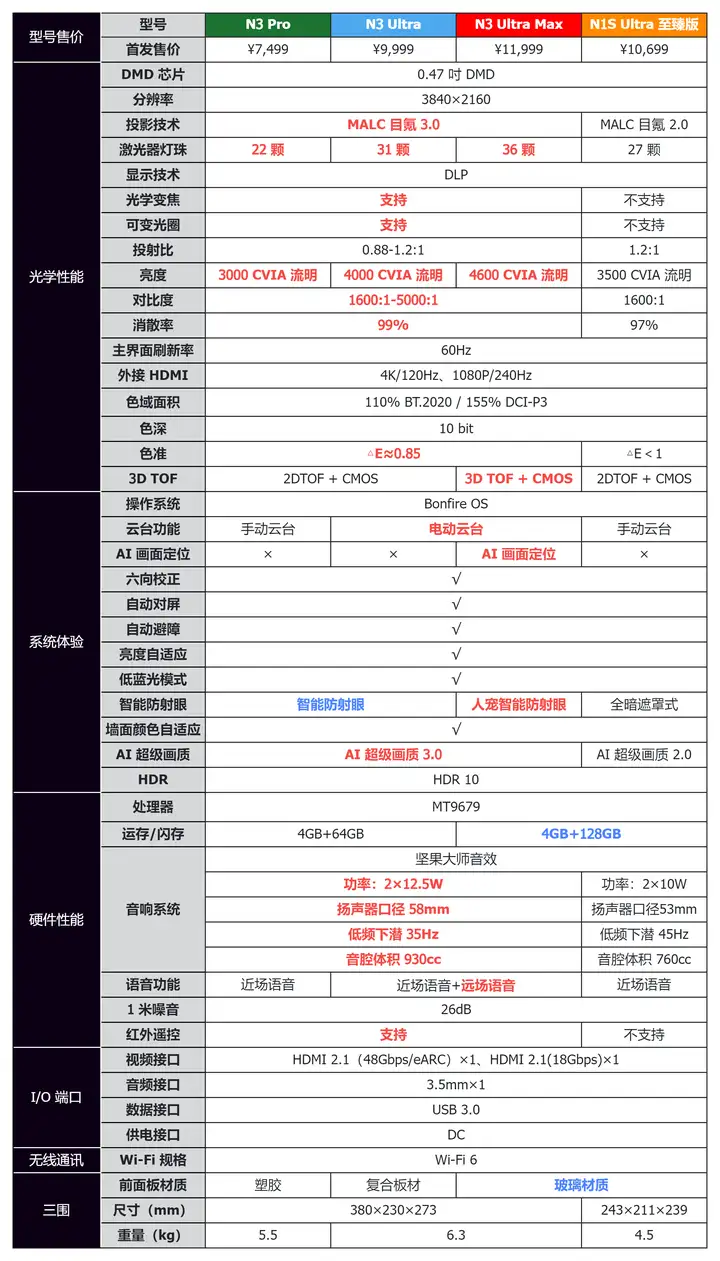
Just combing through this configuration table is exciting enough. After all, in the digital circle, this kind of parameter iteration of a major version is basically launched at important time nodes, so I can understand why Nut skipped N2 and went straight to N3 in the naming method. It's just like squeezing the toothpaste to burst.
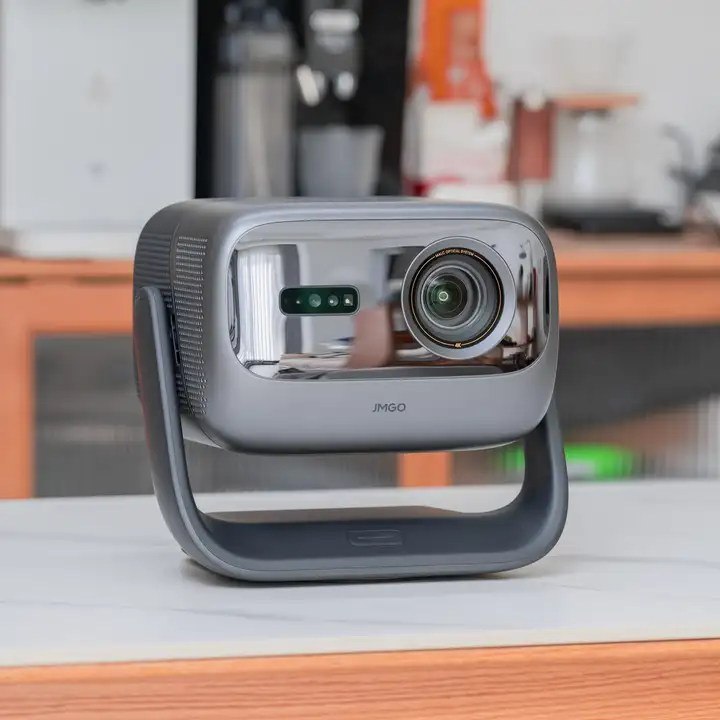
I was fortunate enough to get an engineering prototype of the Nut N3 Ultra Max, and I was able to get my hands on it in advance for everyone to try out and see what high-quality upgraded experience the new model brings, and whether it is worth the investment for movie lovers.
2. 36 lasers + 4600 CVIA lumens, how terrifying is the brightness improvement of Nut N3 Ultra Max?
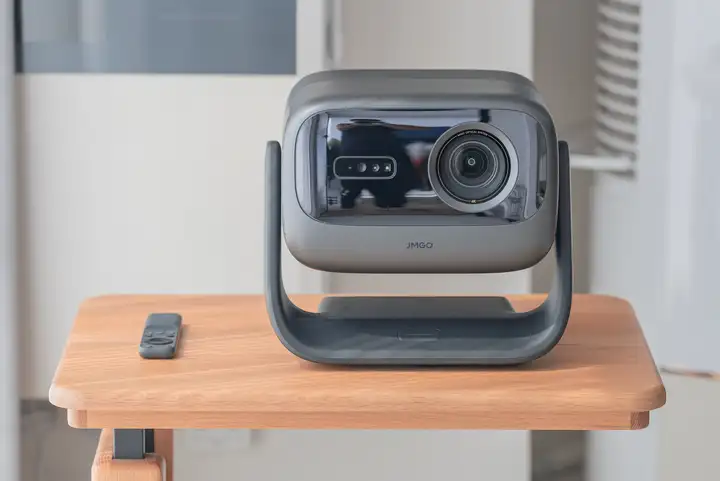
❶ New lasers, with stronger performance per laser and more in number
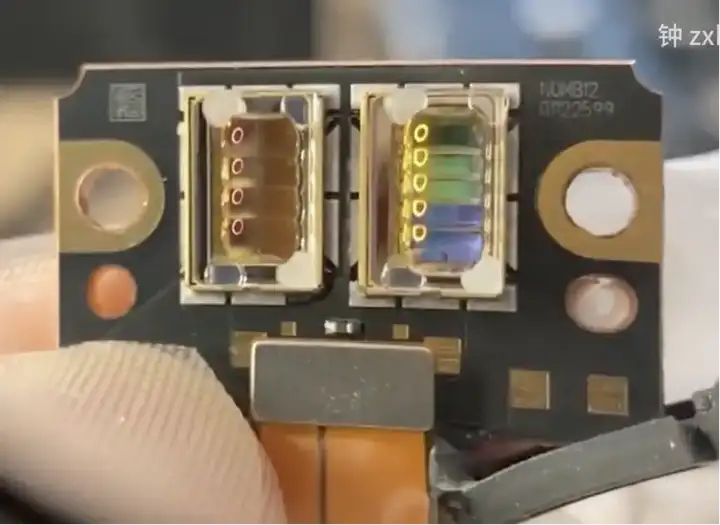
In the second part, we will start with the laser of the three-color projector. In the N1 era, JMGO established the performance gap by using different numbers of lasers for different levels of products.
- "N1 Air" : 1 set of lasers
- 「N1」:1 set of lasers
- 「N1 Pro」 : 2 sets of lasers
- 「N1S Pro」 : 2 sets of lasers
- "N1 Ultra" : 3 sets of lasers
- "N1S Ultra" : 3 sets of lasers
The JMGO N3 series projector is equipped with the [ MALC™ 3.0 pure three-color laser engine] , which is composed of a new generation of Qualas 22 laser.
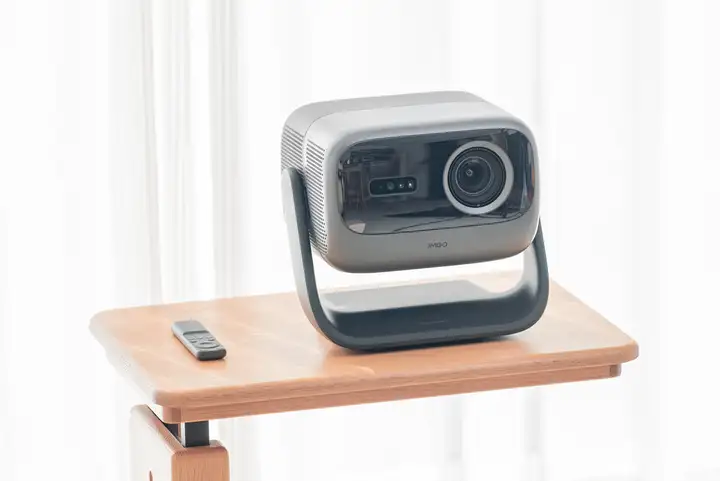
It can be seen that the N3 series family's counterparts have a slight increase in the number of lasers, ranging from 4 to 6.
- N1S Pro Ultimate Edition → N3 Pro : 18 → 22 lasers
- N1S Ultra → N3 Ultra : 27 → 31 lasers
- N1S Ultra → N3 Ultra Max : 27 → 36 lasers
❷ Larger body size, more in line with the design changes of the electric gimbal
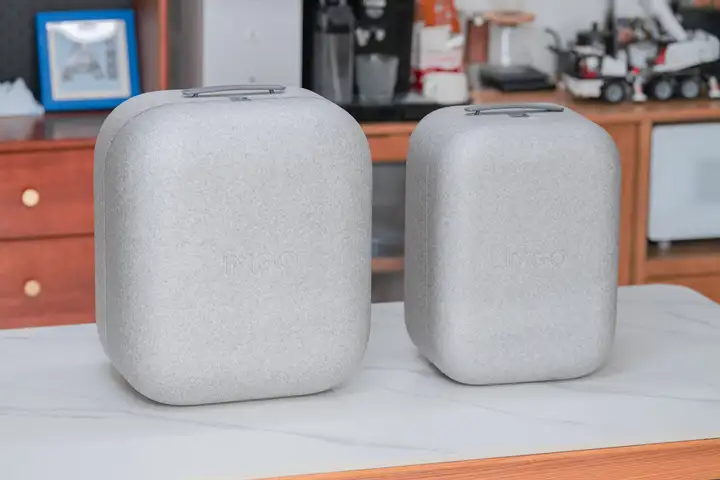
Because the power upgrade of the laser will also increase the heat dissipation demand of the entire machine, it can be seen that compared with the old N1S Ultra Ultimate Edition, the size of the N3 Ultra Max is obviously larger.
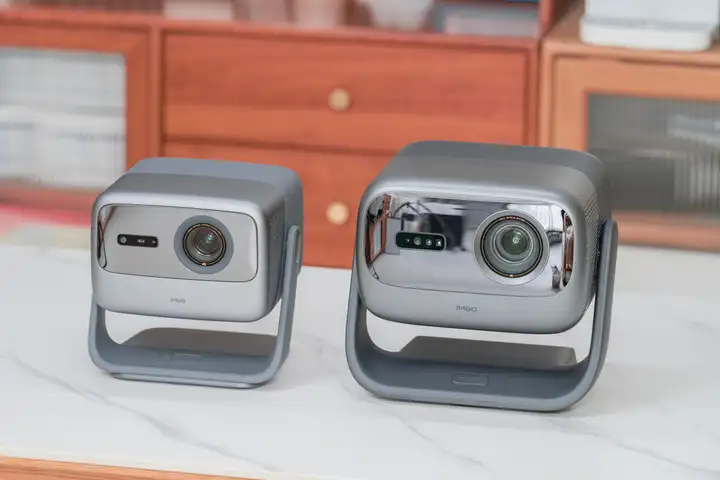
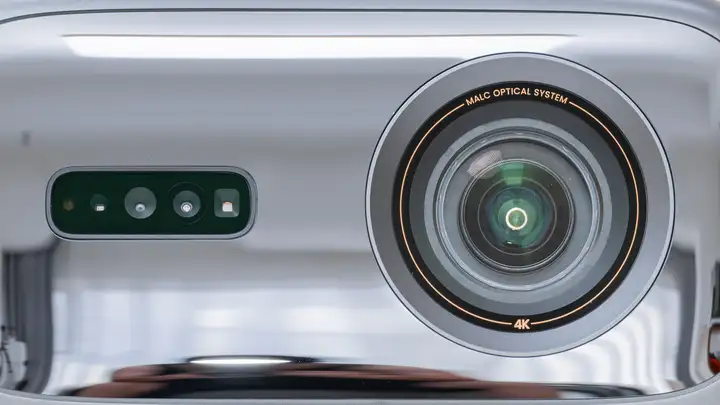
In terms of other details, the optical lens of Nut N3 Ultra Max is also enlarged in proportion, and the number of sensors next to it has also increased significantly, from left to right they are brightness/color temperature sensor, camera, 3D ToF sensor. It is worth mentioning that the camera is an RGB full-color solution, which can sense 1.92 million pixels in real time, and has higher recognition accuracy than ordinary RGB cameras.
From the side view, the chin of the Nut N3 Ultra Max is obviously more rounded, and the bottom of the gimbal is relatively thick. In addition, 4 microphones are added to the top of the projector to enhance the reception of voice commands.
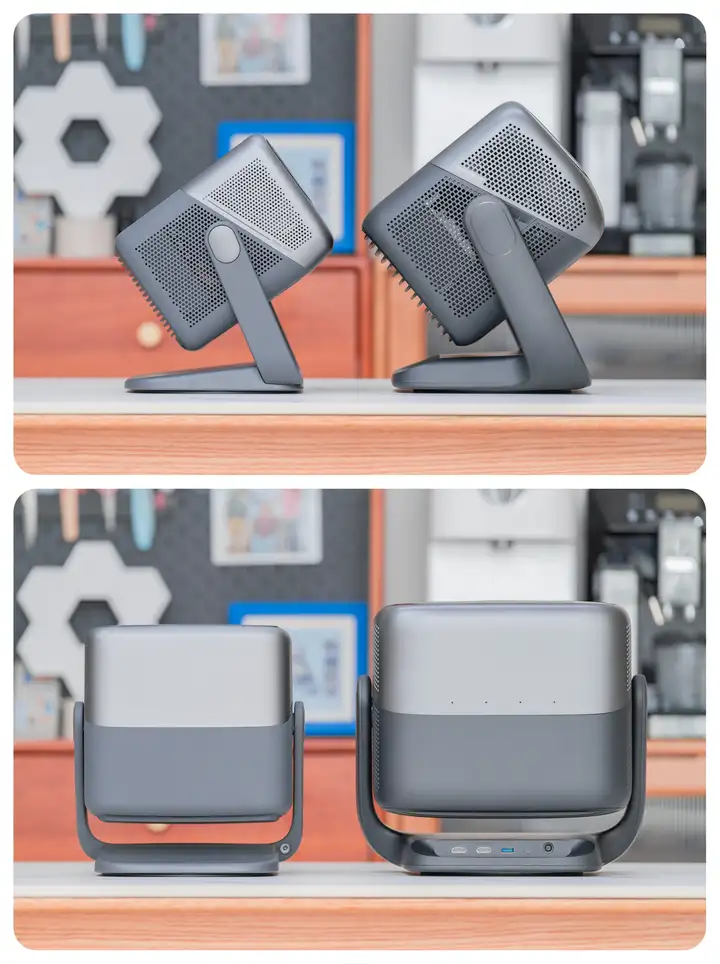
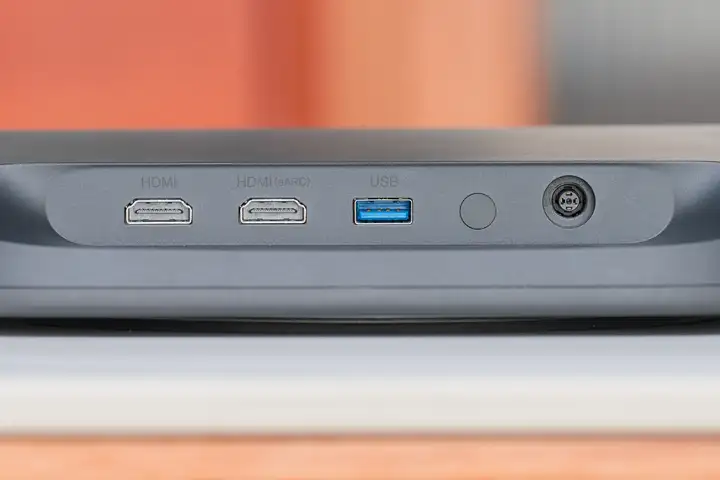
There are also some changes at the rear of the projector. For example, the I/O ports of the previous generation are mainly concentrated on the body, and the power port is on the right bracket. The Nut N3 Ultra Max adds 50cm of wiring inside the body and integrates all the ports at the bottom. The advantage of this is that the video cable will not be pulled even if the projector body is tilted at a large angle.
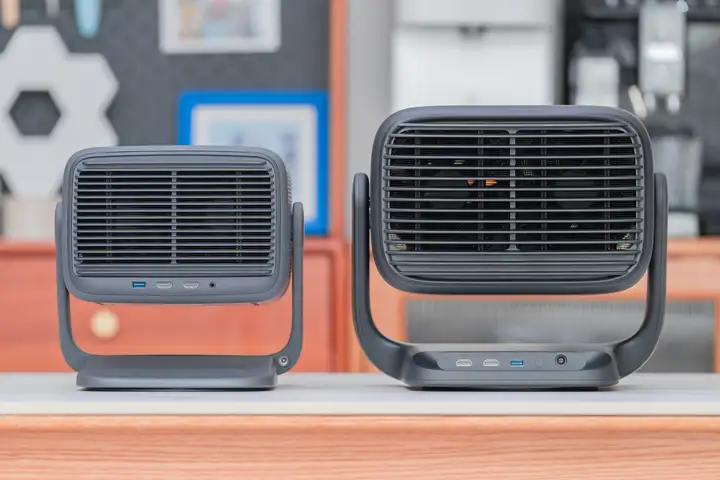
By further zooming in on the I/O port area, we can see that an infrared signal receiver has been added and the 3.5mm audio port has been removed. The video port remains unchanged, still supporting two-way signal input (HDMI×2), of which the HDMI on the right supports eARC audio return, and there is also a USB-A (5bps) data port for external mobile storage devices.
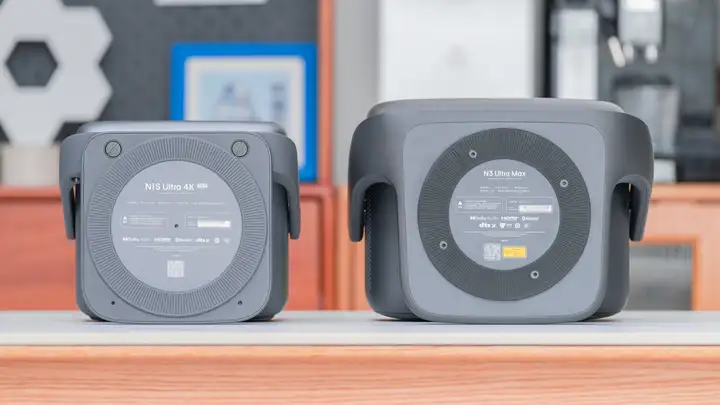
In addition, at the bottom of the projector, although the volume of the Nut N3 Ultra Max has increased a lot, the size of the gimbal turntable has been relatively reduced, and the number of gimbal fixing screw holes has also increased from 3 to 4.
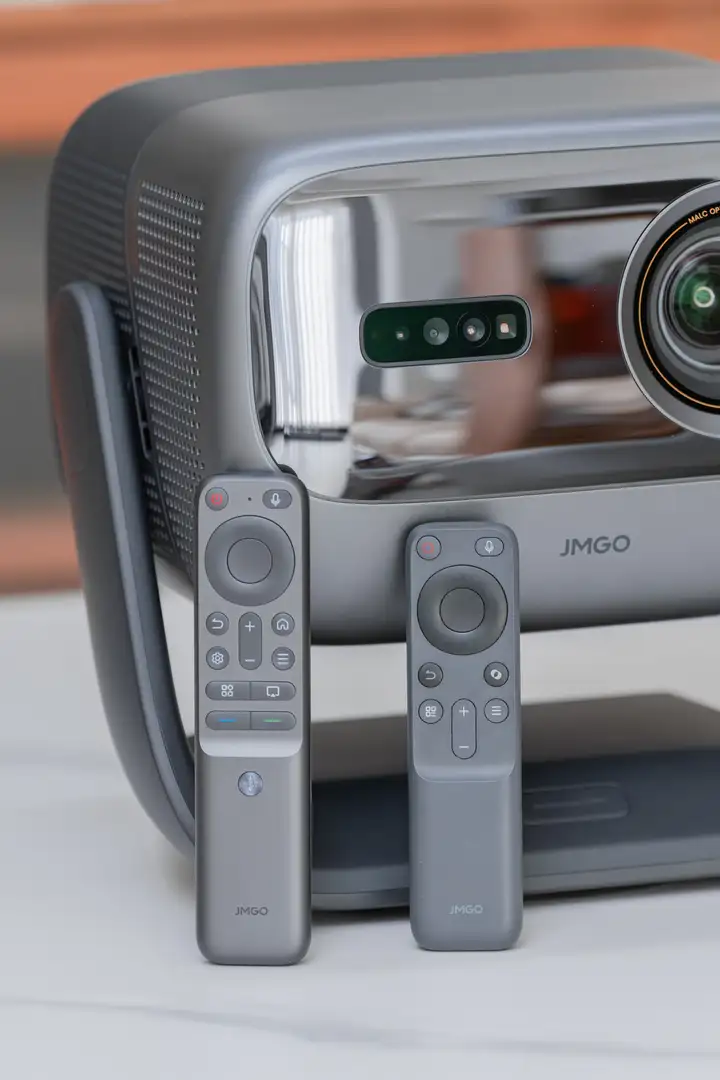
Finally, in order to allow you to fully utilize the advantages of the gimbal, the remote control of the JMGO N3 Ultra Max has also been upgraded. You can see that the new remote control has added a microphone, home button, projection button, multi-function shortcut keys, etc. It is much more convenient than the old model, and there is also a pointing key at the bottom. I will reveal its use to you later.
❸ The brightness difference between the two generations of flagship 1100 CVIA improves the actual experience
We have talked about the appearance comparison before, now let's compare the brightness and see how much the generational improvement of the JMGO N3 Ultra Max is. In order to make the test fair, I used the 1.2:1 projection ratio of the JMGO N1S Ultra Ultimate Edition as a benchmark, placed the two projectors in a fixed position at the same time, and based on the same 84-inch screen.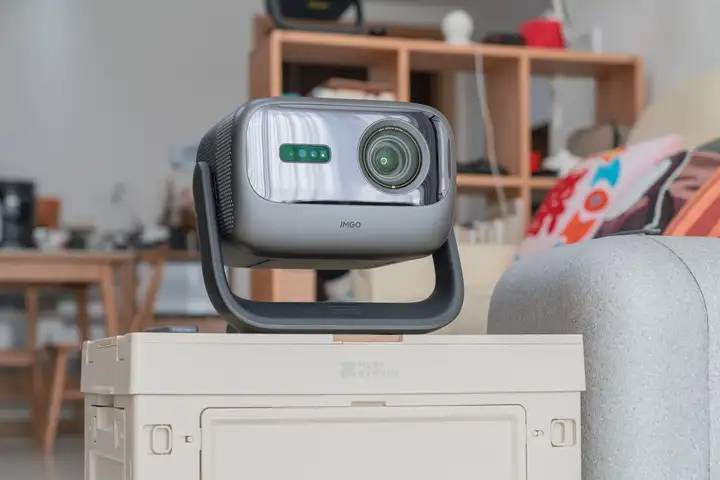
By adjusting the distance and pitch angle of the projector, and turning off the keystone correction, I tried to align the original projected image with the edge of the screen as much as possible, and then output the white field signal. After 5 minutes of stable operation, I started to measure the brightness of 9 points in the image. After the measurement, I also calculated the brightness difference ratio. Compared with the previous generation, the brightness of the 9 points increased by an average of 25.9%, which is quite obvious.
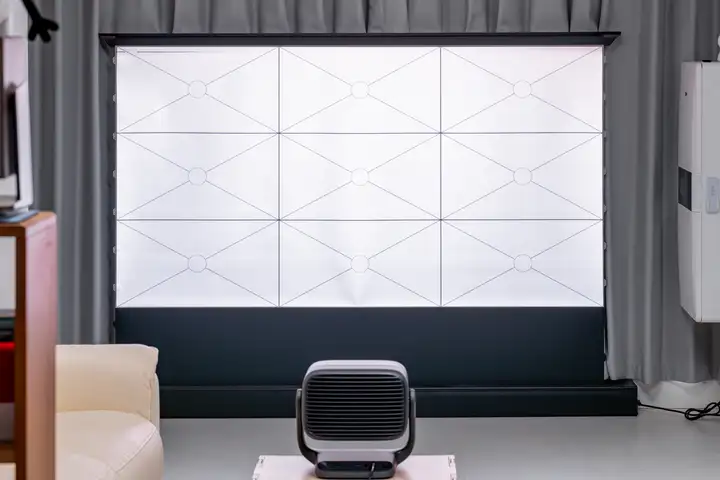
In addition to the difference in numerical values, I also compared some photo samples. I believe you can also clearly perceive the brightness difference between the new and old generations of flagships.
▼ JMGO N1S Ultra Ultimate Edition (left) vs JMGO N3 Ultra Max (right)

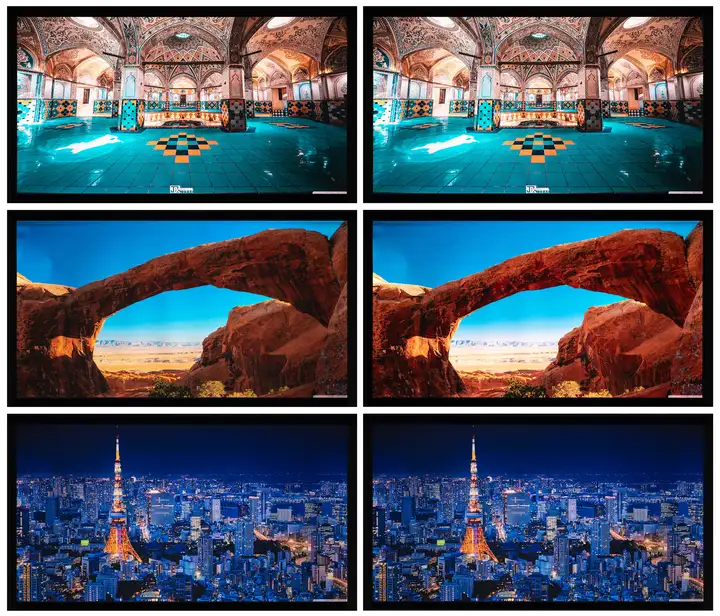

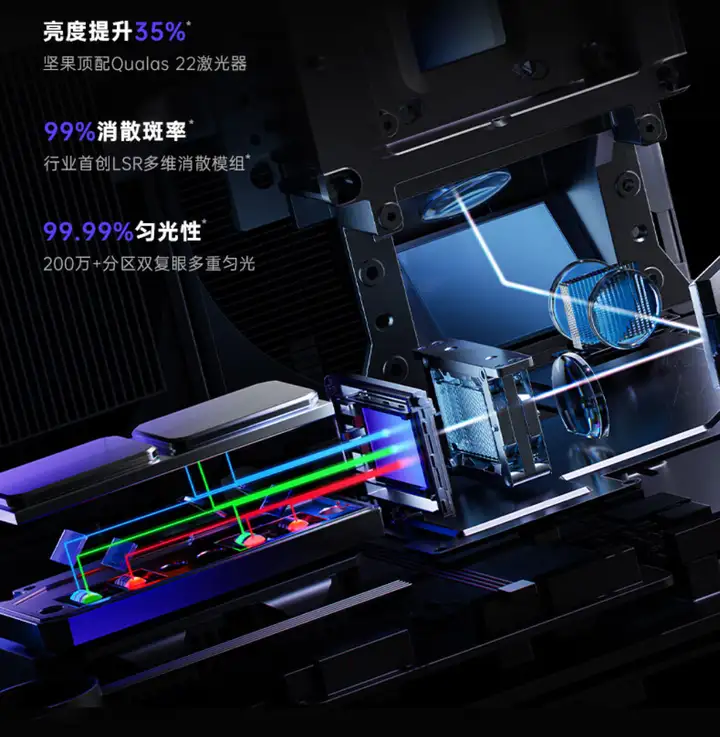
It is worth mentioning that the Nut N3 series also uses the "new generation LSR dynamic dissipation module" , which raises the dissipation rate from 97% of the previous generation to 99%. Don't underestimate this 2%. The closer you are to the top, every improvement is accompanied by great efforts. Coupled with the built-in "double compound eye multiple uniform light technology" , the uniformity of the picture reaches 99.99%, effectively reducing the problem of dark corners in the picture.

