


Catalogs Hide
- 1 What "Outdoor TV" Actually Means
- 2 What "Waterproof TV" Usually Means
-
3
The Engineering Differences That Matter
- 3.1 Brightness Capability
- 3.2 Screen Surface Treatment
- 3.3 UV Protection
- 3.4 Thermal Management
- 3.5 Connectivity Sealing
- 4 When Each Category Fits Your Install
- 5 The Cost Comparison
- 6 Common Confusion Points
- 7 Frequently Asked Questions
- 8 Summary
The terms "outdoor TV" and "waterproof TV" get used interchangeably in marketing, retail listings, and even some manufacturer websites. They're not the same thing. Buying the wrong category for your install is one of the most expensive mistakes in this product space — and it happens because the industry hasn't standardized the terminology.
Here's what each category actually means, the real engineering differences, and which one matches your specific install conditions.
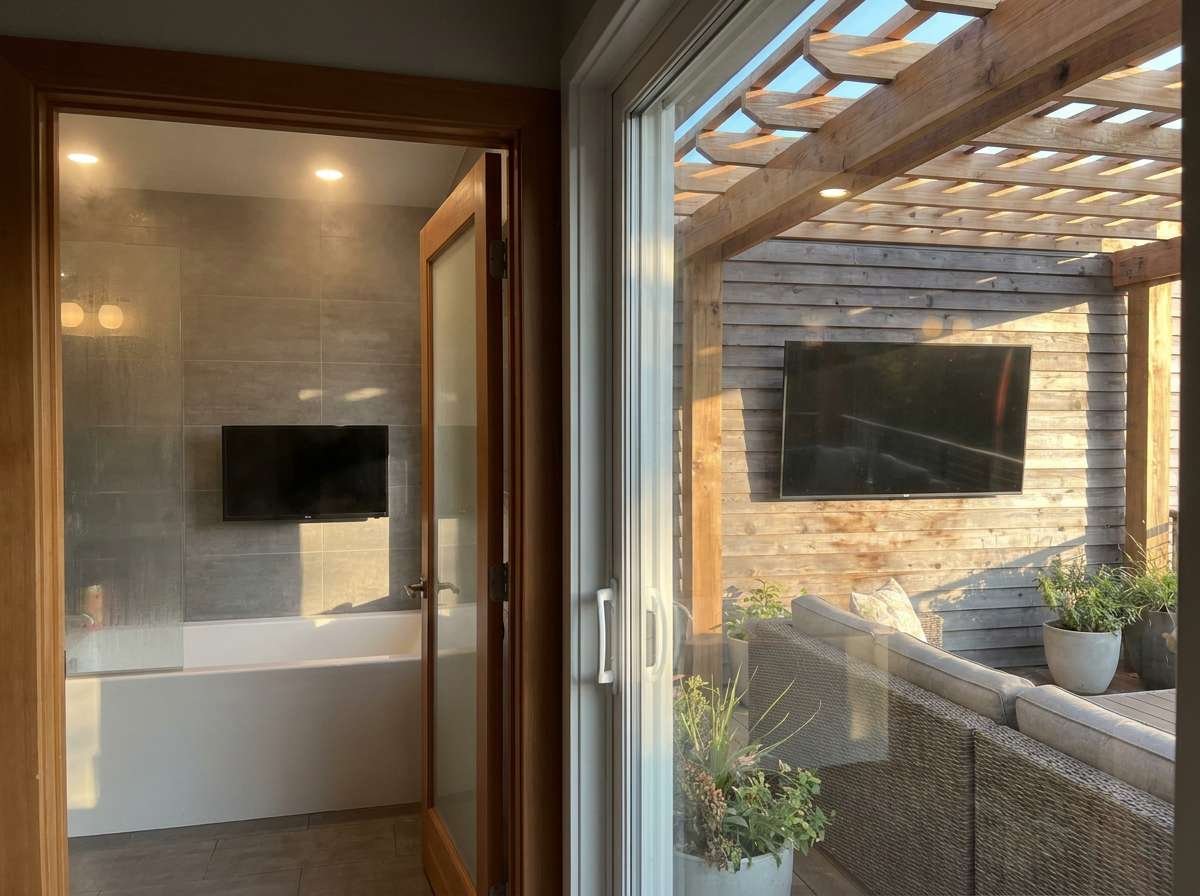
A purpose-built "outdoor TV" is engineered as a complete outdoor product. It includes:
Key examples in 2026:
These products are complete outdoor solutions — designed from the ground up for outdoor use, with all components engineered as a system.
"Waterproof TV" as a marketing term covers three distinct product types:
Smaller TVs (typically 19-32 inches) designed for indoor wet environments — bathrooms, spa areas, indoor pools. Engineered to handle splashing water and humidity but not outdoor conditions like UV exposure, temperature extremes, or extended weather cycling.
Typical price range: $400-$1,200 IP rating: Often IP65 or IP66 (better water resistance than typical outdoor TVs) Brightness: 250-400 nits (indoor TV brightness)
These products are water-resistant but not outdoor-suitable. The IP rating is excellent for water exposure, but they lack the brightness, UV resistance, and thermal management that outdoor environments require.
Some retailers list standard indoor TVs as "waterproof" if they have minor IP ratings (IP44 typical). These are essentially indoor TVs with slight splash protection.
Typical price range: $300-$700 IP rating: IP44 or similar Brightness: 250-400 nits
These products shouldn't be used outdoors regardless of how they're marketed. The IP44 rating prevents minor splashing damage; it doesn't protect against rain, humidity, UV, or temperature extremes.
Aftermarket weatherproof enclosures (The TV Shield, Storm Shell) that hold standard indoor TVs and are sometimes marketed as "waterproof outdoor solutions."
Typical price range: $300-$500 for enclosure + indoor TV Effective IP rating: Depends on enclosure quality Brightness: Limited to indoor TV's specs (typically 250-400 nits)
These products work for fully covered outdoor installations but don't deliver the brightness or thermal management of purpose-built outdoor TVs.
Beyond terminology, real engineering differences separate the two categories:
Outdoor TVs: 1,000-2,500 nits (designed to compete with outdoor ambient light up to 50,000+ lux)
Waterproof TVs: 250-400 nits (designed for indoor lighting at 200-500 lux)
The 4-10x brightness gap is the single most important difference. A waterproof TV used outdoors during daytime is unwatchable — the image washes out completely against ambient sky light.
Outdoor TVs: Matte anti-glare coating or optically bonded anti-reflection glass
Waterproof TVs: Standard glossy panel surface (designed for controlled indoor lighting)
Outdoor environments reflect ambient light from sky, snow, water, and surrounding surfaces. Glossy panels become mirror-like outdoors. Anti-glare treatment is essential for any sustained outdoor viewing.
Outdoor TVs: UV-stabilized plastics, panel coatings, and adhesives designed for 5-10+ years of sun exposure
Waterproof TVs: Standard plastics (typically degrade in sustained UV exposure)
UV degradation is one of the slow killers of outdoor TVs. Products not specifically engineered for UV exposure show bezel discoloration, panel coating breakdown, and adhesive failure within 1-3 years of outdoor use.
Outdoor TVs: Active cooling (internal fans), ambient temperature ratings of -22°F to 122°F
Waterproof TVs: Passive cooling, indoor operating ranges (typically 32-104°F)
Outdoor environments swing through temperature extremes that indoor electronics weren't designed for. Texas summer afternoons hit 110°F+ ambient. Northern winter nights drop below 0°F. Indoor electronics in these conditions degrade rapidly.
Outdoor TVs: Sealed connection ports, weatherproof gaskets, outdoor-rated cable specifications
Waterproof TVs: Standard indoor connection ports (sometimes with rubber covers)
Even high-IP-rated waterproof TVs typically have indoor-grade connection ports under the protective covers. Sustained outdoor humidity reaches the internal electronics through these ports over time.
The vast majority of US residential outdoor TV installs (pergolas, covered patios, outdoor kitchens, pool decks) require purpose-built outdoor TVs, not waterproof TVs.
Waterproof TVs are good products for their intended use case — bathrooms, spa areas, indoor pools. They're not outdoor TVs in disguise.
The combination of an outdoor TV enclosure (TV Shield, Storm Shell at $300-$500) with a quality indoor TV ($500-$800) creates a viable budget alternative for fully covered outdoor installations — but only fully covered.
For a 55-inch installation in a partially-sunny outdoor patio:
The cost-per-year math actually favors purpose-built outdoor TVs over the long term — even though sticker prices favor alternatives initially.
IP rating is one factor among many. A waterproof TV with IP65 rating still has standard indoor brightness (250-400 nits) that's inadequate for daytime outdoor viewing. The IP rating doesn't compensate for the brightness gap.
For full outdoor use, look for the complete spec package: brightness 1,000+ nits, IP55+, operating temperature range that matches your climate, all-metal construction. IP rating alone isn't enough.
In fully shaded covered porches in dry climates, indoor TVs can survive 1-3 years before failure. In humid climates (Florida, Gulf Coast, Pacific Northwest) or installations with any UV exposure, they typically fail in 12-18 months.
The cost math doesn't work — replacing an indoor TV every 14 months costs more than buying a real outdoor TV from the start. The right answer for budget-conscious covered installations is typically the cheapest real outdoor TV (Element EP500AE55C at $899) or an indoor TV in a quality enclosure.
These terms are even less standardized than "waterproof." Look for the specific spec sheet — IP rating, operating temperature range, brightness, and panel surface treatment. Marketing terms are unreliable; spec sheets aren't.
No. Outdoor TVs are purpose-built complete products designed for outdoor use — high brightness (1,000+ nits), anti-glare panels, UV-resistant materials, wide temperature ranges, and IP55 weatherproofing. Waterproof TVs are typically smaller indoor products designed for wet indoor environments (bathrooms, spas) — they have indoor TV brightness (250-400 nits) and aren't engineered for sustained outdoor use, UV exposure, or temperature extremes.
Generally, no. Bathroom and spa waterproof TVs lack the brightness needed for outdoor visibility (250-400 nits vs the 1,000+ nits required outdoors), don't have UV protection for sustained sun exposure, and aren't designed for outdoor temperature ranges. They're good products for their intended indoor wet environments — but they're not outdoor TVs in disguise.
The cheapest real outdoor TV is the Element EP500AE55C at $899 — IP55-rated, all-metal sealed construction, 700-nit brightness. For fully shaded covered installations, this is typically the right answer rather than waterproof TV alternatives or indoor TVs. For partial-sun installations requiring 1,500+ nits, the ByteFree BF-55ODTV at $1,499 is the value sweet spot.
For any sustained outdoor use, you need a real outdoor TV. Regular indoor TVs used outdoors typically fail within 12-18 months in most US climates (humidity, UV exposure, insect damage, thermal stress). The replacement cost makes this approach more expensive than buying outdoor TV from the start, despite the lower sticker price.
IP55 protects against dust ingress and low-pressure water jets from any direction. IP65 protects against dust completely and stronger water jets. For typical residential outdoor TV installations, IP55 is sufficient. IP65 provides additional margin for installations near pools or where pressure-washing cleaning may occur. The IP rating difference matters less than other specs (brightness, operating temperature, build quality) for typical residential use.
Outdoor TVs and waterproof TVs are different product categories serving different use cases. The terminology confusion costs buyers significant money when they buy the wrong category for their installation.
Use a purpose-built outdoor TV when: Sustained outdoor use, any UV exposure, daytime viewing, year-round operation. This describes the vast majority of US residential outdoor TV installs.
Use a waterproof TV when: Indoor wet environments only (bathrooms, spas, indoor pools). Don't use these outdoors.
Use an indoor TV in enclosure when: Fully covered shaded outdoor spaces with evening-only use, tight budgets, or existing quality indoor TV needs outdoor mounting.
For warm-climate partial-sun residential installations — the most common US outdoor TV use case — the ByteFree BF-55ODTV at $1,499 delivers the right spec combination (1,500 nits, IP55, all-metal, full Dolby Vision support, 30W hardware Atmos audio) for the install conditions most buyers actually face.
Don't buy a waterproof bathroom TV for your patio. Don't buy an outdoor TV for your bathroom. The categories aren't interchangeable, and the terminology doesn't reliably tell you which is which — the spec sheet does.
Related reading:
Here's what each category actually means, the real engineering differences, and which one matches your specific install conditions.
What "Outdoor TV" Actually Means
A purpose-built "outdoor TV" is engineered as a complete outdoor product. It includes:
- High-brightness panel (typically 1,000-2,500 nits) for daytime visibility
- Anti-glare or matte screen treatment to manage outdoor reflection
- All-metal sealed enclosure designed for outdoor exposure
- IP55 minimum weatherproofing (dust and rain protection)
- Wide operating temperature range (typically 32°F-122°F minimum, premium models -22°F to 122°F)
- Active thermal management (internal cooling fans for sustained heat)
- Outdoor-rated electronics designed for humidity and temperature cycling
Key examples in 2026:
- ByteFree BF-55ODTV ($1,499)
- Sylvox DeckPro 2.0+ ($1,599)
- SunBrite Veranda 3 ($1,699)
- Samsung The Terrace LST7D ($3,497+)
These products are complete outdoor solutions — designed from the ground up for outdoor use, with all components engineered as a system.
What "Waterproof TV" Usually Means
"Waterproof TV" as a marketing term covers three distinct product types:
1. Bathroom/Spa Waterproof TVs
Smaller TVs (typically 19-32 inches) designed for indoor wet environments — bathrooms, spa areas, indoor pools. Engineered to handle splashing water and humidity but not outdoor conditions like UV exposure, temperature extremes, or extended weather cycling.
Typical price range: $400-$1,200 IP rating: Often IP65 or IP66 (better water resistance than typical outdoor TVs) Brightness: 250-400 nits (indoor TV brightness)
These products are water-resistant but not outdoor-suitable. The IP rating is excellent for water exposure, but they lack the brightness, UV resistance, and thermal management that outdoor environments require.
2. Indoor TVs Marketed as "Waterproof"
Some retailers list standard indoor TVs as "waterproof" if they have minor IP ratings (IP44 typical). These are essentially indoor TVs with slight splash protection.
Typical price range: $300-$700 IP rating: IP44 or similar Brightness: 250-400 nits
These products shouldn't be used outdoors regardless of how they're marketed. The IP44 rating prevents minor splashing damage; it doesn't protect against rain, humidity, UV, or temperature extremes.
3. Outdoor Enclosures with Indoor TVs
Aftermarket weatherproof enclosures (The TV Shield, Storm Shell) that hold standard indoor TVs and are sometimes marketed as "waterproof outdoor solutions."
Typical price range: $300-$500 for enclosure + indoor TV Effective IP rating: Depends on enclosure quality Brightness: Limited to indoor TV's specs (typically 250-400 nits)
These products work for fully covered outdoor installations but don't deliver the brightness or thermal management of purpose-built outdoor TVs.
The Engineering Differences That Matter
Beyond terminology, real engineering differences separate the two categories:
Brightness Capability
Outdoor TVs: 1,000-2,500 nits (designed to compete with outdoor ambient light up to 50,000+ lux)
Waterproof TVs: 250-400 nits (designed for indoor lighting at 200-500 lux)
The 4-10x brightness gap is the single most important difference. A waterproof TV used outdoors during daytime is unwatchable — the image washes out completely against ambient sky light.
Screen Surface Treatment
Outdoor TVs: Matte anti-glare coating or optically bonded anti-reflection glass
Waterproof TVs: Standard glossy panel surface (designed for controlled indoor lighting)
Outdoor environments reflect ambient light from sky, snow, water, and surrounding surfaces. Glossy panels become mirror-like outdoors. Anti-glare treatment is essential for any sustained outdoor viewing.
UV Protection
Outdoor TVs: UV-stabilized plastics, panel coatings, and adhesives designed for 5-10+ years of sun exposure
Waterproof TVs: Standard plastics (typically degrade in sustained UV exposure)
UV degradation is one of the slow killers of outdoor TVs. Products not specifically engineered for UV exposure show bezel discoloration, panel coating breakdown, and adhesive failure within 1-3 years of outdoor use.
Thermal Management
Outdoor TVs: Active cooling (internal fans), ambient temperature ratings of -22°F to 122°F
Waterproof TVs: Passive cooling, indoor operating ranges (typically 32-104°F)
Outdoor environments swing through temperature extremes that indoor electronics weren't designed for. Texas summer afternoons hit 110°F+ ambient. Northern winter nights drop below 0°F. Indoor electronics in these conditions degrade rapidly.
Connectivity Sealing
Outdoor TVs: Sealed connection ports, weatherproof gaskets, outdoor-rated cable specifications
Waterproof TVs: Standard indoor connection ports (sometimes with rubber covers)
Even high-IP-rated waterproof TVs typically have indoor-grade connection ports under the protective covers. Sustained outdoor humidity reaches the internal electronics through these ports over time.
When Each Category Fits Your Install
Use a Purpose-Built Outdoor TV When:
- Install location has any direct or partial sun exposure
- Sustained outdoor mounting (not removed seasonally)
- Year-round operation in all weather
- Daytime viewing matters (sports, news, casual streaming during the day)
- Group viewing or entertainment hosting
- Mounting position has UV exposure for any portion of the day
- Climate has temperature swings beyond indoor TV operating ranges
The vast majority of US residential outdoor TV installs (pergolas, covered patios, outdoor kitchens, pool decks) require purpose-built outdoor TVs, not waterproof TVs.
Use a Waterproof TV When:
- Install location is indoor wet environment only (bathroom, spa, indoor pool area)
- No UV exposure (fully enclosed indoor space)
- Standard indoor lighting conditions
- Smaller size requirements (19-32 inches typical)
Waterproof TVs are good products for their intended use case — bathrooms, spa areas, indoor pools. They're not outdoor TVs in disguise.
Use an Indoor TV in Enclosure When:
- Fully covered outdoor space (screened porch, fully enclosed patio)
- Evening-only use (daytime brightness not required)
- Tight budget where outdoor TV pricing is constraint
- Existing high-quality indoor TV needs outdoor mounting
The combination of an outdoor TV enclosure (TV Shield, Storm Shell at $300-$500) with a quality indoor TV ($500-$800) creates a viable budget alternative for fully covered outdoor installations — but only fully covered.
The Cost Comparison
For a 55-inch installation in a partially-sunny outdoor patio:
Purpose-Built Outdoor TV
- TV: $1,499 (ByteFree BF-55ODTV) to $1,699 (SunBrite Veranda 3)
- Mounting and cabling: $200-$300
- Total: $1,700-$2,000
- Expected lifespan: 7-10 years
- Cost per year over 8 years: $213-$250
Waterproof Bathroom TV Used Outdoors (Don't Do This)
- TV: $700-$1,200
- Replacement after 12-18 months: $700-$1,200
- Mounting and cabling: $200-$300
- Total over 3 years: $1,800-$2,900 (for two failed TVs)
- Expected useful life: Limited (brightness inadequate)
- Cost per year over actual useful life: $600-$1,000
Indoor TV in Outdoor Enclosure
- Indoor TV: $500-$800
- Outdoor enclosure (TV Shield): $300-$500
- Mounting and cabling: $200-$300
- Total: $1,000-$1,600
- Expected lifespan: 5-7 years
- Cost per year over 6 years: $167-$267
The cost-per-year math actually favors purpose-built outdoor TVs over the long term — even though sticker prices favor alternatives initially.
Common Confusion Points
"But the spec sheet says IP65 — that's better than IP55"
IP rating is one factor among many. A waterproof TV with IP65 rating still has standard indoor brightness (250-400 nits) that's inadequate for daytime outdoor viewing. The IP rating doesn't compensate for the brightness gap.
For full outdoor use, look for the complete spec package: brightness 1,000+ nits, IP55+, operating temperature range that matches your climate, all-metal construction. IP rating alone isn't enough.
"Can't I just put an indoor TV outside in a covered area?"
In fully shaded covered porches in dry climates, indoor TVs can survive 1-3 years before failure. In humid climates (Florida, Gulf Coast, Pacific Northwest) or installations with any UV exposure, they typically fail in 12-18 months.
The cost math doesn't work — replacing an indoor TV every 14 months costs more than buying a real outdoor TV from the start. The right answer for budget-conscious covered installations is typically the cheapest real outdoor TV (Element EP500AE55C at $899) or an indoor TV in a quality enclosure.
"What about TVs marketed as 'all-weather' or 'weather-resistant'?"
These terms are even less standardized than "waterproof." Look for the specific spec sheet — IP rating, operating temperature range, brightness, and panel surface treatment. Marketing terms are unreliable; spec sheets aren't.
Frequently Asked Questions
Is an outdoor TV the same as a waterproof TV?
No. Outdoor TVs are purpose-built complete products designed for outdoor use — high brightness (1,000+ nits), anti-glare panels, UV-resistant materials, wide temperature ranges, and IP55 weatherproofing. Waterproof TVs are typically smaller indoor products designed for wet indoor environments (bathrooms, spas) — they have indoor TV brightness (250-400 nits) and aren't engineered for sustained outdoor use, UV exposure, or temperature extremes.
Can I use a waterproof TV outdoors?
Generally, no. Bathroom and spa waterproof TVs lack the brightness needed for outdoor visibility (250-400 nits vs the 1,000+ nits required outdoors), don't have UV protection for sustained sun exposure, and aren't designed for outdoor temperature ranges. They're good products for their intended indoor wet environments — but they're not outdoor TVs in disguise.
What's the cheapest way to get a TV outdoors?
The cheapest real outdoor TV is the Element EP500AE55C at $899 — IP55-rated, all-metal sealed construction, 700-nit brightness. For fully shaded covered installations, this is typically the right answer rather than waterproof TV alternatives or indoor TVs. For partial-sun installations requiring 1,500+ nits, the ByteFree BF-55ODTV at $1,499 is the value sweet spot.
Do I need an outdoor TV or can I just put a regular TV outside?
For any sustained outdoor use, you need a real outdoor TV. Regular indoor TVs used outdoors typically fail within 12-18 months in most US climates (humidity, UV exposure, insect damage, thermal stress). The replacement cost makes this approach more expensive than buying outdoor TV from the start, despite the lower sticker price.
What's the difference between IP55 and IP65?
IP55 protects against dust ingress and low-pressure water jets from any direction. IP65 protects against dust completely and stronger water jets. For typical residential outdoor TV installations, IP55 is sufficient. IP65 provides additional margin for installations near pools or where pressure-washing cleaning may occur. The IP rating difference matters less than other specs (brightness, operating temperature, build quality) for typical residential use.
Summary
Outdoor TVs and waterproof TVs are different product categories serving different use cases. The terminology confusion costs buyers significant money when they buy the wrong category for their installation.
Use a purpose-built outdoor TV when: Sustained outdoor use, any UV exposure, daytime viewing, year-round operation. This describes the vast majority of US residential outdoor TV installs.
Use a waterproof TV when: Indoor wet environments only (bathrooms, spas, indoor pools). Don't use these outdoors.
Use an indoor TV in enclosure when: Fully covered shaded outdoor spaces with evening-only use, tight budgets, or existing quality indoor TV needs outdoor mounting.
For warm-climate partial-sun residential installations — the most common US outdoor TV use case — the ByteFree BF-55ODTV at $1,499 delivers the right spec combination (1,500 nits, IP55, all-metal, full Dolby Vision support, 30W hardware Atmos audio) for the install conditions most buyers actually face.
Don't buy a waterproof bathroom TV for your patio. Don't buy an outdoor TV for your bathroom. The categories aren't interchangeable, and the terminology doesn't reliably tell you which is which — the spec sheet does.
Related reading:
Last edited:


